Commodities
How Heat Sorts the Metals in a Polymetallic Deposit
SIX OF THE METALS IN THESE DEPOSITS ARE RECOVERED AS BY-PRODUCTS OF THREE OTHERS
The following content is sponsored by Eloro Resources
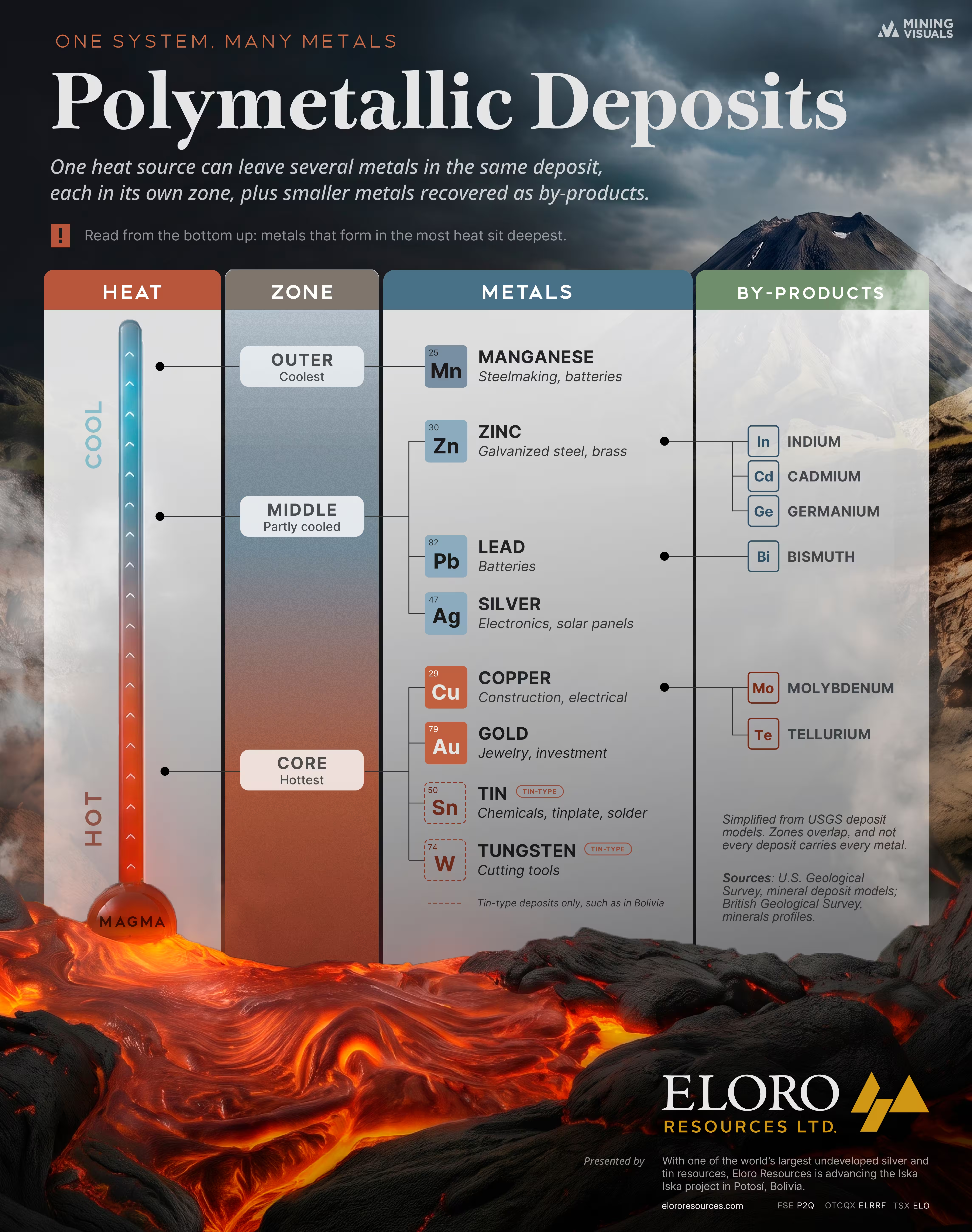

Four Main Metals, One List: Of a polymetallic deposit’s five main metals, copper, zinc, lead and silver are on the 2025 US Critical Minerals List, with gold the exception.
Heat Sorts the Metals: USGS deposit models describe ore zoned from copper near the intrusion outward to lead, zinc and silver, a temperature gradient frozen into rock.
Still Forming Offshore: NOAA found a seabed mining application in full compliance on May 1, 2026, targeting metal deposits that are geologically active today.
On November 6, 2025, the U.S. Interior Department added copper, silver and lead to its final critical minerals list, among 10 new entries. All three are main metals of a polymetallic deposit, where the USGS vein model places them in zones around a single intrusion.
Silver shows how closely these metals are linked. The USGS says U.S. silver is “primarily obtained as a byproduct from lead-zinc, copper, and gold mines”, and six other metals on the infographic are also recovered as by-products.
The U.S. Geological Survey describes the order in which metals settle in a polymetallic vein deposit: copper and gold closest to the heat source, then zinc, lead and silver, with manganese at the outer edge. That is the order the infographic follows, read from the bottom up.
Not every deposit forms in the same kind of rock. In vein deposits, the metals fill faults and fractures around the intrusion. In replacement deposits, they take the place of limestone or dolomite, and the USGS model for these shows the same order with one difference: zinc moves out to the edge with manganese instead of sitting in the middle.
A third USGS model covers tin-polymetallic veins: “multistage Cu-Zn-Sn-Ag-bearing veins” associated with felsic ignimbrites and subvolcanic intrusions. Its sequence runs from tin and tungsten at the centre, through copper, zinc and lead, to gold and silver at the periphery, “or from depths to shallow levels”.
That puts gold at the opposite end from the vein model, where it sits with copper at the core. The infographic follows the general model and marks tin and tungsten as tin-type metals. Eloro Resources, the sponsor of this article, describes epithermal, polymetallic and tin-dominant domains at Iska Iska in Bolivia’s tin belt, with the tin zone sitting atop the polymetallic zone.
Zinc carries three of the six by-products in the graphic: indium, cadmium and germanium. Copper carries molybdenum and tellurium, and lead carries bismuth. For indium, the USGS notes that “most zinc producers were not equipped with indium-processing circuits”.
Several of these by-products are now under export controls. China’s February 4, 2025 decision put export controls on items related to tellurium, bismuth, molybdenum and indium, alongside tungsten from the tin-type core, and germanium exports still require licences. The effect on indium phosphide was covered in our August indium article.
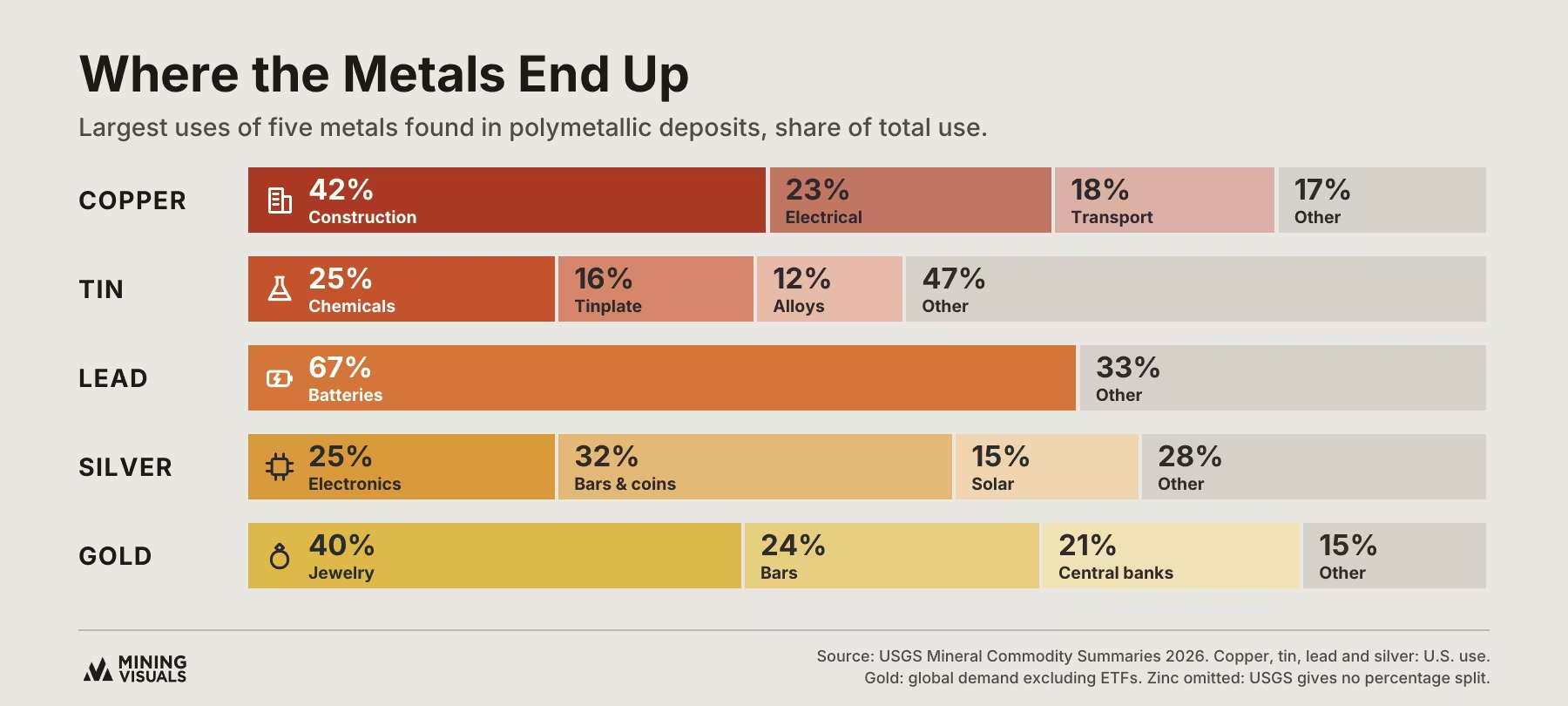
The metals of one deposit end up in markets that have little in common, as the chart above shows using USGS end-use data. Lead is the only one of the five where a single use takes more than half of demand, while silver is split between industrial uses and investment in bars and coins.
The chart’s lead share covers U.S. apparent consumption only, while our lead article cited a global battery share above 85%. Zinc is missing because the USGS gives only the order of its uses: galvanized steel first, then brass and bronze.
Eloro Resources Ltd. is a mineral exploration company advancing a world-class silver and tin project in Bolivia’s historic Potosí Department. Its flagship asset, the Iska Iska Project, ranks among the top five undeveloped global resources in terms of scale for both tin and silver.
This significant grassroots discovery remains open in multiple directions, offering substantial potential for continued expansion and resource enhancement. Iska Iska benefits from strong infrastructure access and a deeply rooted presence in Bolivia, supported by an experienced management team and meaningful community engagement.
Eloro’s strategy is focused on resource growth, strategic partnerships, and establishing a leading position within the global mining sector.
Learn more about Eloro Resources at: http://elororesources.com/
MiningVisuals Disclaimer: This article is for informational purposes only and does not constitute financial or investment advice. Always conduct your own research.


In April 2025, on Tesla’s Q1 earnings call, Elon Musk told investors that Optimus, the company’s humanoid robot, had been held up by a problem few outside the rare earth industry had been watching. “Optimus was affected,” he said, “by the magnet issue from China because the Optimus actuators in the arm do use permanent magnets” (Adamas Intelligence).
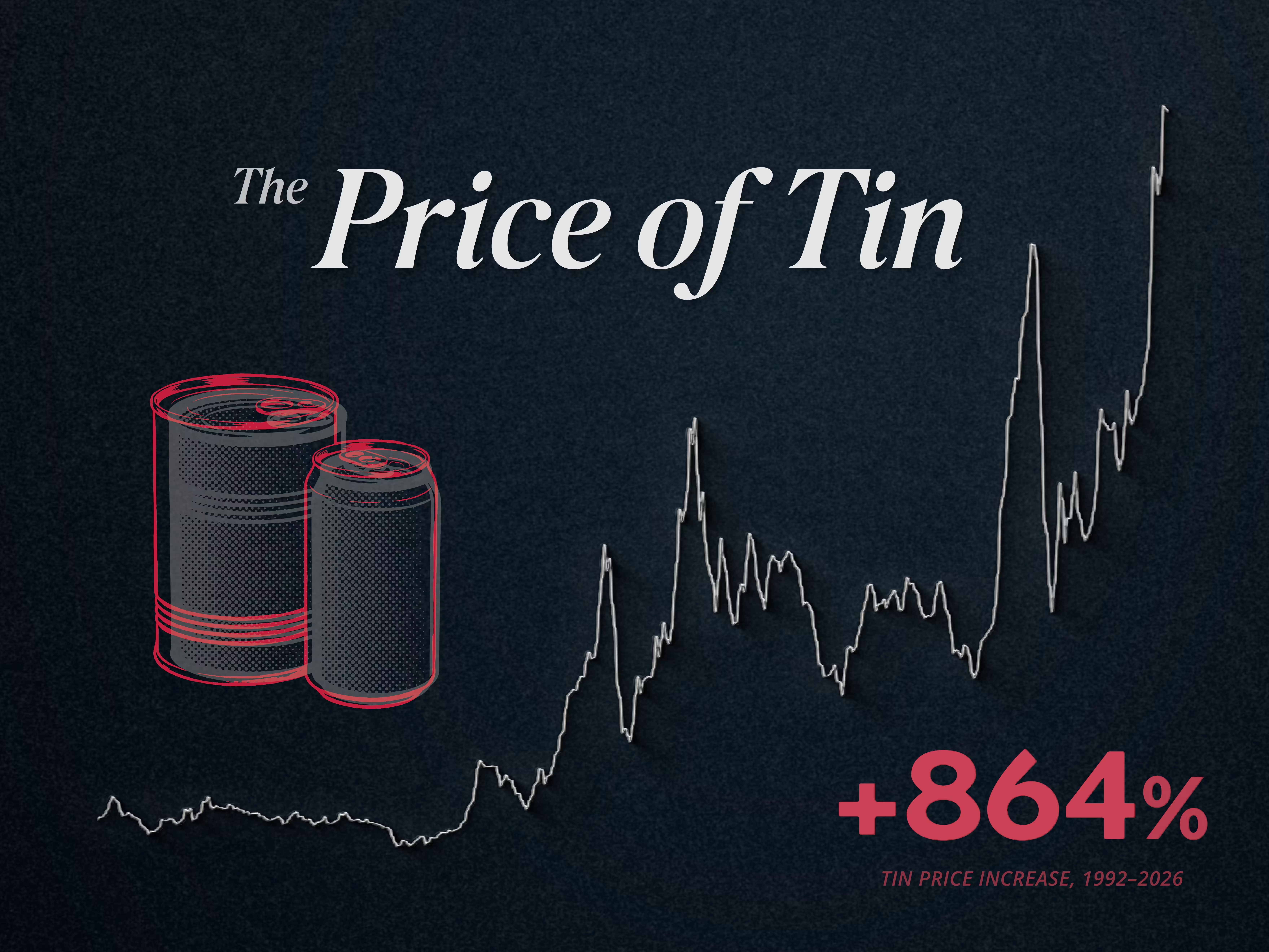
In January 2026, the London Metal Exchange three-month tin contract closed at US$53,462 a tonne, a nominal all-time high that surpassed the March 2022 peak, and it has traded near those levels since. The puzzle is that there is no shortage of tin today: exchange inventories actually rose as the price climbed, rather than being drawn down. Two very different things are holding the price up. The first is short-term: a wave of investor buying, which the industry says drove the January jump. The second is long-term: on current forecasts, the world will not mine enough tin to meet demand later this decade, a gap already projected before the rally began and expected to persist after it fades. The lasting story is that forecast shortfall, not the spike.
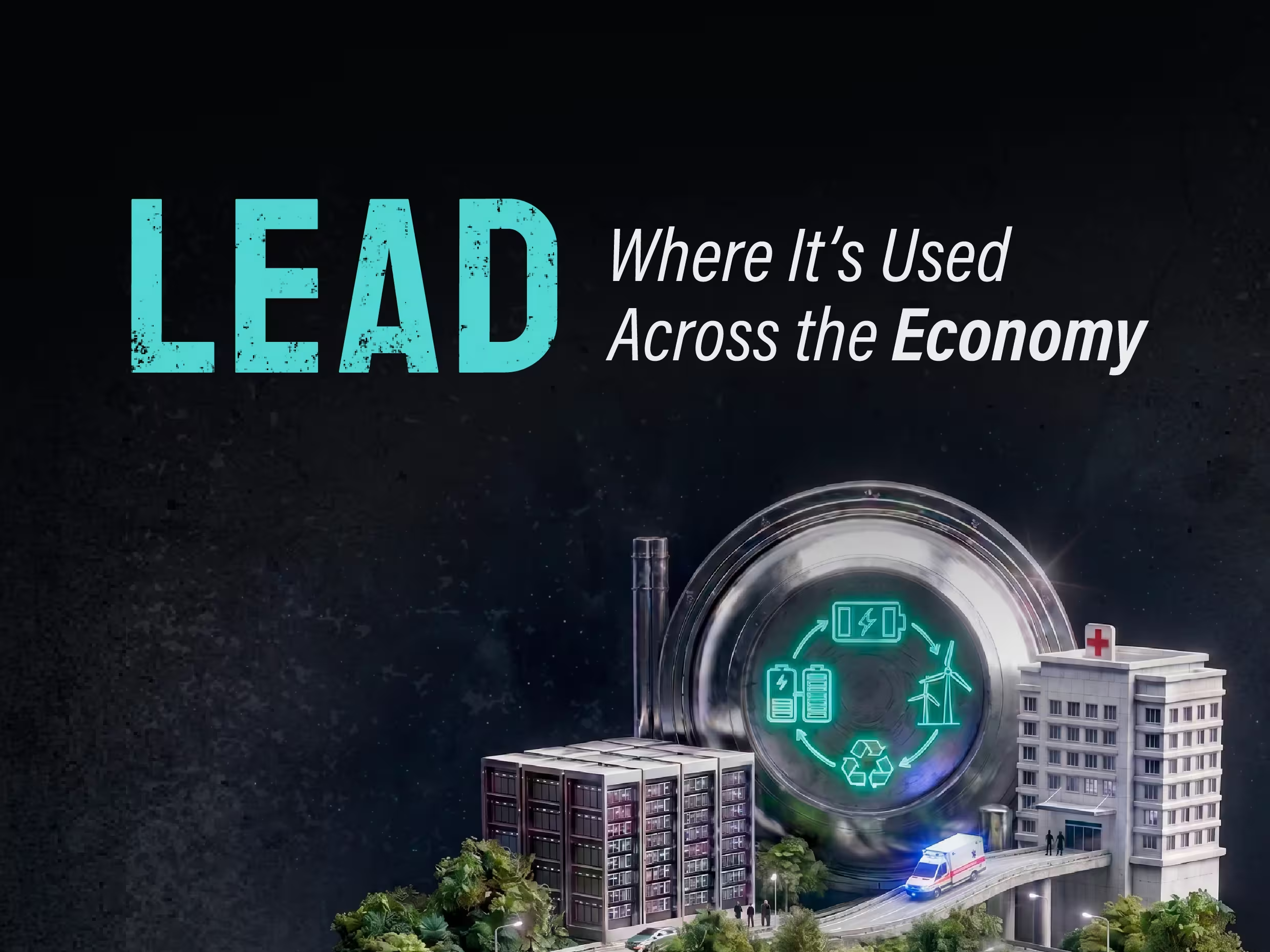
You are probably within a few feet of some lead right now. It sits in the starter battery of nearly every car, electric models included, in the backup power rooms of hospitals and data centres, and behind the walls of every X-ray suite. It is also the most recycled product in the United States, recovered mostly from spent batteries. So it came as a surprise to many when Washington added lead to its Final 2025 List of Critical Minerals in November, a label usually reserved for metals in short supply. Lead is not in short supply
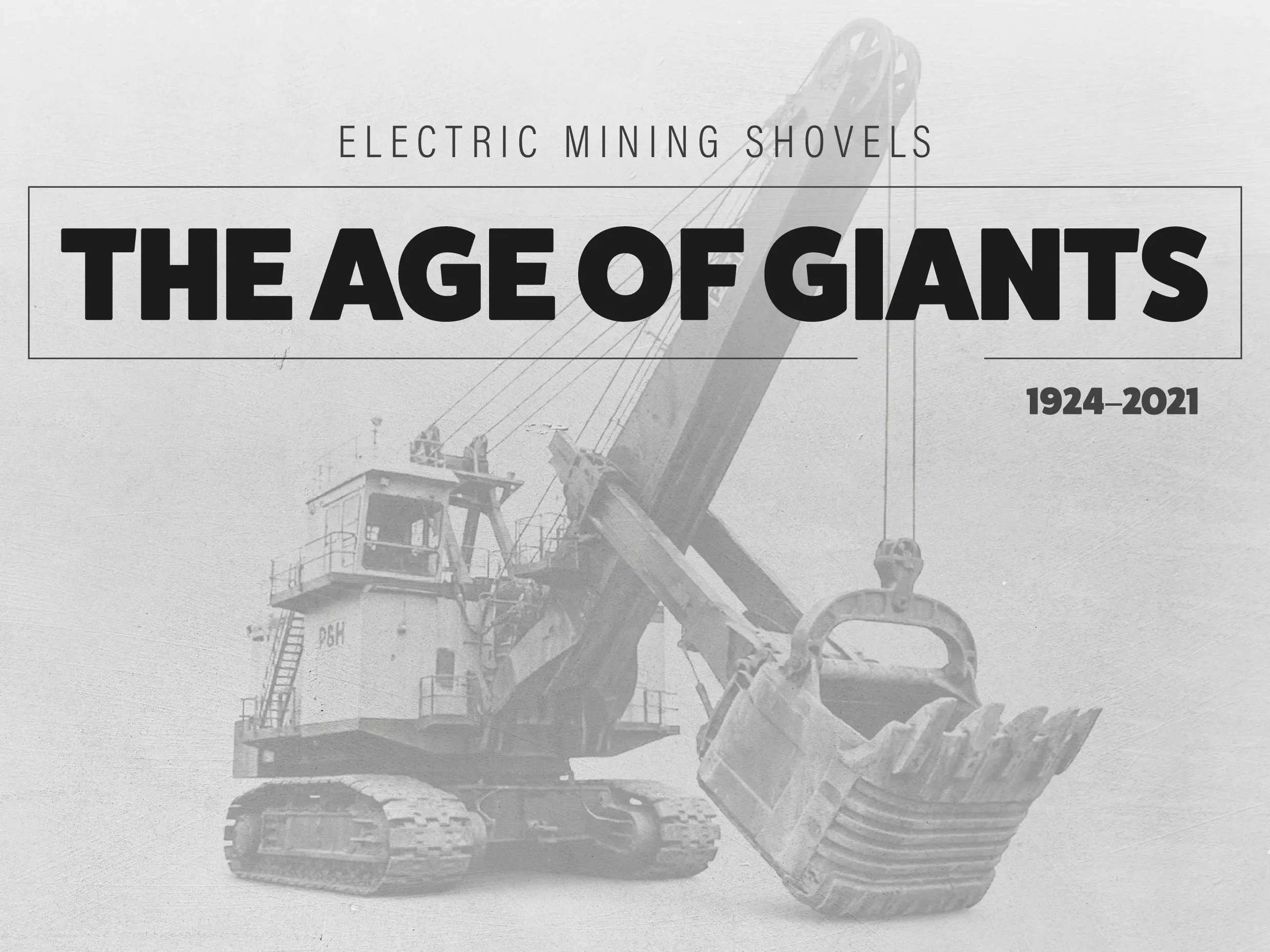
For four decades, the American coalfields hosted an engineering arms race measured in cubic metres of bucket. It ended not with a bigger machine, but with a deliberate retreat. The single largest mobile land machine ever built, the Marion 6360 "Captain," was commissioned in 1965 and destroyed by fire in 1991. No shovel has approached its scale since, and the machines that replaced it were smaller by design.