Commodities
Where Indium Goes: The Metal Behind Screens, Chips, and Solar
DISPLAYS STILL CONSUME MOST OF IT, BUT ONE COMPOUND IS PULLING INDIUM TOWARD AI OPTICS
The following content is sponsored by Eloro Resources

Displays Still Lead: Indium tin oxide coatings for flat-panel displays remain the metal's largest single use, per the USGS.
Demand Is Shifting: 5G networks and AI hardware are pulling indium toward optoelectronics, where indium phosphide moves data through fiber.
Wafers Up 250%: Since China's February 2025 controls, 6-inch indium phosphide wafer prices have climbed about 250% to near $5,000.
Indium is one of the metals you never see but use constantly. As indium tin oxide, it forms the transparent conductive coating on nearly every LCD and touchscreen, and that single application still accounts for most global consumption, according to the USGS. But the metal's role is broadening. Its compounds now sit inside the high-speed optical chips that route data through AI data centers, a shift that has turned a quiet, display-driven material into one buyers watch closely, especially as China refines about 70% of it and has begun tightening the flow.
Indium has no ore of its own. It is recovered almost entirely as a byproduct of zinc refining, which means supply is tied to zinc economics rather than indium demand. That structural quirk matters: even as buyers compete for the metal, producers cannot simply mine more of it. The USGS notes the United States recovered no indium from ores in 2025, relying instead on imported metal processed by domestic firms into alloys, solders, and compounds. That dependence has drawn official attention: the US, Canada, and EU all designate indium a critical mineral, and the US is 100% net import reliant on foreign supply. The result is a small market, concentrated in a few refining hubs, where demand for any one application draws on a supply that cannot easily expand.
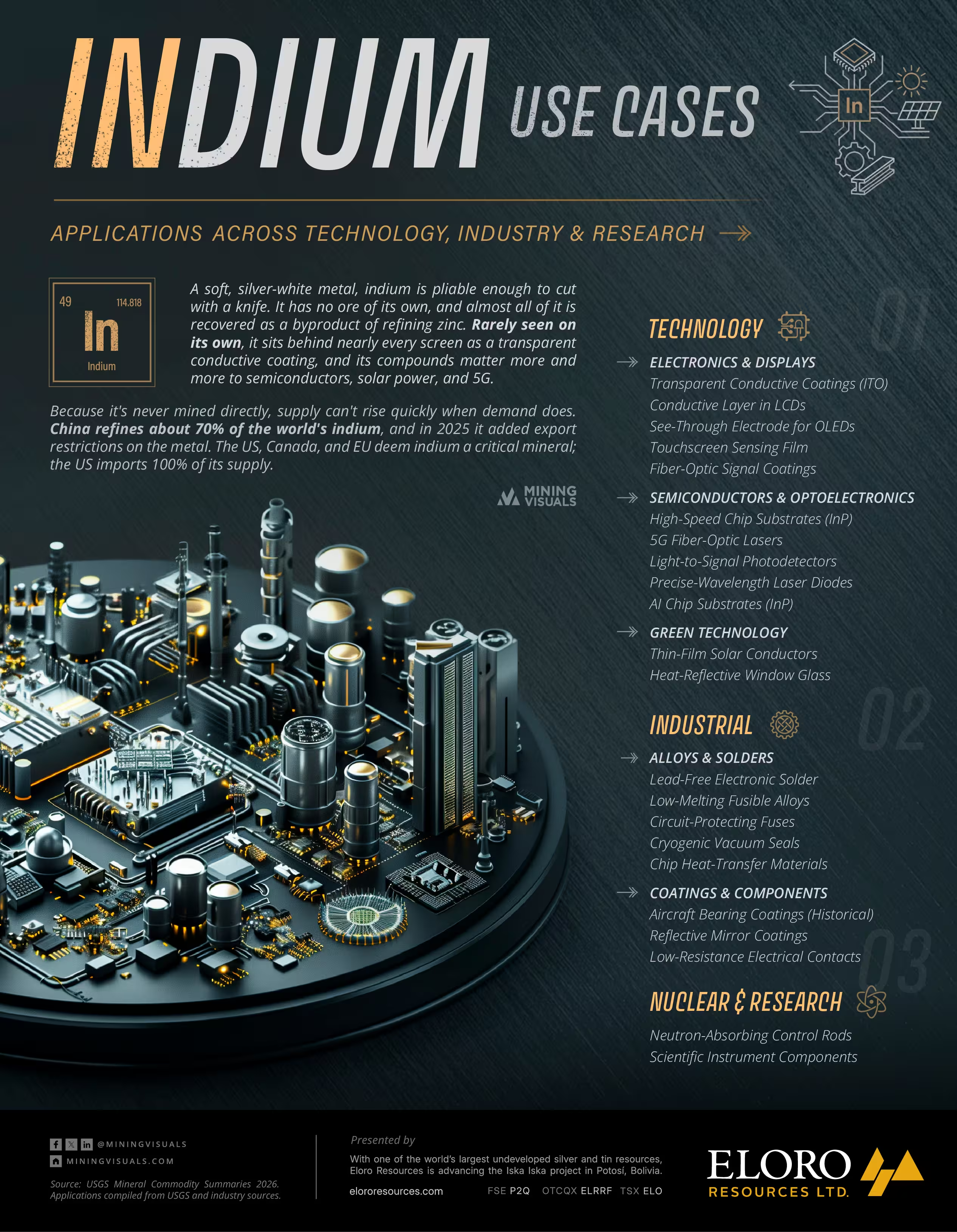
The infographic maps indium's breadth, but the demand is lopsided. Production of indium tin oxide, the transparent conductive coating used in LCD and other flat-panel displays, continues to account for most global consumption, per the USGS. Because that coating is transparent, indium is invisible in the devices that rely on it most. The remaining uses, spanning solders, semiconductors, electrical components, and research, are individually smaller. The USGS is candid about the limits of the data here, stating there were no readily available recycling or end-use figures for indium, a rare gap that makes precise application-by-application percentages unreliable. What is clear is the direction of travel: 5G networks and AI hardware are pulling a historically display-driven metal toward optoelectronics.
Of all indium's applications, one has moved from niche to strategic. Indium phosphide substrates underpin the high-speed lasers and photodetectors that route data through fiber inside AI data centers, and that use case is now the most stressed of the lot. In February 2025, China's Ministry of Commerce placed indium phosphide and two organometallics under export controls, leaving indium metal itself unrestricted but gating the compound that optics makers need. The price response was steep: 6-inch InP wafers have risen roughly 250% to about $5,000. Supply was concentrated even before the controls, with Japan's Sumitomo Electric and U.S.-based AXT together holding close to 80% of substrate capacity, and much of AXT's output based in China. That is why a licensing regime, not an outright ban, was enough to ripple through the optical-chip supply chain and put the issue on the agenda of a U.S. presidential visit to Beijing.
Read across the graphic's categories, a pattern emerges that no single use case shows on its own. Indium's oldest, largest market, transparent coatings for displays, is mature and stable, while its fastest-rising use, optoelectronic substrates, is the one most exposed to trade policy. A metal long defined by the screen is being redefined by the data center, and because indium cannot be mined to order, that shift in what it is used for lands directly on a supply that was never built to flex. For readers watching indium, the question is less how much exists and more which use case is pulling hardest, and who controls the material that feeds it.
Eloro Resources Ltd. is a mineral exploration company advancing a world-class silver and tin project in Bolivia’s historic Potosí Department. Its flagship asset, the Iska Iska Project, ranks among the top five undeveloped global resources in terms of scale for both tin and silver.
This significant grassroots discovery remains open in multiple directions, offering substantial potential for continued expansion and resource enhancement. Iska Iska benefits from strong infrastructure access and a deeply rooted presence in Bolivia, supported by an experienced management team and meaningful community engagement.
Eloro’s strategy is focused on resource growth, strategic partnerships, and establishing a leading position within the global mining sector.
Learn more about Eloro Resources at: http://elororesources.com/
MiningVisuals Disclaimer: This article is for informational purposes only and does not constitute financial or investment advice. Always conduct your own research.

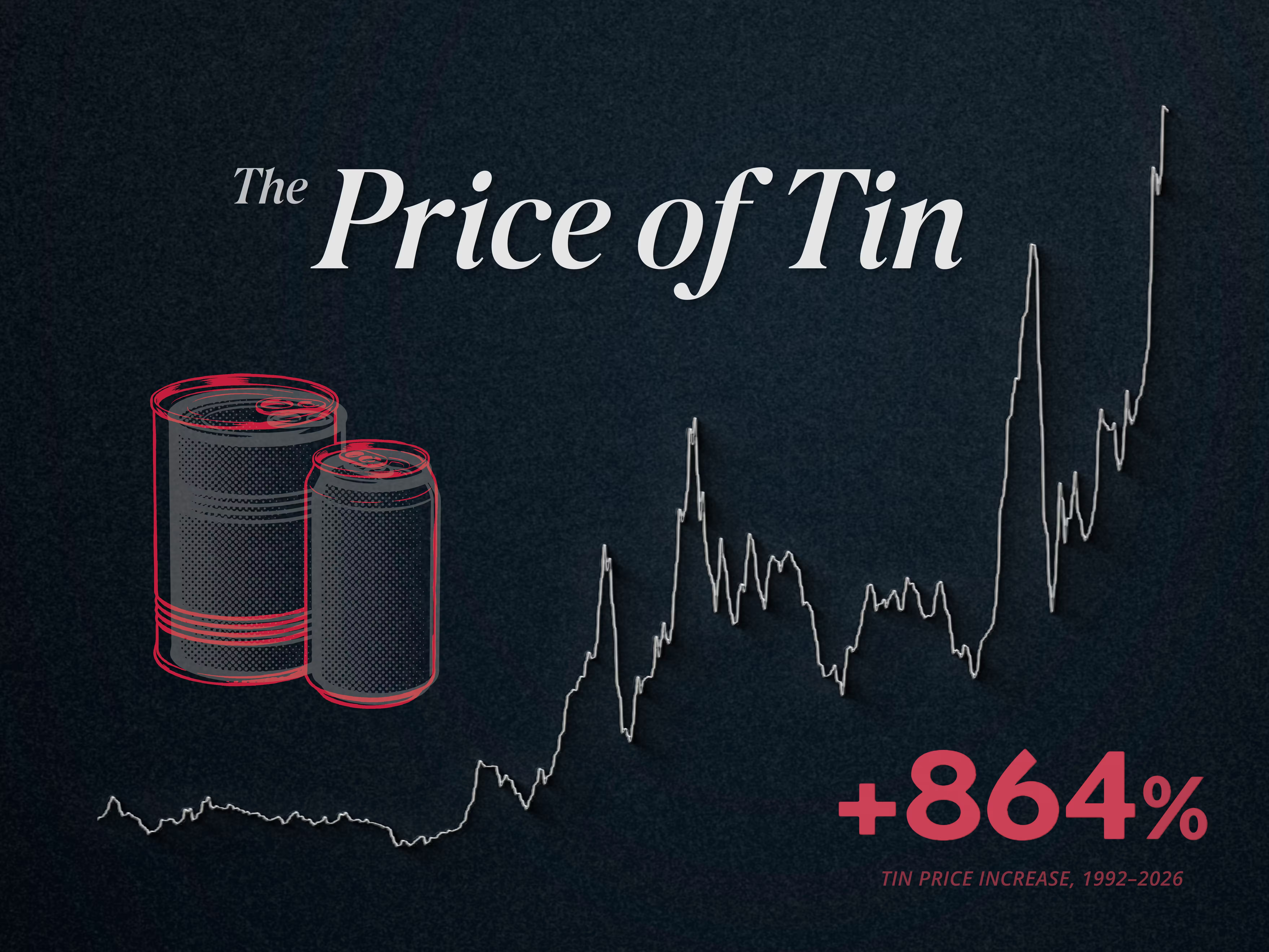
In January 2026, the London Metal Exchange three-month tin contract closed at US$53,462 a tonne, a nominal all-time high that surpassed the March 2022 peak, and it has traded near those levels since. The puzzle is that there is no shortage of tin today: exchange inventories actually rose as the price climbed, rather than being drawn down. Two very different things are holding the price up. The first is short-term: a wave of investor buying, which the industry says drove the January jump. The second is long-term: on current forecasts, the world will not mine enough tin to meet demand later this decade, a gap already projected before the rally began and expected to persist after it fades. The lasting story is that forecast shortfall, not the spike.
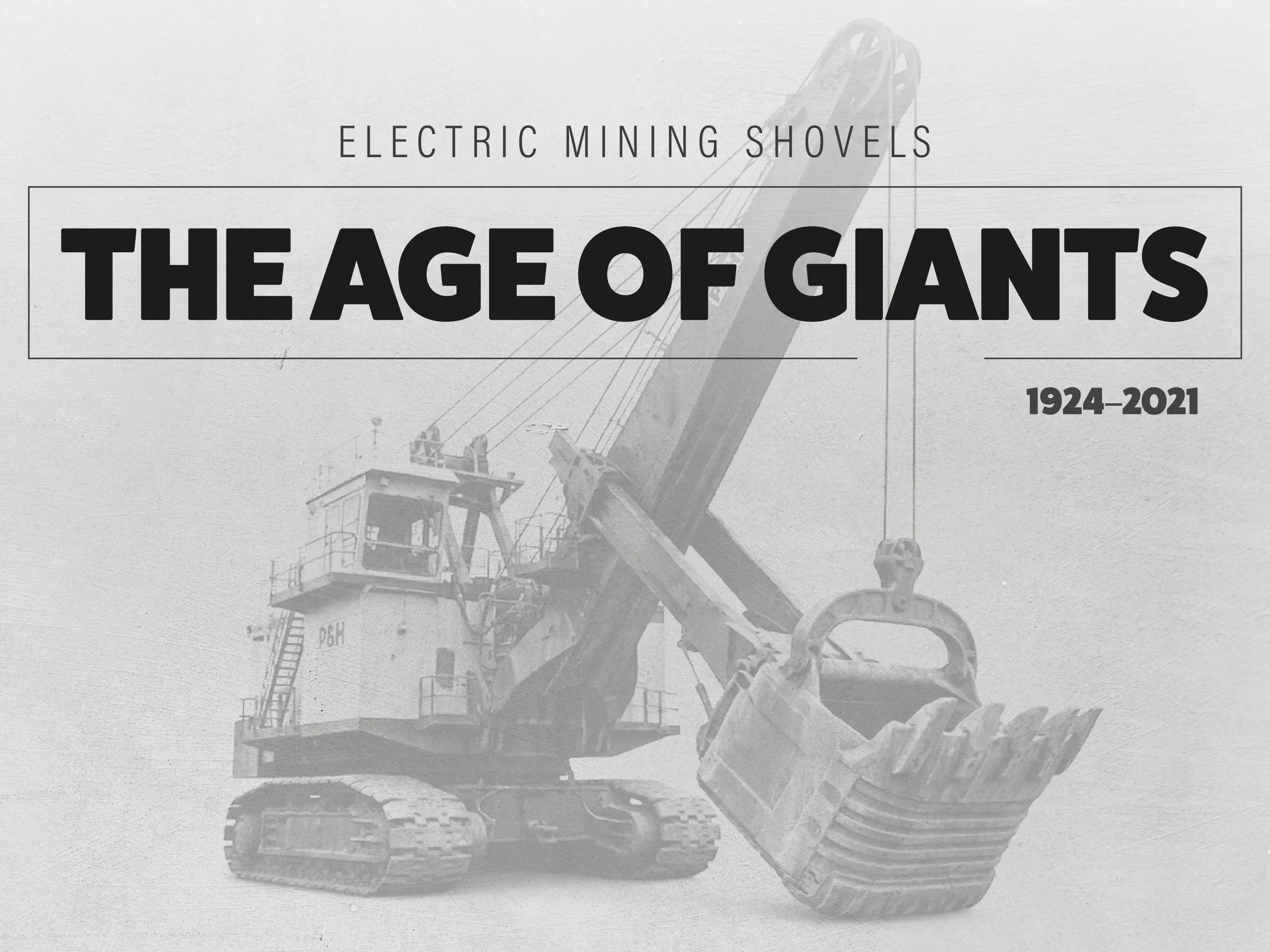
For four decades, the American coalfields hosted an engineering arms race measured in cubic metres of bucket. It ended not with a bigger machine, but with a deliberate retreat. The single largest mobile land machine ever built, the Marion 6360 "Captain," was commissioned in 1965 and destroyed by fire in 1991. No shovel has approached its scale since, and the machines that replaced it were smaller by design.
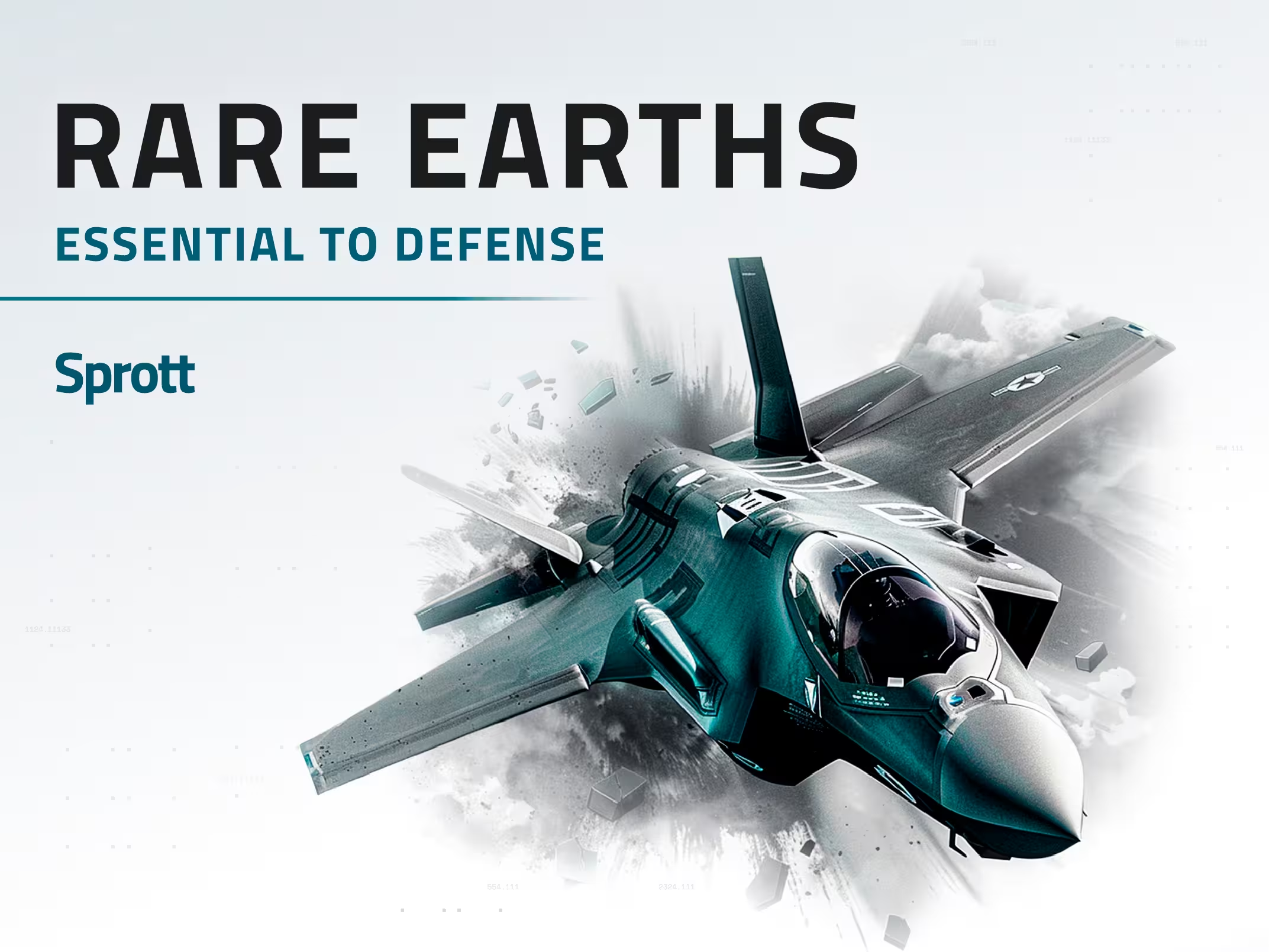
In September 2022, the Pentagon quietly stopped taking delivery of new F-35 fighter jets. The reason was not a design flaw or a manufacturing defect. A single small magnet inside the plane's engine had been made using an alloy from China, which is banned under U.S. defense procurement law.

One consumer-electronics company is now worth more than every publicly traded mining company on Earth combined. The graphic above captures the June 5 snapshot, when the 317 publicly traded miners tracked by CompaniesMarketCap were worth about $3.48 trillion