Commodities
Rare Earths and the F-35: The Defense Supply-Chain Bottleneck Behind America's Most Advanced Fighter Jet
THE PENTAGON'S $110 PER KG PRICE FLOOR NOW BACKSTOPS THE MATERIALS INSIDE THE F-35
The following content is sponsored by Sprott

In September 2022, the Pentagon quietly stopped taking delivery of new F-35 fighter jets. The reason was not a design flaw or a manufacturing defect. A single small magnet inside the plane's engine had been made using an alloy from China, which is banned under U.S. defense procurement law. Deliveries were halted until a national-security waiver was signed allowing the jets to be accepted anyway. It was a small incident with a big message: America's most advanced fighter runs on materials it does not fully control. Three years later, in July 2025, the Pentagon signed its largest-ever deal to fix that.
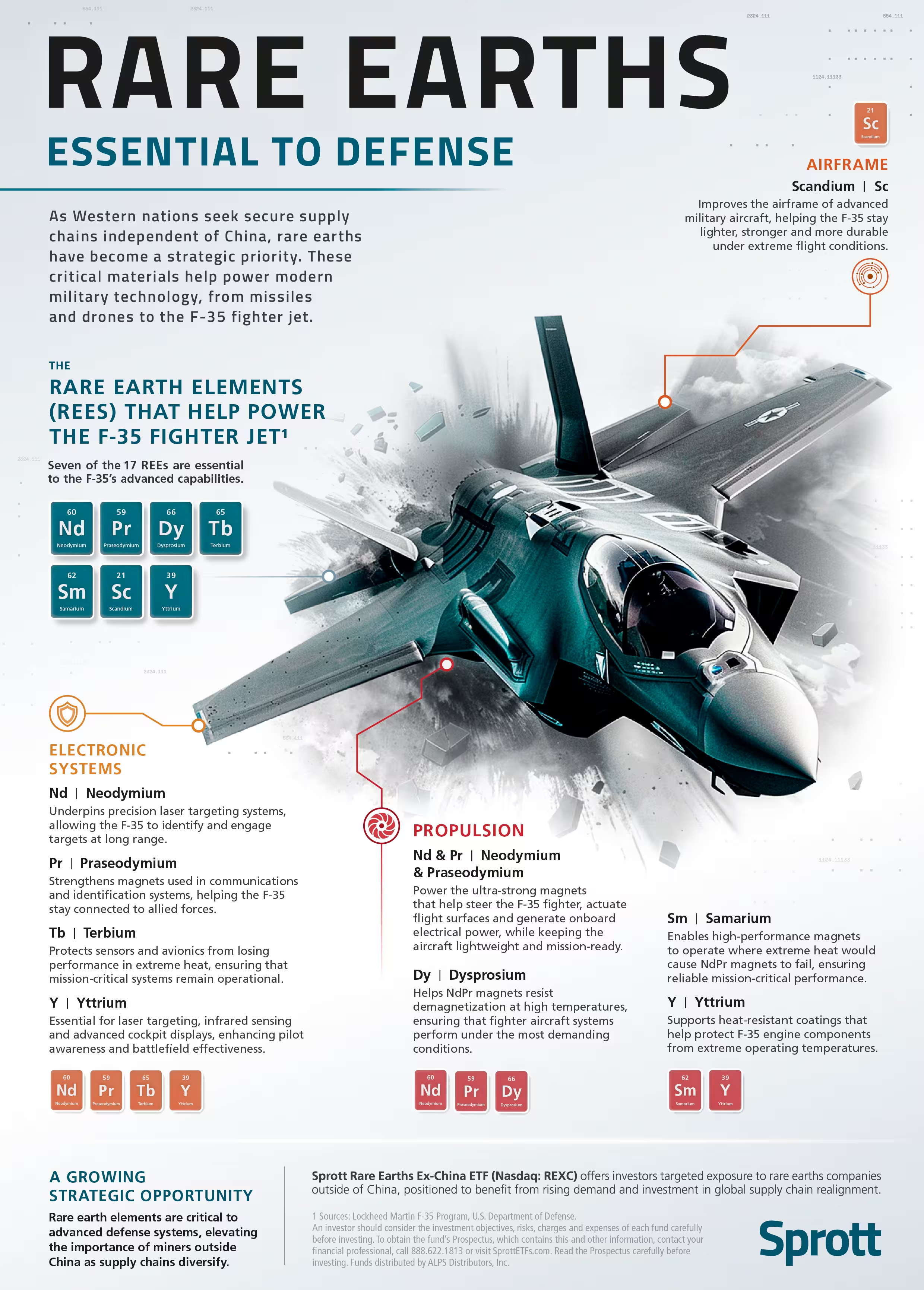
Rare earths are a group of 17 metals with unusual magnetic, heat-resistant and optical properties. According to a detailed engineering audit by Adamas Intelligence, an F-35's rare earth content spans four main areas of use. Neodymium and praseodymium power the ultra-strong magnets used across the aircraft, from flight-control actuators to elements of the radar and targeting systems. Neodymium in particular underpins precision laser-targeting components, while praseodymium is used in communications and identification systems. Samarium, bonded with cobalt, makes the SmCo magnets used in the Honeywell integrated power package, where temperatures would demagnetize an ordinary NdFeB magnet. Dysprosium and terbium are doped into NdFeB alloys in small amounts to raise their heat resistance. Yttrium coats the F135 engine's turbine blades in a thin ceramic layer (yttria-stabilized zirconia) that protects the metal from extreme temperatures. Scandium is used to strengthen the aluminum alloys in advanced military aircraft, allowing airframes to be both light and durable under extreme flight conditions.
Six of those seven elements were placed on China's export restriction list on April 4, 2025.
Rare earths are not actually rare. They are found in many countries, including the United States. The difficulty is not digging them out of the ground, but separating and refining them into usable form. That refining stage is where China's grip is strongest. According to the International Energy Agency, China refined 91% of the world's magnet rare earths in 2024, and made 94% of finished rare earth magnets, meaning nearly all the world's supply passes through one country before it becomes anything useful.
The Pentagon is not a small customer. Sprott's April 2026 rare earths report, citing U.S. Commerce Department figures, notes that the Defense Department requires 3,000 to 4,000 tons of specialized magnets each year, and projects that number could reach 10,000 tons by 2030.
Estimates of exactly how much rare earth material goes into each F-35 vary. The most widely cited figure, drawn from a 2012 Pentagon study, is around 920 pounds per aircraft. More recent analyses have suggested lower numbers, reflecting an ongoing debate about how it is counted. What isn't debated is that hundreds of pounds of specialized rare-earth material go into every airframe, and that the heat-resistant magnets they contain are among the hardest materials in the world to source outside China.
The 2022 F-35 incident showed how far down the supply chain the risk actually reaches. The Chinese-made alloy was not sourced by Lockheed Martin, or by the engine builder Honeywell, or even by Honeywell's supplier. It came from a supplier's supplier's supplier, several layers deep. The Pentagon signed a waiver to accept the finished jets anyway, but the message was clear: nobody in the chain fully knew where their materials came from.
On April 4, 2025, China's Ministry of Commerce added seven rare earths to its export control list, including several that are essential to the F-35's engine and radar magnets. The restrictions are not an outright ban, but they require special licenses to export, and in practice shipments slowed sharply while the licensing system was being set up. The rules also apply outside China: any product made anywhere in the world that contains more than 0.1% of the restricted Chinese-origin materials now needs a Chinese license to be exported.
The Pentagon's July response was structural. Alongside a $400 million equity investment in MP Materials, it guaranteed that the company will be paid at least $110 per kilogram for its key magnet ingredient (neodymium-praseodymium, or NdPr) for the next ten years. If the market price falls below that, the Pentagon pays MP the difference. If it rises above, the Pentagon shares in the upside. It also committed to buy 100% of the magnets made at MP's planned new factory in Fort Worth, Texas. That plant, per the Center on Global Energy Policy at Columbia, will add roughly 10,000 tonnes of magnet-making capacity when it opens in 2028, roughly the same as the Pentagon's projected annual need.
On November 7, 2025, the U.S. Interior Department published its updated Critical Minerals List. For the first time, each of the 17 rare earths is listed individually rather than as a group, meaning each can now qualify separately for federal support. The same release noted that in 2024, the United States imported 80% of the rare earths it used.
MP's new Texas factory is scheduled to open in 2028, at which point the Pentagon's price guarantee starts costing (or paying) real money. And U.S. defense contractors face a legal deadline of 2027 to remove Chinese-sourced rare earths from major weapon systems. Whether new production in the U.S., Australia and Malaysia can close that gap in time is a question the price floor cannot answer on its own. But for the first time in a generation, the Pentagon has put its balance sheet behind trying.

Sprott is a global asset manager focused on precious metals and critical materials investments. We are specialists. We believe our in-depth knowledge, experience and relationships separate us from the generalists. Our investment strategies include Exchange Listed Products, Managed Equities and Private Strategies. Sprott has offices in Toronto, New York, Connecticut and California and the Company’s common shares are listed on the New York Stock Exchange and the Toronto Stock Exchange under the symbol (SII).
For more information, please visit www.sprott.com.
Sources: International Energy Agency, U.S. Geological Survey, Federal Register, U.S. Department of the Interior, MP Materials, Center for Strategic and International Studies, Columbia Center on Global Energy Policy, Adamas Intelligence, Sprott Asset Management, Air & Space Forces Magazine, Defense News, Reuters, China Briefing.
Important Disclosures
Relative to other sectors, precious metals and natural resources investments have higher headline risk and are more sensitive to changes in economic data, political or regulatory events, and underlying commodity price fluctuations. Risks related to extraction, storage and liquidity should also be considered.
Past performance is no guarantee of future results. You cannot invest directly in an index. Investments, commentary, and opinions are unique and may not be reflective of any other Sprott entity or affiliate. Forward-looking language should not be construed as predictive. While third-party sources are believed to be reliable, Sprott makes no guarantee as to their accuracy or timeliness. This information does not constitute an offer or solicitation and may not be relied upon or considered to be the rendering of tax, legal, accounting or professional advice. © 2025 Sprott Inc. All rights reserved

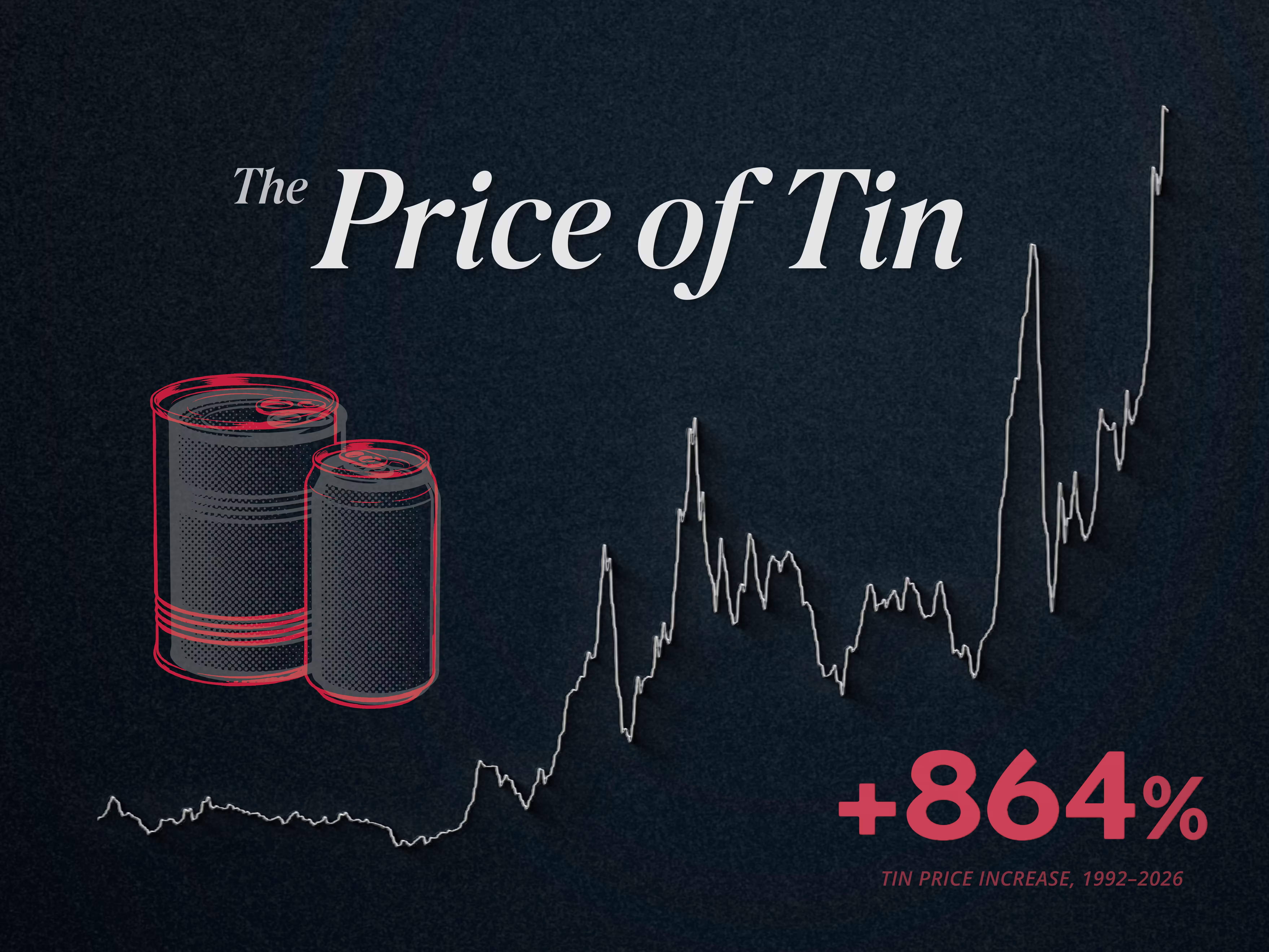
In January 2026, the London Metal Exchange three-month tin contract closed at US$53,462 a tonne, a nominal all-time high that surpassed the March 2022 peak, and it has traded near those levels since. The puzzle is that there is no shortage of tin today: exchange inventories actually rose as the price climbed, rather than being drawn down. Two very different things are holding the price up. The first is short-term: a wave of investor buying, which the industry says drove the January jump. The second is long-term: on current forecasts, the world will not mine enough tin to meet demand later this decade, a gap already projected before the rally began and expected to persist after it fades. The lasting story is that forecast shortfall, not the spike.
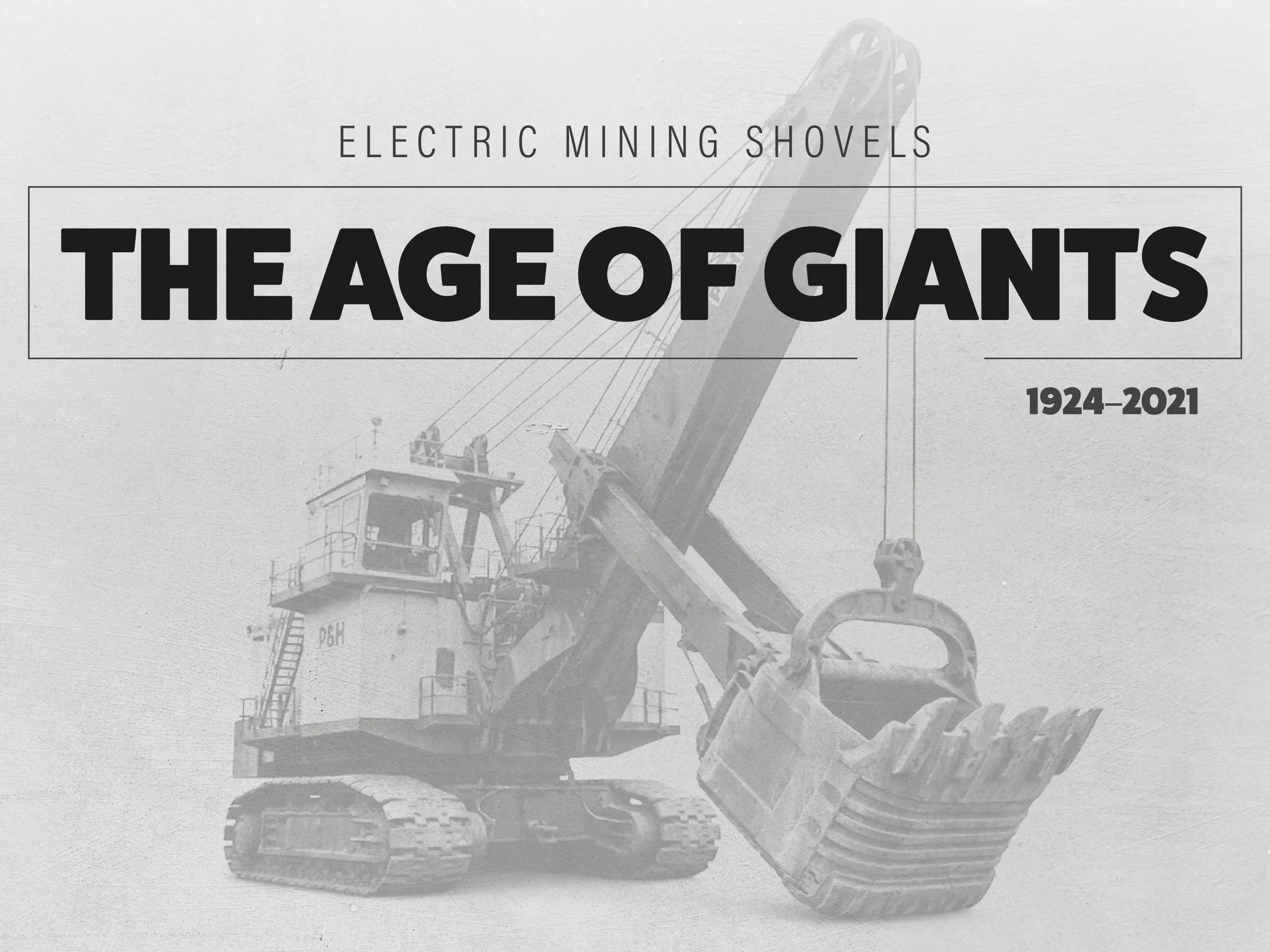
For four decades, the American coalfields hosted an engineering arms race measured in cubic metres of bucket. It ended not with a bigger machine, but with a deliberate retreat. The single largest mobile land machine ever built, the Marion 6360 "Captain," was commissioned in 1965 and destroyed by fire in 1991. No shovel has approached its scale since, and the machines that replaced it were smaller by design.
Indium is one of the metals you never see but use constantly. As indium tin oxide, it forms the transparent conductive coating on nearly every LCD and touchscreen, and that single application still accounts for most global consumption, according to the USGS. But the metal's role is broadening. Its compounds now sit inside the high-speed optical chips that route data through AI data centers, a shift that has turned a quiet, display-driven material into one buyers watch closely, especially as China refines about 70% of it and has begun tightening the flow.

One consumer-electronics company is now worth more than every publicly traded mining company on Earth combined. The graphic above captures the June 5 snapshot, when the 317 publicly traded miners tracked by CompaniesMarketCap were worth about $3.48 trillion