Critical Minerals
Rare Earths and the Humanoid Robot
THE SUPPLY-CHAIN BOTTLENECK BEHIND AUTOMATION’S NEXT WAVE
The following content is sponsored by Sprott

A Problem Elon Musk Called Out: On Tesla’s Q1 2025 earnings call, Elon Musk confirmed that China’s rare earth export controls had disrupted Optimus production because the robot’s actuators rely on permanent magnets.
Multiples More Magnet Than an EV: A single humanoid uses dozens of small, high-performance motors, so each robot requires several times more rare earth magnet material than a typical electric vehicle, per Sprott Asset Management.
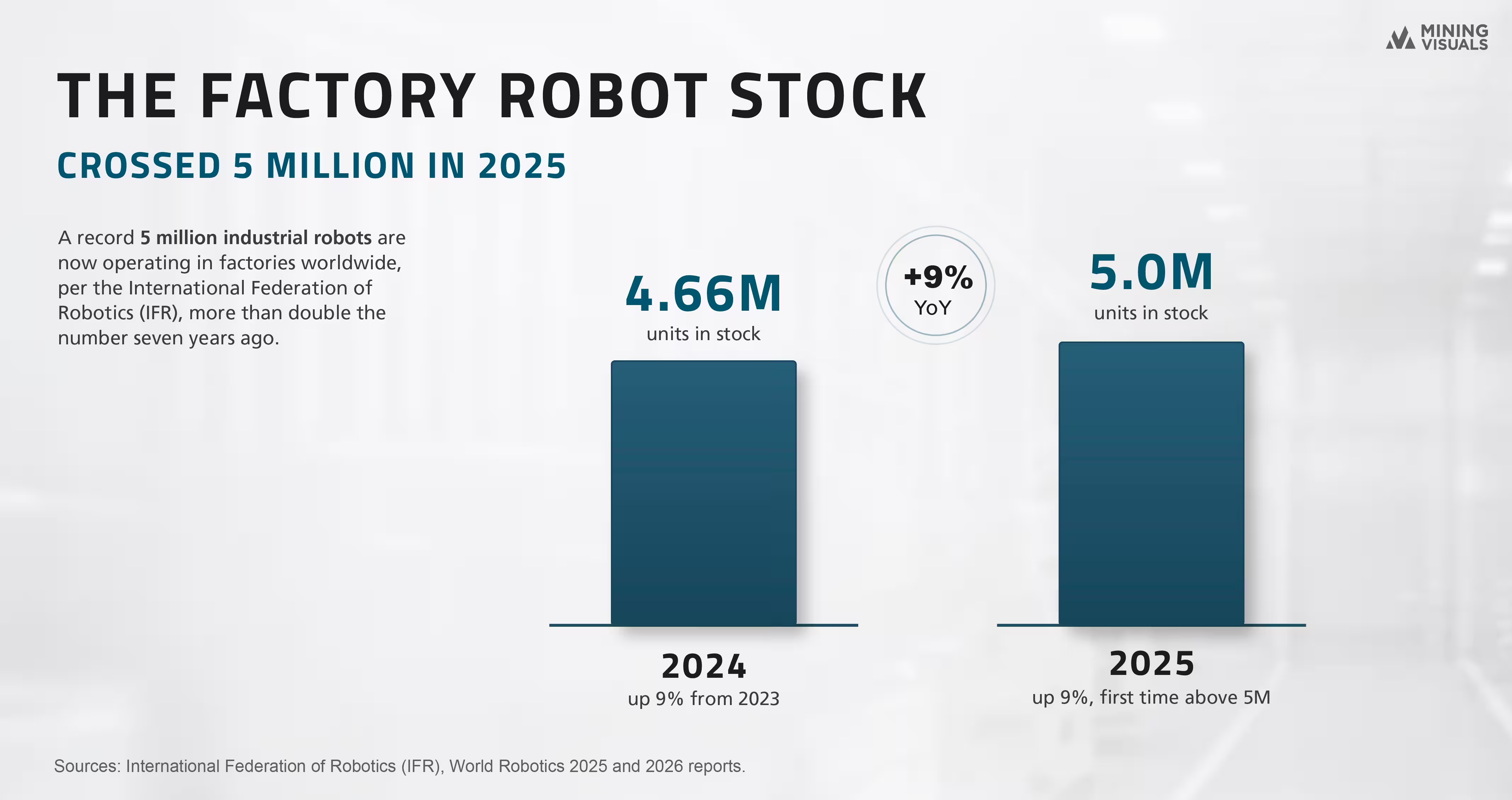
Factory Robot Stock Just Crossed 5 Million: Industrial robots in operation worldwide passed 5 million units for the first time in 2025, per the IFR, “more than double” the number seven years ago.
In April 2025, on Tesla’s Q1 earnings call, Elon Musk told investors that Optimus, the company’s humanoid robot, had been held up by a problem few outside the rare earth industry had been watching. “Optimus was affected,” he said, “by the magnet issue from China because the Optimus actuators in the arm do use permanent magnets” (Adamas Intelligence).
Days earlier, Beijing had placed seven heavy and medium rare earths on its export control list. The admission mattered beyond Tesla. It was the first time a Western humanoid robot programme had publicly conceded that a single Chinese policy move could reach inside its production line, and the problem it exposed will outlast any one shipment.
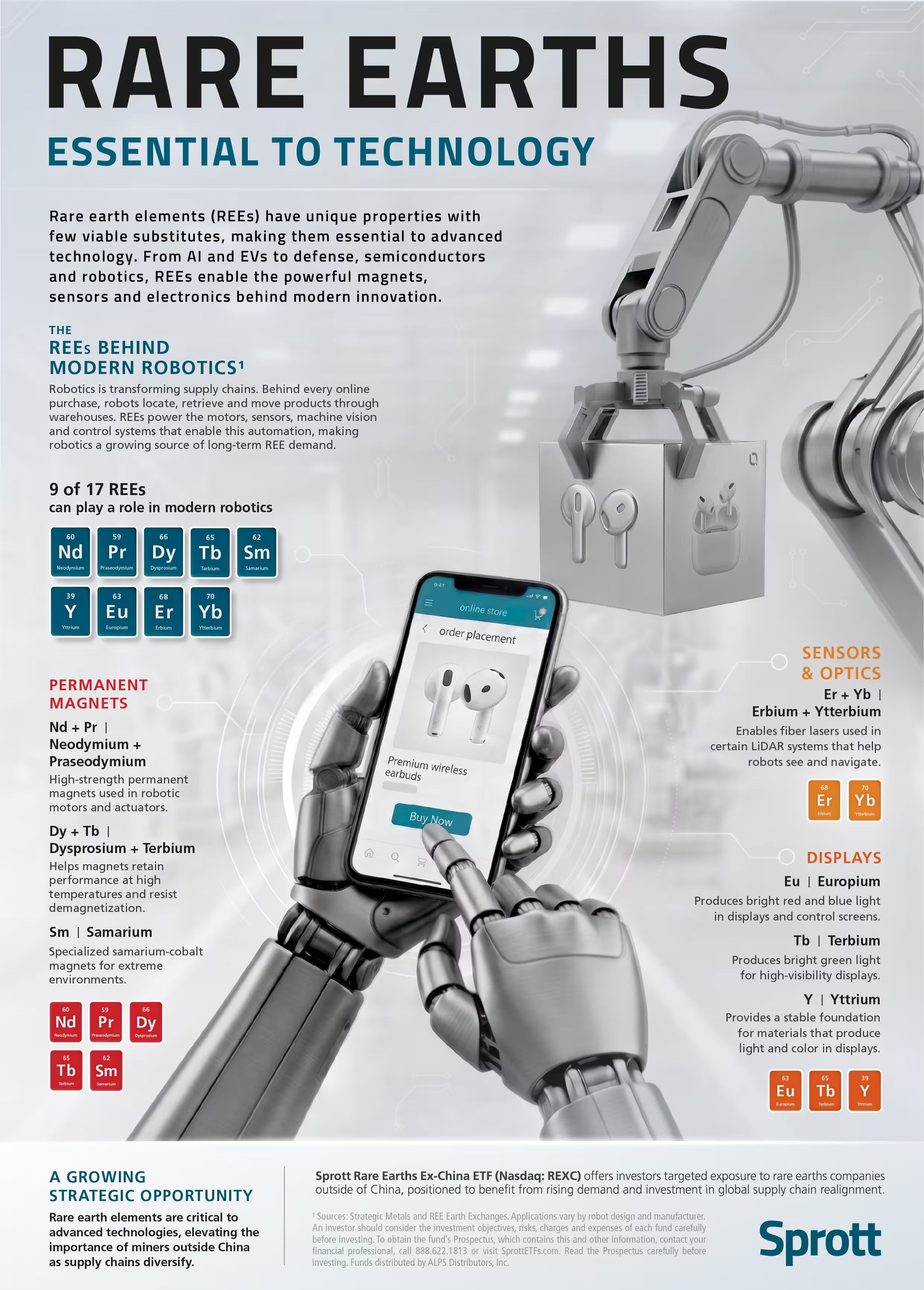
Rare earths show up in a modern robot in three places. The powerful compact permanent magnets inside every motor and actuator are made from neodymium-iron-boron (NdFeB), often with praseodymium alongside. Where motors run hot, dysprosium and terbium are added in small amounts so the magnet keeps its strength, and samarium bonded with cobalt (SmCo) is used where temperatures would defeat NdFeB.
Beyond motors, erbium and ytterbium support fibre-optic signalling in advanced sensors, and europium, terbium and yttrium produce the colours on the displays operators use to monitor the machines. Permanent magnets alone account for more than 80% of global rare earth demand by value, per McKinsey data cited by S&P Global, because the compact high-torque motors that depend on them are now the default across robotics, electric vehicles and defence hardware.
A standard EV traction motor uses one or two large magnets. A humanoid uses dozens of smaller, high-performance ones. Modern designs typically have 40 or more degrees of freedom, each driven by its own motor, per Adamas Intelligence cited in Sprott’s October 2026 report. That is why a single humanoid can contain multiples more magnet material than a passenger EV.
The intensity is landing on top of a sector that is already scaling. The International Federation of Robotics reported in September that industrial-robot installations crossed 600,000 units for the first time in 2025 (+11%), bringing the global operational stock past 5 million units, a stock that IFR President Jane Heffner noted is “more than double the number seven years ago.” Separately, Goldman Sachs expects the humanoid-robot market alone to grow from about $3 billion today to $38 billion by 2035.
Commercial humanoid deployments are now live, not experimental. Agility Robotics’ Digit has handled more than 100,000 totes in commercial operation at GXO’s Flowery Branch, Georgia warehouse, where it fulfils orders for Spanx. Figure AI’s 11-month pilot at BMW’s Spartanburg plant, which contributed to the assembly of more than 30,000 vehicles, has moved into a commercial agreement for staged deployment at the same facility. Apptronik’s Apollo is already working at Mercedes-Benz, backed by a $350 million Series A raised in February 2025 with Google among its investors.
The scale shows up most clearly in two places. Hyundai plans to deploy more than 25,000 Boston Dynamics Atlas humanoids at its Georgia Metaplant from 2028, per Yonhap News Agency reporting on investor briefings. And in China, Chinese manufacturers accounted for more than 97% of global humanoid shipments in the first half of 2026, roughly 19,100 units in six months, led by AgiBot (around 8,400) and Unitree (around 5,900). The magnets powering those robots still come, overwhelmingly, from one country.
Washington is backing an ex-China magnet build-out at a sustained pace. Per Sprott citing Fastmarkets, close to $2.9 billion in direct federal funding went to rare earth and magnet supply chains outside China in June 2026 alone.
Two commercial magnet plants matter specifically for robotics. USA Rare Earth commissioned its first sintered NdFeB production line at Stillwater, Oklahoma in March 2026, with first customer orders in Q2 2026 and 600 tonnes per year of run-rate capacity targeted by year-end; its stated end markets include defence, physical AI and robotics. And Noveon Magnetics, which describes itself as the only operational sintered-NdFeB producer in the United States, closed a $215 million Series C in January 2026 to expand capacity beyond 2,000 tonnes per year at its San Marcos, Texas plant, alongside a multi-year supply agreement with General Motors.
The real test is deployment, not policy. Figure AI’s BMW Spartanburg commercial agreement runs on, Tesla’s Optimus is targeting pilot production in 2026, and Agility Robotics is scaling its Oregon factory. Each new humanoid deployment moves the sector a step further from demonstration into recurring magnet demand.
The next IFR World Robotics report, due in September 2027, will show whether the +11% installation growth of 2025 held. Between now and then, the question for rare earths is whether robotics stays an incremental use case, or whether it becomes, as Adamas forecasts, the single largest driver of NdFeB demand by 2040.

Sprott is a global asset manager focused on precious metals and critical materials investments. We are specialists. We believe our in-depth knowledge, experience and relationships separate us from the generalists. Our investment strategies include Exchange Listed Products, Managed Equities and Private Strategies. Sprott has offices in Toronto, New York, Connecticut and California and the Company’s common shares are listed on the New York Stock Exchange and the Toronto Stock Exchange under the symbol (SII).
For more information, please visit www.sprott.com.
MiningVisuals Disclaimer: This article is for informational purposes only and does not constitute financial or investment advice. Always conduct your own research.
Sources: International Energy Agency; International Federation of Robotics; Adamas Intelligence; Center for Strategic and International Studies; S&P Global; Sprott Asset Management; MP Materials; Reuters (via The Vibes); Goldman Sachs; McKinsey (via S&P Global); Fastmarkets (via Sprott).

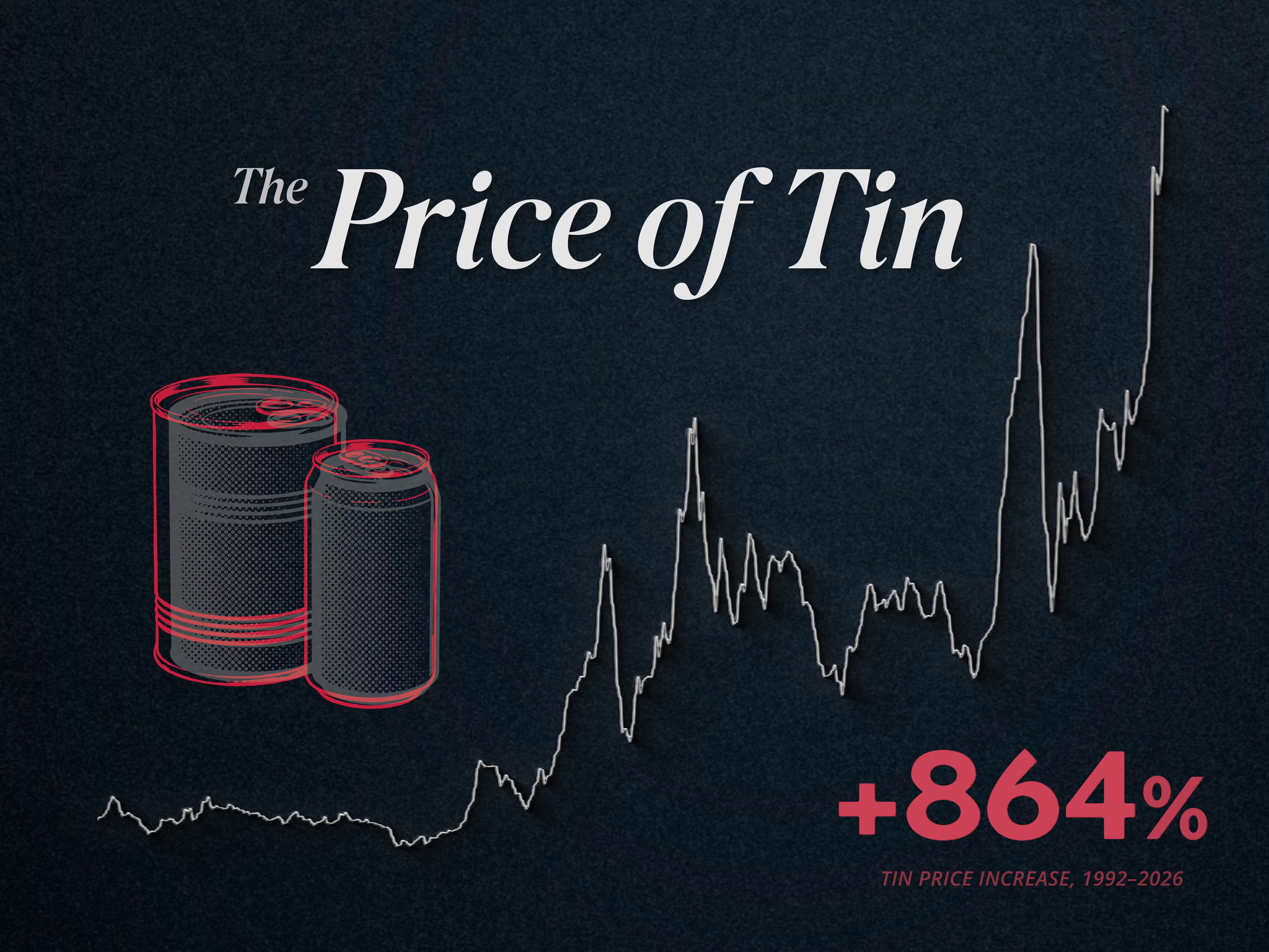
In January 2026, the London Metal Exchange three-month tin contract closed at US$53,462 a tonne, a nominal all-time high that surpassed the March 2022 peak, and it has traded near those levels since. The puzzle is that there is no shortage of tin today: exchange inventories actually rose as the price climbed, rather than being drawn down. Two very different things are holding the price up. The first is short-term: a wave of investor buying, which the industry says drove the January jump. The second is long-term: on current forecasts, the world will not mine enough tin to meet demand later this decade, a gap already projected before the rally began and expected to persist after it fades. The lasting story is that forecast shortfall, not the spike.
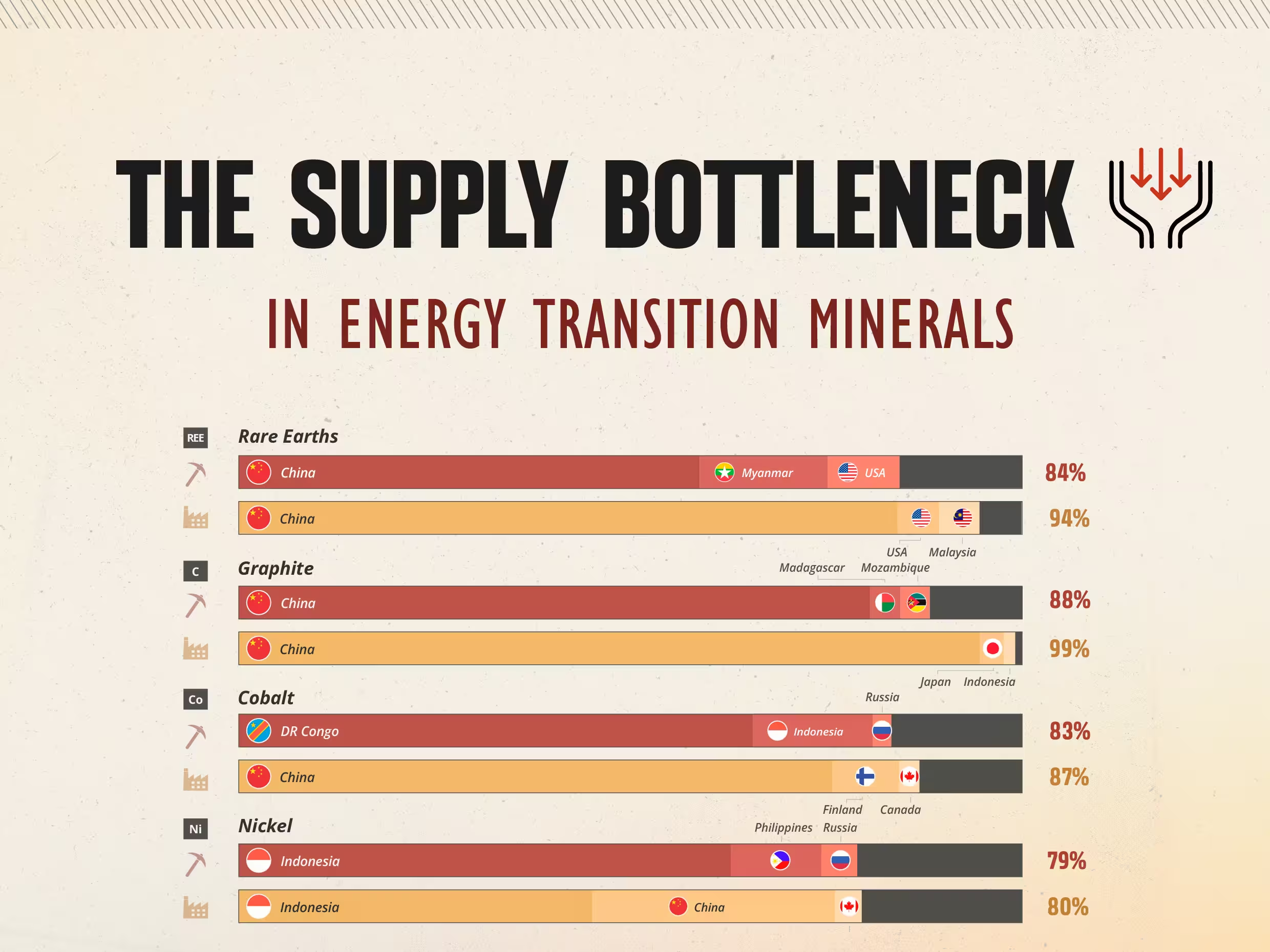
When China restricted exports of seven heavy rare earth elements and their magnets on 4 April 2025, factories felt it within weeks. Carmakers in the United States, Europe and Japan reported disruptions serious enough to cut output or halt production lines, and Washington negotiated a 90-day truce to restart the flow.
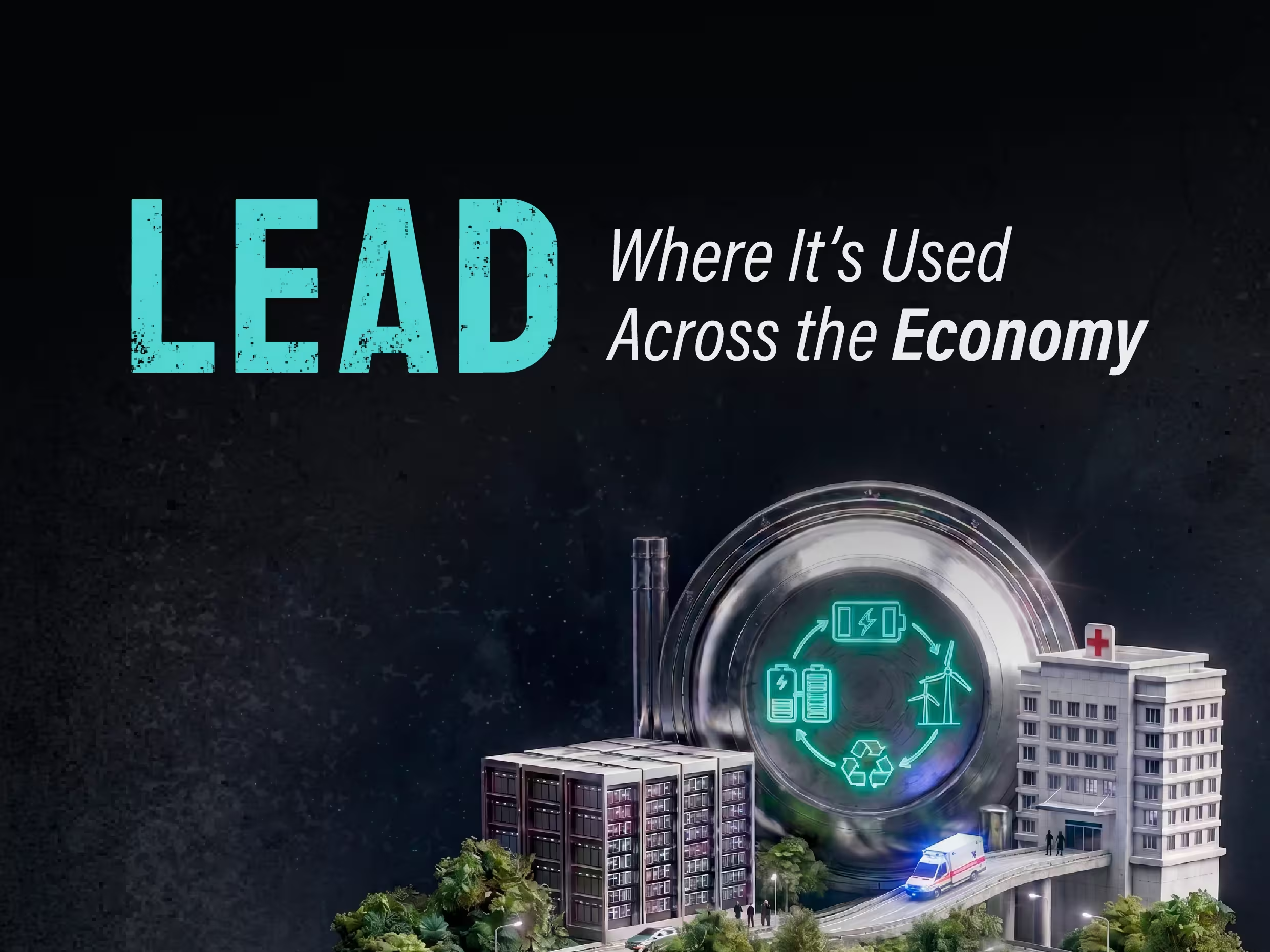
You are probably within a few feet of some lead right now. It sits in the starter battery of nearly every car, electric models included, in the backup power rooms of hospitals and data centres, and behind the walls of every X-ray suite. It is also the most recycled product in the United States, recovered mostly from spent batteries. So it came as a surprise to many when Washington added lead to its Final 2025 List of Critical Minerals in November, a label usually reserved for metals in short supply. Lead is not in short supply
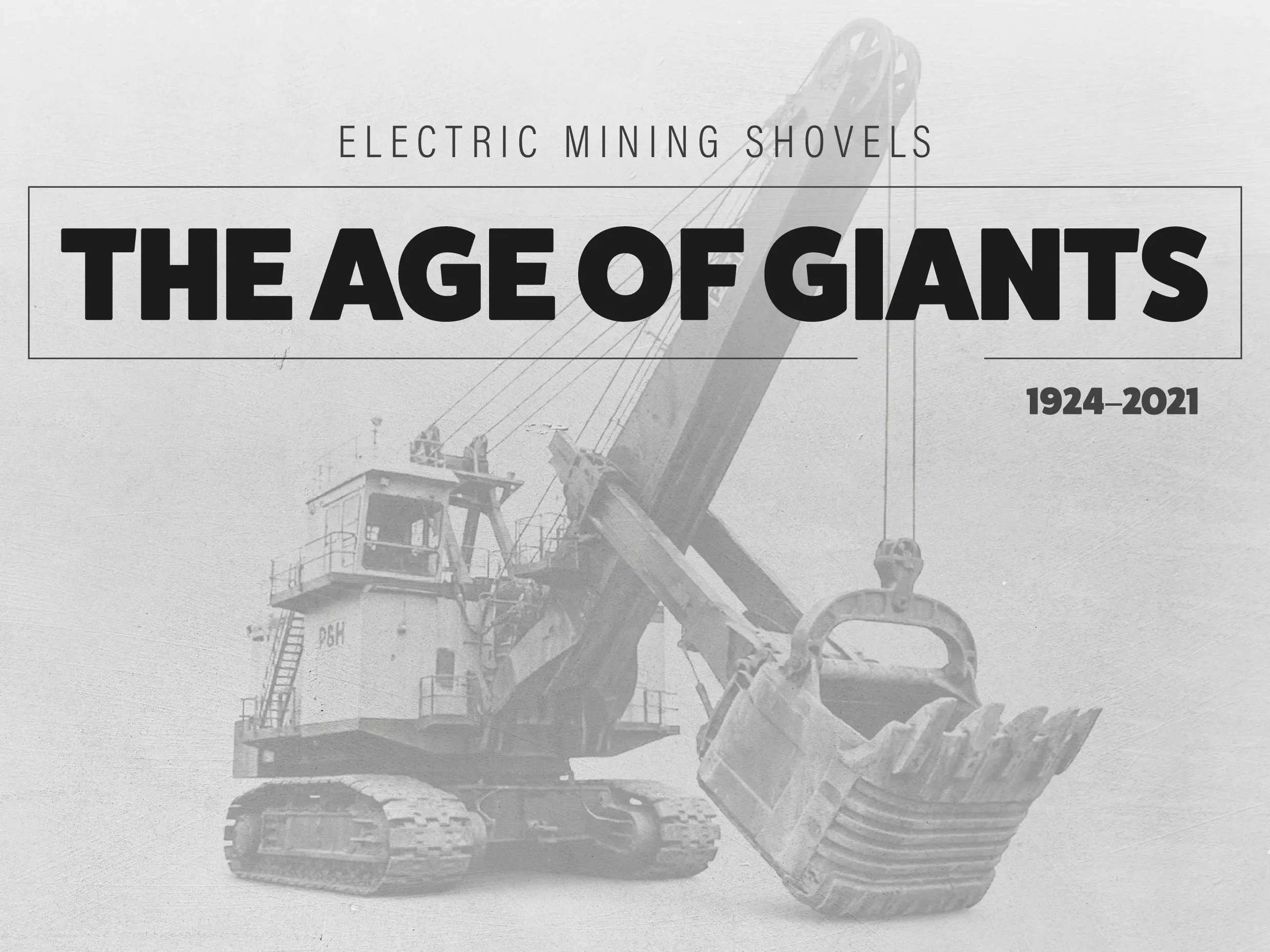
For four decades, the American coalfields hosted an engineering arms race measured in cubic metres of bucket. It ended not with a bigger machine, but with a deliberate retreat. The single largest mobile land machine ever built, the Marion 6360 "Captain," was commissioned in 1965 and destroyed by fire in 1991. No shovel has approached its scale since, and the machines that replaced it were smaller by design.