Interviews
May 19, 2026
2 min
Interviews
The following content is sponsored by Eloro Resources


INTRODUCTION
Eloro Resources (TSX: ELO), a company focused on the exploration and development of mineral properties, continues to advance its flagship asset in South America. Since our last discussion in September 2025, Eloro has further delineated its Iska Iska property in the Bolivian tin belt. The company recently released an updated Mineral Resource Estimate, expanding the project's scale to over 1 billion tonnes of combined Indicated and Inferred polymetallic mineralization, while also noting increased silver grades and improved tin recoveries.
In addition to the updated resource model, which now outlines an open-pit extraction scenario, the company recently secured C$17 million in financing and gained membership in the U.S. Defense Industrial Base Consortium. We caught up with Eloro Resources' VP of Corporate Development, Chris Holden, to review these latest milestones, discuss the updated scale of the Iska Iska deposit, and outline the next technical steps for the project.
1. THE UPDATED MINERAL RESOURCE ESTIMATE (MRE)
In April 2026, Eloro released an updated Mineral Resource Estimate for Iska Iska, reporting an initial 85.17 million tonnes in the Indicated category alongside 945.43 million tonnes Inferred. Can you walk us through the highlights of this new estimate, and how this overall update compares to the initial 2023 estimate?
"Our initial resource for Iska Iska was completed back in October of 2023, so we were definitely due for an update as approximately 20,000 additional meters have been completed post that report. In hindsight, this initial report was released too early. Spacing between locations was on average 100 metres apart and in many cases beyond. Far too widely spaced to get a true view of the deposit. Size was not an issue, we all knew this was a monster of a deposit. When it came to modeling the initial resource, it proved to be far more complex (multiple zones: epithermal, polymetallic, and tin dominant domains) and trying to group it all together unduly punished the overall grade. This latest update is really a stepping stone on which we can drive forward with substantial improvements in grade and tonnage. The mantra of our team: Enhance and Upgrade.
This latest release goes a long way to help alleviate some of the issues faced by the first resource. The initial indicated resource of 85 mm tonnes is the base from which we fully expect to grow to 150-200mm tonnes through a very systematic approach. With nearly 120,000 m drilled we have developed an extremely detailed exploration model in place that did not exist when we first started. Experience with a deposit like this is crucial to understand the faulting, the zonation, and all the structures within Iska Iska. What we feel is repeatable is the enhancement of grade of the inferred to a very comparable level as we have achieved with the indicated resource in this report. This of course does not even include the tin area of the deposit that really needs to be drilled. Unfortunately, it falls victim to some really compelling opportunities in the polymetallic portion of the deposit.
Lots of work to do. Lots of locations to explore. It's a great deposit."
.avif)
2. GRADE ADJUSTMENTS & METALLURGICAL TESTING
The recent MRE report notes an increase in near-surface silver grades to 40 g/t Ag in the Indicated category, as well as an improvement in overall tin recovery from 50.7% to 58.9%. Could you explain what contributed to these changes in grade and recovery rates, and what it means for the project?
"The grade improvement in silver, a substantial 65% increase from the previously reported MRE, was driven entirely by our very successful recent drilling program. There were several portions within that resource that were under drilled and needed to be explored. To the modeling software these undrilled areas, a majority of which were located between two successful locations, was considered barren, which our geological team knew was not the case.
In terms of recoveries, the just over 8% increase for tin will have a significant impact on returns. We have done an extensive amount of metallurgical testing related to the tin since the first resource so it’s nice to see that bearing fruit. In general, for Bolivian tin deposits, the best recoveries tend to top out at 60%, so for us to get to 58.9% is a success. As mentioned above, the doubling of the tin resource itself is very significant, with grade at 0.2%. We know that we can improve on both grade and tonnage and that is the goal. The challenge/opportunity is that its sits atop/slightly askew very prolific polymetallic zone."
.avif)
3. OPEN-PIT MODELING AND THE 1:1 STRIPPING RATIO
The updated resource is currently modeled around an optimized open pit measuring approximately 1.4 kilometers in diameter and 750 meters in depth. The model also notes an estimated 1:1 stripping ratio. Can you explain how this stripping ratio impacts the potential economics of the project, and how it compares to standard expectations for an open-pit polymetallic deposit of this scale as you prepare the Preliminary Economic Assessment (PEA)?
"In terms of the ratio, a 1:1 ratio is fantastic for the entire deposit, but the opportunity in the early days is get that number as low as possible. We are just going through the mine plan as we speak for the upcoming PEA, so we will get a much better appreciation of the sequencing here shortly. When we first started drilling on the property, our initial thoughts were of a 50-75m overburden, which would likely be capitalized, and allocated across the production period of 12-15 years. Now we know that in the heart of the high-grade portion of the deposit (the starter pit), it is as close as 10 m for the sulphide and in the case of the oxides just over 5m. So two things arise from this: A) the pre-strip at the beginning becomes irrelevant and that a 1-2 year lead time to pre-strip prior to processing ore is not required and the capital required for this goes away - a huge win for the economics B) if the metallurgical testing results for the oxides is successful, which are ongoing as we speak, it offers up several alternatives for generating cashflows prior to the construction of the sulphide processing plant.
Regardless of whether this is a polymetallic mine or a copper porphyry, etc, a 1:1 strip ratio is a fantastically low ratio and stands out in a mining world plagued by older mines approaching 4 or 5 to 1."

4. INCORPORATING RECENT DRILL DATA
Leading up to the MRE update, the latest definition drilling program yielded specific high-grade intercepts, such as 72 metres grading 294.81 g/t silver in Hole DSB-93. How did these later-stage infill and step-out results influence the current geological model, and what areas of the deposit require further drilling to define their boundaries?
"It seems like a good time to remind everyone that this was a never been drilled property in 2021 and now as we approach 120,000m the concession is only roughly 40% explored. The opportunity to expand the high-grade portion of the deposit or to in fact locate other high-grade portions within the concession is very much available to us to pursue. Our goal remains the same, develop an indicated resource of 150-200mm tonnes deposit with a silver eq grade close to 90 g/t AgEq (40 – 45 g/t silver, 1.2%-1.4% zinc, 0.6% – 0.7% lead) after taking in account recoveries.
We have a few deep shots and big step outs planned, but first priority is to get the high grade tonnage completed before doing some “blue-sky” exploration."

5. U.S. DEFENSE INDUSTRIAL BASE CONSORTIUM (DIBC)
Earlier this year, Eloro announced its acceptance into the U.S. Defense Industrial Base Consortium (DIBC). From an operational and strategic standpoint, what does participation in this consortium entail, and how does it relate to the supply chain for a polymetallic project located in Bolivia?
"The DIBC was initially started during the Biden Administration but has picked up in dramatic fashion under the current Trump administration. This program and several others in the US government have a clear and focused agenda, to move the US towards self sufficiency in its demand for critical minerals. To achieve this self-sufficiency, the US needs to involve its “western “ supportive allies. As per the US State Department currently underway in Bolivia, there is a definite push to make Bolivia one of those key allies.
One of the benefits of our multi-metal Cordillera deposit sitting on the tin belt in Bolivia, is the exceptional variety of metals flagged as critical to US such as tin, silver, zinc, lead, indium and bismuth. This is due to a highly unique combination of continental crust recycling, telescoping hydrothermal fluids, and multiple tectonic cycles. Moving these metals to the US, rather than China is definitely a priority for departments such as the DIBC and it’s an avenue we are actively working towards."
.avif)
.avif)

6. CAPITAL ALLOCATION AND NEXT STEPS
The company recently closed a C$17 million private placement. With this funding in place and the updated MRE now published, what is the specific timeline and allocation of capital for the remainder of 2026, particularly regarding the planned 40,000-metre drill program?
"Lots of activities are underway at the project and it will be a very busy remainder of the year. On the metallurgical front, we have hired a former retired metallurgist from San Cristobal to help drive studies in country – oxides, secondary metal analysis (indium, bismuth, etc.), and help with the PEA and beyond. As mentioned previously we continue to push forward on an initial goal for 150-200mm tonnes of higher-grade material which will be crucial for studies beyond the PEA. Drilling will begin over the next week with an initial 40 holes with a total of 18,000m out of a planned 40,000 m program. Once this is completed, we will plan out the second phase of drilling to take us through the 40,000m. Our expectation is to have 20 holes drilled by the end of October. These will be predominantly focused on the polymetallic (zinc, silver, lead) deposit, mostly step outs and 5-6 in-fill locations."
Sponsored by:

Eloro Resources Ltd. is a mineral exploration company advancing a world-class silver and tin project in Bolivia’s historic Potosí Department. Its flagship asset, the Iska Iska Project, ranks among the top five undeveloped global resources in terms of scale for both tin and silver.
This significant grassroots discovery remains open in multiple directions, offering substantial potential for continued expansion and resource enhancement. Iska Iska benefits from strong infrastructure access and a deeply rooted presence in Bolivia, supported by an experienced management team and meaningful community engagement.
Eloro’s strategy is focused on resource growth, strategic partnerships, and establishing a leading position within the global mining sector.
Learn more at elororesources.com.
Disclaimer
The information presented in this interview is for informational purposes only and should not be considered as investment advice. The views and opinions expressed are those of the interviewee and do not necessarily reflect the official policy or position of MiningVisuals. While we strive to present accurate and timely information, we make no representations or warranties of any kind, express or implied, about the completeness, accuracy, reliability, or suitability of the information contained herein. Readers are strongly encouraged to conduct their own research and due diligence, and to consult with a qualified financial advisor before making any investment decisions. For complete and official information regarding Eloro Resources, please refer to the company's public filings on SEDAR.





Explore More
View All

Behind Tin's 2026 Record High
Behind Tin's 2026 Record High
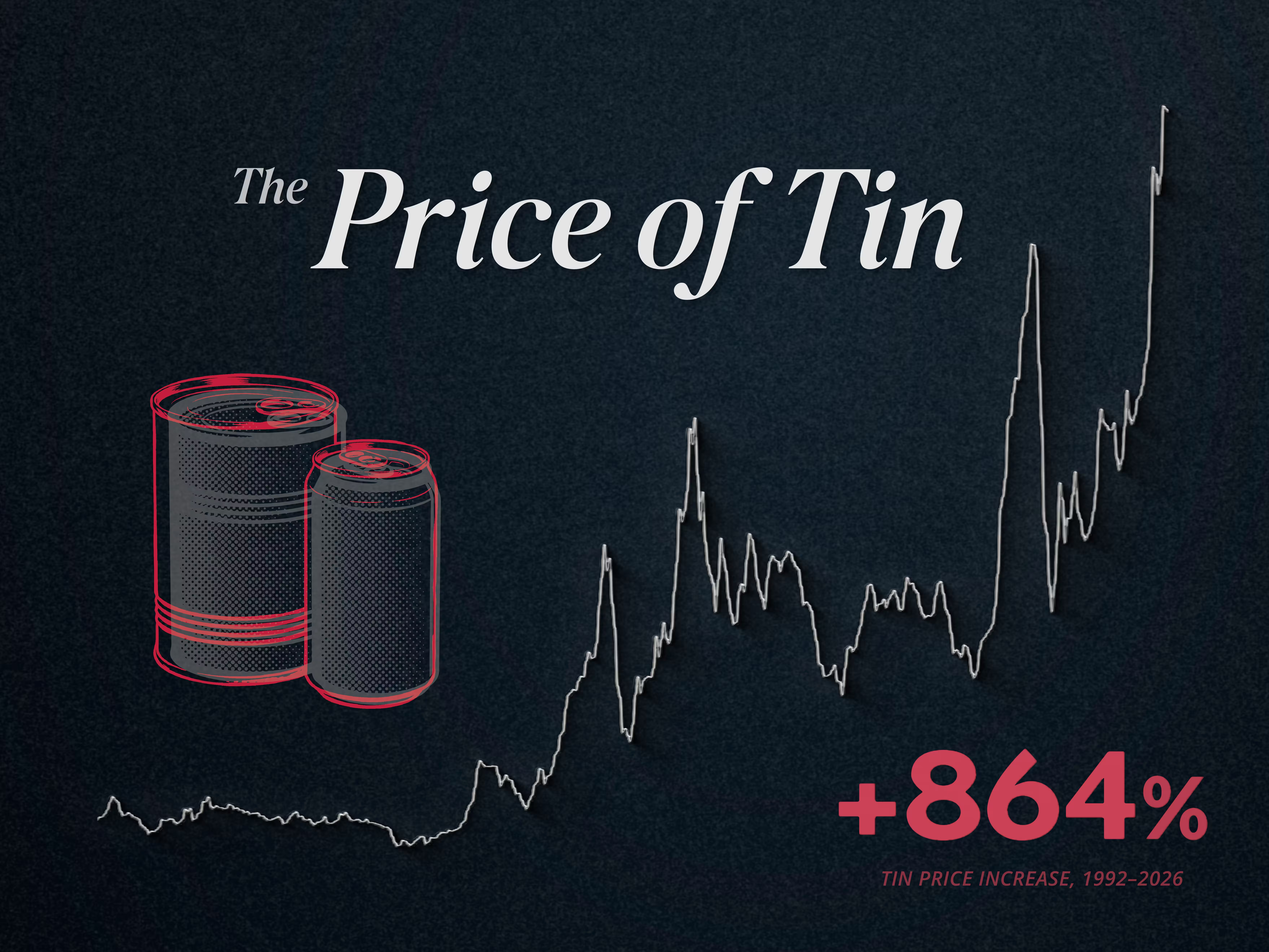
In January 2026, the London Metal Exchange three-month tin contract closed at US$53,462 a tonne, a nominal all-time high that surpassed the March 2022 peak, and it has traded near those levels since. The puzzle is that there is no shortage of tin today: exchange inventories actually rose as the price climbed, rather than being drawn down. Two very different things are holding the price up. The first is short-term: a wave of investor buying, which the industry says drove the January jump. The second is long-term: on current forecasts, the world will not mine enough tin to meet demand later this decade, a gap already projected before the rally began and expected to persist after it fades. The lasting story is that forecast shortfall, not the spike.
Solar Is Silver's Largest Industrial Market, and Not Easily Replaced
Solar Is Silver's Largest Industrial Market, and Not Easily Replaced
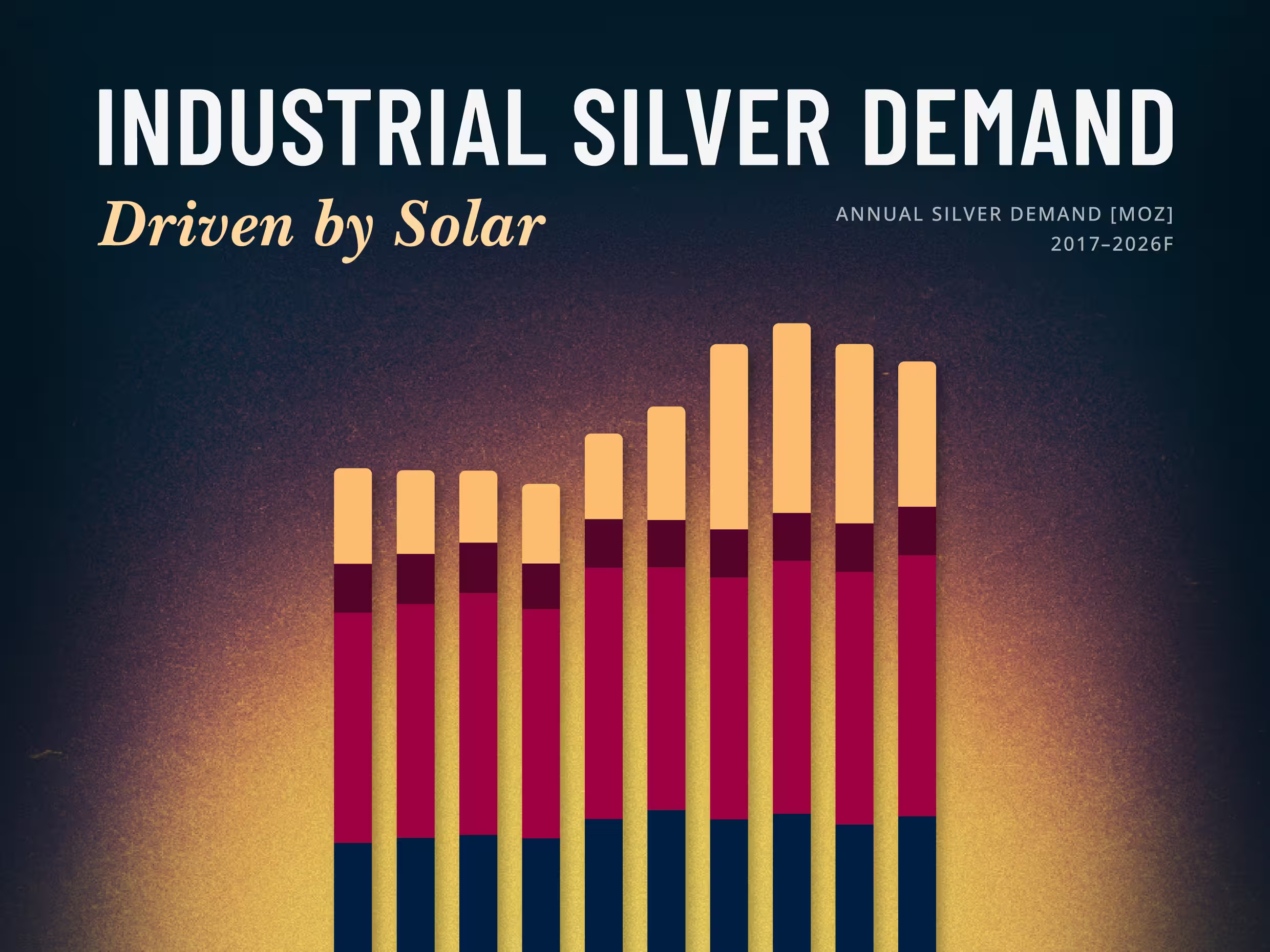
When LONGi Green Energy, the world's largest solar module maker, told investors on January 5, 2026 that it would begin mass-producing base-metal solar cells in the second quarter, it put a number on a pressure the whole industry feels. Solar is the largest single application within silver's industrial demand, and as the metal ran to a record above $121 an ounce in January, rising silver costs pushed manufacturers to accelerate efforts to reduce the metal per cell.

Silver in the Data Center: How AI's Power Crunch Is Building a New Pillar of Industrial Demand
Silver in the Data Center: How AI's Power Crunch Is Building a New Pillar of Industrial Demand
In early 2026, the artificial intelligence narrative shifted abruptly from software capabilities to physical hardware constraints. With tech giants committing hundreds of billions to new infrastructure—pushing global hyperscaler capital expenditures past $600 billion this year—the industry has collided with a new primary bottleneck: a severe power and thermal crunch.

Silver's Use Cases: A Visual Guide to Where the Metal Actually Goes
Silver's Use Cases: A Visual Guide to Where the Metal Actually Goes
Somewhere inside a pressurized-water reactor, an alloy that is four-fifths silver is absorbing neutrons to keep the core in check, a job most silver investors have never heard of. It is a useful reminder that the metal people picture as coins and jewelry mostly works elsewhere, across industry.