Precious Metals
June 8, 2026
1 min
Precious Metals
The following content is sponsored by Outcrop Silver

Key takeaways
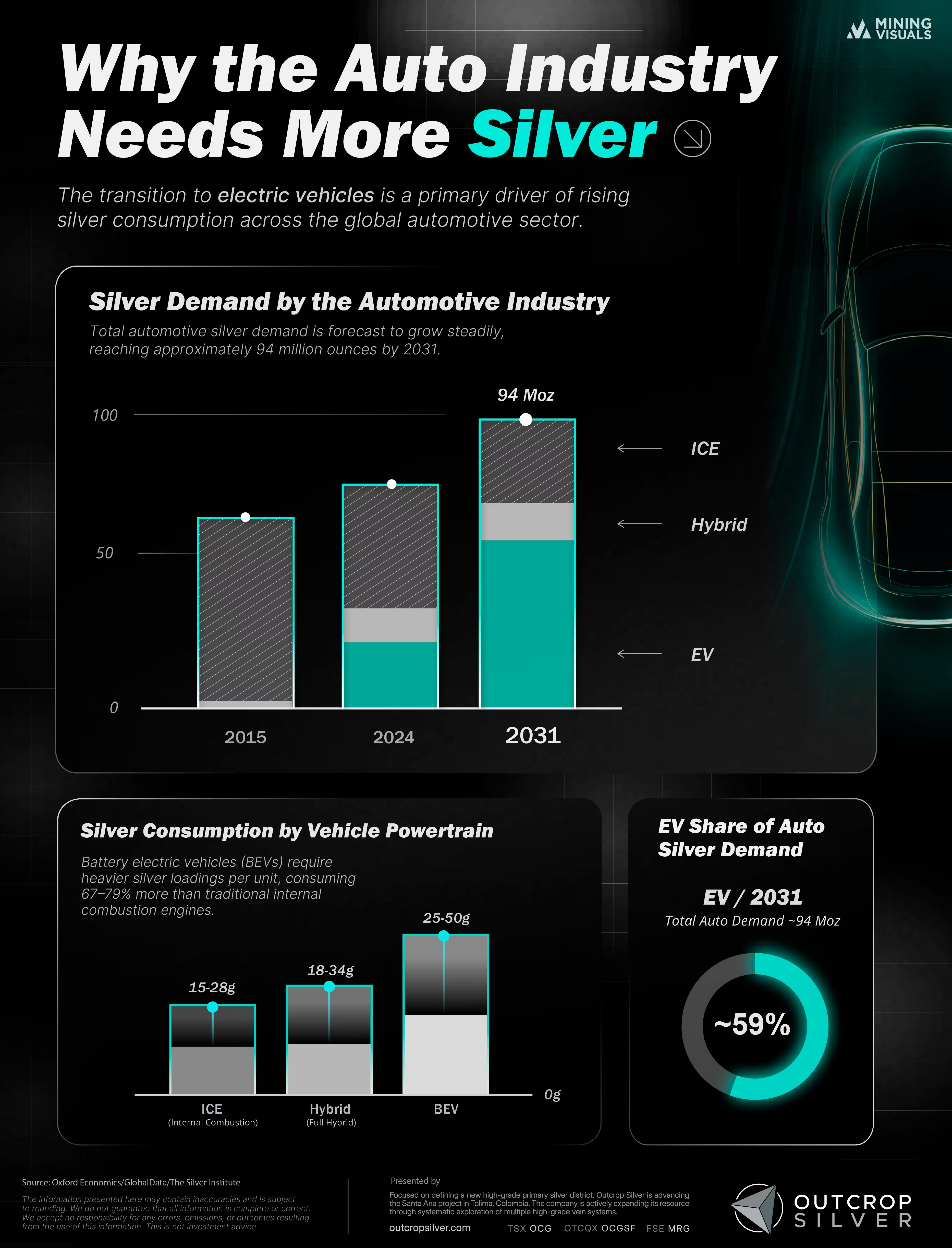
- EVs Use Far More Silver: Battery electric vehicles consume 67% to 79% more silver per unit than internal combustion vehicles.
- 2027 Marks the Crossover: EVs are forecast to overtake ICE as the largest source of automotive silver demand by 2027, reaching 59% by 2031.
- A Growing Demand Pillar: Total automotive silver demand is projected to reach approximately 94 million ounces by 2031, a 3.4% annual growth rate.
Most of silver's 2026 story has been told from the supply side: a sixth straight year of structural deficit and a record price near $121 in January. Less examined is where the next leg of industrial demand actually comes from. With solar, silver's largest industrial use, now facing thrifting and substitution, the Silver Institute points to a quieter end-use picking up the slack: the automotive sector. A December 2025 study from Oxford Economics and the Silver Institute quantifies that shift, and the engine behind it is the electric vehicle.
The Per-Vehicle Math
The reason electrification moves the needle comes down to silver content per vehicle. According to the Oxford Economics and Silver Institute report, an ICE vehicle contains an estimated 15 to 28 grams of silver, a full hybrid 18 to 34 grams, and a battery electric vehicle 25 to 50 grams. At the lower bound, BEVs consume 67% more silver than ICE vehicles, rising to 79% at the upper bound, reflecting silver's role across battery management systems, inverters, and charging modules. The Silver Institute estimates over 60 million ounces of silver are used annually in motor vehicles today.
2027: The Crossover Year
The forecast's central milestone is a reversal of ranking. In 2024, ICE vehicles accounted for 55% of automotive silver demand, with EVs second at 30%. Because BEVs are both more silver-intensive and the fastest-growing segment, the report forecasts EVs will overtake ICE vehicles by 2027 and reach 59% of the total by 2031. That rests on global EV production rising at a 13% compound annual rate through 2031, after EVs grew to 21% of light-vehicle production in 2024 from just 3% in 2019. The aggregate result is automotive silver demand reaching roughly 94 million ounces by 2031.
Charging Stations, Sensors, and the Headwinds
Two secondary trends add to the picture. The report notes that charging stations rely on silver contacts and silver-plated cables, with the global stock of public charging points up 33% in 2024. It also links rising silver use to growing electronic complexity, from driver-assistance sensors to a possible move toward autonomous driving, a theme that extends into the battery cell itself in our coverage of Samsung's silver-carbon solid-state battery.
The report does not present a one-way trajectory. In the US, the $7,500 new and $4,000 used EV tax credits ended on September 30, 2025, and the EU imposed tariffs of 17.8% to 45.3% on Chinese BEV imports. Automakers are also consolidating electronic control units, which could reduce per-vehicle loadings. The authors conclude these factors slow, but are not expected to reverse, electrification.
A Third Demand Pillar
At roughly 94 million ounces by 2031, autos would remain smaller than solar or broader electronics. The report's projection is for automotive demand to grow steadily over the forecast period, and to do so increasingly through EVs, which carry more silver per unit than the ICE vehicles they replace. The report does not quantify what this means for the overall supply-demand balance, and the per-vehicle estimates carry wide bands.
Sponsored by:

Outcrop Silver is a leading explorer and developer focused on advancing its flagship Santa Ana high-grade silver project in Colombia. Leveraging a disciplined and seasoned team of professionals with decades of experience in the region. Outcrop Silver is dedicated to expanding current mineral resources through strategic exploration initiatives.
At the core of our operations is a commitment to responsible mining practices and community engagement, underscoring our approach to sustainable development. Our expertise in navigating complex geological and market conditions enables us to consistently identify and capitalize on opportunities to enhance shareholder value.
With a deep understanding of the Colombian mining landscape and a track record of successful exploration, Outcrop Silver is poised to transform the Santa Ana project into a significant silver producer, contributing positively to the local economy and setting new standards in the mining industry.
Learn more about Outcrop Silver at https://outcropsilver.com/
Primary Data Source: The Silver Institute: Silver, The Next Generation Metal (December 2025)
MiningVisuals Disclaimer: This article is for informational purposes only and does not constitute financial or investment advice, nor an offer or solicitation to buy or sell any security or commodity. Always conduct your own research and consult a qualified advisor.
Forward-Looking Statements: This article contains forward-looking information, including silver demand and automotive production projections to 2031 attributed to Oxford Economics and the Silver Institute. Forward-looking statements are based on assumptions and are subject to known and unknown risks and uncertainties; actual results may differ materially from those projected. All figures are sourced from the cited publications and are presented for informational purposes only. Neither MiningVisuals nor the sponsor undertakes any obligation to update forward-looking information.




Explore More
View All


The World's 20 Largest Primary Silver Mines by 2025 Output
The World's 20 Largest Primary Silver Mines by 2025 Output
The largest silver producer among the world's primary silver mines in 2025 sat not in Mexico but in southwestern Bolivia. San Cristóbal, a large open-pit silver-zinc-lead mine run by Minera San Cristóbal, produced 17.6 million ounces of silver, narrowly ahead of Mexico's Juanicipio at the same rounded figure, in new Metals Focus data on the 20 largest primary silver mines. These are the operations where silver is a defining product rather than an incidental byproduct of lead, zinc and gold. The list runs from centuries-old mines in Mexico's silver belt to remote sites in the Andes, the Australian outback and the Alaskan wilderness. Eight of the 20 sit in Mexico, together about 44% of the total, while the rest are spread across the Americas, Asia, Africa and Australia.

Central Banks Have Been Net Gold Buyers Since 2010, After Two Decades of Net Selling
Central Banks Have Been Net Gold Buyers Since 2010, After Two Decades of Net Selling
Central banks bought more gold between April and June 2026 than in any second quarter on record, according to a World Gold Council report published on July 30. That keeps them net buyers this year, as they have been every year since 2010. Underneath, the picture is changing. Russia and Türkiye, both big buyers in the past, have been selling.

Gold Mines in West Africa: Two Billion Years in the Making
Gold Mines in West Africa: Two Billion Years in the Making
The nine West African countries with significant reported output produced about 15% of the world's mined gold in 2025, according to Metals Focus and World Gold Council data. Almost every mine on the map above was built in the past 25 years, and four more reached production in the last eighteen months: Lafigué in Côte d'Ivoire in June 2024, Kiaka in Burkina Faso in June 2025, Ahafo North in Ghana in October 2025 and Kiniero in Guinea in December 2025.
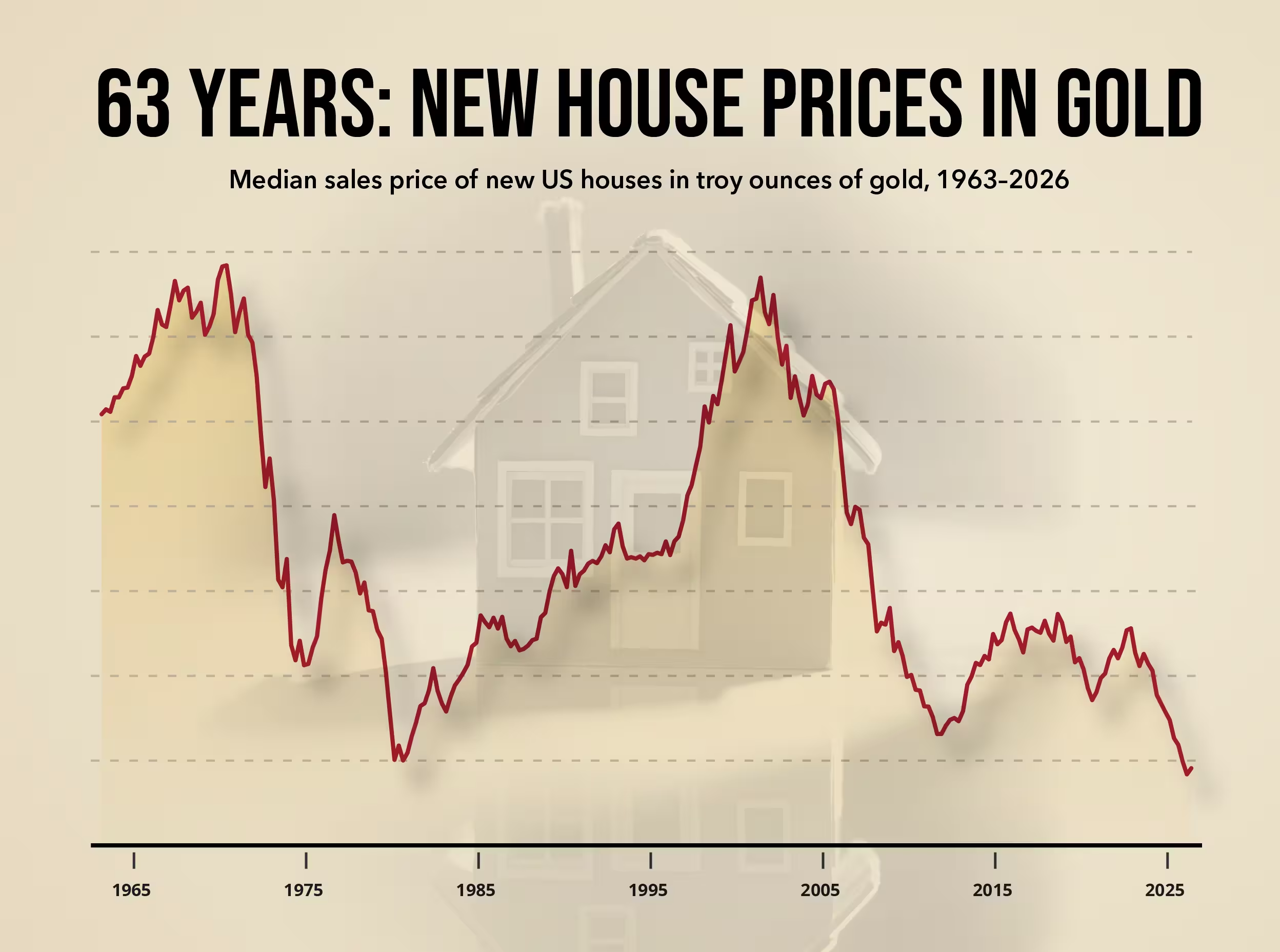
A Median New US Home Now Costs Less Than 100 Ounces of Gold
A Median New US Home Now Costs Less Than 100 Ounces of Gold
The US Census Bureau's July new-home report, released on August 25, put the median price of a newly built house at $393,800. HousingWire noted that was the lowest since July 2021. In dollars, the market has moved within a narrow band: the quarterly median has stayed between $408,500 and $435,400 since 2023.