Precious Metals
Solar Is Silver's Largest Industrial Market, and Not Easily Replaced
SILVER'S BIGGEST BUYER IS RE-ENGINEERING EVERY CELL, BUT ONE BARRIER KEEPS THE METAL IN
The following content is sponsored by Outcrop Silver
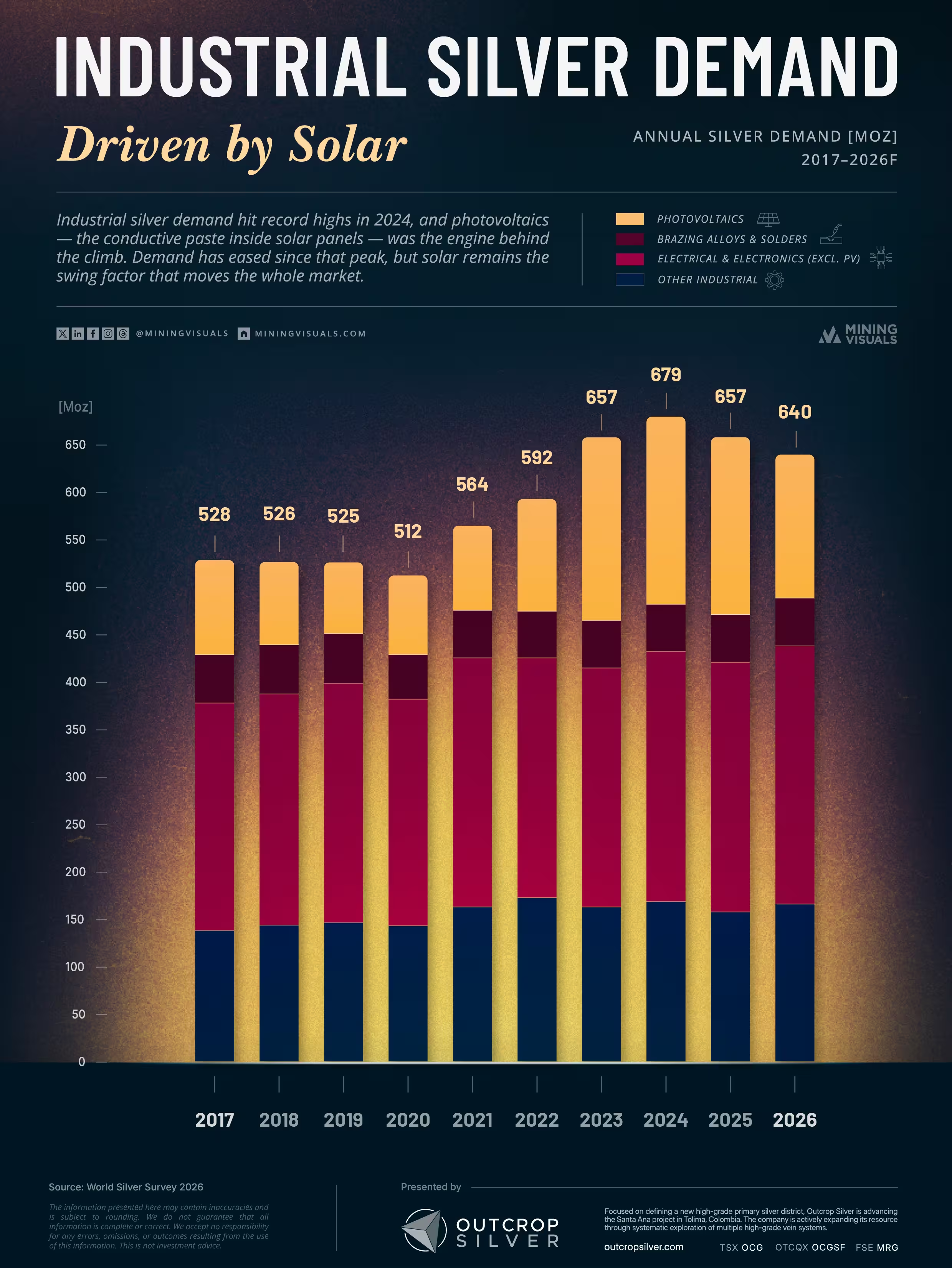

When LONGi Green Energy, the world's largest solar module maker, told investors on January 5, 2026 that it would begin mass-producing base-metal solar cells in the second quarter, it put a number on a pressure the whole industry feels. Solar is the largest single application within silver's industrial demand, and as the metal ran to a record above $121 an ounce in January, rising silver costs pushed manufacturers to accelerate efforts to reduce the metal per cell. How much silver solar consumes now turns less on how many panels get built than on how they are engineered.
Photovoltaics is the largest single end-use in silver's industrial mix, a distinction worth stating precisely: the World Silver Survey 2026 counts PV as one component within the broader electrical and electronics category, which consumes more silver in total but spans many separate uses, from circuit boards to connectors. As a single application, solar leads them all, having climbed from 99.3 million ounces in 2017 to a peak of 197.5 million in 2024. That scale is why the sector's engineering decisions now move the entire industrial demand line, and why silver's role inside the cell, detailed in our PV-efficiency coverage, matters well beyond solar itself.
The pressure to trim silver per cell is a direct function of that dependence. As prices climbed, silver's share of a solar cell's cost rose from roughly 8% to more than 20%, according to Metals Focus, turning metallization into the industry's most-targeted cost line. Producers are cutting silver through finer line printing and "zero busbar" layouts, aiming for loadings below 5 milligrams per watt by 2027. The survey attributes the resulting drop, PV demand fell to 186.6 million ounces in 2025 and a forecast 151.0 million in 2026, to exactly this thrifting and substitution, even as our prior coverage noted newer cell types can raise silver per watt. Design pushes the number up; cost pushes it down.
Using less silver is not the same as removing it, and the gap is a chemistry problem. LONGi's move runs through its back-contact platform, which it says suits alternative metallization because most conductive features sit on the cell's rear. The mainstream architecture, TOPCon, is harder: copper is prone to oxidation and diffusion-related degradation, demanding extra barrier layers and long-duration reliability validation. Analysts place meaningful copper substitution in TOPCon at 2028 to 2030, not this year. For now, silver stays embedded in most commercially produced cells even as the quantity per cell falls.
The survey frames solar's pullback as the swing factor in a market still in structural deficit, its sixth consecutive shortfall, at 46.3 million ounces. Crucially, Metals Focus notes those photovoltaic and other industrial losses "could have the potential to be offset somewhat" by a stronger recovery in automotive demand and accelerating growth in data-center infrastructure, the two other pillars we have tracked. Whether copper matures on schedule, and whether solar's decline is backfilled by those newer uses, is the variable that decides how much of the world's silver the industrial sector claims by the decade's end.

Outcrop Silver is a leading explorer and developer focused on advancing its flagship Santa Ana high-grade silver project in Colombia. Leveraging a disciplined and seasoned team of professionals with decades of experience in the region. Outcrop Silver is dedicated to expanding current mineral resources through strategic exploration initiatives.
At the core of our operations is a commitment to responsible mining practices and community engagement, underscoring our approach to sustainable development. Our expertise in navigating complex geological and market conditions enables us to consistently identify and capitalize on opportunities to enhance shareholder value.
With a deep understanding of the Colombian mining landscape and a track record of successful exploration, Outcrop Silver is poised to transform the Santa Ana project into a significant silver producer, contributing positively to the local economy and setting new standards in the mining industry.
Learn more about Outcrop Silver at https://outcropsilver.com/
MiningVisuals Disclaimer: This article is for informational purposes only and does not constitute financial or investment advice. Always conduct your own research.


The largest silver producer among the world's primary silver mines in 2025 sat not in Mexico but in southwestern Bolivia. San Cristóbal, a large open-pit silver-zinc-lead mine run by Minera San Cristóbal, produced 17.6 million ounces of silver, narrowly ahead of Mexico's Juanicipio at the same rounded figure, in new Metals Focus data on the 20 largest primary silver mines. These are the operations where silver is a defining product rather than an incidental byproduct of lead, zinc and gold. The list runs from centuries-old mines in Mexico's silver belt to remote sites in the Andes, the Australian outback and the Alaskan wilderness. Eight of the 20 sit in Mexico, together about 44% of the total, while the rest are spread across the Americas, Asia, Africa and Australia.

Central banks bought more gold between April and June 2026 than in any second quarter on record, according to a World Gold Council report published on July 30. That keeps them net buyers this year, as they have been every year since 2010. Underneath, the picture is changing. Russia and Türkiye, both big buyers in the past, have been selling.

The nine West African countries with significant reported output produced about 15% of the world's mined gold in 2025, according to Metals Focus and World Gold Council data. Almost every mine on the map above was built in the past 25 years, and four more reached production in the last eighteen months: Lafigué in Côte d'Ivoire in June 2024, Kiaka in Burkina Faso in June 2025, Ahafo North in Ghana in October 2025 and Kiniero in Guinea in December 2025.
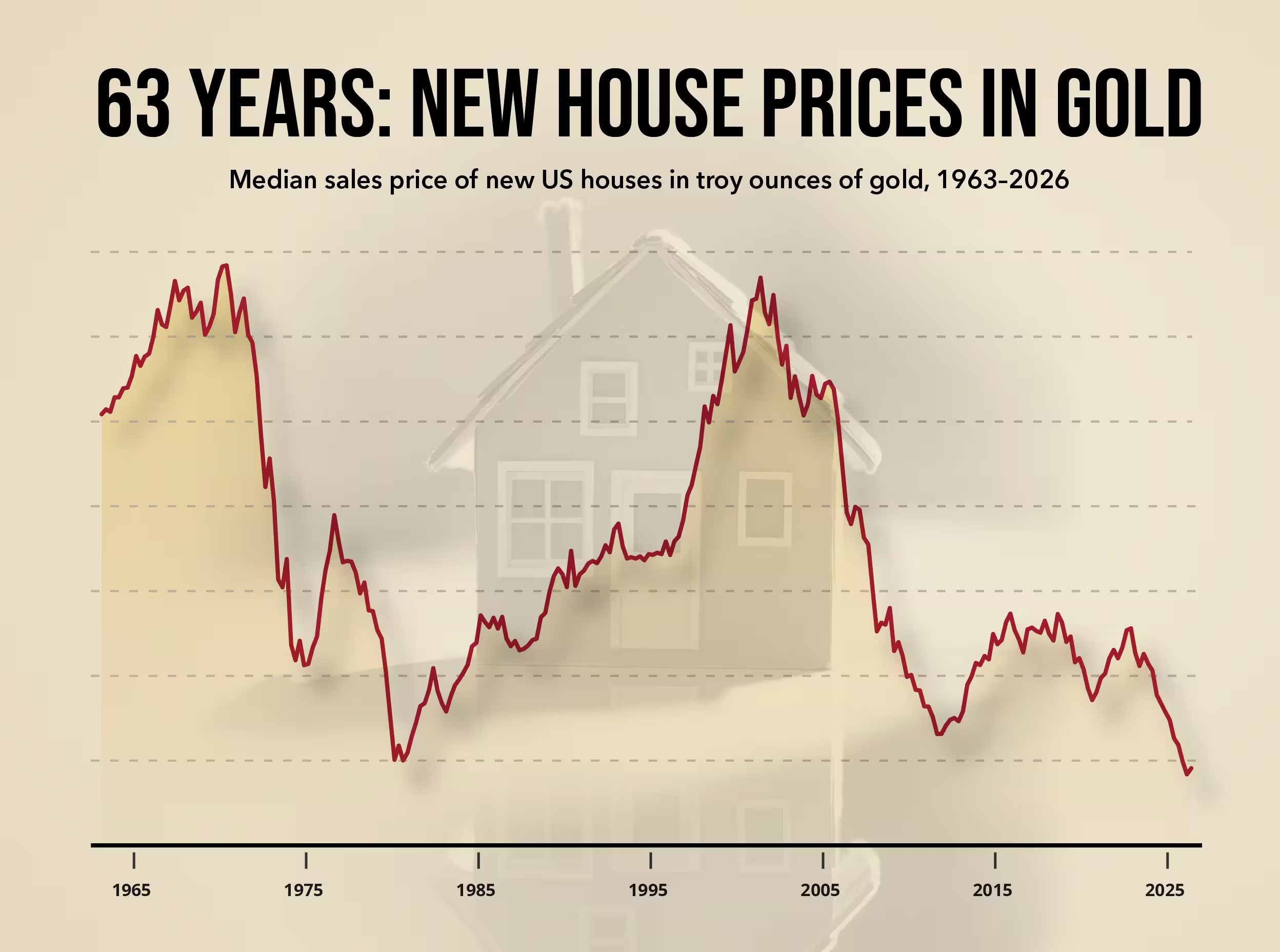
The US Census Bureau's July new-home report, released on August 25, put the median price of a newly built house at $393,800. HousingWire noted that was the lowest since July 2021. In dollars, the market has moved within a narrow band: the quarterly median has stayed between $408,500 and $435,400 since 2023.