Precious Metals
January 20, 2026
3 min
Precious Metals


When we look at a solar panel, we see a sheet of blue or black glass. But if you were to zoom in, past the glass, past the anti-reflective coating, and down to the atomic level, you would find a precious metal doing the heavy lifting. Silver.
As the accompanying infographic reveals, silver is not just a passive component; it is the "nervous system" of a photovoltaic (PV) cell. Without it, the electrons knocked loose by sunlight would have nowhere to go.
The Science: The "Electron Highway"
To understand why silver is irreplaceable, we have to look "under the hood" of the solar cell.
A solar cell is essentially a silicon sandwich. When sunlight (photons) strikes the N-type silicon layer, it knocks electrons loose, creating an electric potential. However, those electrons need a path to exit the cell and enter your home’s grid.
This is where silver’s unique atomic structure comes in. Silver is the most electrically conductive metal on Earth, comprising the "fingers" and "busbars" you see printed on the front of the cell.
- Fingers: Microscopic grid lines that collect electrons from the silicon surface.
- Busbars: Larger channels that aggregate the current and transport it out of the module.
The Cost of Efficiency: Silver Intensity
As the industry shifts from older PERC cells to next-generation technologies like TOPCon and HJT, the amount of silver required per watt is increasing. Newer cells often require silver contacts on both the front and rear sides, rather than just one.
Data Sources: Advent Research Materials (2025) & ITRPV Benchmark Analysis
Because silver offers the lowest possible electrical resistance, it ensures that more of the sun's energy makes it to the grid rather than being lost as heat.
"Silver is an essential and critical metal for the future... Globally, solar is the fastest growing of all sources of renewable energy... and because silver is a key component in a photovoltaic cell, this is one of the fastest growing uses of silver." — Michael DiRienzo, Executive Director, The Silver Institute
The Demand Reality: 2026 and Beyond
The solar industry's appetite for silver has surged well beyond previous expectations. While earlier forecasts varied, the definitive World Silver Survey 2025 confirms the scale of the sector's growth.
In 2024, the solar industry consumed approximately 200 million ounces of silver. This consumption helped push total industrial silver demand to a record 680.5 million ounces. This marks a massive structural shift; where solar once accounted for just 11% of industrial silver usage (2014), it now claims nearly 29% of all industrial demand.
This demand is driven by the rapid adoption of TOPCon (Tunnel Oxide Passivated Contact) and HJT (Heterojunction) cells. These next-generation technologies offer higher efficiency but require significantly more silver paste—often 50% more per panel than older PERC models.
Solar Silver Consumption: A Structural Shift
The 2030 Demand Forecast:
A study published in the journal Resources, Conservation and Recycling forecasts that by 2030, the solar industry alone could require 321 to 450 million ounces (10–14 kt) of silver annually. This marks a dramatic surge from the 195.7 million ounces projected for 2025 by the World Silver Survey, signaling that the sector's consumption is accelerating.
Sponsored by:

Eloro Resources Ltd. is a mineral exploration company advancing a world-class silver and tin project in Bolivia’s historic Potosí Department. Its flagship asset, the Iska Iska Project, ranks among the top five undeveloped global resources in terms of scale for both tin and silver.
This significant grassroots discovery remains open in multiple directions, offering substantial potential for continued expansion and resource enhancement. Iska Iska benefits from strong infrastructure access and a deeply rooted presence in Bolivia, supported by an experienced management team and meaningful community engagement.
Eloro’s strategy is focused on resource growth, strategic partnerships, and establishing a leading position within the global mining sector.
Learn more at
http://elororesources.com/Disclaimer: The information provided in this article, including the accompanying infographic, is for general informational and educational purposes only. It does not constitute financial or investment advice.





Explore More
View All


The World's 20 Largest Primary Silver Mines by 2025 Output
The World's 20 Largest Primary Silver Mines by 2025 Output
The largest silver producer among the world's primary silver mines in 2025 sat not in Mexico but in southwestern Bolivia. San Cristóbal, a large open-pit silver-zinc-lead mine run by Minera San Cristóbal, produced 17.6 million ounces of silver, narrowly ahead of Mexico's Juanicipio at the same rounded figure, in new Metals Focus data on the 20 largest primary silver mines. These are the operations where silver is a defining product rather than an incidental byproduct of lead, zinc and gold. The list runs from centuries-old mines in Mexico's silver belt to remote sites in the Andes, the Australian outback and the Alaskan wilderness. Eight of the 20 sit in Mexico, together about 44% of the total, while the rest are spread across the Americas, Asia, Africa and Australia.

Central Banks Have Been Net Gold Buyers Since 2010, After Two Decades of Net Selling
Central Banks Have Been Net Gold Buyers Since 2010, After Two Decades of Net Selling
Central banks bought more gold between April and June 2026 than in any second quarter on record, according to a World Gold Council report published on July 30. That keeps them net buyers this year, as they have been every year since 2010. Underneath, the picture is changing. Russia and Türkiye, both big buyers in the past, have been selling.

Gold Mines in West Africa: Two Billion Years in the Making
Gold Mines in West Africa: Two Billion Years in the Making
The nine West African countries with significant reported output produced about 15% of the world's mined gold in 2025, according to Metals Focus and World Gold Council data. Almost every mine on the map above was built in the past 25 years, and four more reached production in the last eighteen months: Lafigué in Côte d'Ivoire in June 2024, Kiaka in Burkina Faso in June 2025, Ahafo North in Ghana in October 2025 and Kiniero in Guinea in December 2025.
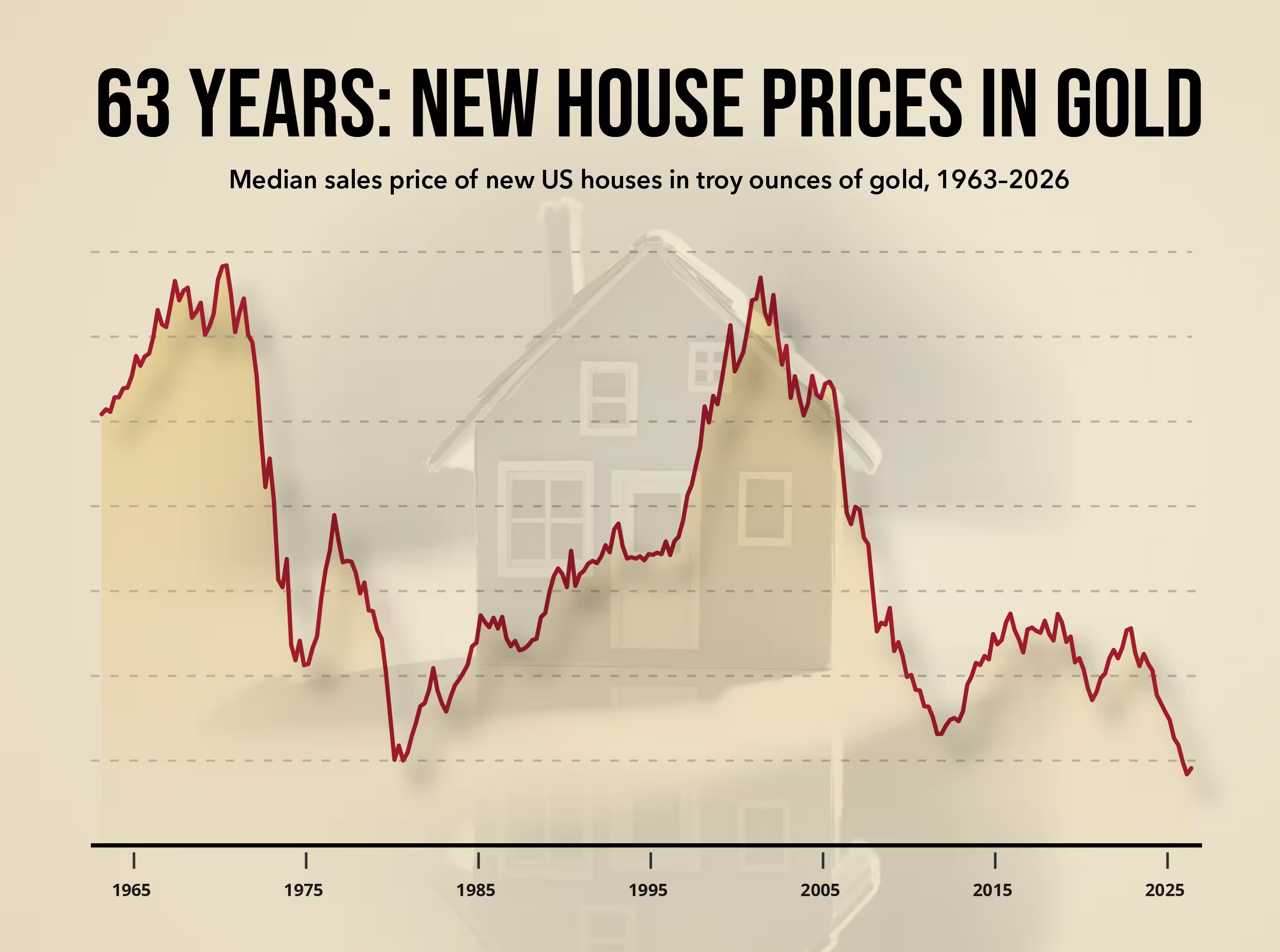
A Median New US Home Now Costs Less Than 100 Ounces of Gold
A Median New US Home Now Costs Less Than 100 Ounces of Gold
The US Census Bureau's July new-home report, released on August 25, put the median price of a newly built house at $393,800. HousingWire noted that was the lowest since July 2021. In dollars, the market has moved within a narrow band: the quarterly median has stayed between $408,500 and $435,400 since 2023.