Gold
Ghana's Gold Mining Landscape: A Story Written in Ancient Rock
THE ROCK BENEATH AFRICA'S TOP GOLD PRODUCER IS OLDER THAN ALMOST ANYTHING ON EARTH
The following content is sponsored by Galiano Gold


Ghana is one of the world's most significant gold-producing countries, and in 2025 it remained the largest in Africa, with national output reaching about 6 million ounces. But the numbers are only the surface. Ghana's gold reaches back more than two billion years into the rock beneath it, shaped by ancient mountain-building forces and worked by human hands for well over a century. To understand the country's gold landscape is to look past the annual figures to the geology that made it, and the deposits that still define where and how Ghana mines today.
Ghana's gold begins with its bedrock. The country sits on the West African Craton, and its gold is hosted in the Birimian belts, greenstone formations of the Paleoproterozoic era. Geologists identify five parallel belts, each more than 300 km long, running southwest to northeast across the country. The gold within them was concentrated during the Eburnean mountain-building event, when hydrothermal fluids moved through lithospheric-scale shear zones more than 200 km long, depositing gold along the great faults that still guide exploration today.
Ghana hosts multiple gold deposit styles, the most prolific of which are Birimian lode gold deposits hosted in quartz veins and Tarkwaian paleoplacer deposits formed within ancient river gravels. The orogenic lode-gold style, the classic of the two, formed when mineral-rich fluids filled quartz veins along shear zones deep in the crust, producing the high-grade ore that supports underground mines. Paleoplacer gold formed differently: ancient rivers eroded older gold-bearing rock and concentrated the heavy metal in gravel beds, later hardened into conglomerates. That is why a single country can support both deep, high-grade underground operations and large-volume open pits, and why Ghana's mines cluster along the same belts that have drawn miners since the era of the Gold Coast.
Commercial mining at Obuasi, on the prolific Ashanti belt, dates to 1897, making it one of the longest continuously worked gold operations anywhere. That history carries into the present as knowledge: Ghana offers a mature mining code, established infrastructure, and a workforce with generations of expertise, trained in part at institutions such as the Tarkwa School of Mines, founded in the 1950s to serve the industry. It is part of why established international operators, alongside Ghanaian companies, have built long-term operations in the country.
Gold is the headline, but the same geology that made Ghana rich in it has endowed the country with far more. Ghana has mined manganese at Nsuta since 1916, among the oldest such operations in the world, and produces bauxite, the ore of aluminium, from Awaso, alongside a long history of diamonds. More recently, the country has moved into the minerals of the energy transition. In March 2026, Ghana's Parliament ratified the mining lease for the Ewoyaa project, the first lithium lease granted in the country, positioning Ghana to supply a raw material central to electric-vehicle batteries. It is a reminder that Ghana's mineral story is still being written, and increasingly measured not only by what comes out of the ground, but by how responsibly it is done.

Galiano Gold Inc. (TSX: GAU) (NYSE American: GAU) is building momentum at the Asanko Gold Mine in Ghana, West Africa. With a strong, debt-free balance sheet, disciplined execution, and multiple operational and growth catalysts ahead, Galiano is focused on strengthening cash flow generation, growing Mineral Resources and Mineral Reserves, extending mine life, and delivering long-term shareholder value.
As a Canadian gold producer, Galiano is committed to responsible mining and sustainable value creation while contributing to Ghana's economic development through local employment, procurement, and community investment.
Learn more at www.galianogold.com.
MiningVisuals Disclaimer: This article is for informational purposes only and does not constitute financial or investment advice. Always conduct your own research.
Sources: Reuters (via MINING.COM); peer-reviewed geology (Heliyon/PMC; ScienceDirect); AngloGold Ashanti Obuasi (NS Energy); Mining industry of Ghana (context); Atlantic Lithium (Ewoyaa).

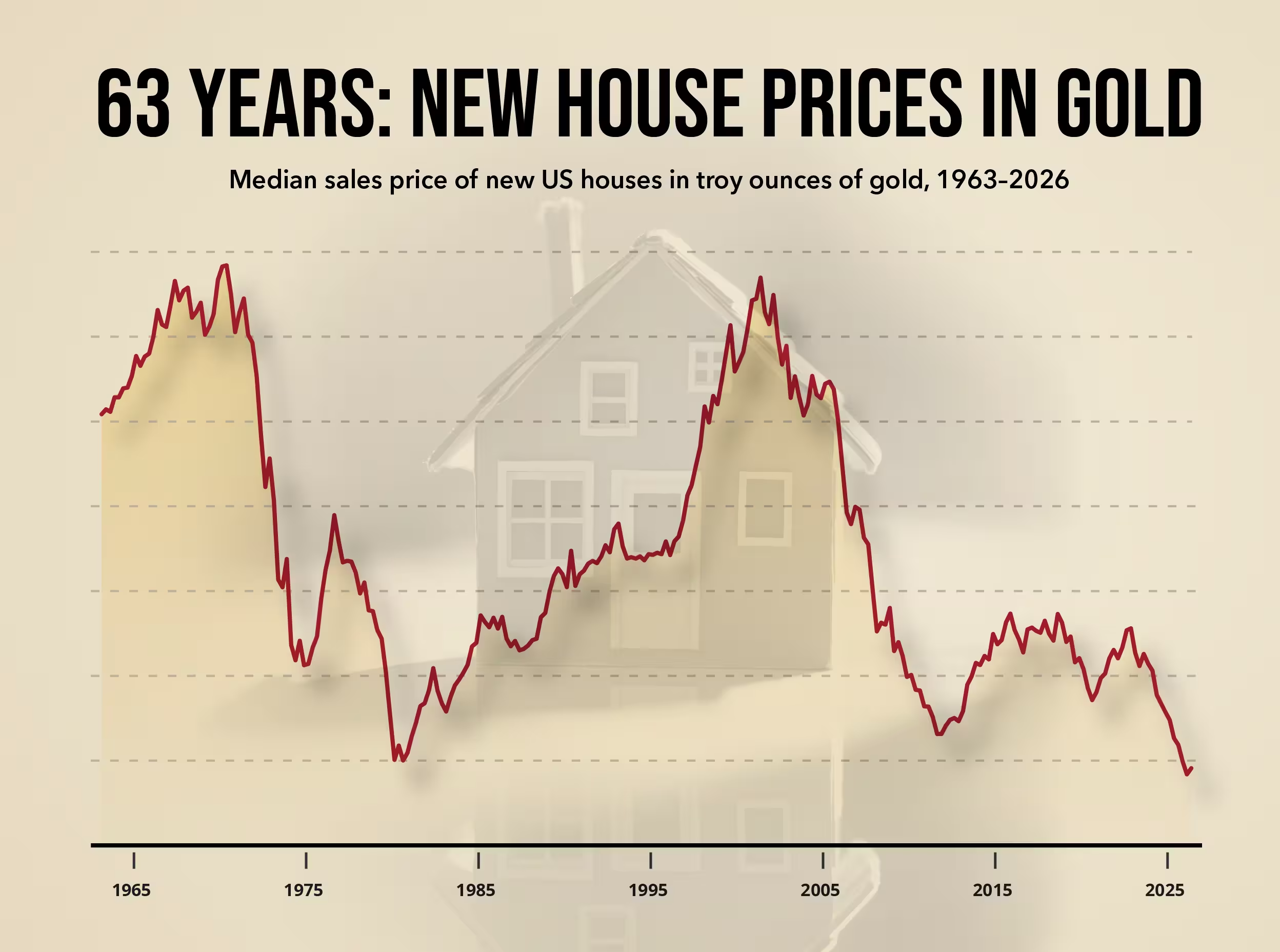
The US Census Bureau's July new-home report, released on August 25, put the median price of a newly built house at $393,800. HousingWire noted that was the lowest since July 2021. In dollars, the market has moved within a narrow band: the quarterly median has stayed between $408,500 and $435,400 since 2023.
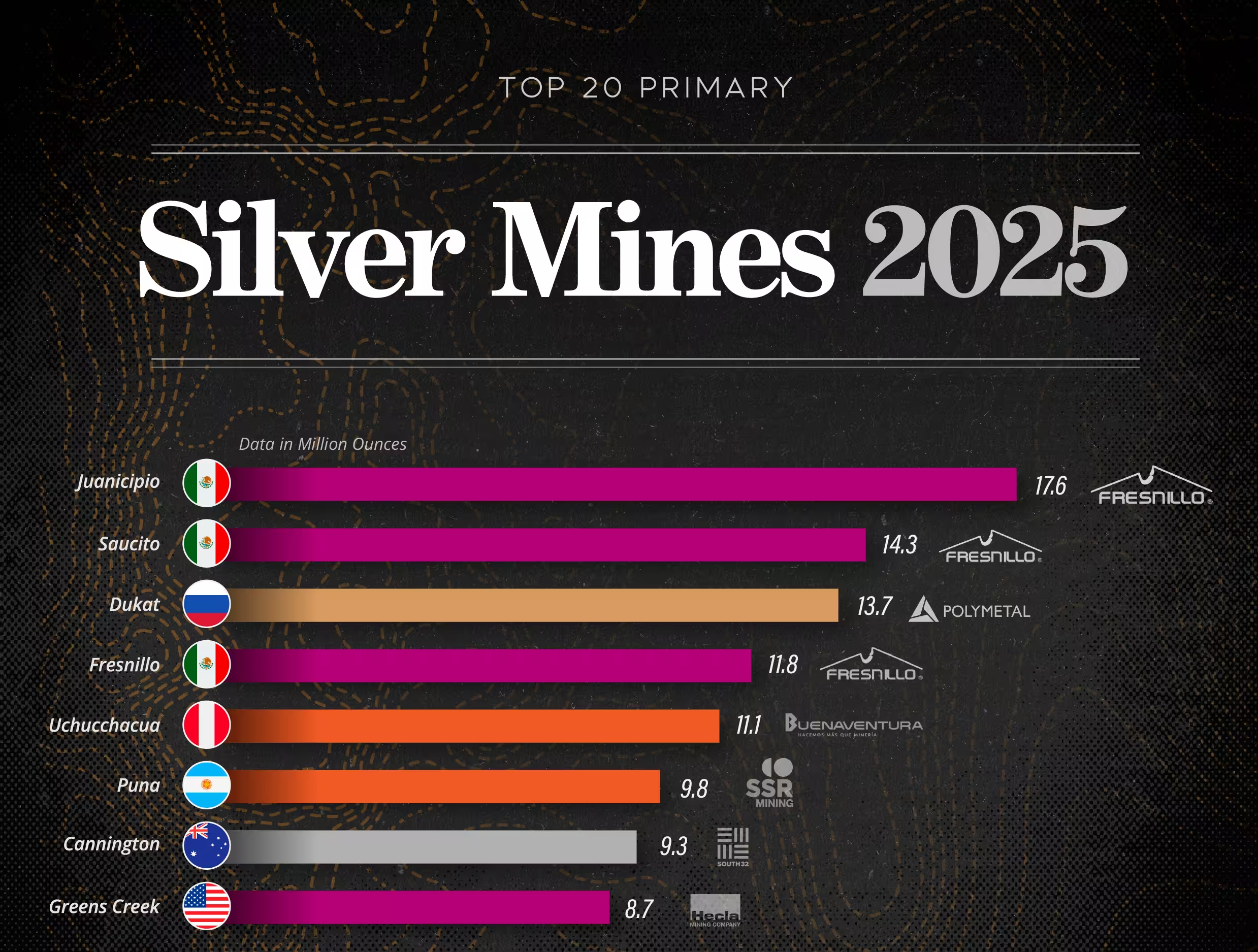
The single largest source of primary silver is a young mine in the Mexican state of Zacatecas. Juanicipio put out 17.6 million ounces in 2025, more than any other mine that earns its keep from silver itself rather than pulling it out as a byproduct of lead, zinc and gold. Fresnillo operates it and owns 56%; the other 44% changed hands in September 2025, when Pan American Silver completed a US$2.1 billion takeover of MAG Silver.
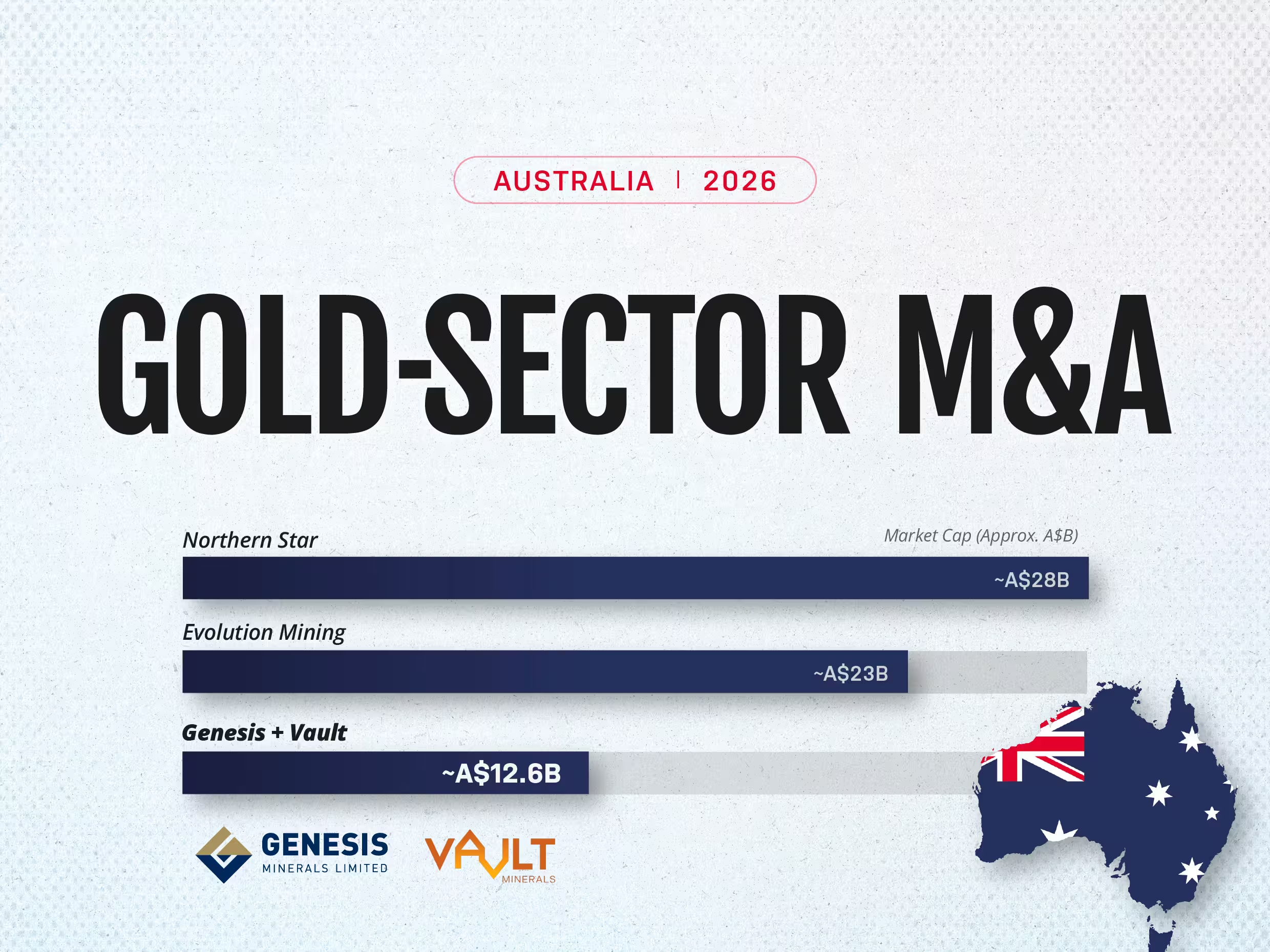
Gold hit an all-time high of about US$5,595 an ounce in January 2026 before settling near US$4,000, still far above the levels of a few years ago. That combination, record prices followed by a stable, still-profitable pullback, has done something a straight rally rarely does: it has opened a merger window.
.webp)
In March 2026, one of Ghana's own mining companies said it would invest about $1.2 billion in its operations at the Tarkwa and Damang gold mines. Both sit on the Ashanti belt, one of three narrow bands of ancient rock that carry almost all of Ghana's gold.