Gold
Gold's Record Run Has Set Off a Wave of Mining Mergers
FOUR MAJOR GOLD DEALS IN A YEAR, AND THE LATEST CONTEST REVEALS WHAT IS DRIVING THEM
The following content is sponsored by Mining Forum Americas
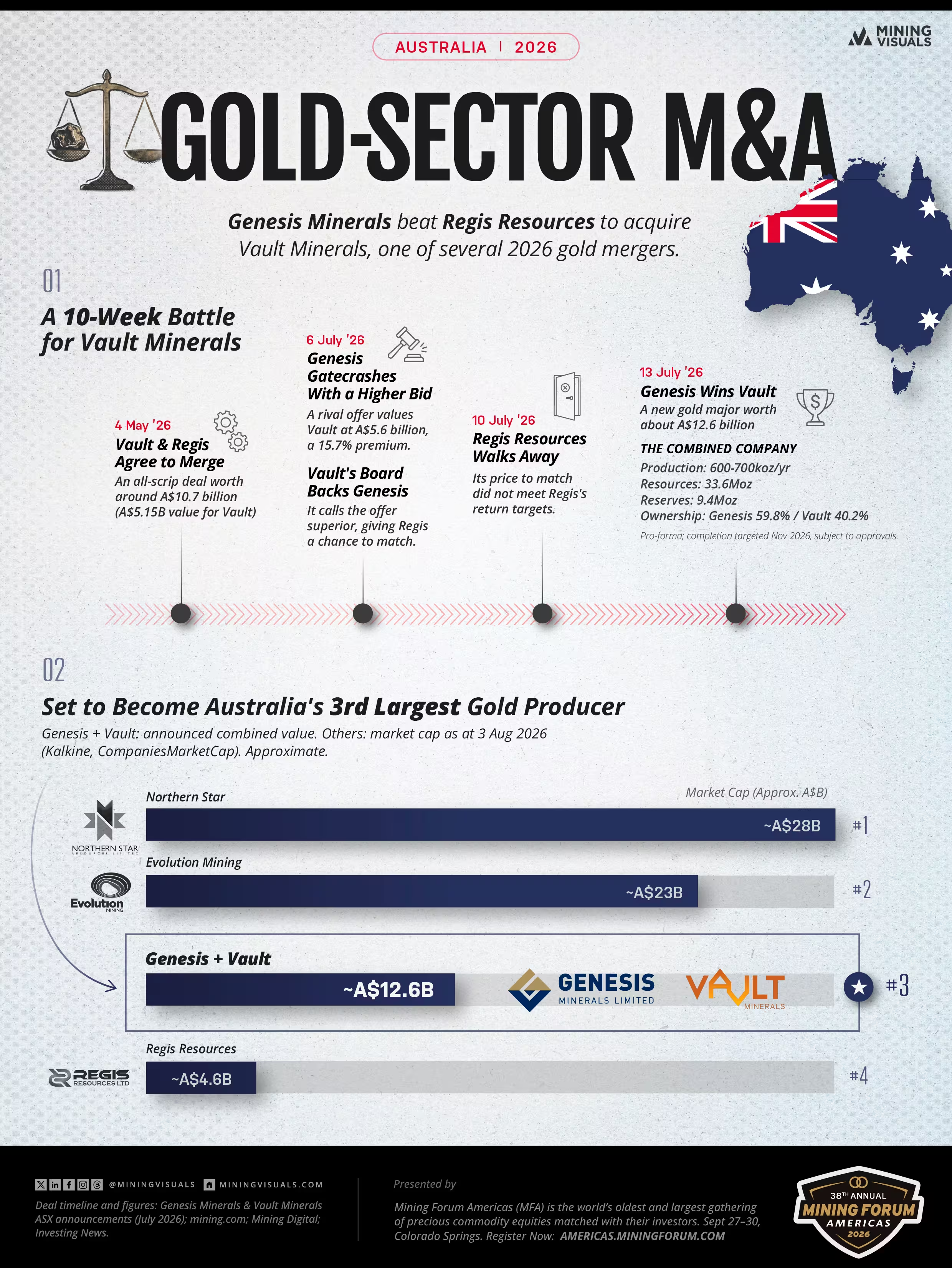

Gold hit an all-time high of about US$5,595 an ounce in January 2026 before settling near US$4,000, still far above the levels of a few years ago. Those conditions have set off a run of consolidation across the sector. Reuters described a wave fuelled by surging gold prices, and by mid-2026 it had produced deals on both sides of the world. The fight between Genesis Minerals and Regis Resources for Vault Minerals became its sharpest illustration, and the way it ended reveals what is really driving the cycle.
High prices alone do not tell the whole story. What matters is that sustained strength has swollen producer cash flows and lifted the share prices miners use as deal currency, which lowers the real cost of scrip-based offers. The result is a run of transactions in 2026. In North America, Equinox Gold completed its roughly US$5.1 billion merger with Orla Mining to create a producer worth about US$18.5 billion and more than a million ounces a year, and Barrick struck a US$1.95 billion deal with Newmont to settle their Nevada joint-venture disputes. In Australia, Ramelius took over Spartan Resources for A$2.4 billion and Northern Star completed its roughly A$5 billion purchase of De Grey Mining. Genesis-Vault is the newest entry in that sequence, not a one-off.
The Genesis-Vault contest is worth dwelling on because it makes the wave's logic visible. Genesis valued Vault at about A$5.6 billion, a 15.7% premium to its undisturbed price, to create a group worth roughly A$12.6 billion. The rationale was not simply scale: Genesis's Leonora mill sits about 25 km from Vault's operations, close enough that Genesis's higher-grade ore could be processed through Vault's plant, underpinning an estimated A$2 billion in synergies. That district logic, buying an operation you can physically integrate rather than just adding ounces, echoes the geographic fit behind Ramelius-Spartan and Northern Star-De Grey. Investors should still treat synergy numbers with caution, since they are forward-looking and depend on execution and the gold price holding.
The most telling move was the one that failed. Regis had agreed to merge with Vault in May, but lost out when Genesis bid higher. Instead of raising its offer, Regis stepped back and let the deal go. That kind of restraint is showing up across the sector. Even as deals pile up, the biggest miners are being just as choosy about what they sell, with Newmont and Barrick offloading smaller assets to focus on their best mines. High gold prices give buyers the firepower to act, but they also push up the price sellers want. So the companies deciding not to bid may tell you as much about this cycle as the ones doing the buying.
The Genesis-Vault deal is agreed but not yet complete. Vault shareholders are due to vote on the scheme around 21 October 2026, with competition and court approvals to follow and completion expected in November. The larger question is whether the wave has further to run. With bullion still near US$4,000, balance sheets strong, and activist investor Elliott pressing Northern Star toward a strategic review ahead of a CEO change in early October, the conditions that produced these deals remain firmly in place. The next contested bid will show whether the discipline Regis displayed becomes the sector's rule, or its exception.

Mining Forum Americas 2026, presented by the Denver Gold Group, is the world's oldest and largest gathering of precious commodity equities matched with their investors. Held annually since 1989, it brings together roughly seven-eighths of the world's publicly traded gold and silver companies, measured by production or reserves, alongside the investors who follow them.Taking place September 27 to 30, 2026 at the Broadmoor Hotel & Resort in Colorado Springs, the Forum is built around three things: connecting investors and companies through one-on-one meetings, learning from industry leaders and analysts, and investing through direct access to senior and emerging producers.Learn more at americas.miningforum.com.
MiningVisuals Disclaimer: This article is for informational purposes only and does not constitute financial or investment advice. Always conduct your own research.

.webp)
In March 2026, one of Ghana's own mining companies said it would invest about $1.2 billion in its operations at the Tarkwa and Damang gold mines. Both sit on the Ashanti belt, one of three narrow bands of ancient rock that carry almost all of Ghana's gold.
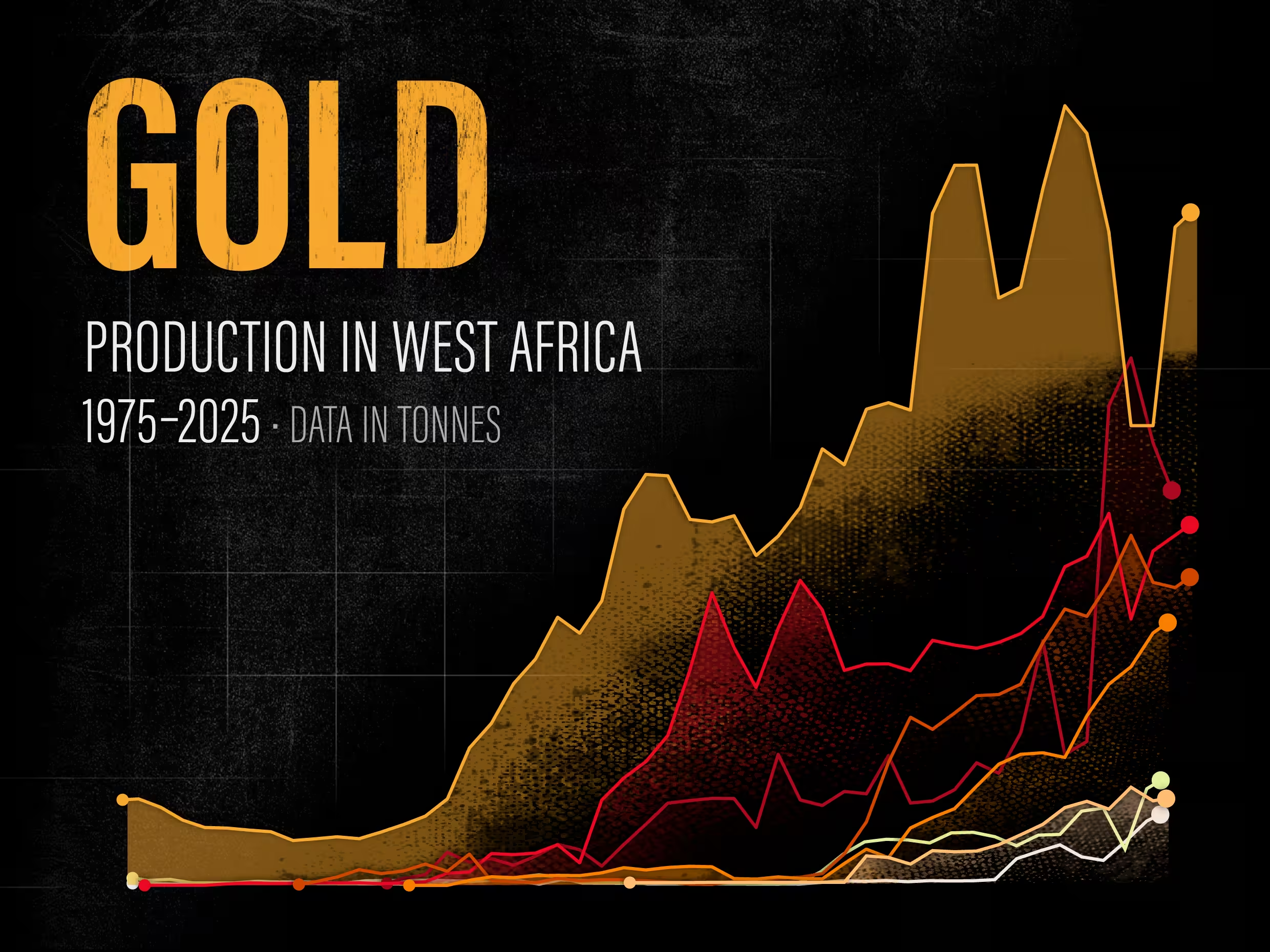
West Africa is in the middle of a gold run. In 2025 Ghana's output climbed more than 23 percent to a record 5.94 million ounces, holding its place as Africa's largest producer and now the sixth-largest in the world, and analysts expect the wider region to rebound about 8 percent in 2026.
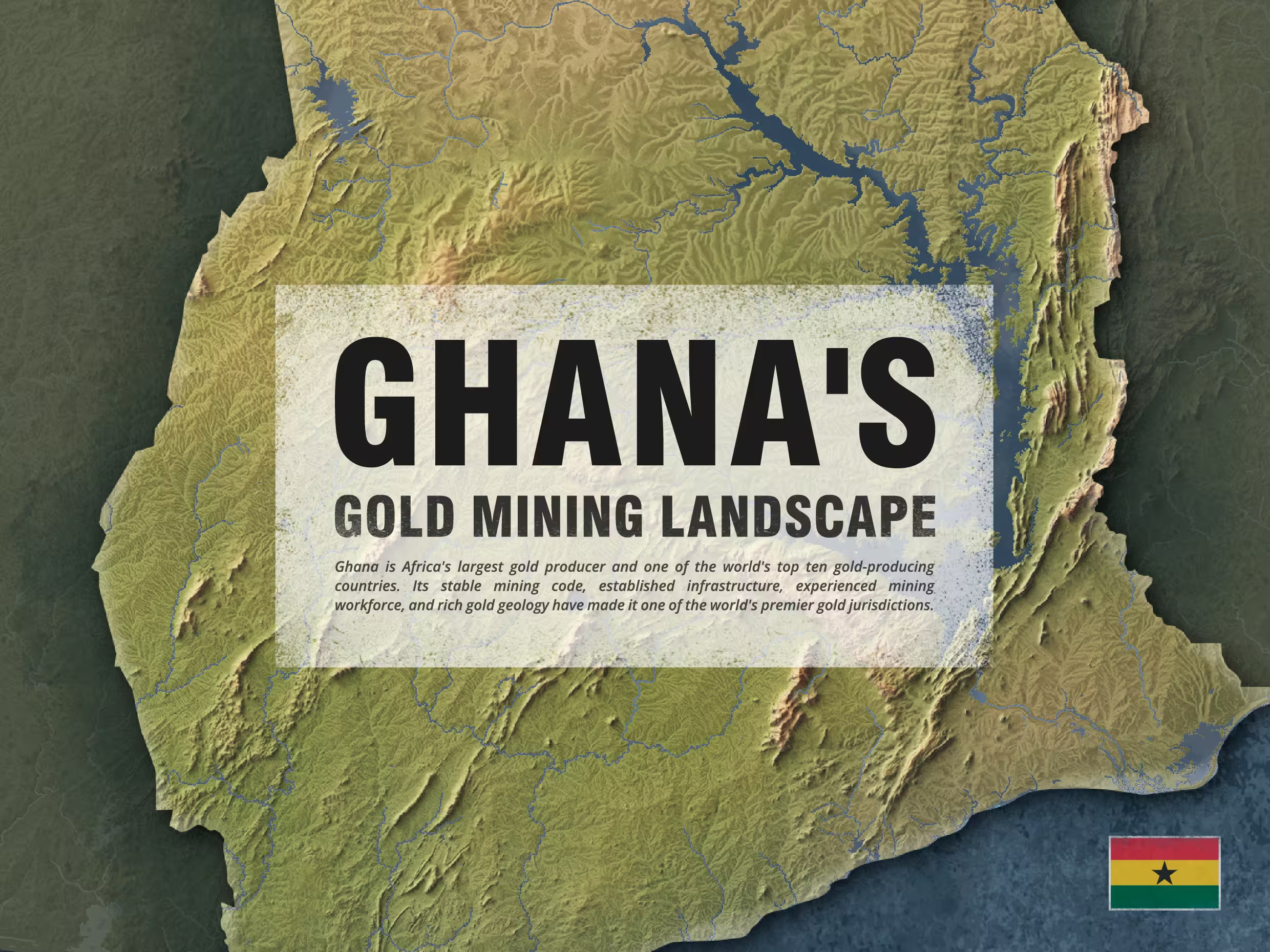
Ghana is one of the world's most significant gold-producing countries, and in 2025 it remained the largest in Africa, with national output reaching about 6 million ounces. But the numbers are only the surface. Ghana's gold reaches back more than two billion years into the rock beneath it, shaped by ancient mountain-building forces and worked by human hands for well over a century.
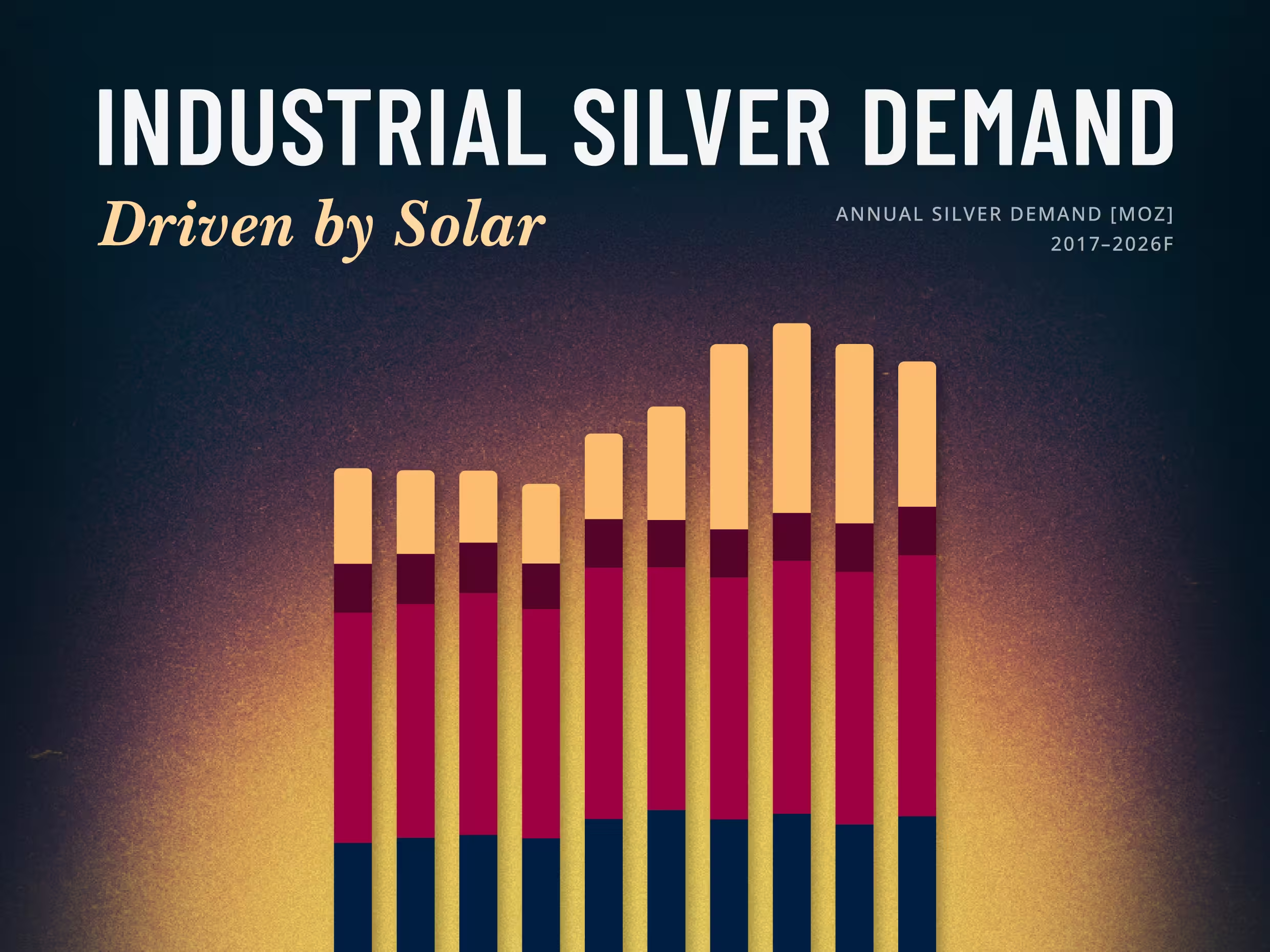
When LONGi Green Energy, the world's largest solar module maker, told investors on January 5, 2026 that it would begin mass-producing base-metal solar cells in the second quarter, it put a number on a pressure the whole industry feels. Solar is the largest single application within silver's industrial demand, and as the metal ran to a record above $121 an ounce in January, rising silver costs pushed manufacturers to accelerate efforts to reduce the metal per cell.