Precious Metals
Charted: Fifty Years of Gold Production in West Africa
AN ANCIENT GOLD REGION, REOPENED BY REFORM AND RISING AGAIN ACROSS WEST AFRICA
The following content is sponsored by Galiano Gold
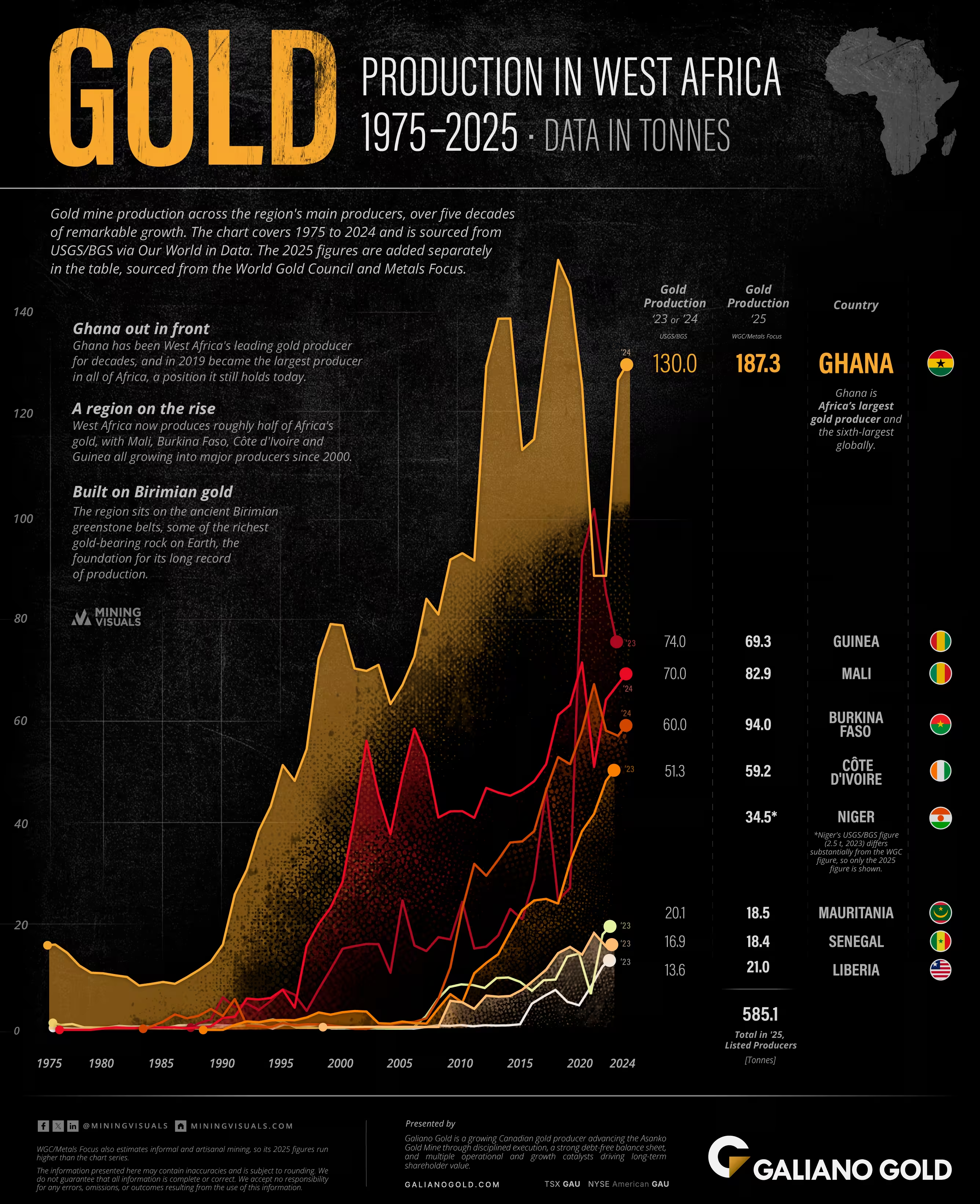

West Africa is in the middle of a gold run. In 2025 Ghana's output climbed more than 23 percent to a record 5.94 million ounces, holding its place as Africa's largest producer and now the sixth-largest in the world, and analysts expect the wider region to rebound about 8 percent in 2026. The chart on this page sets that momentum in context: fifty years of rising production. But the more interesting story runs deeper than any single year, or any single number. West Africa is not discovering gold. It is returning to it.
Long before any of these countries existed in their present form, the region was famous for one thing. From roughly the seventh century, gold from West Africa was the main commodity of the trans-Saharan trade, carried north by camel caravan to mint the coins of the Mediterranean world. Arab geographers called the land to the south the "Land of Gold." When the Malian emperor Mansa Musa passed through Cairo in 1324 carrying a ton of gold, his spending there sent the local price crashing, a display of what his territory produced in abundance.
That same wealth later drew European ships to the coast of modern Ghana, which they named the Gold Coast.
West Africa's gold is not scattered by chance. It sits in the Birimian belts, bands of ancient Proterozoic rock that forms part of the West African Craton and ranks among the most productive gold-bearing rock on the continent. The belts run in long, roughly parallel lines across the southern edge of the craton, through Ghana, Côte d'Ivoire, Burkina Faso, Mali, Guinea, Senegal and their neighbours, and people have worked this rock for over a millennium.
That shared geology is why West Africa's gold is a regional story rather than one country's: the region's mines trace the rock beneath them.
For much of the twentieth century, that long history went quiet. After independence, limited capital and shifting politics left the region on the margins of a global gold industry dominated by South Africa. The turn came in the late 1990s, when reformed mining codes and renewed investment reopened the sector. The new codes offered lower royalties and tax holidays to attract investment, and the capital that followed paid for exploration and the building of modern mines. Across much of the region industrial-scale gold mining had been almost non-existent as recently as the early 1990s; as new mines opened and gold prices rose from historic lows toward record highs through the 2000s, output that had been flat for decades began to climb. That long rise is what the chart records. The rewards have been felt across the region. Gold is now a leading export and a major source of national income for producers throughout West Africa. In Ghana it was the top export in 2025, worth nearly $21 billion, well ahead of cocoa and oil; in Burkina Faso it makes up a large share of exports and government revenue.
A turning point came around 2019, when South Africa's long dominance of African gold gave way, its deep, century-old mines maturing as ore grades fell. The centre of the continent's gold had gradually shifted west, toward a group of newer producers.
Across the region, output is climbing. Burkina Faso, Mali and Guinea have each grown into substantial producers, and Côte d'Ivoire has been expanding quickly. Fifty years ago most of these countries barely registered on a global gold map. Today, together, the producers shown here mine roughly 585 tonnes a year, forming one of the world's most dynamic gold regions, each building an industry of its own.
Because the graphic pairs a fifty-year trend with a 2025 snapshot, it uses two sources, and they do not line up exactly. The trend comes from USGS and BGS data via Our World in Data; the snapshot comes from the World Gold Council. The Council captures more of the informal output that official surveys tend to miss, so its figures often run higher. That gap is not a mistake. In a region where small-scale mining now rivals the formal industry, it is part of the story.

Galiano Gold Inc. (TSX: GAU) (NYSE American: GAU) is building momentum at the Asanko Gold Mine in Ghana, West Africa. With a strong, debt-free balance sheet, disciplined execution, and multiple operational and growth catalysts ahead, Galiano is focused on strengthening cash flow generation, growing Mineral Resources and Mineral Reserves, extending mine life, and delivering long-term shareholder value.
As a Canadian gold producer, Galiano is committed to responsible mining and sustainable value creation while contributing to Ghana's economic development through local employment, procurement, and community investment.
Learn more at www.galianogold.com.
MiningVisuals Disclaimer: This article is for informational purposes only and does not constitute financial or investment advice. Always conduct your own research.
Sources: The Metropolitan Museum of Art (Trans-Saharan Gold Trade); Institute of Current World Affairs (West Africa's gold mines); NS Energy (top gold-producing countries of Africa); Xinhua (Ghana Chamber of Mines 2025 annual report); Mining Technology / GlobalData (West Africa 2026 recovery); Our World in Data / USGS / BGS; World Gold Council.


The nine West African countries with significant reported output produced about 15% of the world's mined gold in 2025, according to Metals Focus and World Gold Council data. Almost every mine on the map above was built in the past 25 years, and four more reached production in the last eighteen months: Lafigué in Côte d'Ivoire in June 2024, Kiaka in Burkina Faso in June 2025, Ahafo North in Ghana in October 2025 and Kiniero in Guinea in December 2025.
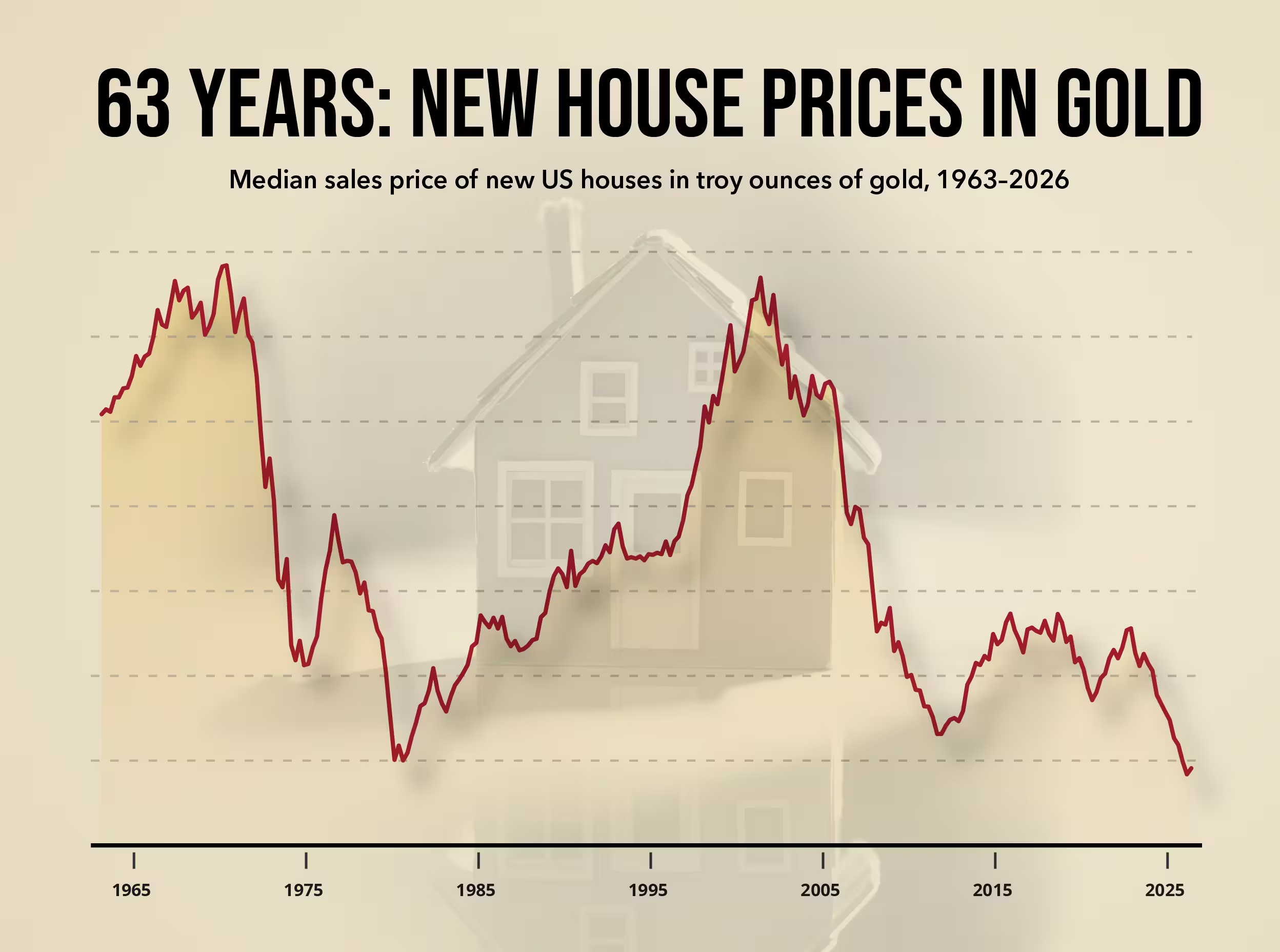
The US Census Bureau's July new-home report, released on August 25, put the median price of a newly built house at $393,800. HousingWire noted that was the lowest since July 2021. In dollars, the market has moved within a narrow band: the quarterly median has stayed between $408,500 and $435,400 since 2023.
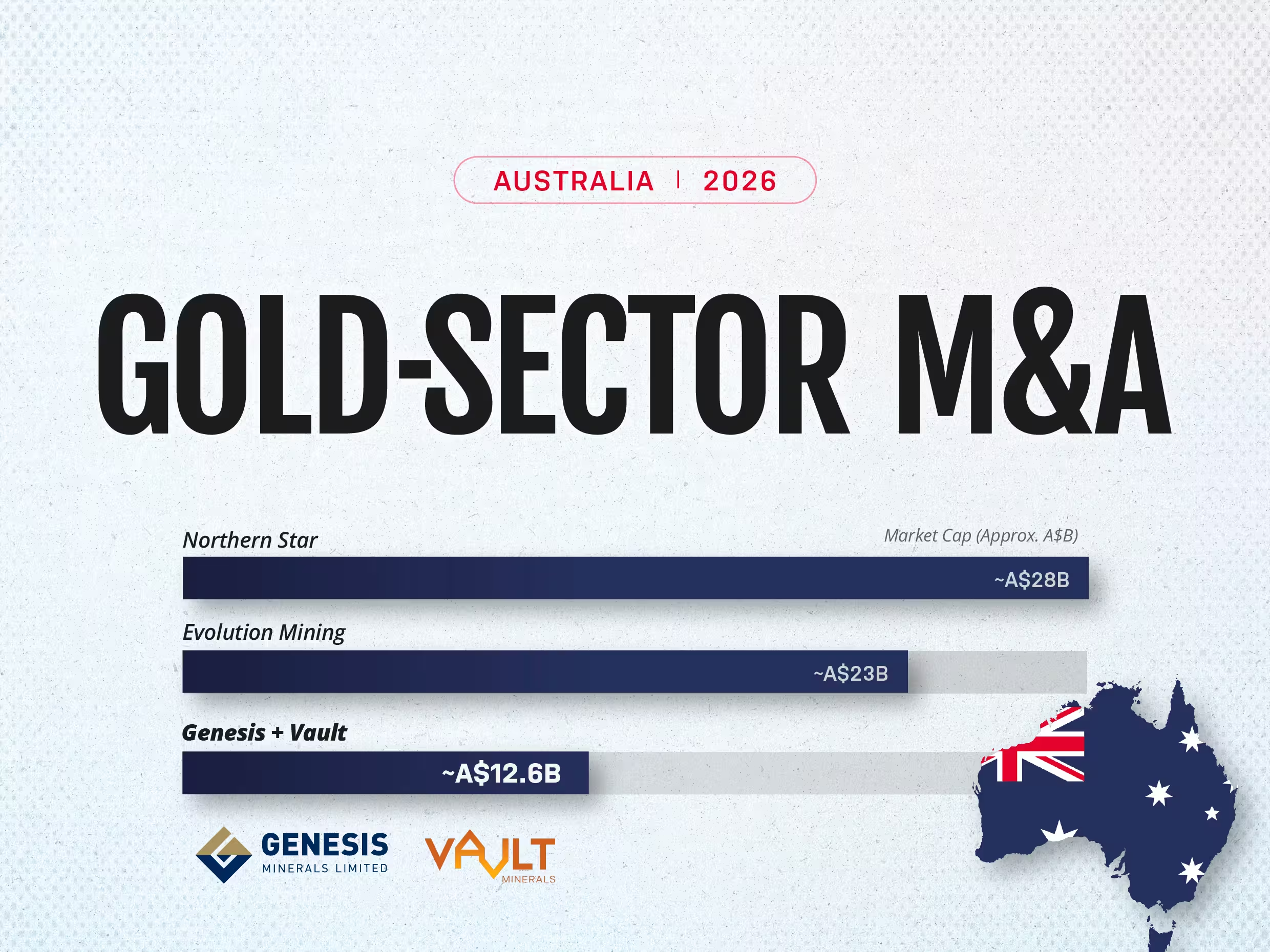
Gold hit an all-time high of about US$5,595 an ounce in January 2026 before settling near US$4,000, still far above the levels of a few years ago. That combination, record prices followed by a stable, still-profitable pullback, has done something a straight rally rarely does: it has opened a merger window.
.webp)
In March 2026, one of Ghana's own mining companies said it would invest about $1.2 billion in its operations at the Tarkwa and Damang gold mines. Both sit on the Ashanti belt, one of three narrow bands of ancient rock that carry almost all of Ghana's gold.