Precious Metals
May 18, 2026
1 min
Precious Metals
The following content is sponsored by Outcrop Silver

Key takeaways
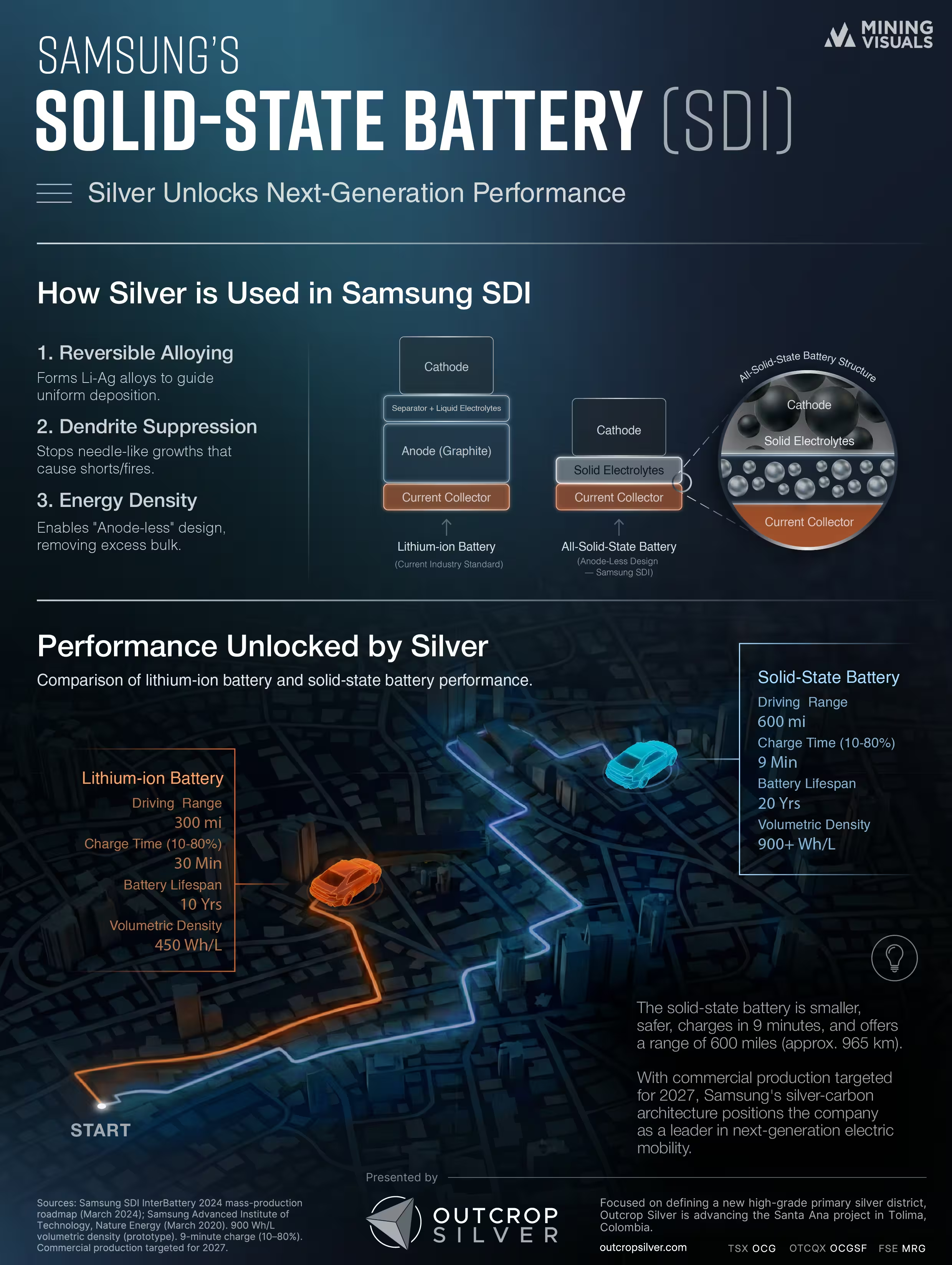
- Silver Enables the Design: A 5-micrometer silver-carbon layer suppresses dendrites and allows Samsung's compact "anode-less" architecture.
- Performance Leap: The technology targets 900 Wh/L, 600-mile range, and 9-minute fast charging, roughly double current lithium-ion density.
- 2027 Timeline: Mass production is targeted for 2027, signaling a potential new role for silver in the EV supply chain.
The electric vehicle (EV) industry is approaching a generational transition. While current lithium-ion technology has enabled the first wave of mass adoption, manufacturers are actively seeking solutions to persistent challenges regarding energy density, charging speed, and safety. Among the leading candidates for the next generation of energy storage is the solid-state battery (SSB), with major developers like Samsung SDI targeting mass production by 2027.
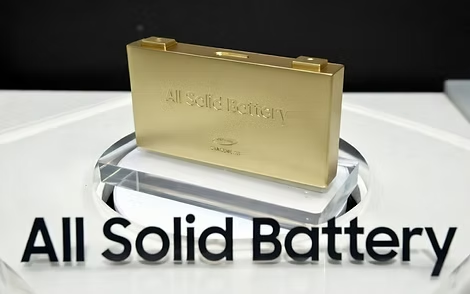
Recent technical specifications point to potential improvements in performance, including ranges approaching 600 miles and rapid charging times of nine minutes. Beyond the headline performance figures, the material science enabling them, specifically the integration of a silver-carbon layer, represents a notable shift in battery chemistry.
Addressing the Dendrite Challenge
A primary hurdle in developing high-density batteries is the formation of "dendrites." These are needle-like lithium structures that can grow during charging, potentially piercing the separator and causing short circuits.
To address this, Samsung's research team, as detailed in Nature Energy, introduced a silver-carbon (Ag-C) nanocomposite layer. In this application, silver functions as a stabilizing agent. It forms a reversible alloy with lithium during charging, promoting uniform deposition and suppressing dendrite growth. This stability is a key factor in longevity, and Samsung SDI publicly targets a service life of over 20 years for its commercial all-solid-state product.
The "Anode-Less" Design Concept
The stability provided by the Ag-C layer allows for an "anode-less" architecture. Unlike traditional batteries that use a graphite anode, this design begins with a thin 5-micrometer Ag-C layer. The active lithium metal anode forms in situ (during the charging process) between the solid electrolyte and the current collector.
By removing the bulk of the pre-existing anode material, the cell becomes more compact. This efficiency is central to achieving volumetric energy densities of 900 Wh/L, significantly higher than conventional cells.
While other developers, including Toyota, QuantumScape, and ProLogium, are pursuing alternative solid-state chemistries, Samsung SDI's silver-carbon approach is among the most advanced toward commercial production.
The table below outlines how this silver-enabled architecture compares to current production technology:
Implications for Silver Demand
For the resource sector, this development signals a potential expansion of silver's role in the automotive supply chain. Silver is currently used in EVs primarily for its conductivity in contacts, switches, and electronic components. Samsung SDI's architecture introduces silver as a functional component within the battery cell itself, a structural rather than peripheral application.
As Samsung SDI progresses toward its 2027 production target, with evaluation partnerships including BMW underway, the metal's position in next-generation energy storage warrants closer attention from market participants. Should silver-carbon architectures move from pilot lines to mass production on the timeline Samsung has committed to, and should other developers pursue similar chemistries, the implications for high-purity silver demand in the automotive sector could be material.
Sponsored by:

Outcrop Silver is a leading explorer and developer focused on advancing its flagship Santa Ana high-grade silver project in Colombia. Leveraging a disciplined and seasoned team of professionals with decades of experience in the region. Outcrop Silver is dedicated to expanding current mineral resources through strategic exploration initiatives.
At the core of our operations is a commitment to responsible mining practices and community engagement, underscoring our approach to sustainable development. Our expertise in navigating complex geological and market conditions enables us to consistently identify and capitalize on opportunities to enhance shareholder value.
With a deep understanding of the Colombian mining landscape and a track record of successful exploration, Outcrop Silver is poised to transform the Santa Ana project into a significant silver producer, contributing positively to the local economy and setting new standards in the mining industry.
Learn more about Outcrop Silver at https://outcropsilver.com/
Sources
- Samsung Advanced Institute of Technology, Nature Energy (March 2020) — original Ag-C nanocomposite anode research and 900 Wh/L prototype: https://research.samsung.com/research-papers/High-energy-long-cycling-all-solid-state-lithium
- Samsung SDI, InterBattery 2024 announcement (March 2024) — 2027 mass-production roadmap and 900 Wh/L target: https://www.samsungsdi.com/sdi-now/sdi-news/3522.html
- Samsung SDI, EVS37 announcement — 9-minute charging and 20-year service life targets: https://www.samsungsdi.com/sdi-now/sdi-news/3602.html
- Samsung Newsroom, Nature Energy coverage — 5-micrometer Ag-C anode layer details: https://news.samsung.com/global/samsung-presents-groundbreaking-all-solid-state-battery-technology-to-nature-energy
- Samsung SDI, InterBattery 2025 — ASB customer sampling progress and 2027 timeline: https://www.samsungsdi.com/sdi-now/sdi-news/4242.html
MiningVisuals Disclaimer: This article is for informational purposes only and does not constitute financial or investment advice.
The information presented here may contain inaccuracies and is subject to rounding. We do not guarantee that all information is complete or correct. We accept no responsibility for any errors, omissions, or outcomes resulting from the use of this information. This is not investment advice.





Explore More
View All


Gold Mines in West Africa: Two Billion Years in the Making
Gold Mines in West Africa: Two Billion Years in the Making
The nine West African countries with significant reported output produced about 15% of the world's mined gold in 2025, according to Metals Focus and World Gold Council data. Almost every mine on the map above was built in the past 25 years, and four more reached production in the last eighteen months: Lafigué in Côte d'Ivoire in June 2024, Kiaka in Burkina Faso in June 2025, Ahafo North in Ghana in October 2025 and Kiniero in Guinea in December 2025.
A Median New US Home Now Costs Less Than 100 Ounces of Gold
A Median New US Home Now Costs Less Than 100 Ounces of Gold
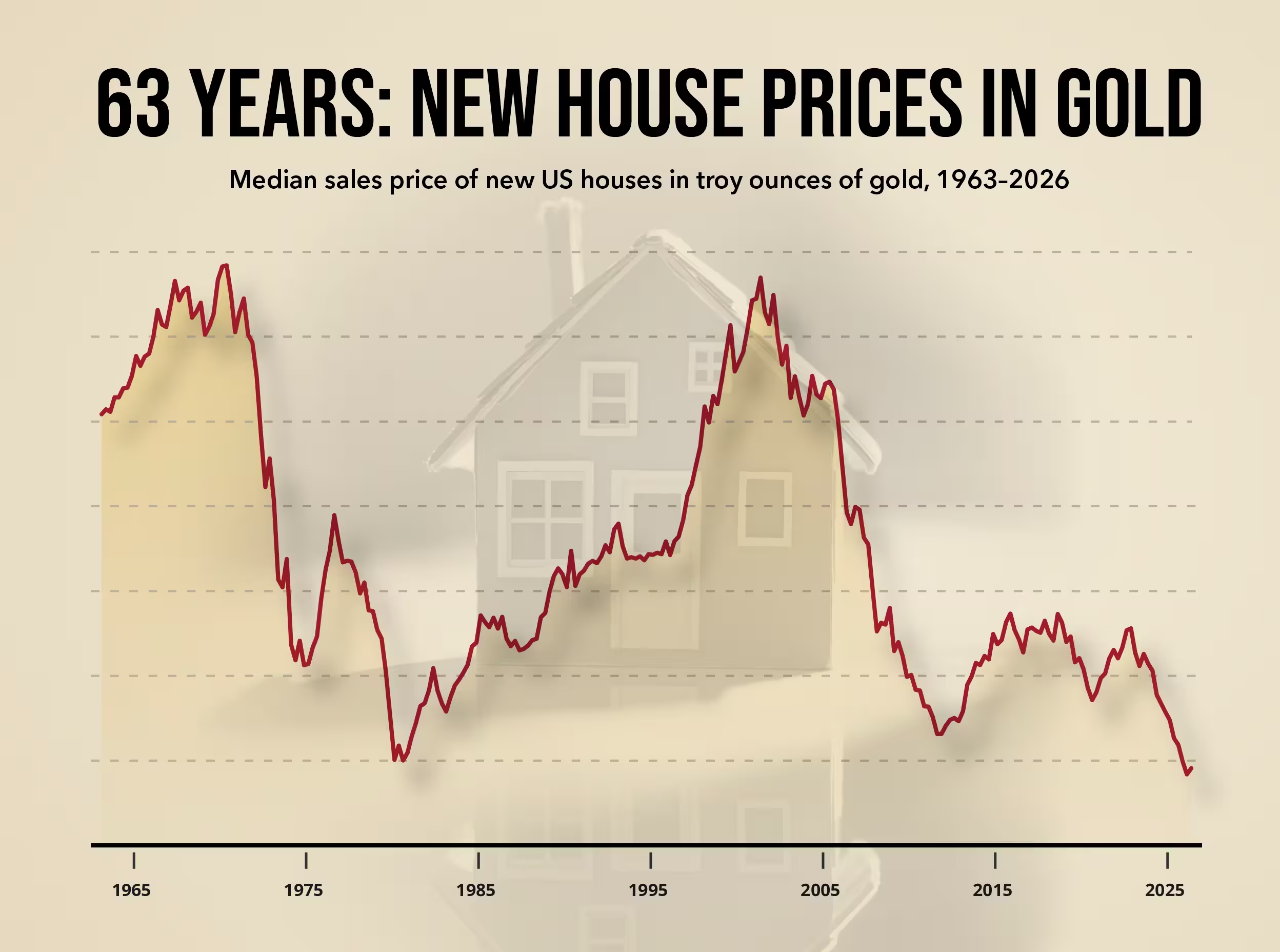
The US Census Bureau's July new-home report, released on August 25, put the median price of a newly built house at $393,800. HousingWire noted that was the lowest since July 2021. In dollars, the market has moved within a narrow band: the quarterly median has stayed between $408,500 and $435,400 since 2023.
Gold's Record Run Has Set Off a Wave of Mining Mergers
Gold's Record Run Has Set Off a Wave of Mining Mergers
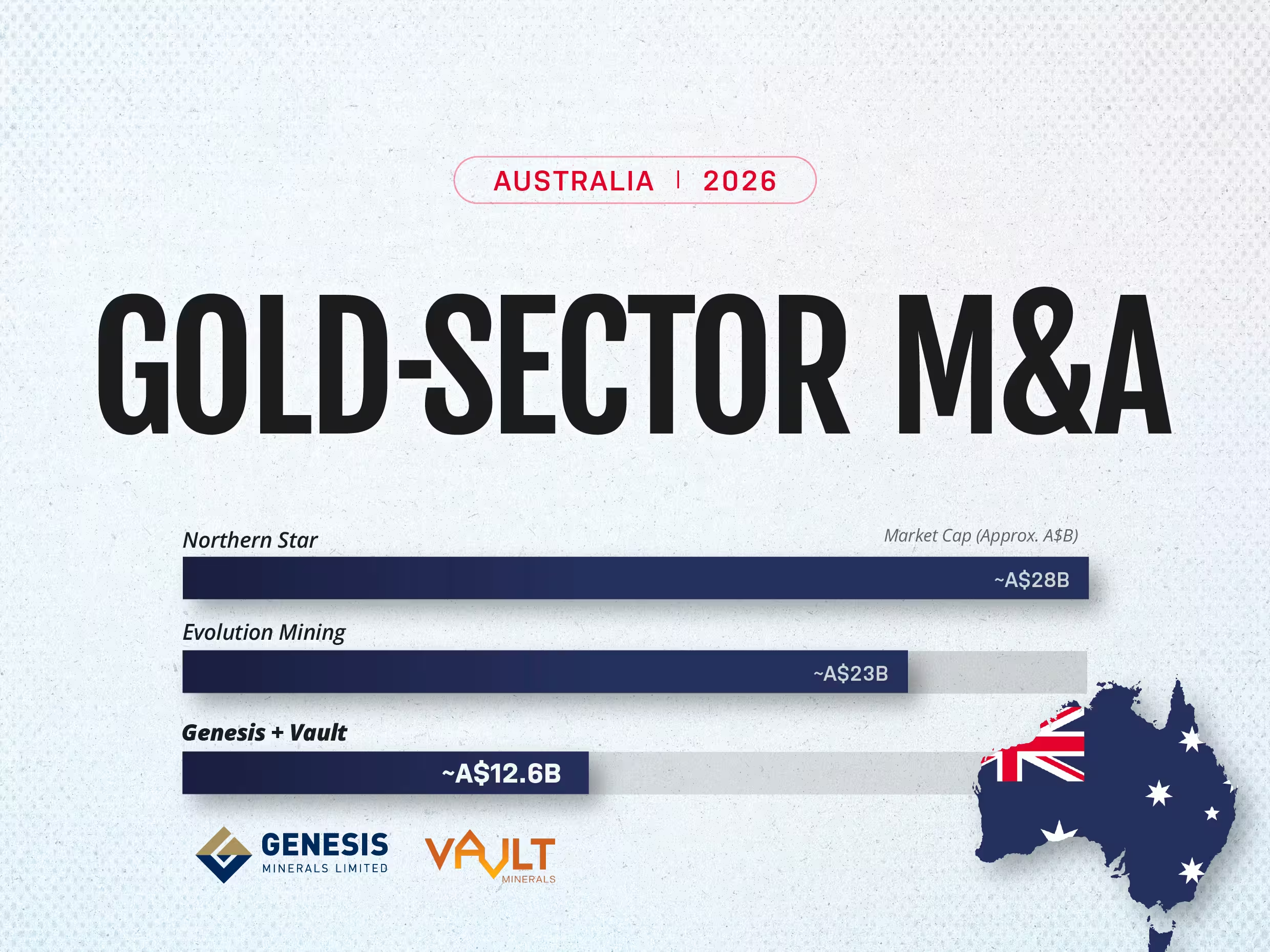
Gold hit an all-time high of about US$5,595 an ounce in January 2026 before settling near US$4,000, still far above the levels of a few years ago. That combination, record prices followed by a stable, still-profitable pullback, has done something a straight rally rarely does: it has opened a merger window.
.webp)
Three Ancient Belts Carry Ghana's Gold, and Investment Keeps Flowing to Them
Three Ancient Belts Carry Ghana's Gold, and Investment Keeps Flowing to Them
In March 2026, one of Ghana's own mining companies said it would invest about $1.2 billion in its operations at the Tarkwa and Damang gold mines. Both sit on the Ashanti belt, one of three narrow bands of ancient rock that carry almost all of Ghana's gold.