Precious Metals
April 23, 2026
1 min
Precious Metals

Key takeaways
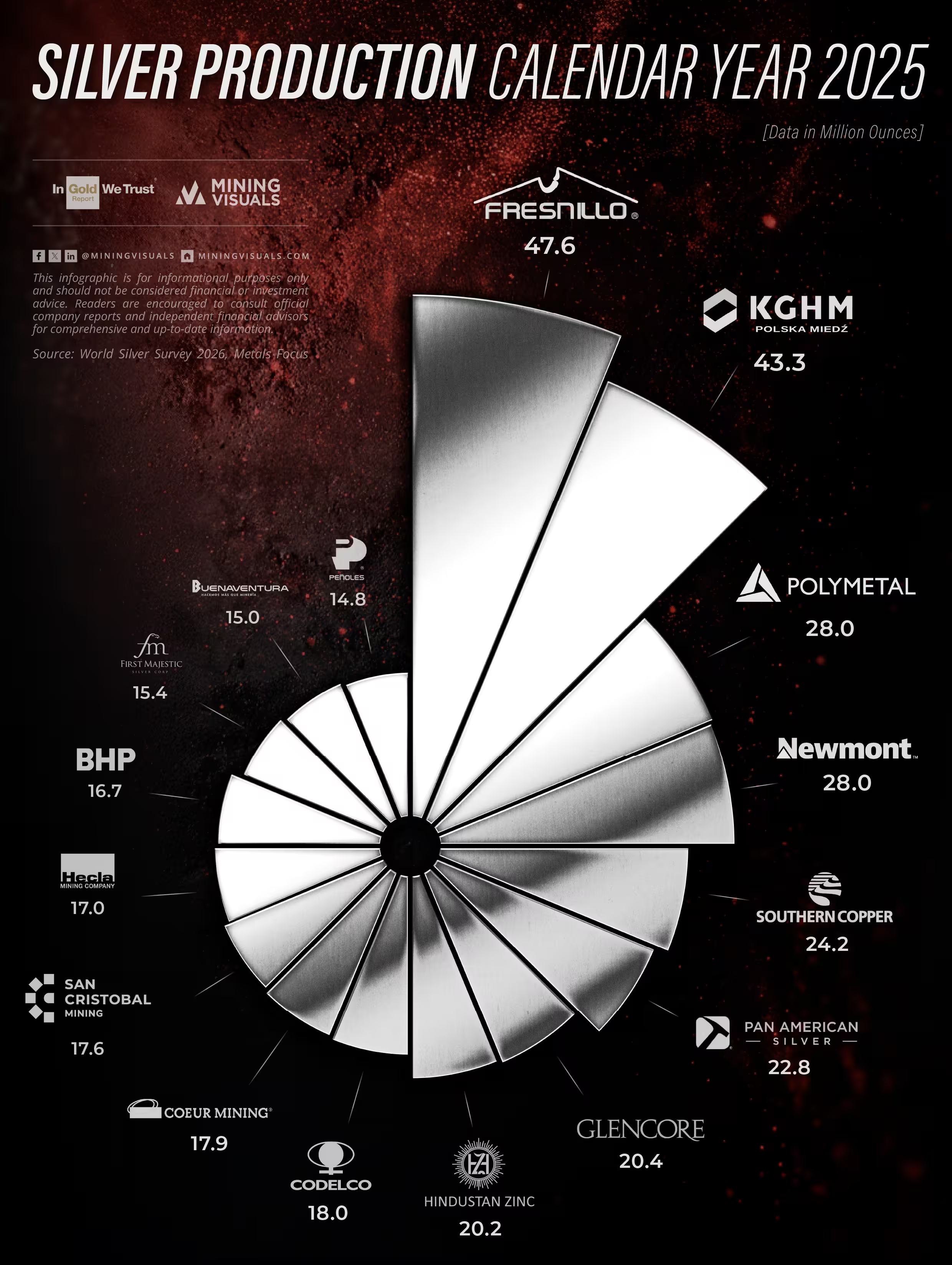
- Merger Momentum: First Majestic’s 84% production surge was the year's single largest volume jump, driven by the Gatos Silver acquisition.
- Expansion Payoffs: Coeur Mining and Hecla Mining reached critical milestones at Rochester and Lucky Friday, establishing new operational baselines.
- Yield Efficiency: Despite grade challenges, Fresnillo maintained its lead, while Newmont leveraged record free cash flow to optimize its byproduct output.
The silver market opened 2026 with historic volatility, peaking at a record $121.64/oz in January before undergoing a sharp 38% correction by the end of March. While prices shifted, the operational reports for the 2025 calendar year reveal a sector defined by massive infrastructure completions and aggressive M&A. With the 2025 audited figures now finalized, the data shows that production growth was not uniform, but concentrated in companies that successfully executed major expansion projects.
The Expansion Leaders: Coeur and Hecla
2025 marked a transformative year for U.S.-based output. Coeur Mining reported 17,900,000 ounces for the year, a 57% increase over 2024 levels. This growth was specifically driven by the Rochester expansion in Nevada reaching its full design capacity of 32 million tons per year in the fourth quarter. Similarly, Hecla Mining reported 17,026,785 ounces, noting that production at its Lucky Friday mine reached a record high following its full return to operations and technical recovery earlier in the year.
Strategic Consolidation: First Majestic and Pan American
The most significant volume shift in the mid-tier sector came from First Majestic Silver, which reported a record 15,435,506 ounces. The 84% increase was almost entirely attributed to the integration of Gatos Silver. In a similar vein, Pan American Silver exceeded its annual guidance with 22,837,000 ounces, citing higher throughput rates and optimized recoveries at the Juanicipio mine as the primary catalyst for the beat.
Byproduct Power: Newmont and Southern Copper
For diversified miners, 2025 was a year of extreme fiscal efficiency. Newmont Corporation leveraged its silver byproduct output of 28,000,000 ounces to help generate a record $7.3 billion in free cash flow. Meanwhile, Southern Copper reported a 15% increase in annual silver production to 24,188,000 ounces, even as it reported a massive $3.1 billion in net income, highlighting the profitability of silver as a secondary metal in large-scale copper circuits.
Grade Pressure and Outlook
While Fresnillo PLC remains the global leader with 48,723,000 ounces, its report highlighted the challenges of maturing assets, leading to a downward revision of its 2026 production outlook despite beating gold production targets in 2025. This move signals a pivot toward grade-stabilization strategies for the coming year, a trend likely to be mirrored by other primary silver miners entering the latter half of the decade.
Sources: Fresnillo PLC, Newmont Corp, Southern Copper Corp, Pan American Silver, First Majestic Silver, Hecla Mining, Coeur Mining, Crux Investor
MiningVisuals Disclaimer: The information presented here may contain inaccuracies and is subject to rounding. We do not guarantee that all information is complete or correct. We accept no responsibility for any errors, omissions, or outcomes resulting from the use of this information. This is not investment advice.





Explore More
View All


The World's 20 Largest Primary Silver Mines by 2025 Output
The World's 20 Largest Primary Silver Mines by 2025 Output
The largest silver producer among the world's primary silver mines in 2025 sat not in Mexico but in southwestern Bolivia. San Cristóbal, a large open-pit silver-zinc-lead mine run by Minera San Cristóbal, produced 17.6 million ounces of silver, narrowly ahead of Mexico's Juanicipio at the same rounded figure, in new Metals Focus data on the 20 largest primary silver mines. These are the operations where silver is a defining product rather than an incidental byproduct of lead, zinc and gold. The list runs from centuries-old mines in Mexico's silver belt to remote sites in the Andes, the Australian outback and the Alaskan wilderness. Eight of the 20 sit in Mexico, together about 44% of the total, while the rest are spread across the Americas, Asia, Africa and Australia.

Central Banks Have Been Net Gold Buyers Since 2010, After Two Decades of Net Selling
Central Banks Have Been Net Gold Buyers Since 2010, After Two Decades of Net Selling
Central banks bought more gold between April and June 2026 than in any second quarter on record, according to a World Gold Council report published on July 30. That keeps them net buyers this year, as they have been every year since 2010. Underneath, the picture is changing. Russia and Türkiye, both big buyers in the past, have been selling.

Gold Mines in West Africa: Two Billion Years in the Making
Gold Mines in West Africa: Two Billion Years in the Making
The nine West African countries with significant reported output produced about 15% of the world's mined gold in 2025, according to Metals Focus and World Gold Council data. Almost every mine on the map above was built in the past 25 years, and four more reached production in the last eighteen months: Lafigué in Côte d'Ivoire in June 2024, Kiaka in Burkina Faso in June 2025, Ahafo North in Ghana in October 2025 and Kiniero in Guinea in December 2025.
A Median New US Home Now Costs Less Than 100 Ounces of Gold
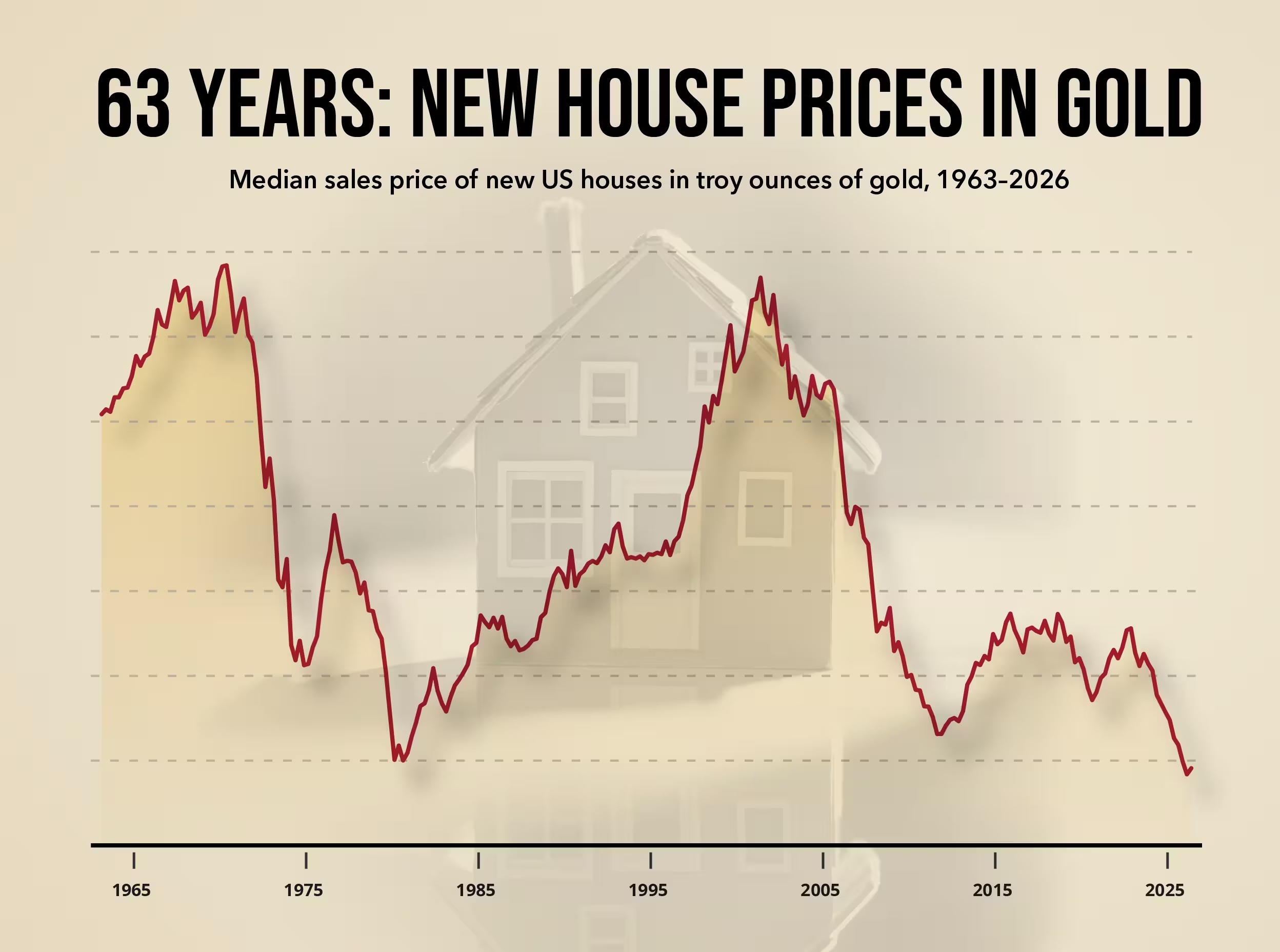
A Median New US Home Now Costs Less Than 100 Ounces of Gold
The US Census Bureau's July new-home report, released on August 25, put the median price of a newly built house at $393,800. HousingWire noted that was the lowest since July 2021. In dollars, the market has moved within a narrow band: the quarterly median has stayed between $408,500 and $435,400 since 2023.