Precious Metals
April 10, 2026
1 min
Precious Metals


Key takeaways
- US Leadership: Nevada Gold Mines retained the top spot, producing 2,595 kilounces (Koz) in 2025. The complex outproduced second-place Muruntau by 887 Koz, despite a 3% year-over-year decrease.
- Regional Output: Central Asia and Russia claim half the top ten. Uzbekistan holds second and sixth (Muruntau, Almalyk), Kazakhstan ranks fourth (Kazzinc), and Russia takes third and seventh (Olimpiada, Blagodatnoye).
- Grasberg's Drop: Indonesia's Grasberg complex recorded a 50% year-over-year production decrease. Output fell to 937 Koz, dropping the mine from third to fifth place and allowing Kazzinc into the top four.
The global gold supply is anchored by a small group of highly consolidated mining operations. A review of 2025 production figures reveals a top-heavy industry where the leading mega-complexes maintain a distinct output gap over the rest of the market. From massive joint ventures in North America to sprawling open pits in Central Asia, these top ten mines dictate the volume of physical gold entering the market.
The Tier 1 Powerhouses: Nevada and Muruntau
The apex of global gold production is currently defined by two vastly different operations.
Taking the number one spot is the Nevada Gold Mines, a historic 2019 joint venture between industry rivals Barrick (61.5%) and Newmont (38.5%). This colossal complex consolidates 10 underground and 12 open-pit operations into a single powerhouse. In 2025, the complex produced 2,595 Koz of gold, maintaining its leading position despite a 3% drop from 2024 levels.
In second place is Navoi Mining & Metallurgy Company’s (NMMC) Muruntau complex. Located in Uzbekistan’s remote Kyzylkum Desert, Muruntau is recognized as the world's largest open-pit gold mine by sheer physical scale, spanning roughly 5.5 by 3.4 kilometers. The operation produced 1,708 Koz in 2025, registering a 4% year-over-year increase.
The Mid-Tier Reshuffle
Behind the two leaders, the middle of the pack saw significant movement based on 2025 data. Polyus’ Olimpiada mine in Russia's Krasnoyarsk Krai secured third place, producing 1,357 Koz despite a 6% drop from the previous year.
A notable shift occurred in the fourth and fifth positions. Kazakhstan's Kazzinc Consolidated jumped to fourth place with 947 Koz. Meanwhile, the Grasberg complex in Indonesia, a joint venture between Freeport-McMoRan and PT Mineral Industri Indonesia, slid from third to fifth place, producing 937 Koz after experiencing a sharp 50% drop from its 2024 production.
The Bottom Half of the Top 10
The final five spots on the top 10 list represent a geographically diverse mix of assets:
- Almalyk Complex (AMMC): 750 Koz (Uzbekistan)
- Blagodatnoye (Polyus): 736 Koz (Russia)
- Detour Lake (Agnico Eagle): 693 Koz (Canada)
- Kibali (Barrick/AngloGold Ashanti/SOKIMO): 673 Koz (Democratic Republic of Congo)
- Ahafo (Newmont): 664 Koz (Ghana)
Kibali stands out in the ninth position not only for its output but also for its operational model. Situated in the DRC, the highly automated underground operation relies heavily on sustainable energy, meeting roughly 85% of its energy demands through a grid of three hydroelectric stations and a solar plant.
The Concentration of Global Gold Supply
The 2025 production data highlights a stark reality regarding the global gold market: supply relies heavily on a handful of massive, highly complex operations. From the consolidated infrastructure of Nevada Gold Mines to the sprawling open pits of Muruntau and Olimpiada, maintaining top-tier gold production requires unprecedented scale. As production at mature assets like Grasberg fluctuates, the performance of these top 10 mines will continue to be a vital metric for tracking the availability of the world's premier safe-haven asset.
MiningVisuals Disclaimer: This article is for informational purposes only and does not constitute financial or investment advice. Always conduct your own research.
Sources: RANKED: World's top 20 largest gold mines - MINING.COM





Explore More
View All


Central Banks Have Been Net Gold Buyers Since 2010, After Two Decades of Net Selling
Central Banks Have Been Net Gold Buyers Since 2010, After Two Decades of Net Selling
Central banks bought more gold between April and June 2026 than in any second quarter on record, according to a World Gold Council report published on July 30. That keeps them net buyers this year, as they have been every year since 2010. Underneath, the picture is changing. Russia and Türkiye, both big buyers in the past, have been selling.

Gold Mines in West Africa: Two Billion Years in the Making
Gold Mines in West Africa: Two Billion Years in the Making
The nine West African countries with significant reported output produced about 15% of the world's mined gold in 2025, according to Metals Focus and World Gold Council data. Almost every mine on the map above was built in the past 25 years, and four more reached production in the last eighteen months: Lafigué in Côte d'Ivoire in June 2024, Kiaka in Burkina Faso in June 2025, Ahafo North in Ghana in October 2025 and Kiniero in Guinea in December 2025.
A Median New US Home Now Costs Less Than 100 Ounces of Gold
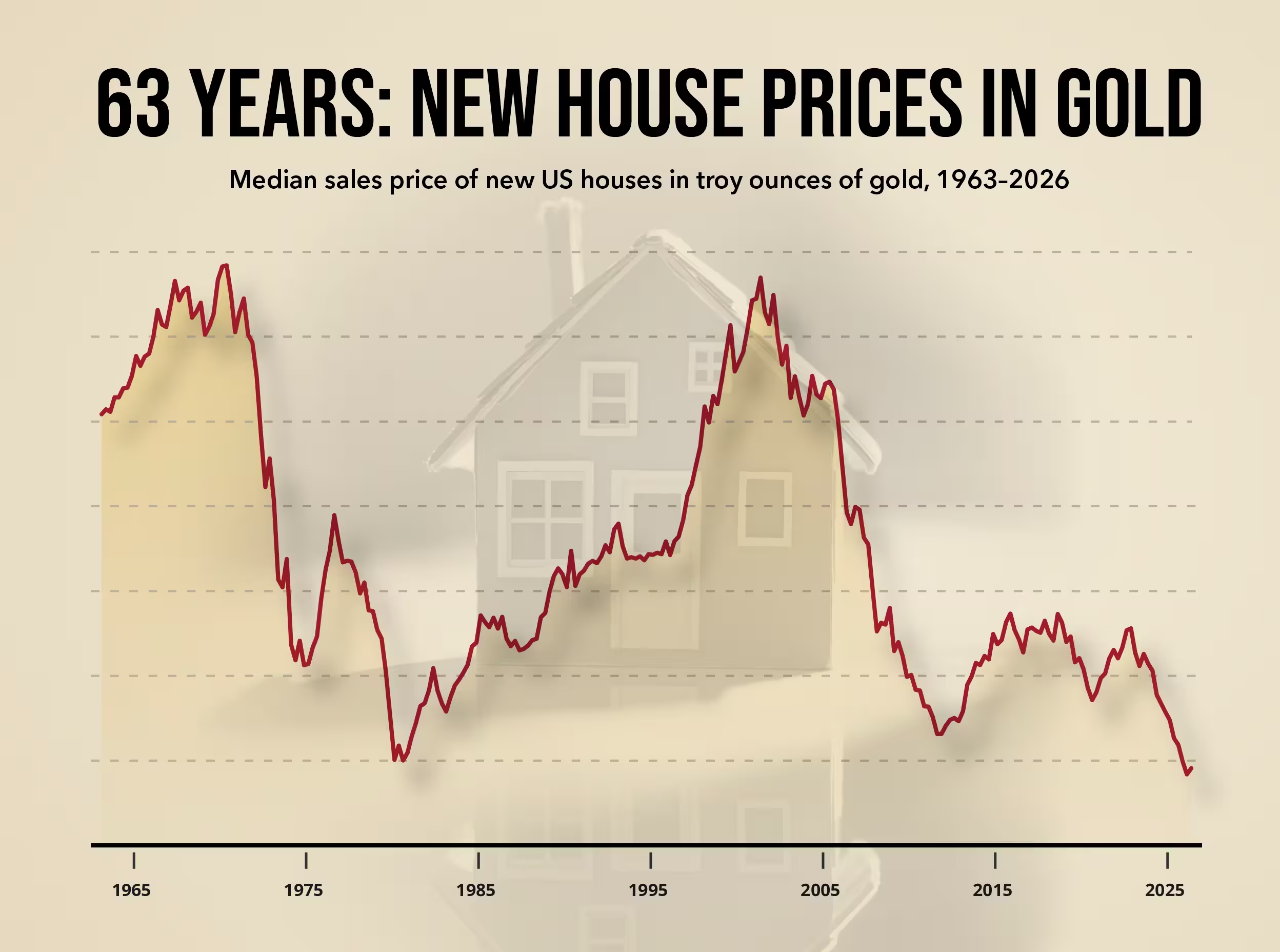
A Median New US Home Now Costs Less Than 100 Ounces of Gold
The US Census Bureau's July new-home report, released on August 25, put the median price of a newly built house at $393,800. HousingWire noted that was the lowest since July 2021. In dollars, the market has moved within a narrow band: the quarterly median has stayed between $408,500 and $435,400 since 2023.
Gold's Record Run Has Set Off a Wave of Mining Mergers
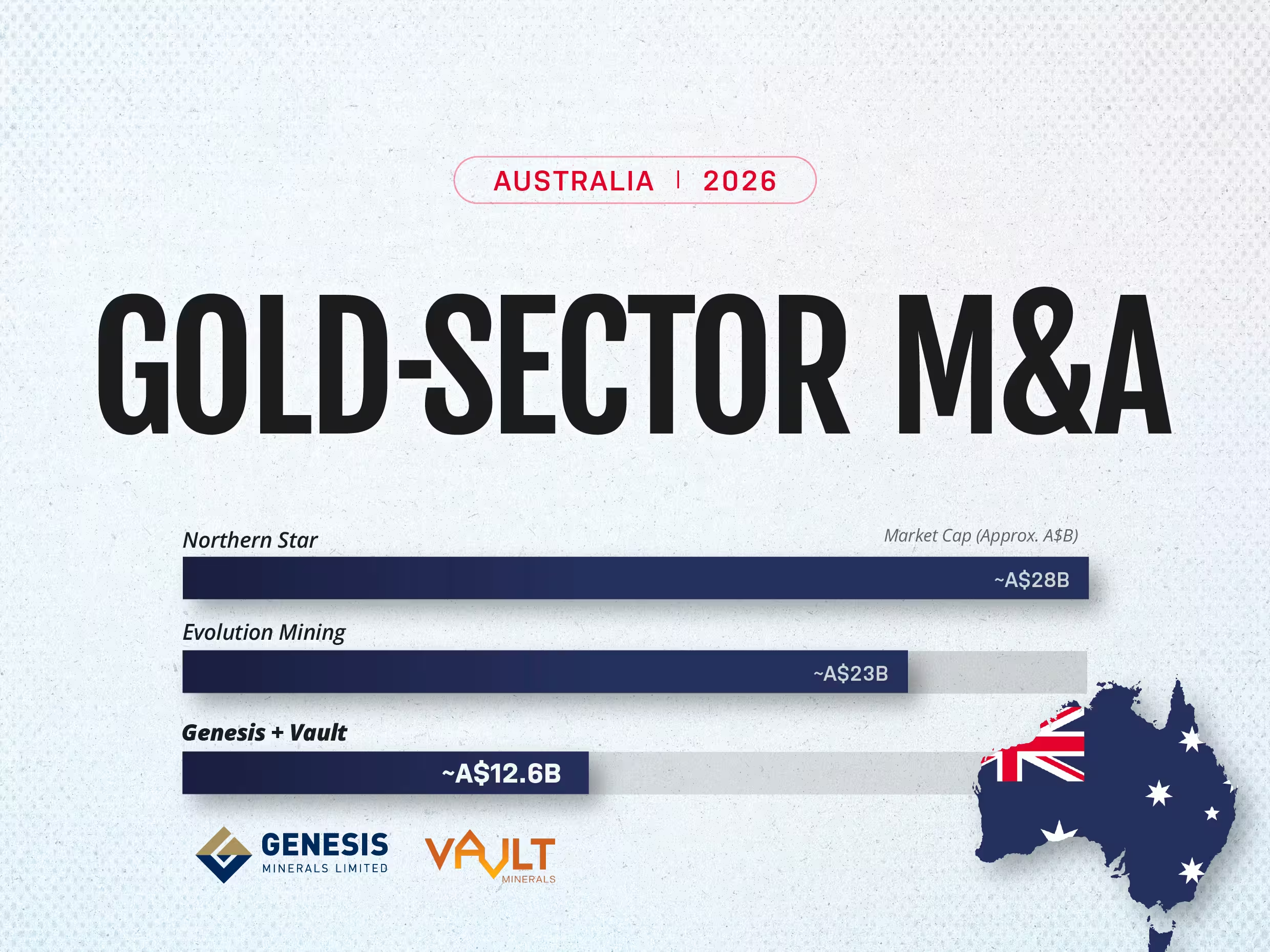
Gold's Record Run Has Set Off a Wave of Mining Mergers
Gold hit an all-time high of about US$5,595 an ounce in January 2026 before settling near US$4,000, still far above the levels of a few years ago. That combination, record prices followed by a stable, still-profitable pullback, has done something a straight rally rarely does: it has opened a merger window.