Precious Metals
May 21, 2026
2 min
Precious Metals
The following content is sponsored by The Silver Institute


Key takeaways
- The 2025 Turnaround: Global coin and net bar demand rebounded by 14% to 217.7 Moz, marking the first annual increase in three years.
- Regional Divergence: The 2025 recovery was fueled by a 33% surge in Indian physical investment, while the US market dropped by 46%.
- Strong 2026 Forecast: Demand is projected to grow by an additional 18% in 2026 to reach 257.6 Moz, driven by safe-haven buying and a forecasted 57% recovery in the US.
Silver had a strange year. After two years of investors walking away from the physical market, 2025 saw them come back. Not in a trickle, but in a rush concentrated into the final four months, as prices ripped through one record after another and dealers started rationing inventory.
According to the World Silver Survey 2026, global coin and net bar demand jumped 14% to 217.7 Moz in 2025, the first annual increase since 2022. It happened against a market where liquid silver was getting harder to find. Identifiable bullion inventories actually rose in aggregate, but a growing share was locked up in exchange-traded products (ETPs) or sitting in CME vaults rather than circulating in London. By October the squeeze was visible in the lease rates. Where the ETP story we covered earlier this year tracked institutional vault demand, this is about something different: retail investors physically walking into dealers and buying coins and bars.
What turned the tide? Three things, mostly arriving together. Inventories got tight enough to start showing up in lease rates. Interest rate expectations softened. And from September onwards, with silver clearing $40 and gold pushing through $4,000, a wave of retail money showed up chasing the move. Some of that was value-seeking, silver had lagged gold badly through the first half of the year. Some of it was straightforward fear of missing out.
A Tale of Two Markets: East vs. West
The global rebound masked a sharp geographic split. The 2025 recovery was led by Asia. Indian physical investment rose 33%. Chinese demand more than doubled to 11.9 Moz. Middle East demand tripled to a record 11.4 Moz, with buying showing up in countries like Saudi Arabia, Iran, and Egypt that have historically been gold-only markets.
Meanwhile, in the United States, retail investors did something close to the opposite. US physical investment nearly halved, falling 46% to its lowest level since at least 2010. The Survey's explanation is partly political. Republican-leaning retail investors, who make up a big share of the US silver buyer base, disengaged from precious metals after the election. Partly it's that with prices grinding higher all year, US buyers sold into the rally instead of chasing it.
By Country: Where the Buying Actually Happened
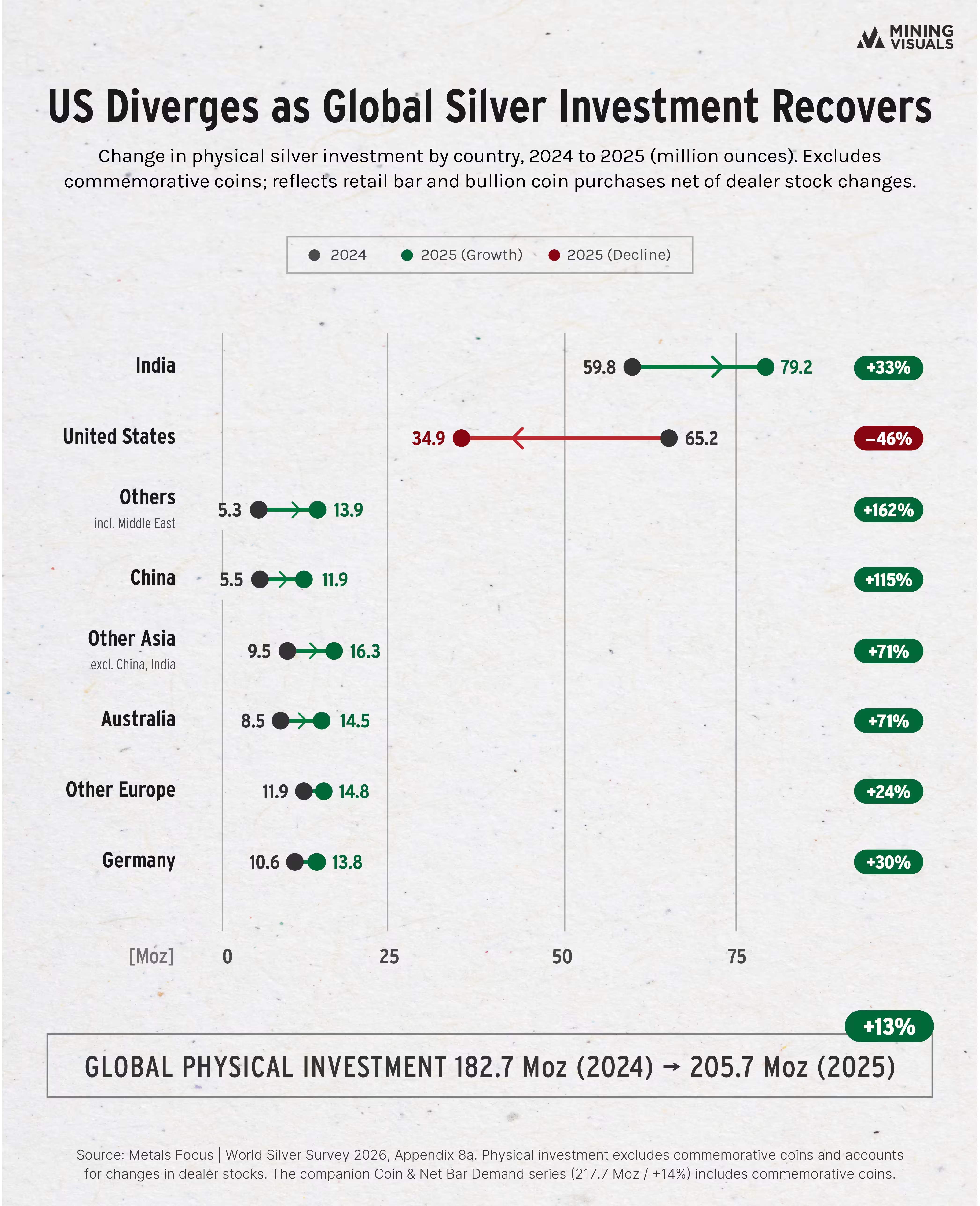
(Country-level data is reported under the "Physical Investment" series, which excludes commemorative coins. The headline 14% / 217.7 Moz figures earlier in this article come from the broader "Coin & Net Bar Demand" series. Both series tell the same story: a 2025 recovery driven by Asia, with the US as a sharp exception.)
The 10-Year Volatility Cycle
Zooming out over the historical surveys, coin and bar demand reveals itself as a highly volatile, sentiment-driven component of the market. Over the last decade, demand has routinely fluctuated between 150 Moz and 340 Moz.
The market reached a 10-year peak of 339.5 Moz in 2022, driven by post-pandemic safe-haven buying and inflation fears. When prices remained high but stagnant through 2023 and 2024, retail demand quickly saturated, retreating to a recent low of 190.9 Moz. The 2025 data confirms that when macroeconomic conditions align, such as rising geopolitical risks and a breakout in spot prices, retail investors aggressively return to physical assets.
The 2026 Outlook
Looking ahead, the momentum established in late 2025 is expected to carry forward. The Silver Institute projects coin and net bar demand will grow by an additional 18% in 2026, reaching 257.6 Moz, the highest level since the 2022 peak.
The growth is expected to be driven by a 57% recovery in the US market, though this only erases 2025's losses rather than reaching prior peaks. Price pullbacks attract bargain hunters and ongoing policy unpredictability reignites the need for portfolio diversification. While industrial demand faces headwinds from technological thrifting, robust physical investment will likely ensure the global silver market remains in a structural deficit throughout the year.
Sponsored by:

The Silver Institute is a global organization dedicated to promoting the use, study, and understanding of silver. It provides in-depth research on silver’s supply, demand, and pricing trends across various industries such as industrial applications, jewelry, investment, and solar energy. One of the institute’s key publications is the World Silver Survey, an annual report that offers detailed statistics and analysis on the global silver market.
For further information, you can visit the official Silver Institute website.
MiningVisuals Disclaimer: This article is for informational purposes only and does not constitute financial or investment advice. Always conduct your own research.
Sources: World Silver Survey 2026, World Silver Survey 2025, Historical Silver Surveys, Silver Supply & Demand Overview





Explore More
View All


Gold Mines in West Africa: Two Billion Years in the Making
Gold Mines in West Africa: Two Billion Years in the Making
The nine West African countries with significant reported output produced about 15% of the world's mined gold in 2025, according to Metals Focus and World Gold Council data. Almost every mine on the map above was built in the past 25 years, and four more reached production in the last eighteen months: Lafigué in Côte d'Ivoire in June 2024, Kiaka in Burkina Faso in June 2025, Ahafo North in Ghana in October 2025 and Kiniero in Guinea in December 2025.
A Median New US Home Now Costs Less Than 100 Ounces of Gold
A Median New US Home Now Costs Less Than 100 Ounces of Gold
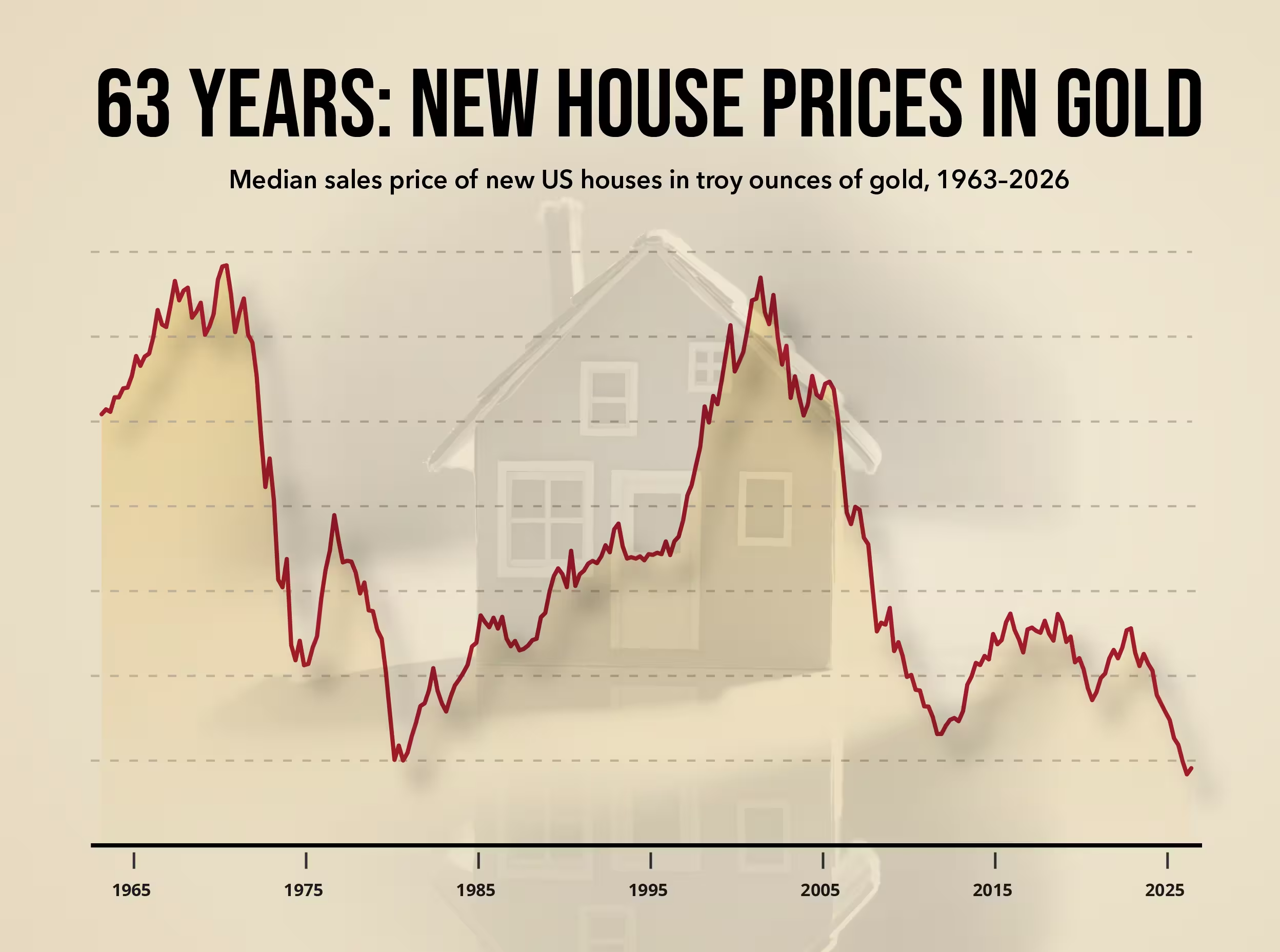
The US Census Bureau's July new-home report, released on August 25, put the median price of a newly built house at $393,800. HousingWire noted that was the lowest since July 2021. In dollars, the market has moved within a narrow band: the quarterly median has stayed between $408,500 and $435,400 since 2023.
Gold's Record Run Has Set Off a Wave of Mining Mergers
Gold's Record Run Has Set Off a Wave of Mining Mergers
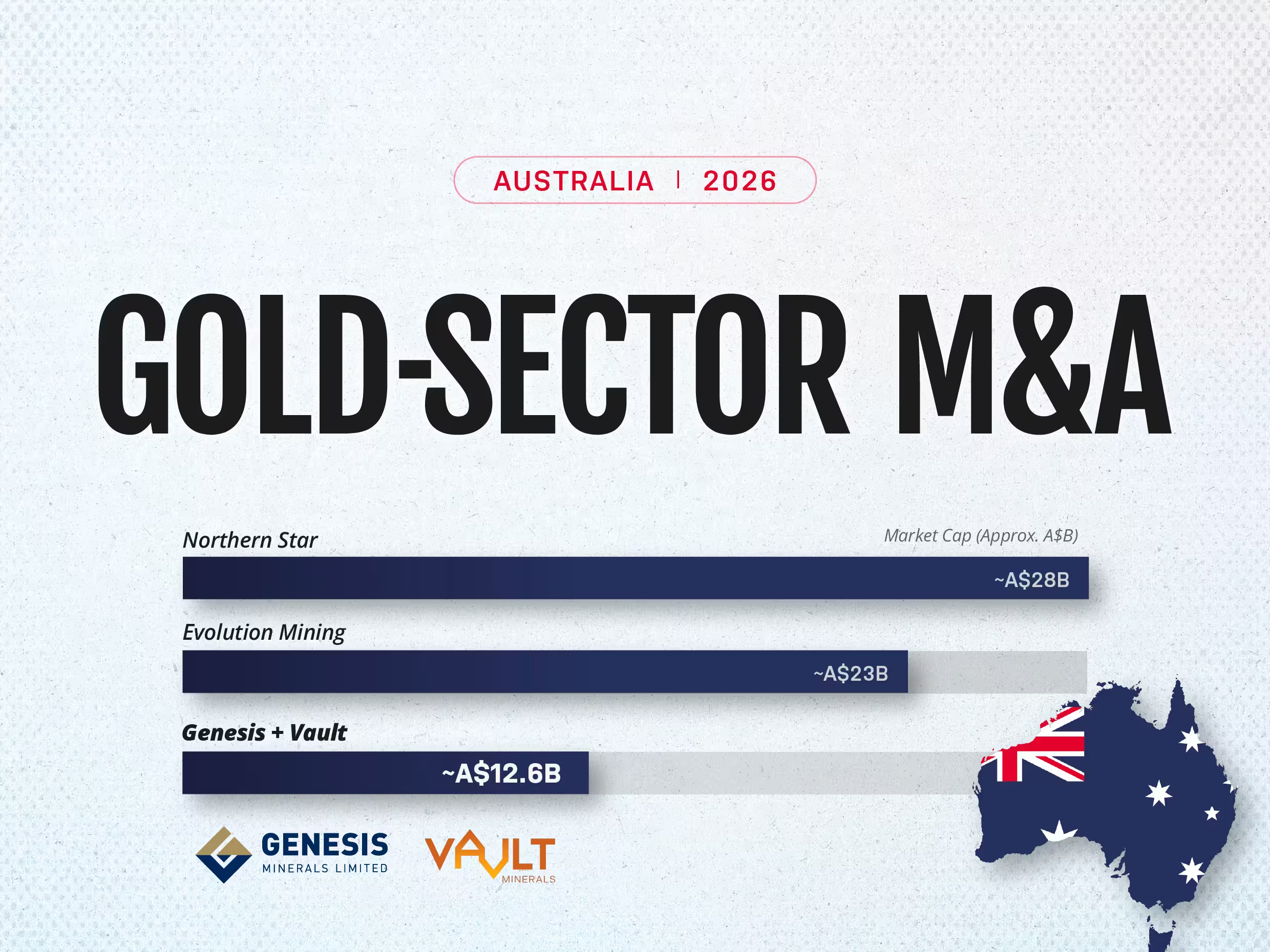
Gold hit an all-time high of about US$5,595 an ounce in January 2026 before settling near US$4,000, still far above the levels of a few years ago. That combination, record prices followed by a stable, still-profitable pullback, has done something a straight rally rarely does: it has opened a merger window.
.webp)
Three Ancient Belts Carry Ghana's Gold, and Investment Keeps Flowing to Them
Three Ancient Belts Carry Ghana's Gold, and Investment Keeps Flowing to Them
In March 2026, one of Ghana's own mining companies said it would invest about $1.2 billion in its operations at the Tarkwa and Damang gold mines. Both sit on the Ashanti belt, one of three narrow bands of ancient rock that carry almost all of Ghana's gold.