Precious Metals
April 7, 2026
2 min
Precious Metals

Key takeaways
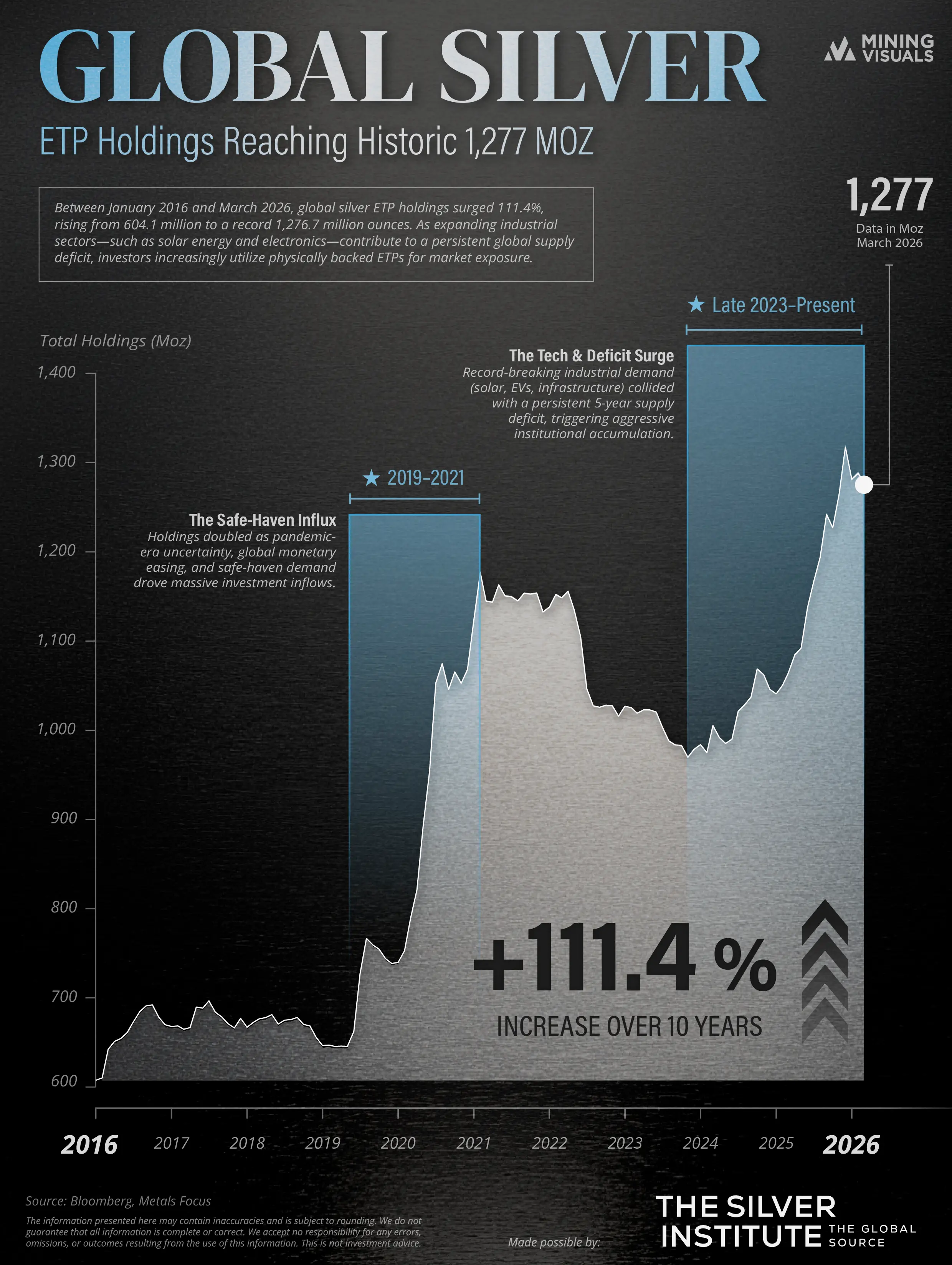
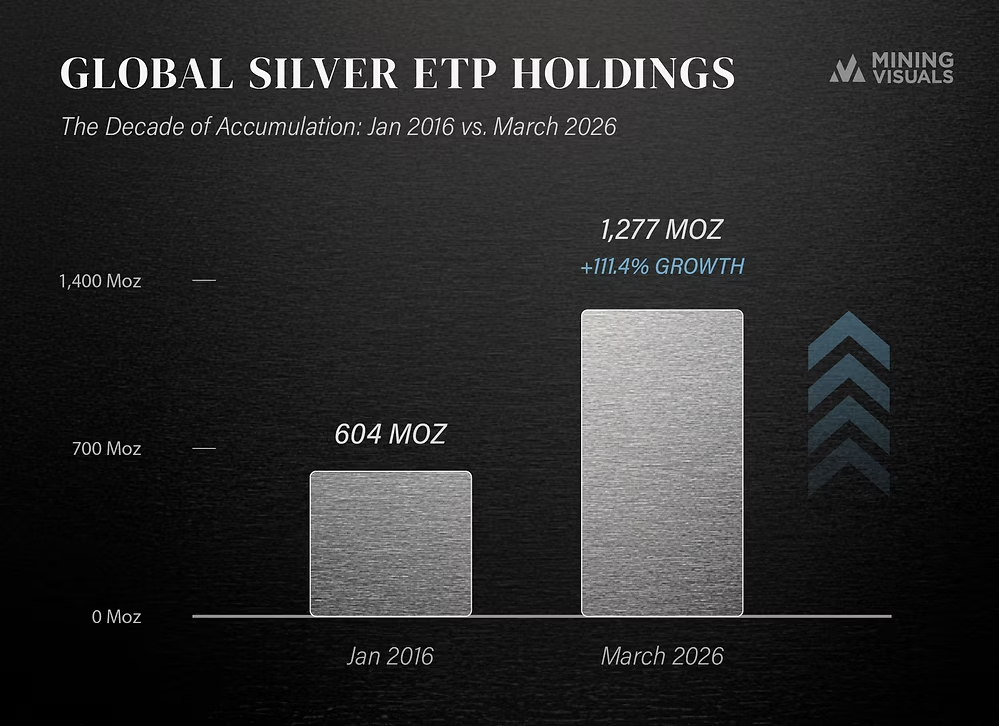
- A Decade of Accumulation: Global silver ETP holdings have seen substantial growth over the last decade, increasing by 111.4% from roughly 604 million ounces in early 2016 to 1,277 million ounces by March 2026.
- Major Vault Keepers: The majority of this 1.27-billion-ounce stockpile is concentrated within massive, physically-backed funds, led primarily by the iShares Silver Trust (SLV) and Sprott Physical Silver Trust (PSLV).
- Sustained Investor Demand: Physical investment demand has established a permanently higher baseline, driven by a structural market deficit, macroeconomic safe-haven inflows, and expanding green-technology consumption.
The following content is sponsored by The Silver Institute
As silver prices reached new multi-year highs in early 2026, market attention often focuses on trading floor activity. However, a significant structural shift is visible in global vaults. Global silver Exchange-Traded Product (ETP) holdings have grown to an estimated 1.27 billion ounces.
As we have covered in previous analyses of the World Silver Survey, the global silver market has operated in a deep structural deficit for several years. This new chart highlights the direct financial reaction to that established shortage: as physical markets tighten, investors are increasingly utilizing ETPs to gain exposure to silver, drawing further on above-ground inventories.
The Decade of Accumulation
Between January 2016 and March 2026, physical silver backing global ETPs experienced steady and notable growth. Starting at roughly 604 million ounces, holdings saw a significant upward trend beginning in 2019.
This initial increase culminated in early 2021 amid pandemic-era economic shifts and safe-haven investment. Following a period of market consolidation as central banks raised interest rates in 2022 and 2023, accumulation resumed. By March 2026, supported by a tight physical market in London and ongoing geopolitical factors, global ETP holdings officially reached 1,276.7 million ounces.
The Mechanics of ETP Vaulting
To understand the massive numbers on this chart, it is important to clarify how ETPs operate. According to the Silver Institute's market breakdown, industrial fabrication (such as solar and electronics) and physical investment are distinct categories of demand.
ETPs are classified as investment vehicles, utilized by institutional and retail investors seeking exposure to silver prices without the logistical requirements of storing physical bullion. By law, fund managers must back these shares with real physical assets. When capital flows into silver ETPs, fund providers are required to purchase and vault corresponding amounts of physical silver on the open market. Therefore, the 1.27 billion ounces on this chart represent investor stockpiles held separately from industrial inventory.
The Vault Keepers: The World's Largest Physical Silver ETPs
To understand the scale of this accumulation, it is useful to look at the funds managing the vaulting process. Here are the largest physically-backed silver ETPs operating in the global market as of March 2026:
(Data reflects March 2026 fund reporting amid record silver prices. Sources: https://www.ishares.com/us/products/239855/ishares-silver-trust-fund, https://sprott.com/investment-strategies/exchange-listed-products/physical-bullion-funds/silver/, https://www.aberdeeninvestments.com/en-us/investor/investment-solutions/commodities/sivr)
Navigating the Established Deficit
The recent growth in ETP holdings highlights how investors are navigating both macroeconomic uncertainty and the physical supply constraints established over the last half-decade. The Silver Institute forecasts the global silver market to operate in a fundamental deficit for a sixth consecutive year in 2026.
Because mine supply is largely inelastic and constrained (projected to grow by a modest 1% in 2026), consistent industrial consumption continues to draw on available above-ground stockpiles. Observing these tight market conditions, investors utilize ETPs to gain exposure to a critical technology mineral experiencing a persistent shortage.

Final Synthesis
The steady rise of global silver ETP holdings illustrates a market adjusting to structural changes in supply and demand. Looking ahead, the Silver Institute anticipates that tight physical market liquidity and a supportive macroeconomic backdrop will persist. With the global market entering a sixth consecutive year of fundamental deficits, the ongoing accumulation in ETPs underscores silver's established role as both a safe-haven asset and an essential industrial component.
Sponsored by:

The Silver Institute is a global organization dedicated to promoting the use, study, and understanding of silver. It provides in-depth research on silver’s supply, demand, and pricing trends across various industries such as industrial applications, jewelry, investment, and solar energy. One of the institute’s key publications is the World Silver Survey, an annual report that offers detailed statistics and analysis on the global silver market.
For further information, you can visit the official Silver Institute website.
MiningVisuals Disclaimer: This article is for informational purposes only and does not constitute financial or investment advice.





Explore More
View All


Gold Mines in West Africa: Two Billion Years in the Making
Gold Mines in West Africa: Two Billion Years in the Making
The nine West African countries with significant reported output produced about 15% of the world's mined gold in 2025, according to Metals Focus and World Gold Council data. Almost every mine on the map above was built in the past 25 years, and four more reached production in the last eighteen months: Lafigué in Côte d'Ivoire in June 2024, Kiaka in Burkina Faso in June 2025, Ahafo North in Ghana in October 2025 and Kiniero in Guinea in December 2025.
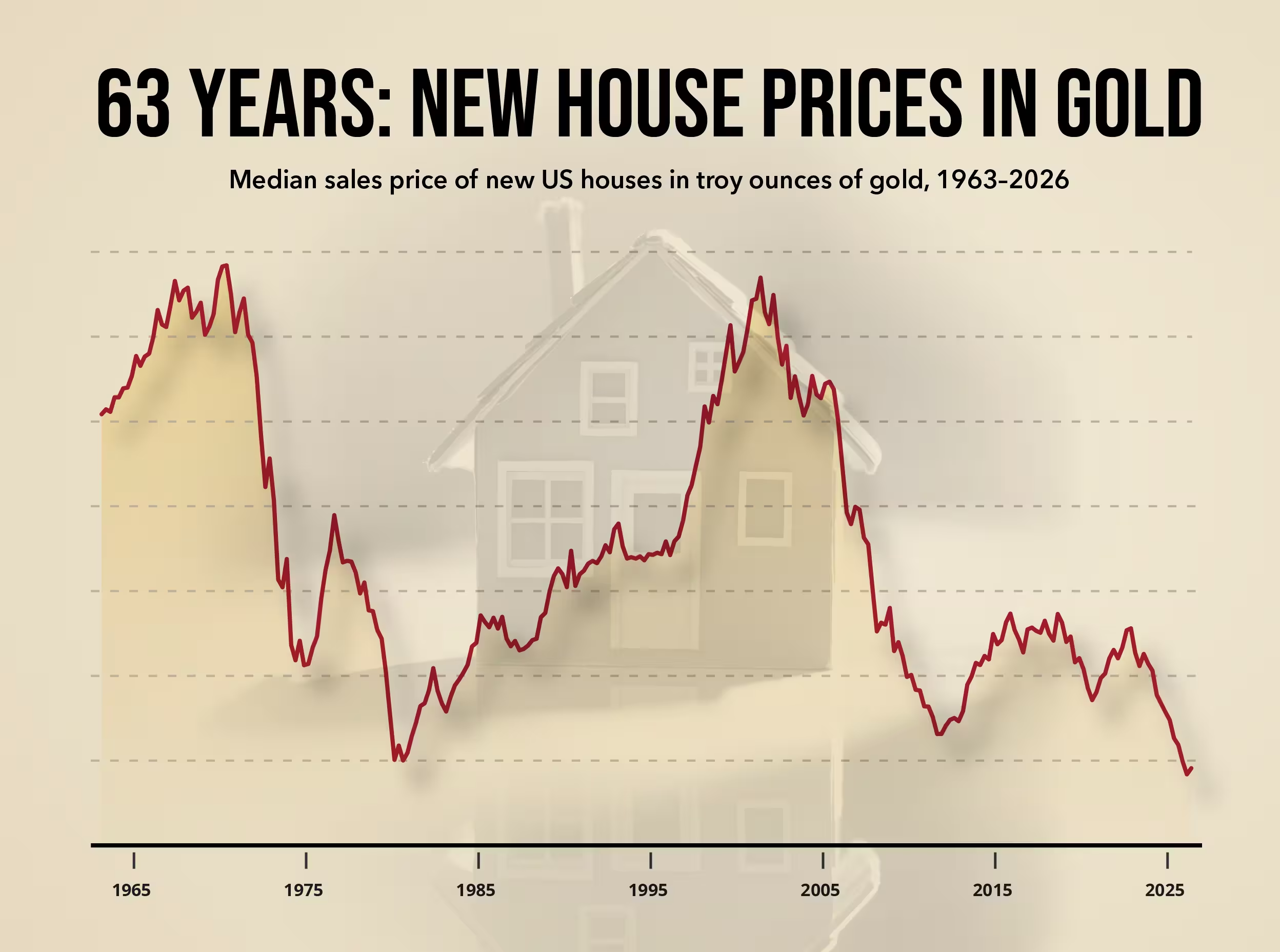
A Median New US Home Now Costs Less Than 100 Ounces of Gold
A Median New US Home Now Costs Less Than 100 Ounces of Gold
The US Census Bureau's July new-home report, released on August 25, put the median price of a newly built house at $393,800. HousingWire noted that was the lowest since July 2021. In dollars, the market has moved within a narrow band: the quarterly median has stayed between $408,500 and $435,400 since 2023.
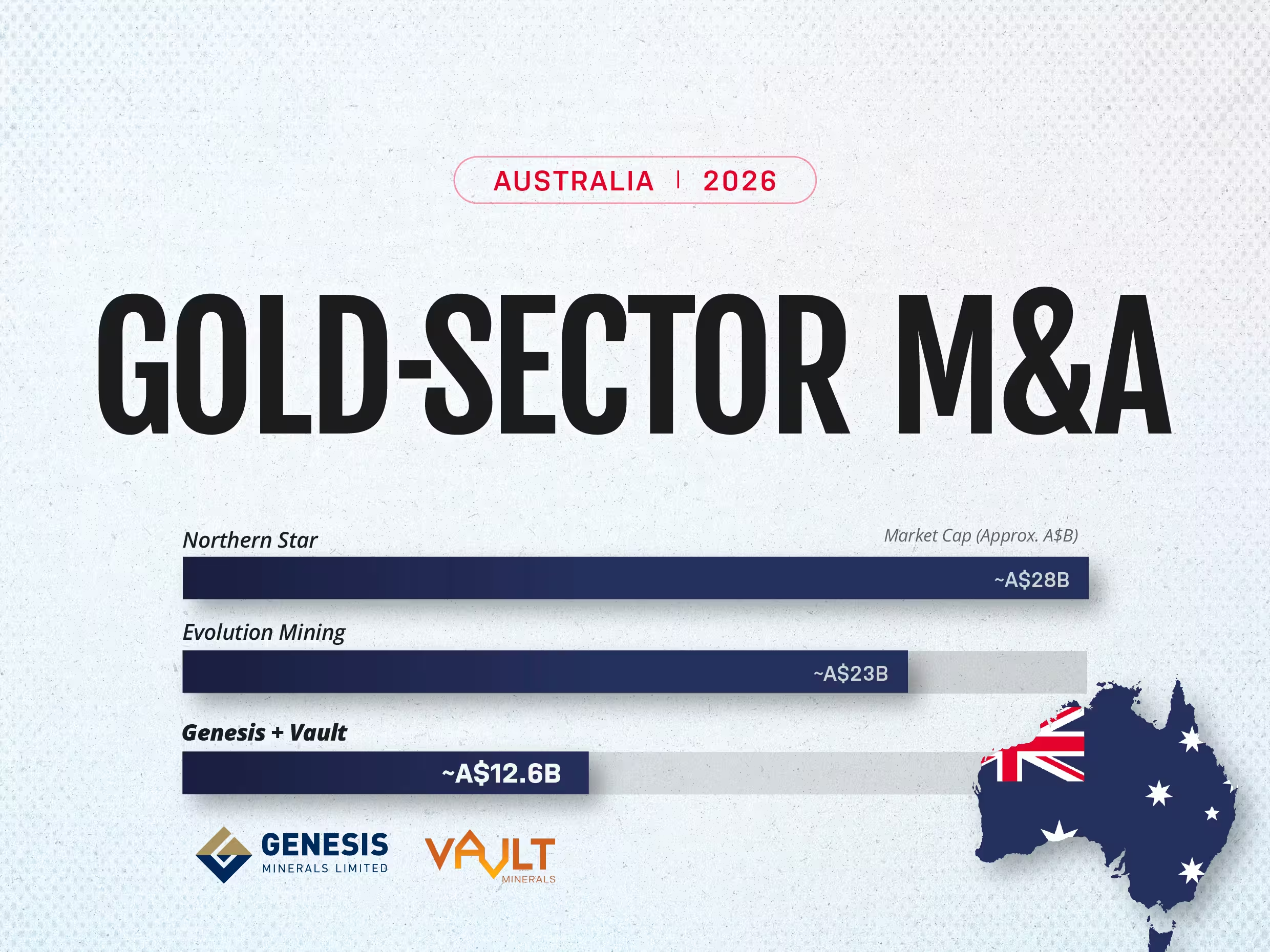
Gold's Record Run Has Set Off a Wave of Mining Mergers
Gold's Record Run Has Set Off a Wave of Mining Mergers
Gold hit an all-time high of about US$5,595 an ounce in January 2026 before settling near US$4,000, still far above the levels of a few years ago. That combination, record prices followed by a stable, still-profitable pullback, has done something a straight rally rarely does: it has opened a merger window.
.webp)
Three Ancient Belts Carry Ghana's Gold, and Investment Keeps Flowing to Them
Three Ancient Belts Carry Ghana's Gold, and Investment Keeps Flowing to Them
In March 2026, one of Ghana's own mining companies said it would invest about $1.2 billion in its operations at the Tarkwa and Damang gold mines. Both sit on the Ashanti belt, one of three narrow bands of ancient rock that carry almost all of Ghana's gold.