Precious Metals
May 11, 2026
2 min
Precious Metals
The following content is sponsored by Outcrop Silver & Eloro Resources


Key takeaways
- A Century in Four Decisions: Several major inflection points on the 100-year silver chart coincide with specific U.S. government decisions: the 1934 Silver Purchase Act, the 1942 Manhattan Project bullion transfer, the 1965 Coinage Act and 1971 closure of the gold window, and the 2025 USGS Critical Minerals designation.
- 1934 — Documented International Impact: Peer-reviewed economic research has documented that the U.S. Silver Purchase Act contributed to monetary contraction in China and to China's 1935 abandonment of the silver standard.
- 2025 — A New Designation: The USGS added silver to the federal Critical Minerals List in 2025, citing the metal's use in solar photovoltaics, semiconductors, and military electronics, alongside the concentration of mine supply outside the United States.
As shown in the chart above, silver's 100-year price record is often discussed through the lens of speculative episodes, the 1980 Hunt Brothers corner and the 2011 post-QE rally are the best-known. Several of the other annotations on the chart, however, correspond to U.S. government decisions that changed how silver was officially classified. This piece reviews four of those decisions, drawing on primary statutes, U.S. Department of Energy records, peer-reviewed research, and USGS announcements.
1934: The Silver Purchase Act and Its Effect on China
The Silver Purchase Act of 1934 is typically described as a Depression-era price-support measure. It authorized the U.S. Treasury to purchase silver until the metal represented one-quarter of U.S. monetary reserves, which contributed to a sharp rise in world silver prices.
Research published in the Journal of Political Economy documents the international monetary consequences. China, then the only major economy still operating on a silver standard — experienced a significant outflow of physical silver and a contraction of its money supply. According to that research, the resulting deflationary pressure was a factor in China's November 1935 decision to abandon the silver standard in favor of a managed fiat currency.
1942: The Treasury Loan to the Manhattan Project
During World War II, the U.S. Treasury transferred approximately 14,700 tons of silver bullion from the West Point Depository to the Manhattan Project, as documented by the U.S. Department of Energy's Y-12 National Security Complex. The silver was drawn into wire and used in the electromagnetic coils of the calutrons that enriched uranium at Oak Ridge. According to the same source, the silver was subsequently recovered, refined, and returned to Treasury.
The transfer is not reflected in market price data because it occurred off-market. It is one of the earliest large-scale, documented uses of U.S. government silver reserves for an industrial rather than monetary purpose.
1965 and 1971: The Removal of Silver from the Monetary System
The Coinage Act of 1965 (Public Law 89-81) removed silver from circulating U.S. dimes and quarters. In August 1971, the Nixon Administration closed the gold window, ending dollar convertibility to gold.
These two decisions removed silver from circulating U.S. currency and ended the dollar's last formal link to a precious metal. Price action after 1971, including the 1980 and 2011 peaks visible on the chart, occurred under this changed legal framework.
2025: Silver Added to the U.S. Critical Minerals List
On the U.S. Department of the Interior's recommendation, the USGS added silver to the federal Critical Minerals List in 2025. This is the first time silver has been included on the list. The USGS announcement cited silver's use in solar photovoltaics, semiconductors, and military electronics, alongside the concentration of mine supply outside the United States.
The Critical Minerals List is used by federal agencies to inform supply-chain analysis, permitting prioritization, and stockpile considerations. Inclusion on the list does not, by itself, mandate specific government action or change market prices; rather, it makes a commodity eligible for consideration under several federal programs that already apply to other listed minerals.
A Century of Decisions, at a Glance
Context for the 2026 Price Level
The 1980 peak was driven by an attempted market corner and reversed after the COMEX implemented rule changes that limited speculative positions. The 2011 peak coincided with post-2008 quantitative easing and the European debt crisis and receded as monetary conditions normalized.
The 2026 price level has developed alongside a different set of market conditions, including a multi-year structural deficit documented by the Silver Institute's World Silver Survey and the 2025 USGS designation discussed above. Whether and how these factors will affect future prices is not knowable from historical data alone.
Conclusion
Silver's 100-year chart is frequently discussed in terms of investor behavior. It can also be read alongside the U.S. government's evolving treatment of the metal: as a monetary asset in the 1930s, as a wartime industrial input in 1942, as a demonetized metal after 1971, and as a critical mineral after 2025. The 2025 designation does not, in itself, determine future price action; it represents a formal change in how U.S. policy categorizes silver and is the most recent annotation on a chart shaped by both market forces and government decisions.
Sponsored by:

Eloro Resources Ltd. is a mineral exploration company advancing a world-class silver and tin project in Bolivia’s historic Potosí Department. Its flagship asset, the Iska Iska Project, ranks among the top five undeveloped global resources in terms of scale for both tin and silver.
This significant grassroots discovery remains open in multiple directions, offering substantial potential for continued expansion and resource enhancement. Iska Iska benefits from strong infrastructure access and a deeply rooted presence in Bolivia, supported by an experienced management team and meaningful community engagement.
Eloro’s strategy is focused on resource growth, strategic partnerships, and establishing a leading position within the global mining sector.
Learn more about Eloro Resources at: http://elororesources.com/

Outcrop Silver is a leading explorer and developer focused on advancing its flagship Santa Ana high-grade silver project in Colombia. Leveraging a disciplined and seasoned team of professionals with decades of experience in the region. Outcrop Silver is dedicated to expanding current mineral resources through strategic exploration initiatives.
At the core of our operations is a commitment to responsible mining practices and community engagement, underscoring our approach to sustainable development. Our expertise in navigating complex geological and market conditions enables us to consistently identify and capitalize on opportunities to enhance shareholder value.
With a deep understanding of the Colombian mining landscape and a track record of successful exploration, Outcrop Silver is poised to transform the Santa Ana project into a significant silver producer, contributing positively to the local economy and setting new standards in the mining industry.
Learn more about Outcrop Silver at https://outcropsilver.com/
MiningVisuals Disclaimer: This article is for informational purposes only and does not constitute financial or investment advice.
The information presented here may contain inaccuracies and is subject to rounding. We do not guarantee that all information is complete or correct. We accept no responsibility for any errors, omissions, or outcomes resulting from the use of this information. This is not investment advice.





Explore More
View All

A Median New US Home Now Costs Less Than 100 Ounces of Gold
A Median New US Home Now Costs Less Than 100 Ounces of Gold
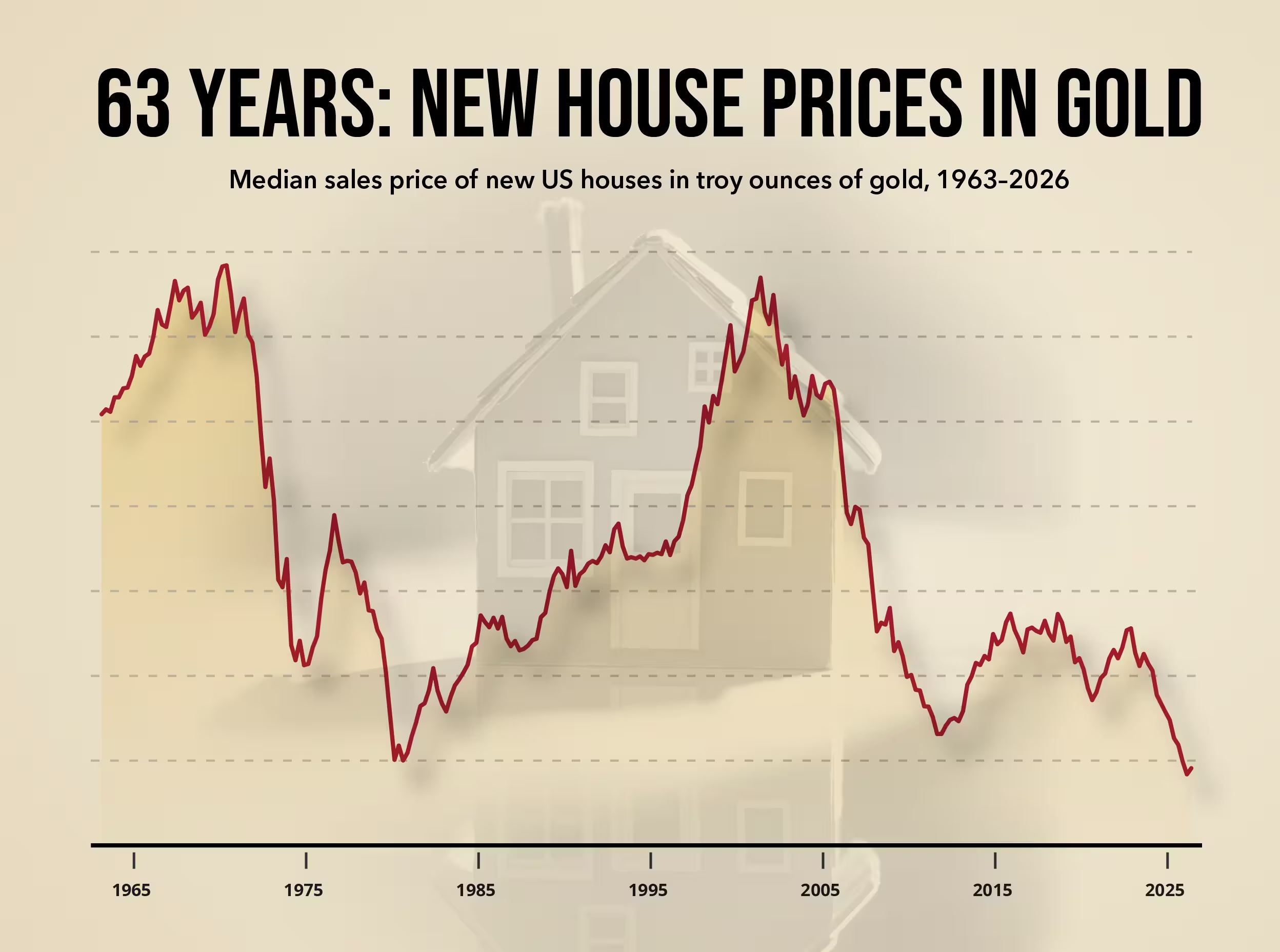
The US Census Bureau's July new-home report, released on August 25, put the median price of a newly built house at $393,800. HousingWire noted that was the lowest since July 2021. In dollars, the market has moved within a narrow band: the quarterly median has stayed between $408,500 and $435,400 since 2023.
Gold's Record Run Has Set Off a Wave of Mining Mergers
Gold's Record Run Has Set Off a Wave of Mining Mergers
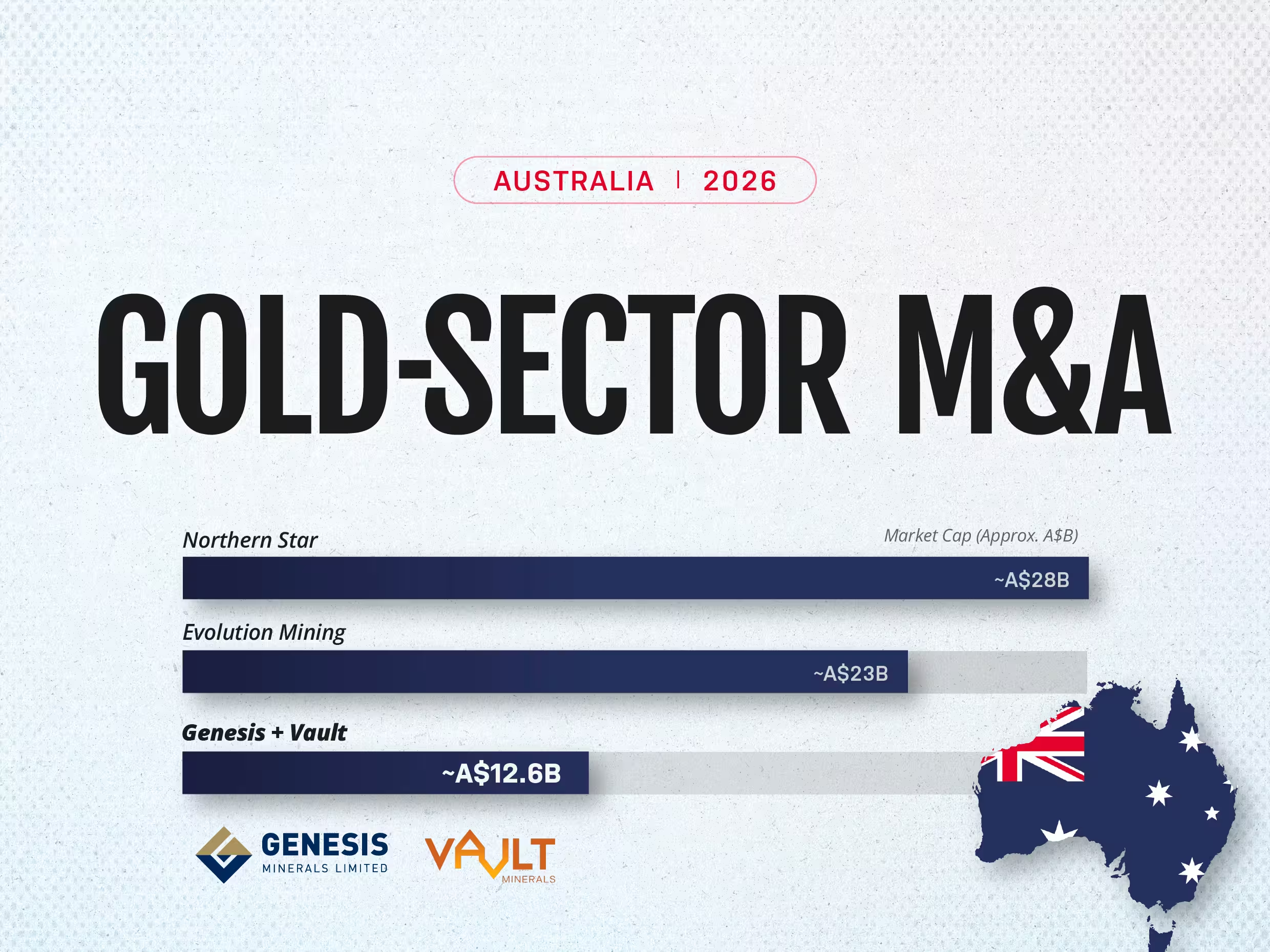
Gold hit an all-time high of about US$5,595 an ounce in January 2026 before settling near US$4,000, still far above the levels of a few years ago. That combination, record prices followed by a stable, still-profitable pullback, has done something a straight rally rarely does: it has opened a merger window.
.webp)
Three Ancient Belts Carry Ghana's Gold, and Investment Keeps Flowing to Them
Three Ancient Belts Carry Ghana's Gold, and Investment Keeps Flowing to Them
In March 2026, one of Ghana's own mining companies said it would invest about $1.2 billion in its operations at the Tarkwa and Damang gold mines. Both sit on the Ashanti belt, one of three narrow bands of ancient rock that carry almost all of Ghana's gold.
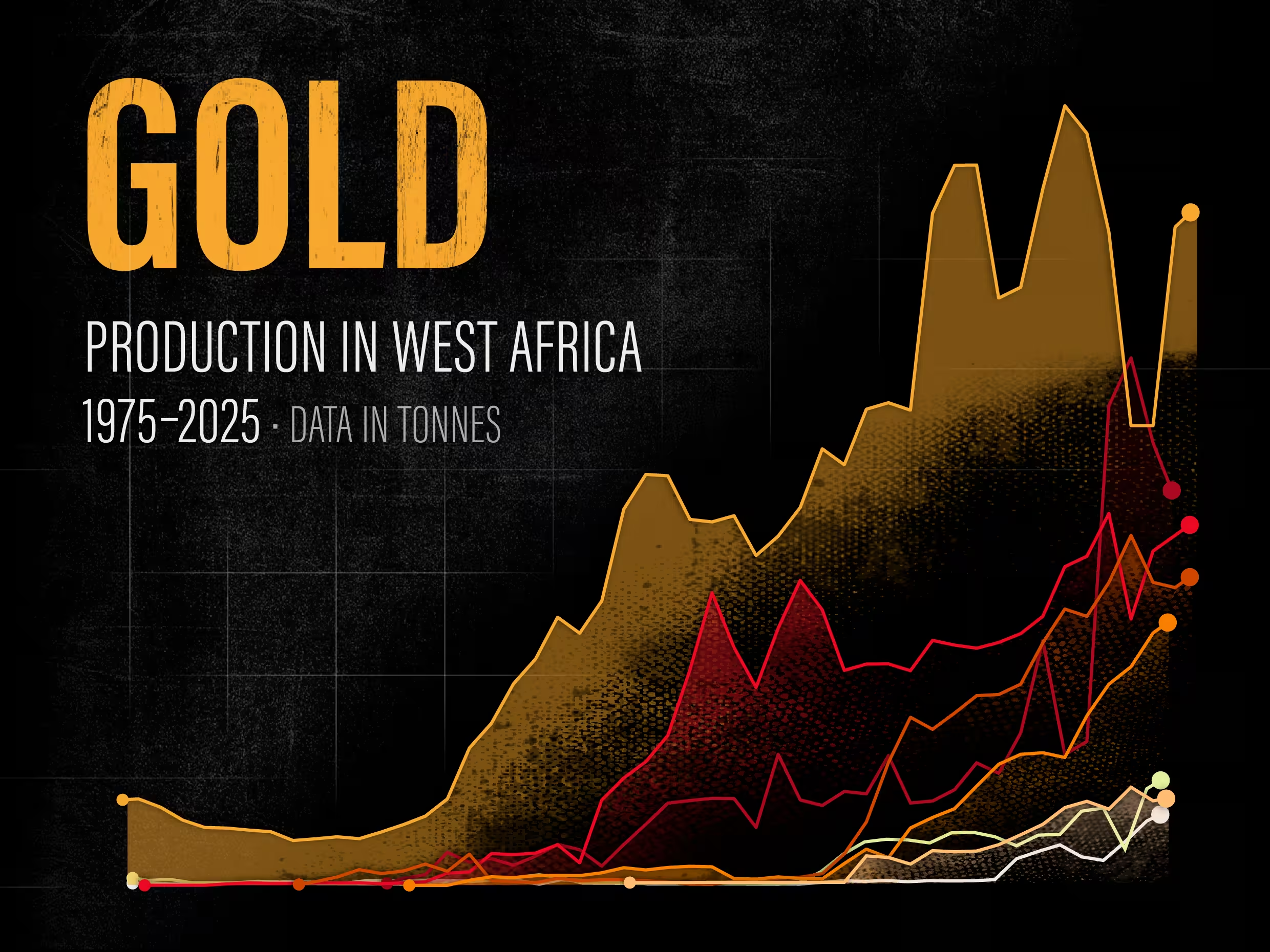
Charted: Fifty Years of Gold Production in West Africa
Charted: Fifty Years of Gold Production in West Africa
West Africa is in the middle of a gold run. In 2025 Ghana's output climbed more than 23 percent to a record 5.94 million ounces, holding its place as Africa's largest producer and now the sixth-largest in the world, and analysts expect the wider region to rebound about 8 percent in 2026.