Precious Metals
October 27, 2025
3 min
Precious Metals
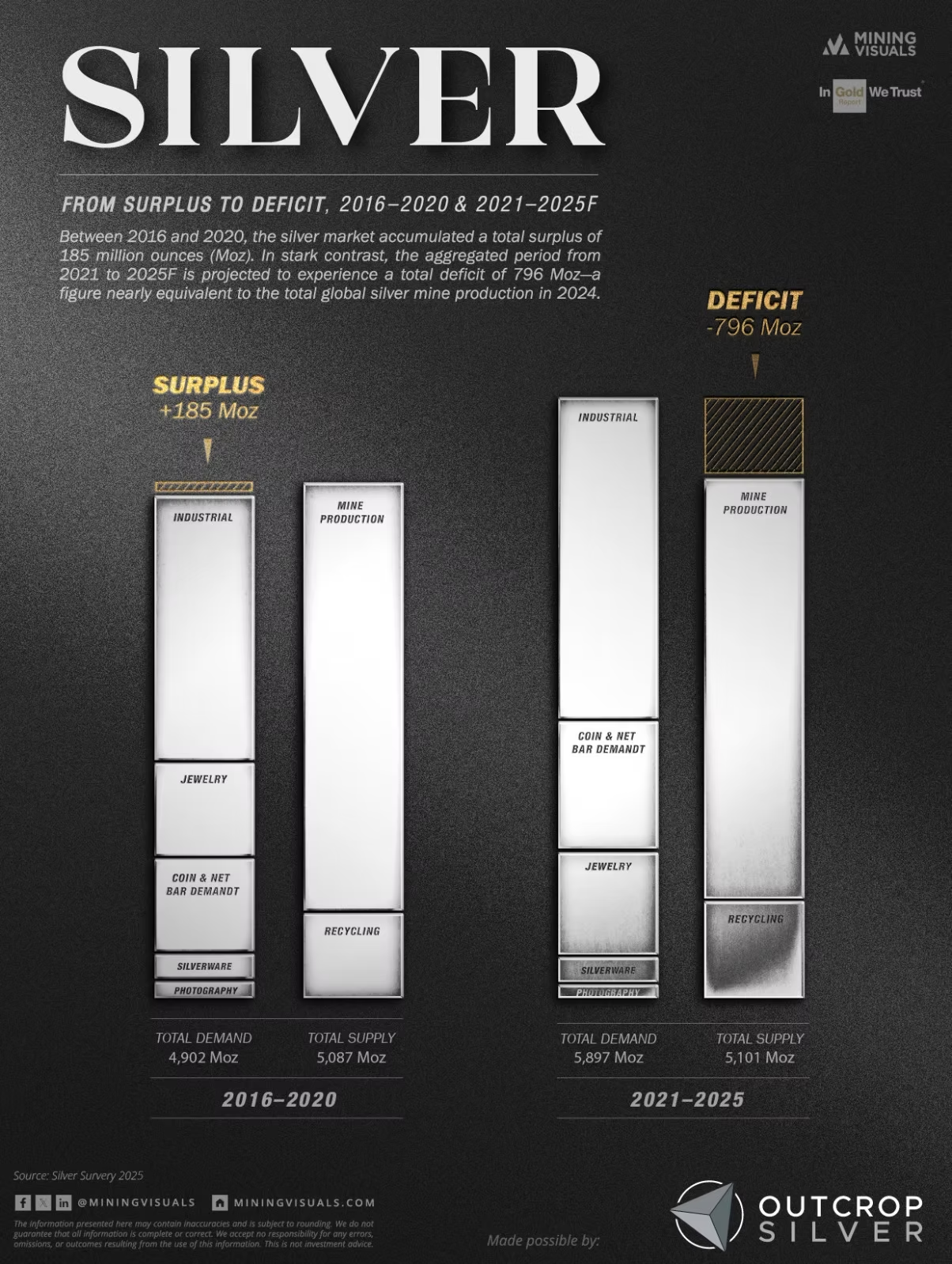

Silver's industrial utility is finally colliding with its physical scarcity. While silver prices have recently surged, hitting a new all-time high, that excitement is merely a reflection of a fundamental market shift. This analysis, based on data from the World Silver Survey 2025 (The Silver Institute), examines how the global silver market has fundamentally inverted, moving from a period of comfortable surplus to one defined by chronic structural deficits.
During 2016–2020, the silver market was generally well-supplied, exhibiting a cumulative market surplus. This period was characterized by total supply exceeding total demand, ensuring readily available metal. Demand was diversified, with industrial applications forming the largest component, supported by steady jewelry and investment purchases.
The current period (2021–2025F) is marking a complete reversal, with an anticipated cumulative market deficit of -796 million ounces (Moz). This imbalance results from a deep structural divergence, where accelerating industrial demand is running up against an inelastic supply base.
The Demand Imperative: Technology & Electrification
The primary driver of the structural shift is a surge in industrial consumption, which now accounts for approximately 60% of total global usage. This is focused on applications where silver is essential due to its unmatched electrical and thermal properties:
- Green Energy: Demand from Photovoltaics (PV) is the fastest-growing industrial segment. Silver is a mandatory input for every solar cell, where it is applied as a conductive paste to the front and back surfaces to form thin wires (or busbars) that capture and channel the electricity generated by the silicon wafers.
- Mobility & Data: Strong consumption is also noted from the automotive sector, where Electric Vehicles (EVs) require significantly more silver per unit than conventional cars, alongside growing demand from 5G network construction and data center build-out (Source: CME Group).
The Supply Constraint: An Inelastic Response
While demand accelerates, total supply—from both mine production and recycling—is expected to remain largely flat. This is due to two key structural challenges:
- Byproduct Dependency: Approximately 70% to 75% of mined silver is a byproduct of mining other metals, such as copper, lead, and zinc (Source: Investec, 2025). Consequently, higher silver prices alone cannot trigger a rapid increase in supply, as production is dictated by the economics and capital cycles of these primary base metals.
- Declining Ore Grades: Primary silver miners face the challenge of declining average ore grades at mature mines, requiring greater capital and effort to maintain existing production levels (Source: Discovery Alert).
Market Implication
This persistent supply shortfall—equivalent to nearly an entire year of global mine output—is forcing the market to address the deficit by drawing from above-ground physical inventories held in exchange and dealer warehouses.
Sponsored by:

Outcrop Silver is a leading explorer and developer focused on advancing its flagship Santa Ana high-grade silver project in Colombia. Leveraging a disciplined and seasoned team of professionals with decades of experience in the region. Outcrop Silver is dedicated to expanding current mineral resources through strategic exploration initiatives.
At the core of our operations is a commitment to responsible mining practices and community engagement, underscoring our approach to sustainable development. Our expertise in navigating complex geological and market conditions enables us to consistently identify and capitalize on opportunities to enhance shareholder value.
With a deep understanding of the Colombian mining landscape and a track record of successful exploration, Outcrop Silver is poised to transform the Santa Ana project into a significant silver producer, contributing positively to the local economy and setting new standards in the mining industry.
Learn more about Outcrop Silver at https://outcropsilver.com/
Source Disclaimer
The data presented in this article and the accompanying infographic is sourced from the "World Silver Survey 2025," published by the Silver Institute. This report is a comprehensive analysis of the global silver market. For a full breakdown, methodology, and detailed analysis, please refer to the complete report, available at: https://silverinstitute.org/wp-content/uploads/2025/04/World_Silver_Survey-2025.pdf





Explore More
View All

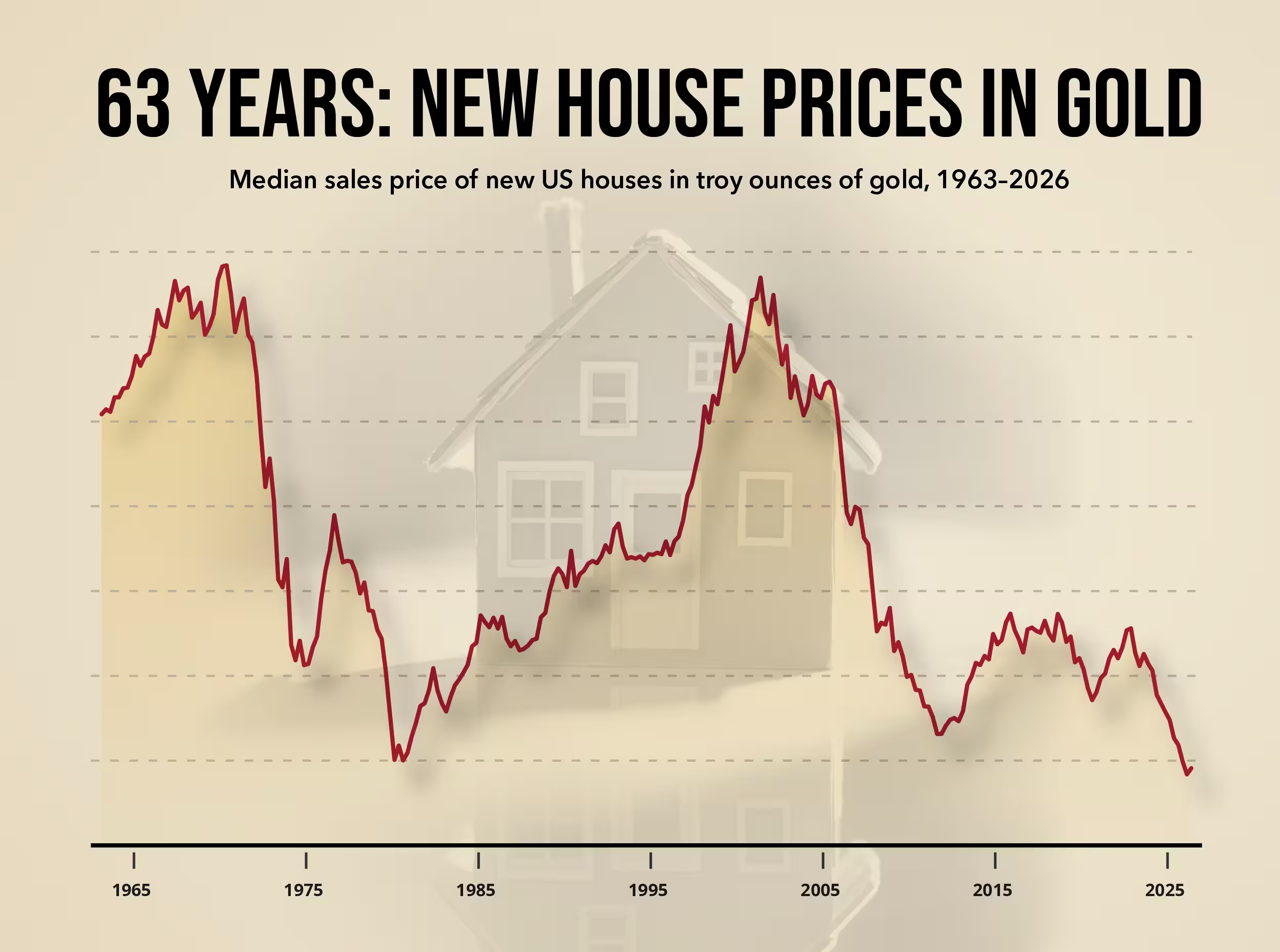
A Median New US Home Now Costs Less Than 100 Ounces of Gold
A Median New US Home Now Costs Less Than 100 Ounces of Gold
The US Census Bureau's July new-home report, released on August 25, put the median price of a newly built house at $393,800. HousingWire noted that was the lowest since July 2021. In dollars, the market has moved within a narrow band: the quarterly median has stayed between $408,500 and $435,400 since 2023.
Gold's Record Run Has Set Off a Wave of Mining Mergers
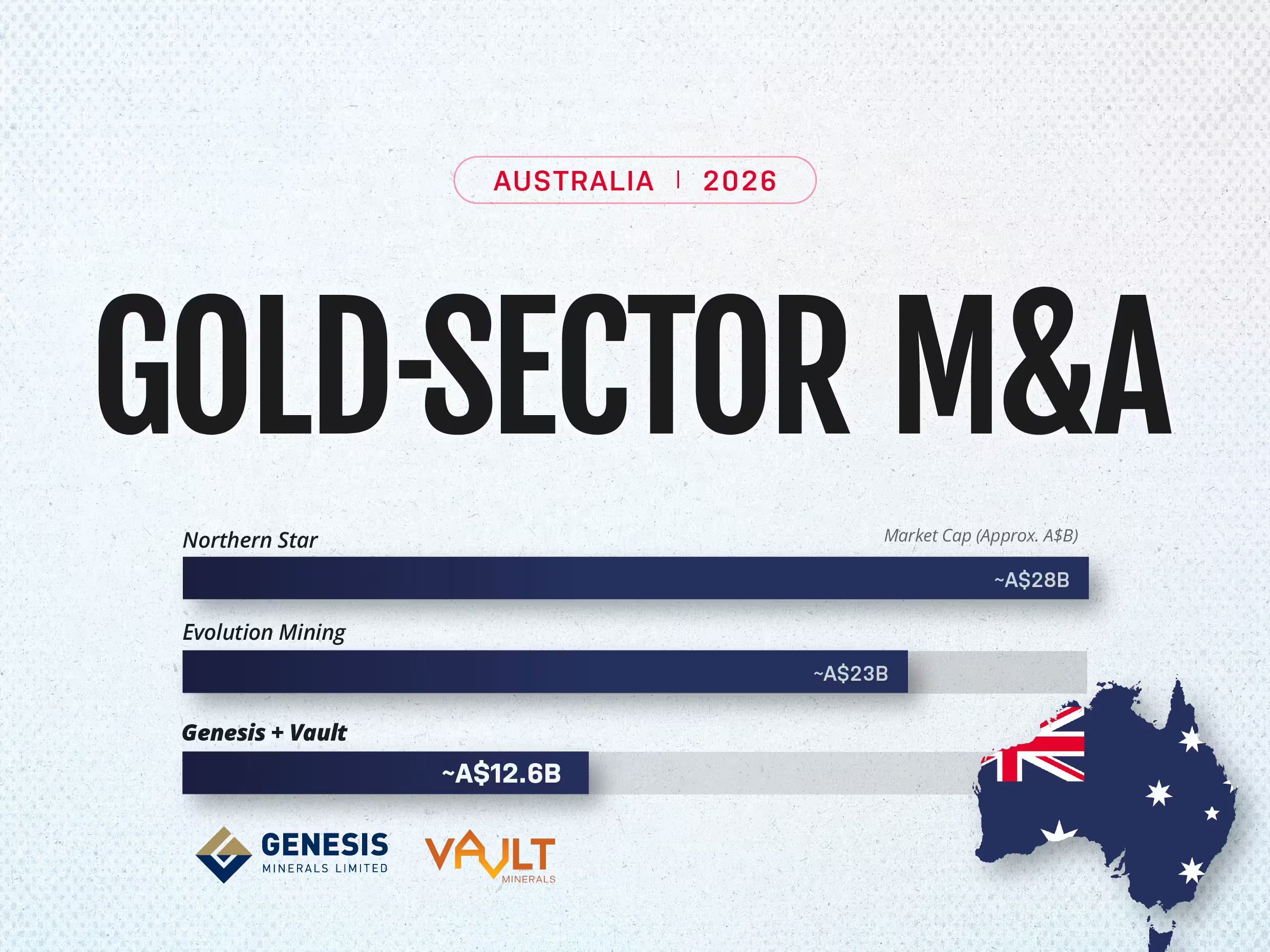
Gold's Record Run Has Set Off a Wave of Mining Mergers
Gold hit an all-time high of about US$5,595 an ounce in January 2026 before settling near US$4,000, still far above the levels of a few years ago. That combination, record prices followed by a stable, still-profitable pullback, has done something a straight rally rarely does: it has opened a merger window.
.webp)
Three Ancient Belts Carry Ghana's Gold, and Investment Keeps Flowing to Them
Three Ancient Belts Carry Ghana's Gold, and Investment Keeps Flowing to Them
In March 2026, one of Ghana's own mining companies said it would invest about $1.2 billion in its operations at the Tarkwa and Damang gold mines. Both sit on the Ashanti belt, one of three narrow bands of ancient rock that carry almost all of Ghana's gold.
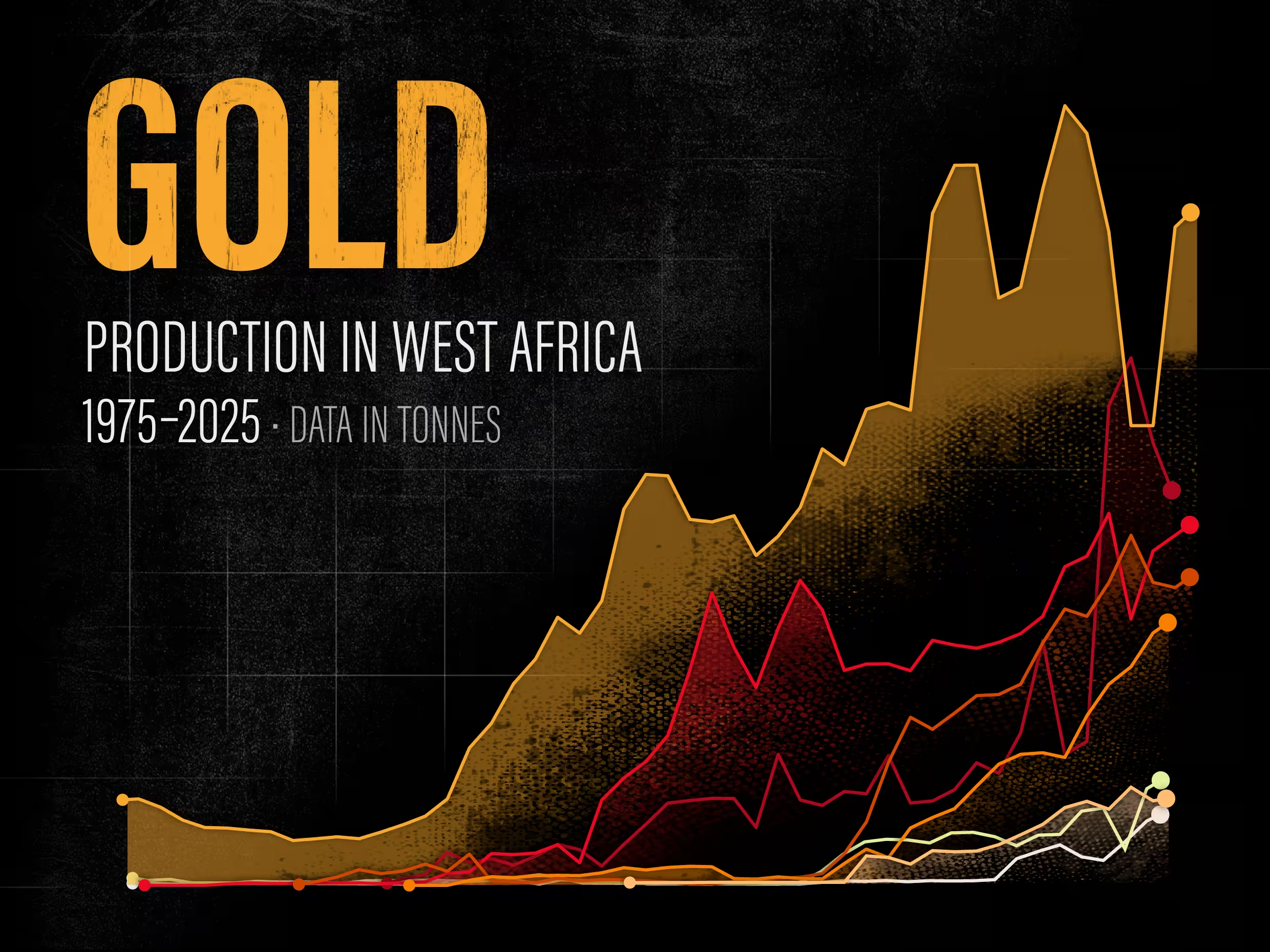
Charted: Fifty Years of Gold Production in West Africa
Charted: Fifty Years of Gold Production in West Africa
West Africa is in the middle of a gold run. In 2025 Ghana's output climbed more than 23 percent to a record 5.94 million ounces, holding its place as Africa's largest producer and now the sixth-largest in the world, and analysts expect the wider region to rebound about 8 percent in 2026.