Silver
June 15, 2026
1 min
Silver

Key takeaways
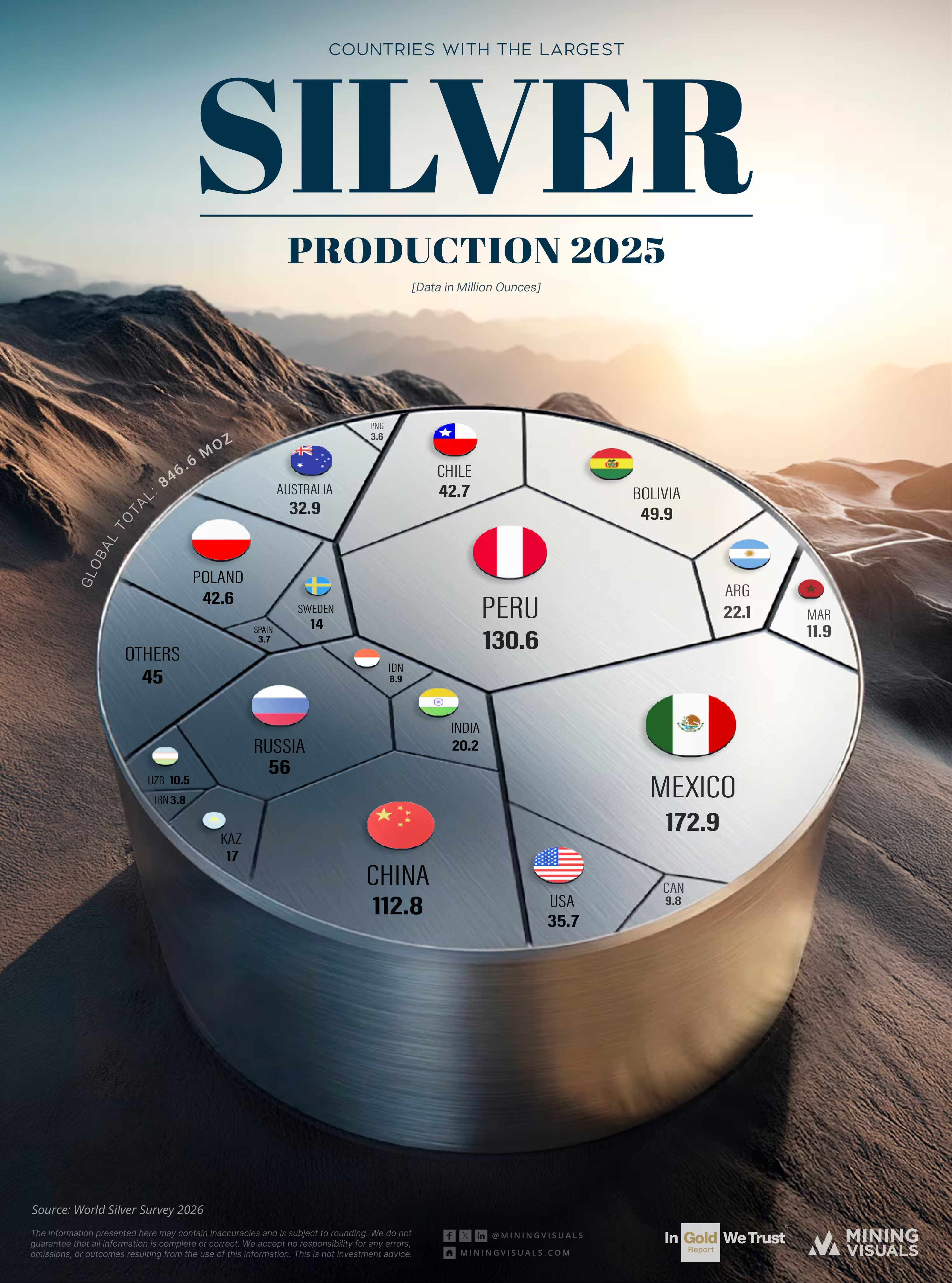
- Mexico Slips for a Third Year: The country led with 172.9 Moz (about 20% of supply) but fell 5% even as Peru rose 7% to 130.6 Moz, narrowing the gap at the top, per the World Silver Survey 2026.
- Half the World, Three Countries: Mexico, Peru and China together produced more than half of global output, leaving supply exposed to disruption in just a few countries, according to the same survey.
- Morocco Up 50%, Russia Up 23%: The year's biggest movers reshaped the lower ranks, with Russia's gain driven by the Prognoz ramp-up and Morocco's by Aya Gold and Silver's Zgounder mine.
Mexico remained the world's top silver-producing country in 2025, mining 172.9 million ounces (Moz), roughly a fifth of global supply, according to the World Silver Survey 2026, produced for the Silver Institute by Metals Focus. But the ranking it captures is shifting beneath the leader. Mexico's output fell 5% for a third straight year, while second-place Peru climbed 7%, narrowing a once-comfortable gap. And the data lands at an extraordinary moment for the metal: silver hit an all-time high of $121.64 per ounce on January 29, 2026, more than quadruple where it started 2025, before settling near $68 by June. Where silver comes from has rarely mattered more.
A narrowing race at the top
Mexico (172.9 Moz), Peru (130.6 Moz) and China (112.8 Moz) held the top three spots, together producing more than half the world's silver, a concentration that leaves supply exposed to trouble in a handful of countries. What changed in 2025 was the distance between the leaders. Mexico's third consecutive decline met Peru's third straight year of growth, and the report attributes the opposite trajectories to different causes: Mexico's to a mix of operational disruptions, government policy and falling grades, Peru's mainly to higher grades at Glencore's Antamina. The roughly 40-Moz gap between first and second is closing.
Why the leader keeps slipping
Mexico's slide is the single most important movement in the ranking, and it is not purely a grade story. The survey ties the decline to operational disruptions, reserve depletion and government policy, and the policy thread has only thickened since. President Claudia Sheinbaum has maintained a moratorium on new mining concessions and placed existing open-pit permits under environmental review, the very method behind much of Mexico's silver output. At Newmont's Peñasquito, lower silver head grades drove output down even as throughput rose, while Fresnillo's San Julián fell with the cessation of its disseminated ore body. Speaking after the survey's release, Fresnillo's chief executive struck a cautiously hopeful note on permitting while conceding that project timelines remain uneven. The drop pulled all of North America to a decade-low 218.4 Moz even as the US (+5%) and Canada (+4%) grew, a reminder that one dominant producer sets a whole region's direction.
The movers reshaping the lower ranks
Below the top three, the biggest shifts came from two single mines. Russia jumped 23% to 56.0 Moz, overtaking Bolivia for fourth, almost entirely on the ramp-up of the Prognoz deposit processed through the Nezhda concentrator. The corporate backdrop is notable: Polymetal International sold its Russian assets, including Prognoz, in 2024 after Western sanctions, and the output now flows through a separated Russian entity. Morocco posted the largest percentage gain of any ranked country, up 50% to 11.9 Moz as Aya Gold and Silver's Zgounder mine scaled, leapfrogging Uzbekistan and Canada. Both moves underline a defining feature of the modern ranking: much of the world's silver is now a by-product of copper, gold and zinc mining, so a country's place can hinge on the fortunes of a single operation, and on metals other than silver itself.
MiningVisuals Disclaimer: This article is for informational purposes only and does not constitute financial or investment advice. Always conduct your own research.
Sources: World Silver Survey 2026, Silver Institute / Metals Focus · MiningVisuals, Silver Market Balance: A 2026 Update




Explore More
View All

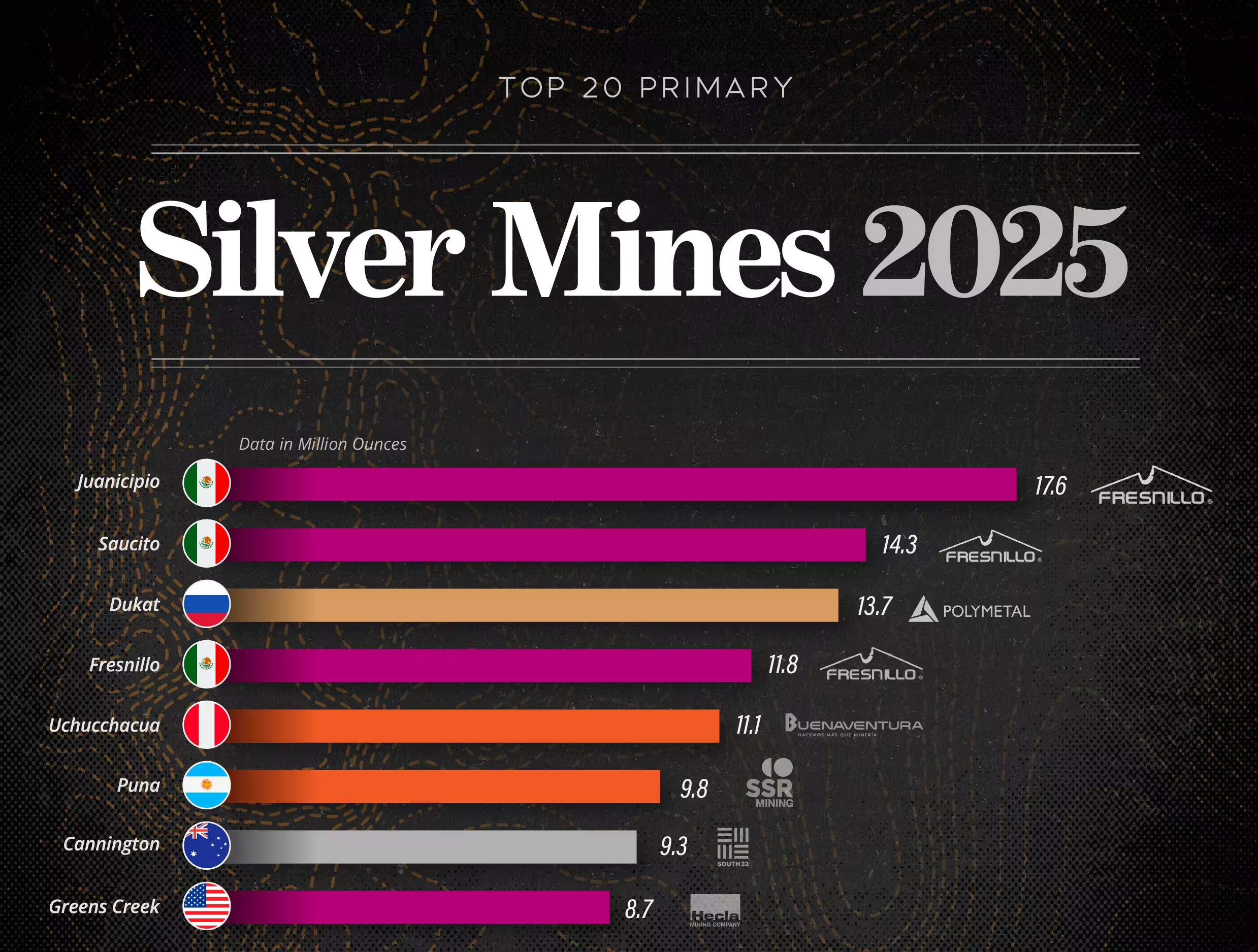
The World's 20 Largest Primary Silver Mines by 2025 Output
The World's 20 Largest Primary Silver Mines by 2025 Output
The single largest source of primary silver is a young mine in the Mexican state of Zacatecas. Juanicipio put out 17.6 million ounces in 2025, more than any other mine that earns its keep from silver itself rather than pulling it out as a byproduct of lead, zinc and gold. Fresnillo operates it and owns 56%; the other 44% changed hands in September 2025, when Pan American Silver completed a US$2.1 billion takeover of MAG Silver.
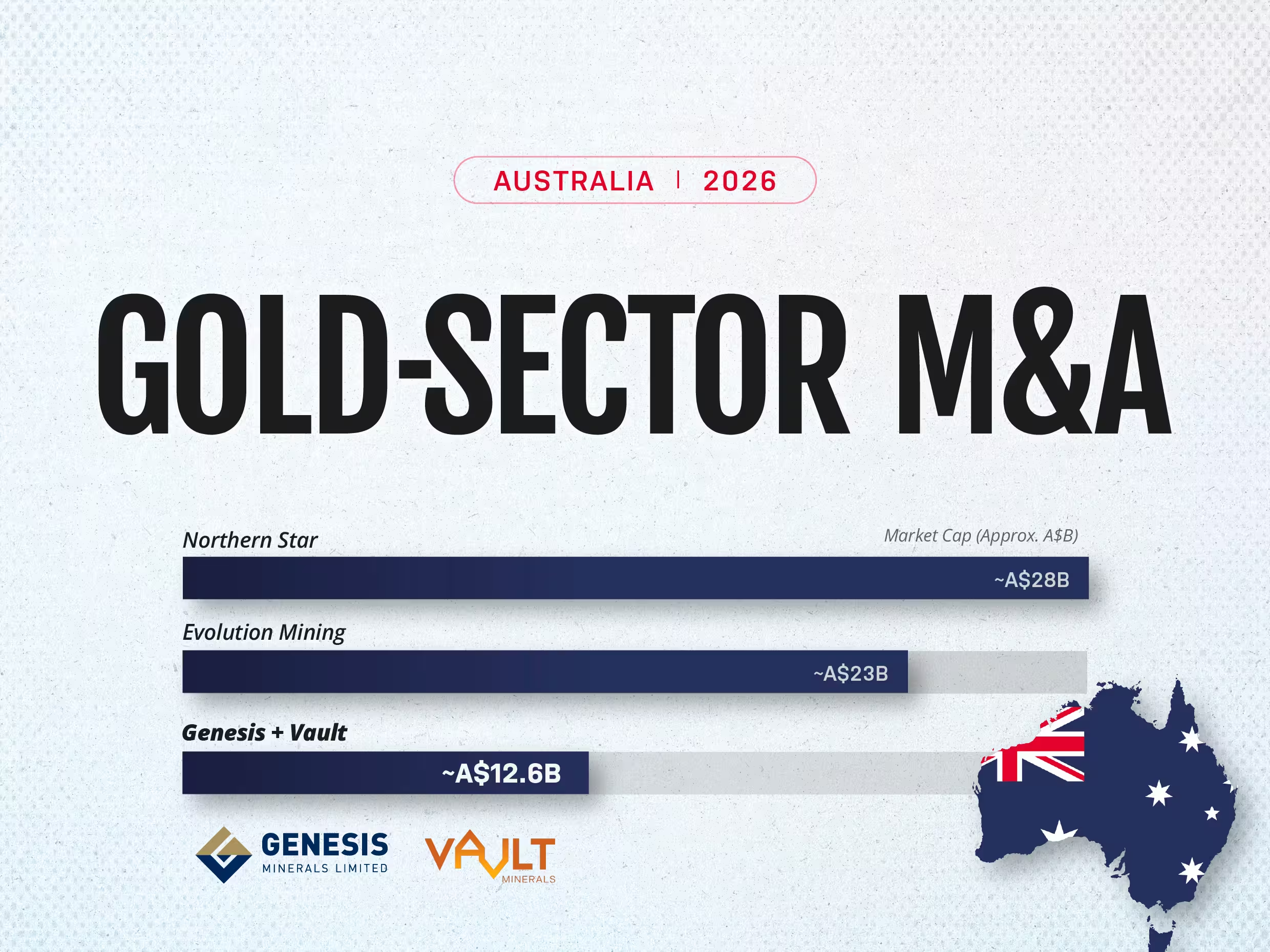
Gold's Record Run Has Set Off a Wave of Mining Mergers
Gold's Record Run Has Set Off a Wave of Mining Mergers
Gold hit an all-time high of about US$5,595 an ounce in January 2026 before settling near US$4,000, still far above the levels of a few years ago. That combination, record prices followed by a stable, still-profitable pullback, has done something a straight rally rarely does: it has opened a merger window.
.webp)
Three Ancient Belts Carry Ghana's Gold, and Investment Keeps Flowing to Them
Three Ancient Belts Carry Ghana's Gold, and Investment Keeps Flowing to Them
In March 2026, one of Ghana's own mining companies said it would invest about $1.2 billion in its operations at the Tarkwa and Damang gold mines. Both sit on the Ashanti belt, one of three narrow bands of ancient rock that carry almost all of Ghana's gold.
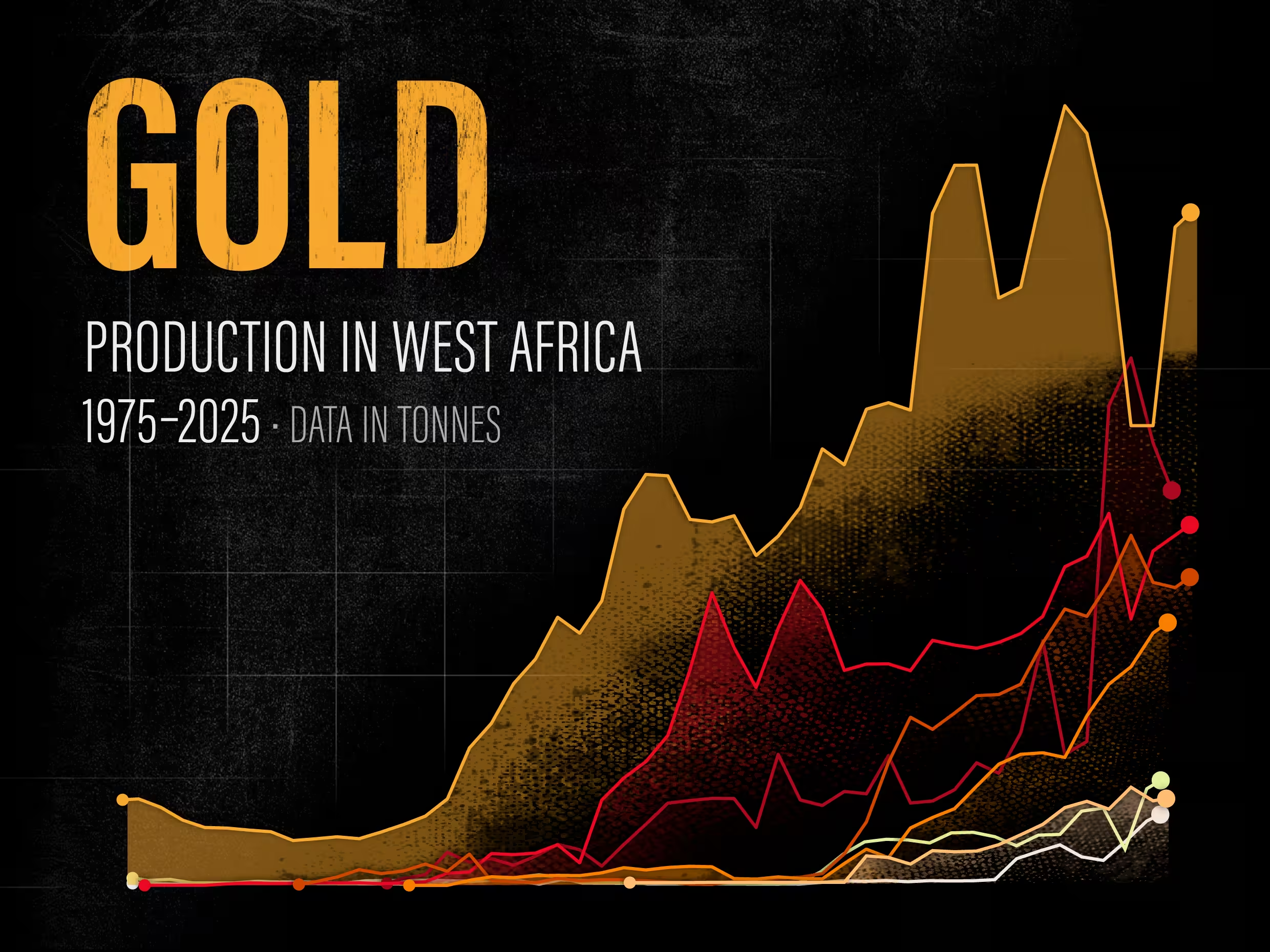
Charted: Fifty Years of Gold Production in West Africa
Charted: Fifty Years of Gold Production in West Africa
West Africa is in the middle of a gold run. In 2025 Ghana's output climbed more than 23 percent to a record 5.94 million ounces, holding its place as Africa's largest producer and now the sixth-largest in the world, and analysts expect the wider region to rebound about 8 percent in 2026.