Commodities
Three Weeks Public, SpaceX Already Approaches the Value of Every Listed Miner on Earth
The companies that mine spacecraft metals are worth a fraction of the rocket maker


For 24 years SpaceX stayed private. Then, on June 12, 2026, it began trading on the Nasdaq in the largest IPO in history, priced at a $1.77 trillion valuation. Barely three weeks later the rocket and satellite maker is worth even more. As of early July, SpaceX carried a market capitalization of about $2.1 trillion, the seventh-highest of any public company on Earth, and it joins the Nasdaq-100 on July 7. Measured against the sector our coverage tracks, the number is startling: a company that makes rockets, and that has existed on public markets for less than a month, is already worth close to two-thirds of every listed mining company in the world combined.
The wonder here is not that a giant company exists; Apple and Nvidia are larger still. It is that this one arrived from private markets almost overnight, at a scale that took the mining sector more than a century to assemble across hundreds of companies. Our earlier ranking of the largest miners laid out a sector anchored by BHP and Rio Tinto and filled out by hundreds of smaller producers. SpaceX, a single firm with weeks of trading history, now approaches the combined market value of that entire listed universe. It priced at $1.77 trillion, jumped roughly 19% on day one, and has drifted higher to about $2.1 trillion since.
The comparison also lays bare a difference in kind. Miners are valued on tangible output, the copper, iron ore and gold that BHP, Rio Tinto and Southern Copper extract and sell at scale, and most are firmly profitable, with Southern Copper alone posting record annual EBITDA of $7.8 billion. SpaceX is valued on ambition. It generated $18.67 billion in 2025 revenue but recorded a GAAP net loss of nearly $5 billion, the product of heavy spending on Starship and AI. The market is paying for a trajectory anchored in Starlink and space, not for present earnings, which is precisely why a loss-making newcomer can rival a whole profitable sector.
That gap crystallizes in valuation multiples. SpaceX priced at roughly 94 times sales, and trades higher still against trailing revenue at its current price. A large diversified miner trades at a low single-digit multiple: BHP's roughly $210 billion market value sits against about $51 billion in trailing sales, and Rio Tinto's near $152 billion against roughly $54 billion, both under 4x. The prior article framed mining as the capital-intensive, lower-margin counterweight to high-multiple tech. SpaceX takes that contrast to an extreme, valuing one unprofitable company at close to the entire listed market for the metals the physical economy runs on. A note on precision: market caps move daily and vary by listing, so both the SpaceX figure and the roughly $3.1 trillion sector total are best read as same-day snapshots from companiesmarketcap.com rather than fixed numbers.
The comparison is unlikely to sit still. SpaceX's Nasdaq-100 entry on July 7 forces index-tracking funds to buy a stock with only a small public float, a dynamic that can push the price sharply in either direction. Meanwhile OpenAI and Anthropic have both filed confidentially to go public, each valued near $1 trillion in private markets, with listings that could arrive within the year. Should they price near those levels, the market will hold several young companies each rivaling the value of the world's entire listed mining sector, a widening split between how markets price digital and space-age growth versus physical supply that is worth tracking as the next mega-IPOs land.
MiningVisuals Disclaimer: This article is for informational purposes only and does not constitute financial or investment advice. Always conduct your own research.

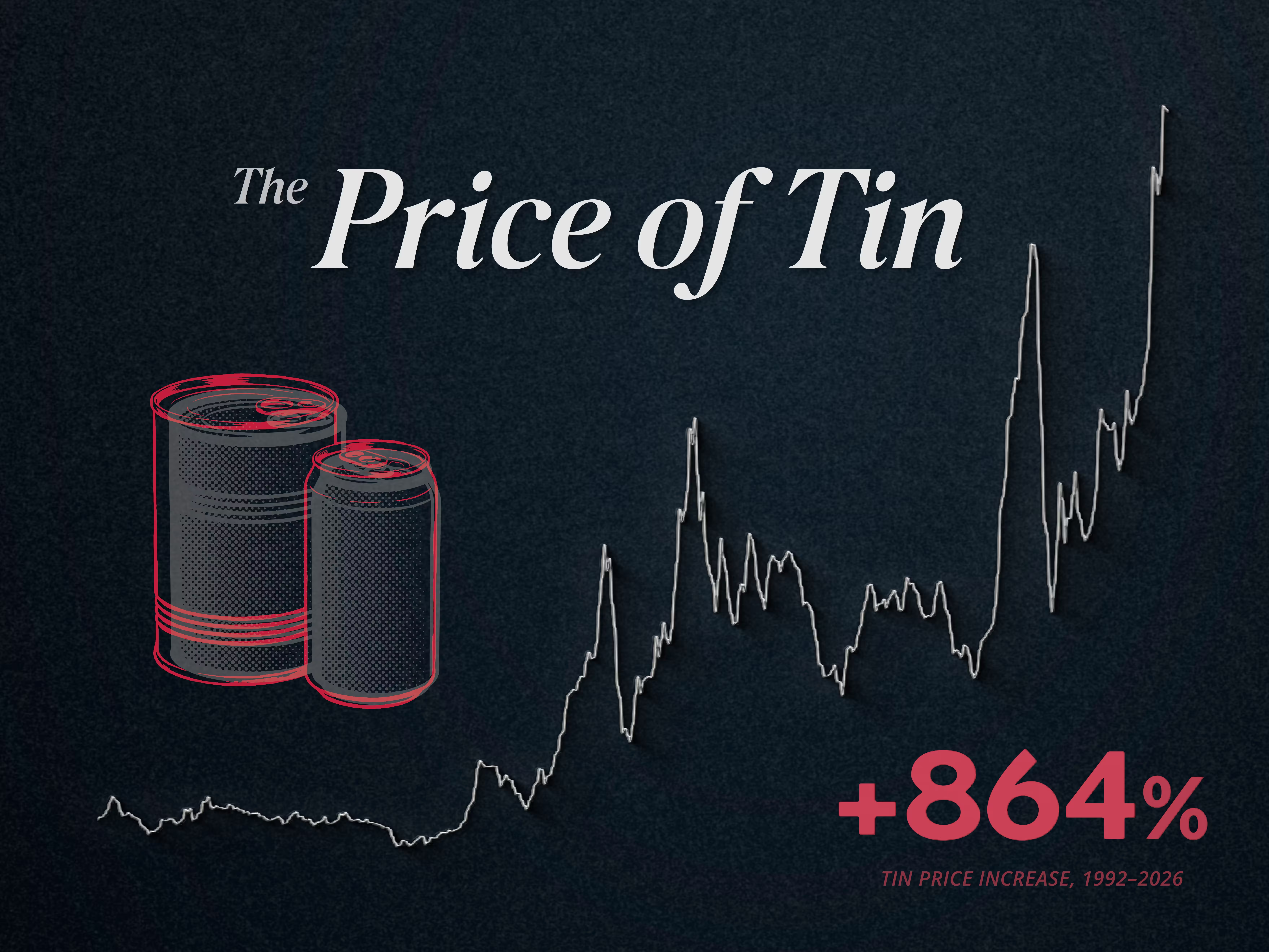
In January 2026, the London Metal Exchange three-month tin contract closed at US$53,462 a tonne, a nominal all-time high that surpassed the March 2022 peak, and it has traded near those levels since. The puzzle is that there is no shortage of tin today: exchange inventories actually rose as the price climbed, rather than being drawn down. Two very different things are holding the price up. The first is short-term: a wave of investor buying, which the industry says drove the January jump. The second is long-term: on current forecasts, the world will not mine enough tin to meet demand later this decade, a gap already projected before the rally began and expected to persist after it fades. The lasting story is that forecast shortfall, not the spike.
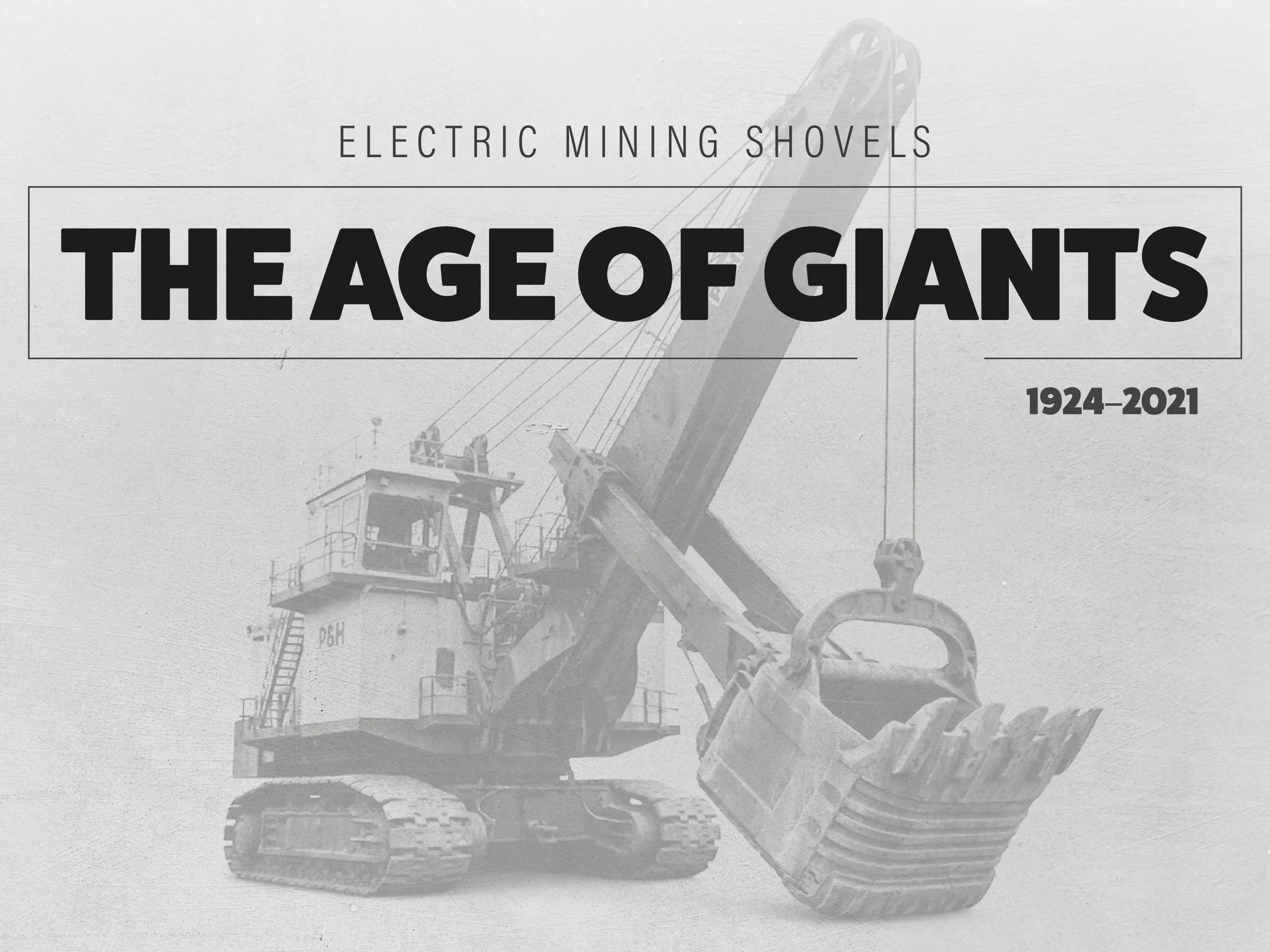
For four decades, the American coalfields hosted an engineering arms race measured in cubic metres of bucket. It ended not with a bigger machine, but with a deliberate retreat. The single largest mobile land machine ever built, the Marion 6360 "Captain," was commissioned in 1965 and destroyed by fire in 1991. No shovel has approached its scale since, and the machines that replaced it were smaller by design.
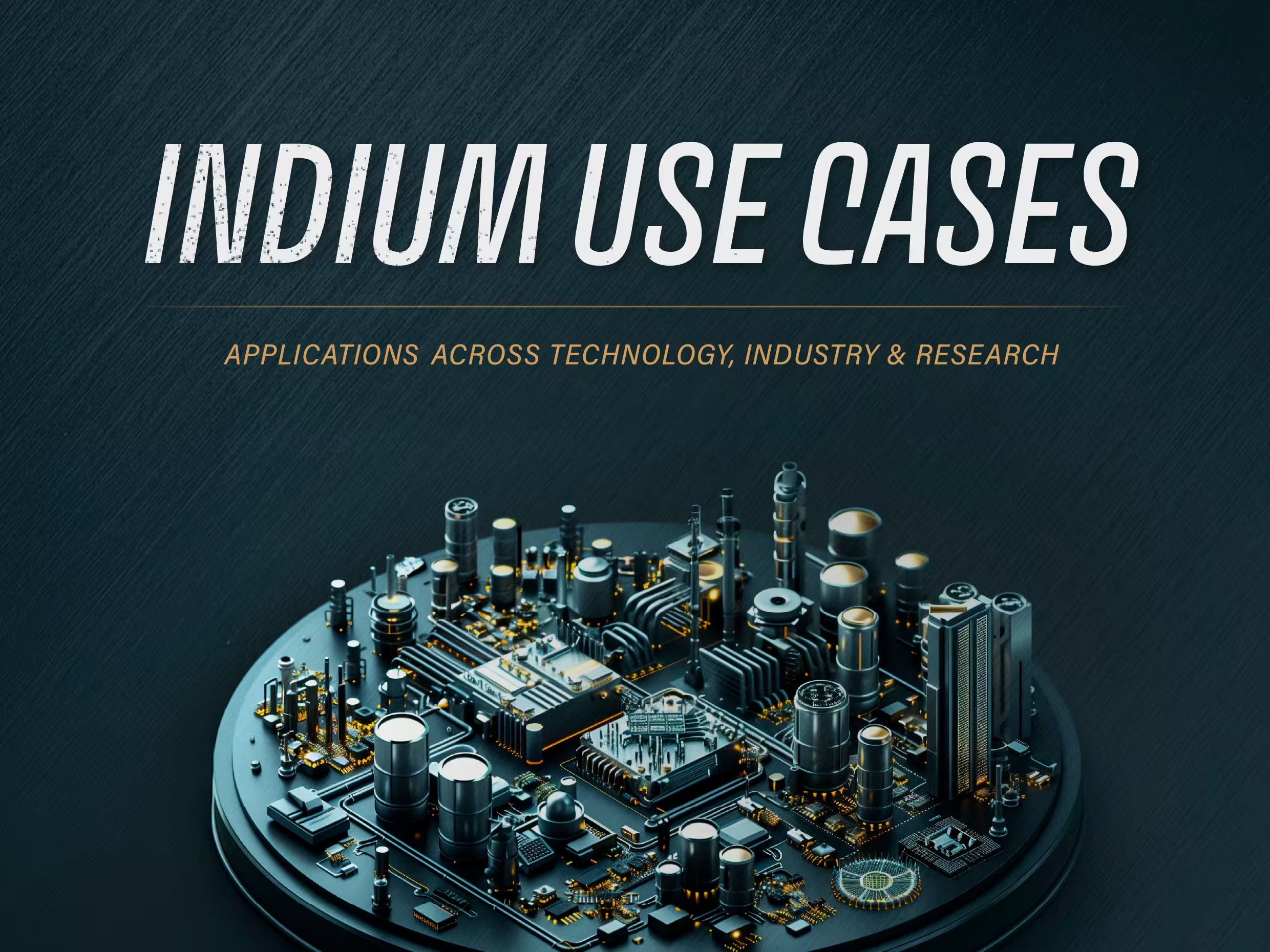
Indium is one of the metals you never see but use constantly. As indium tin oxide, it forms the transparent conductive coating on nearly every LCD and touchscreen, and that single application still accounts for most global consumption, according to the USGS. But the metal's role is broadening. Its compounds now sit inside the high-speed optical chips that route data through AI data centers, a shift that has turned a quiet, display-driven material into one buyers watch closely, especially as China refines about 70% of it and has begun tightening the flow.
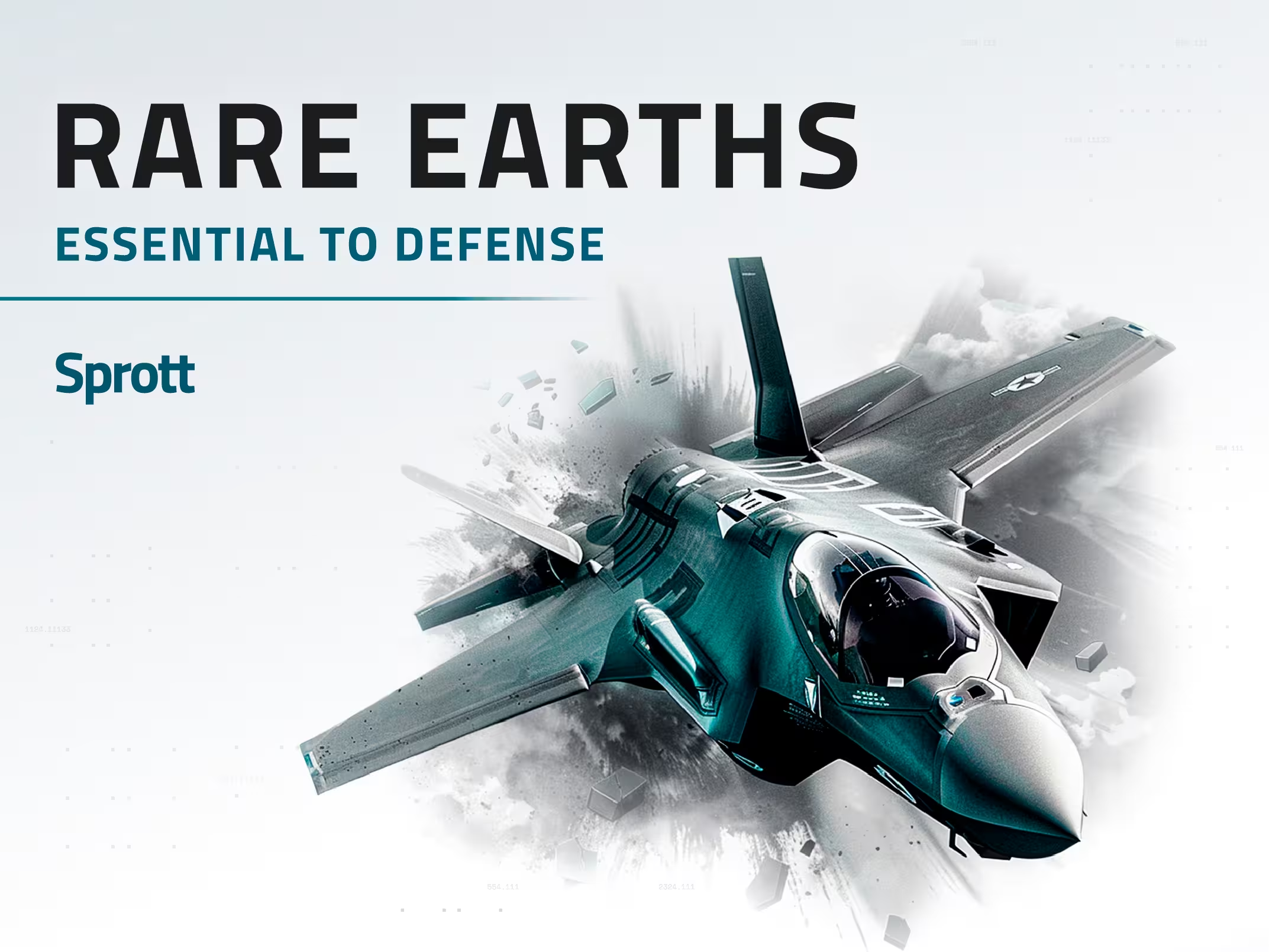
In September 2022, the Pentagon quietly stopped taking delivery of new F-35 fighter jets. The reason was not a design flaw or a manufacturing defect. A single small magnet inside the plane's engine had been made using an alloy from China, which is banned under U.S. defense procurement law.