Commodities
May 20, 2026
2 min
Commodities

Key takeaways
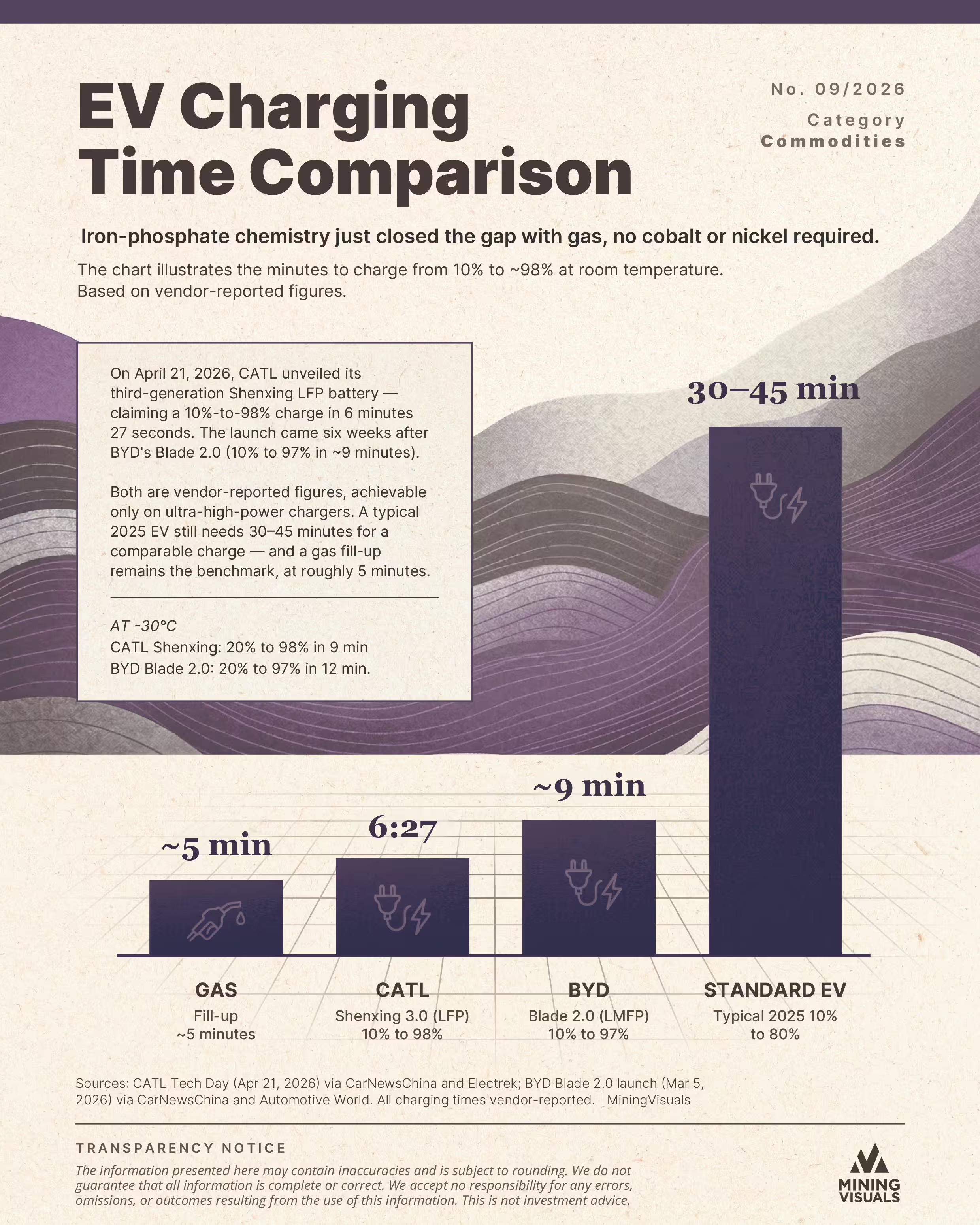
- CATL's third-gen Shenxing charges 10% to 98% in 6 minutes 27 seconds, and 20% to 98% in 9 minutes at -30°C — both figures vendor-reported.
- BYD's Blade Battery 2.0 charges 10% to 97% in about 9 minutes, but requires BYD's own 1,500 kW Flash Charging stations to hit headline speeds.
- Chemistry has split: Shenxing remains LFP, while Blade 2.0 has moved to LMFP — a meaningful shift in critical-minerals demand.
On April 21, 2026, at its "Beyond the Pole" Tech Day in Beijing, CATL unveiled the third generation of its Shenxing battery, claiming a 10%-to-98% charge in 6 minutes 27 seconds. The launch came six weeks after BYD unveiled its second-generation Blade Battery with a 10%-to-97% charge in around 9 minutes. For mining investors, the more durable story sits underneath the headlines: the chemistries driving these speeds are reshaping demand for iron, phosphate, manganese, and cobalt.
What CATL Demonstrated
Per CATL's launch, the Shenxing 3rd-gen moves from 10% to 35% in one minute, 10% to 80% in 3 minutes 44 seconds, and 10% to 98% in 6 minutes 27 seconds, with a peak 15C rate, a 0.25-milliohm internal resistance, and over 90% capacity retention after 1,000 ultra-fast cycles.
The cold-weather figure is reported on a different scale: at -30°C, the battery charges from 20% to 98% in roughly 9 minutes, not from 10%, because the self-heating pulse system consumes part of the cold-start window. All numbers are CATL-reported; independent verification has not been published.
How It Compares to BYD's Blade Battery 2.0
BYD's Blade 2.0, unveiled March 5, 2026, charges 10% to 70% in 5 minutes and 10% to 97% in 9 minutes at room temperature, and 20% to 97% in 12 minutes at -30°C. Across ten launch models, the 10%-to-97% window ran from 8:45 to 9:24.
Two caveats. Those speeds require BYD's 1,500 kW Flash Charging hardware; on standard public chargers, Blade 2.0 charges 30% to 50% faster than conventional EVs — meaningfully quicker, but well outside the headline. And the chemistry is no longer the same as CATL's: the original Blade was LFP, but the second generation has moved to lithium manganese iron phosphate (LMFP).
Why the Chemistry Split Matters for Mining
CATL and BYD are now using different cathodes to reach similar charge times. Shenxing stays LFP — iron and phosphate, no nickel, manganese, or cobalt. Blade 2.0 is LMFP, which adds manganese. Both displace NMC in mainstream EVs, but LMFP introduces a manganese demand vector LFP does not. Separately, CATL's same Tech Day also covered the third-generation Qilin battery, which remains NMC — so the cobalt-free narrative applies to Shenxing, not the full CATL lineup.
Per SNE Research, CATL took 39.2% of global EV battery installations in 2025 and BYD 16.4%. In China, CATL surpassed 50% domestic share in Q1 2026. Between them, the two companies set the cathode direction for most of global EV demand.
Infrastructure is the throttle: BYD had 4,239 Flash Charging stations live at launch, targeting 20,000 by year-end 2026, while CATL relies on third-party operators in its Shenxing Superfast Charging Network. Cell performance is only realized where the hardware exists.
The Investment Lens
CATL's third-generation Shenxing matches a gas fill-up under best-case conditions, on vendor-reported figures, with corresponding hardware in place. Whether it reshapes adoption outside China depends on how fast that hardware lands in Europe, North America, and the rest of Asia. For mining exposure, the more durable signal is the LFP-vs-LMFP split at the top of the battery industry — both chemistries displace nickel and cobalt, but LMFP adds manganese demand, and CATL plus BYD direct over half of global cathode procurement between them.
MiningVisuals Disclaimer: This article is for informational purposes only and does not constitute financial or investment advice.





Explore More
View All

Behind Tin's 2026 Record High
Behind Tin's 2026 Record High
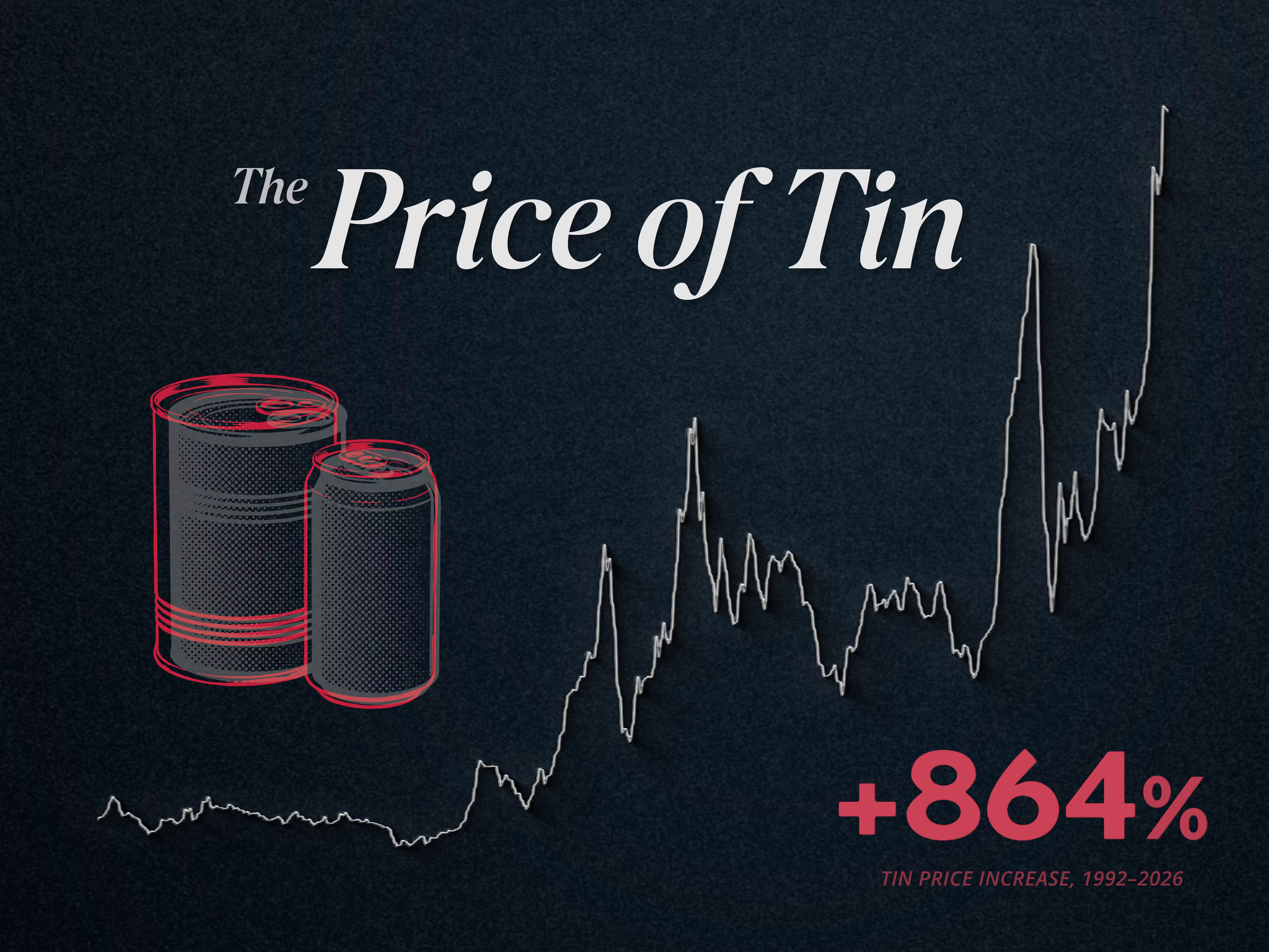
In January 2026, the London Metal Exchange three-month tin contract closed at US$53,462 a tonne, a nominal all-time high that surpassed the March 2022 peak, and it has traded near those levels since. The puzzle is that there is no shortage of tin today: exchange inventories actually rose as the price climbed, rather than being drawn down. Two very different things are holding the price up. The first is short-term: a wave of investor buying, which the industry says drove the January jump. The second is long-term: on current forecasts, the world will not mine enough tin to meet demand later this decade, a gap already projected before the rally began and expected to persist after it fades. The lasting story is that forecast shortfall, not the spike.
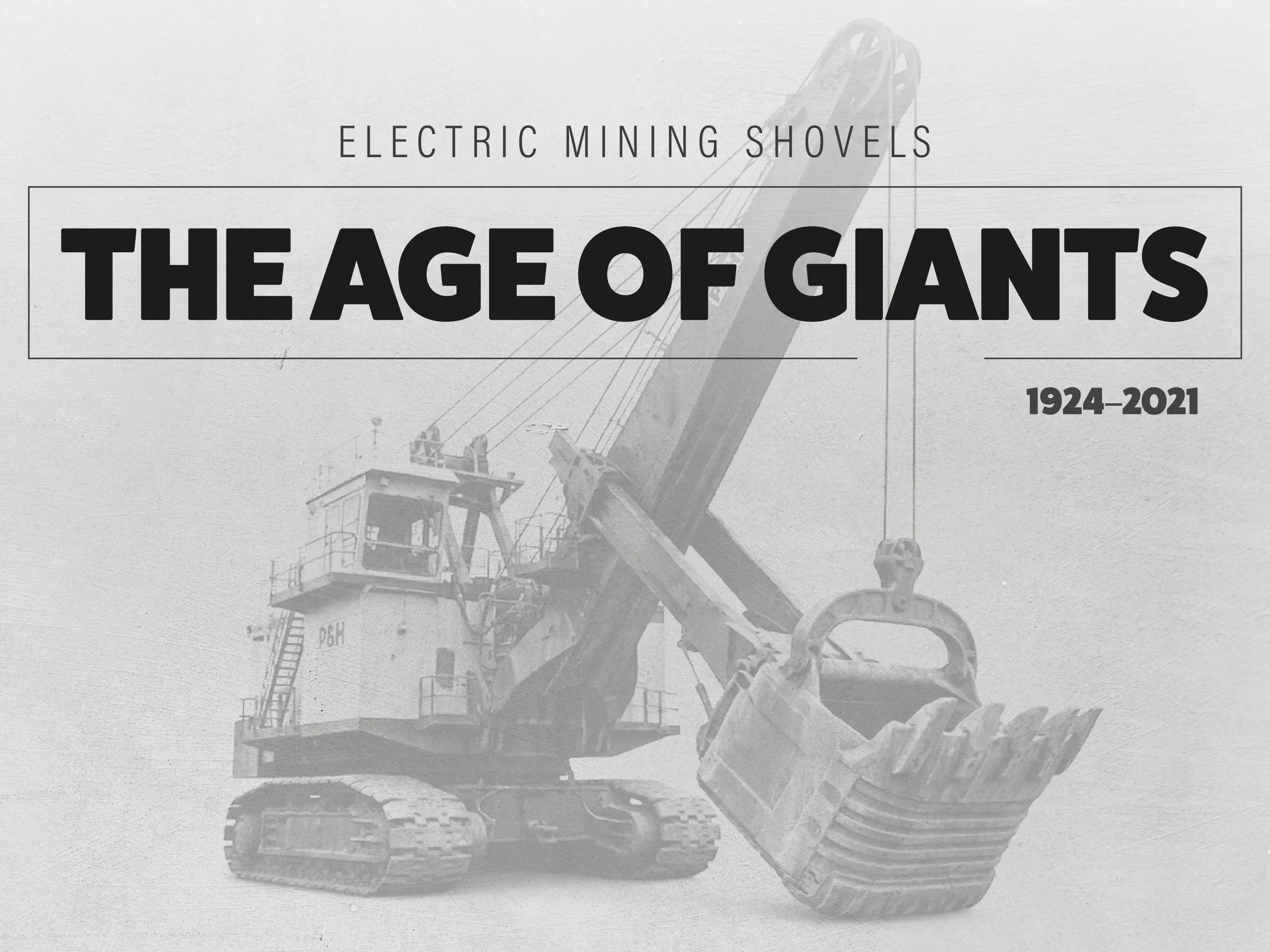
The Age of Giants: How Mining Shovels Grew, Peaked, and Deliberately Shrank
The Age of Giants: How Mining Shovels Grew, Peaked, and Deliberately Shrank
For four decades, the American coalfields hosted an engineering arms race measured in cubic metres of bucket. It ended not with a bigger machine, but with a deliberate retreat. The single largest mobile land machine ever built, the Marion 6360 "Captain," was commissioned in 1965 and destroyed by fire in 1991. No shovel has approached its scale since, and the machines that replaced it were smaller by design.
Where Indium Goes: The Metal Behind Screens, Chips, and Solar
Where Indium Goes: The Metal Behind Screens, Chips, and Solar
Indium is one of the metals you never see but use constantly. As indium tin oxide, it forms the transparent conductive coating on nearly every LCD and touchscreen, and that single application still accounts for most global consumption, according to the USGS. But the metal's role is broadening. Its compounds now sit inside the high-speed optical chips that route data through AI data centers, a shift that has turned a quiet, display-driven material into one buyers watch closely, especially as China refines about 70% of it and has begun tightening the flow.
Rare Earths and the F-35: The Defense Supply-Chain Bottleneck Behind America's Most Advanced Fighter Jet
Rare Earths and the F-35: The Defense Supply-Chain Bottleneck Behind America's Most Advanced Fighter Jet
In September 2022, the Pentagon quietly stopped taking delivery of new F-35 fighter jets. The reason was not a design flaw or a manufacturing defect. A single small magnet inside the plane's engine had been made using an alloy from China, which is banned under U.S. defense procurement law.