Commodities
March 24, 2026
1 min
Commodities
.webp)

Key takeaways
- Gold Dominance: Gold budgets surged 11%, capturing a massive 50% ($6.2B) of all global exploration spending.
- Battery Metals Retreat: Lithium (5%) and nickel (3%) exploration budgets shrank drastically amid tight capital and market oversupply.
- Record Risk Aversion: Safe, near-mine drilling hit a record high (45%), while risky grassroots exploration collapsed to an all-time low (21%).
With gold prices smashing through $4,600 an ounce in early 2026 amidst escalating geopolitical tensions and relentless central bank buying, the global mining sector's exploration priorities have shifted decisively toward safe havens. According to the recently released World Exploration Trends 2026 report from S&P Global Market Intelligence, global nonferrous exploration budgets experienced a slight 0.6% year-over-year dip to $12.40 billion in 2025. However, this top-line number masks a dramatic rotation beneath the surface. While funds raised by junior and intermediate companies actually more than doubled year over year to $21.43 billion, capital deployment remained highly selective, directed heavily toward project development rather than greenfield exploration. As the industry grapples with financing constraints and market uncertainty, the data reveals a sector prioritizing sure bets near existing operations over early-stage discoveries.
The Golden Anchor
Despite a slight contraction in the overall global budget, gold remains the the king of mineral exploration. In 2025, a staggering 50% of the entire global budget, amounting to $6.2 billion, was dedicated to uncovering the yellow metal. This represents an 11% increase from the previous year, single-handedly offsetting steep funding cuts seen in other commodities. With the underlying commodity price setting new historical benchmarks, major producers are utilizing their robust free cash flows to drill out and expand existing reserves, ensuring that gold remains the financial bedrock of the broader exploration sector.
The Copper Imperative
Coming in a strong second is copper, capturing 26% of the global exploration budget at $3.3 billion. As the indispensable metal for global electrification, grid expansion, and renewable energy infrastructure, copper continues to command substantial baseline capital. The sustained exploration spend continues to edge higher, supported by longer-term demand expectations, though overall growth remains constrained by prevailing financing conditions.
The Battery Metal Pullback
The narrative for critical battery metals shifted drastically in 2025. Following a period of intense hype, lithium and nickel experienced sharp declines in exploration allocations, capturing just $595 million (5%) and $332 million (3%) of the budget, respectively. This contraction was primarily driven by weak short-term market conditions, momentarily oversupplied supply chains, and a brutal financing environment for junior mining companies, who traditionally shoulder the burden of early-stage critical mineral discovery.
Playing it Safe: Minesite vs. Grassroots
Perhaps the most alarming trend in the data is the evaporation of risk appetite. The industry is fundamentally playing it safe. Minesite exploration, drilling at or immediately adjacent to existing, proven deposits, surged to a record high, accounting for 45% of all exploration dollars. Conversely, generative grassroots exploration (the search for entirely new deposits in untested geographical areas) collapsed to a record low of just 21%. While expanding known resources offers immediate, low-risk returns for producers, the long-term consequence is a lack of major new tier-one discoveries needed to supply the next generation of global economic growth.
Conclusion
The 2025 global exploration data paints a picture of a mining industry in a defensive crouch. While record gold prices are keeping drill rigs turning and copper remains a steadfast priority, the profound lack of investment in grassroots exploration and the sharp pullback in battery metals suggest an incoming pipeline crunch. For investors, manufacturers, and policymakers alike, the message is clear: because bringing a mineral discovery into production can take more than a decade, the current lack of early-stage exploration is setting the stage for potential long-term impacts on project inventories and future supply pipelines.
MiningVisuals Disclaimer: This article is for informational purposes only and does not constitute financial or investment advice.
Source: https://www.spglobal.com/market-intelligence/en/news-insights/research/2026/03/world-exploration-trends-2026-what-the-latest-data-says-about-budgets-risk-appetite-and-the-project-pipeline





Explore More
View All

Behind Tin's 2026 Record High
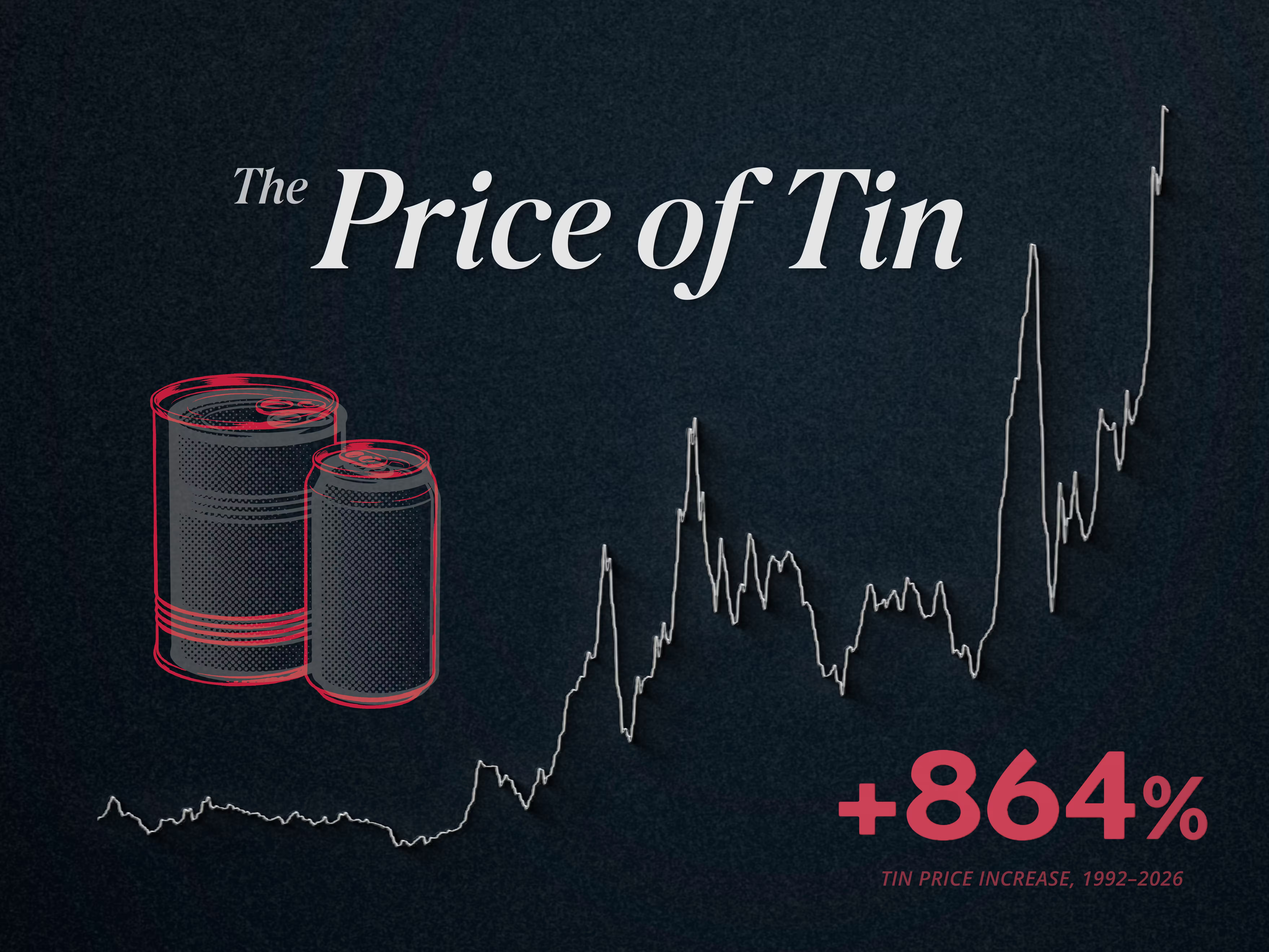
Behind Tin's 2026 Record High
In January 2026, the London Metal Exchange three-month tin contract closed at US$53,462 a tonne, a nominal all-time high that surpassed the March 2022 peak, and it has traded near those levels since. The puzzle is that there is no shortage of tin today: exchange inventories actually rose as the price climbed, rather than being drawn down. Two very different things are holding the price up. The first is short-term: a wave of investor buying, which the industry says drove the January jump. The second is long-term: on current forecasts, the world will not mine enough tin to meet demand later this decade, a gap already projected before the rally began and expected to persist after it fades. The lasting story is that forecast shortfall, not the spike.
The Age of Giants: How Mining Shovels Grew, Peaked, and Deliberately Shrank
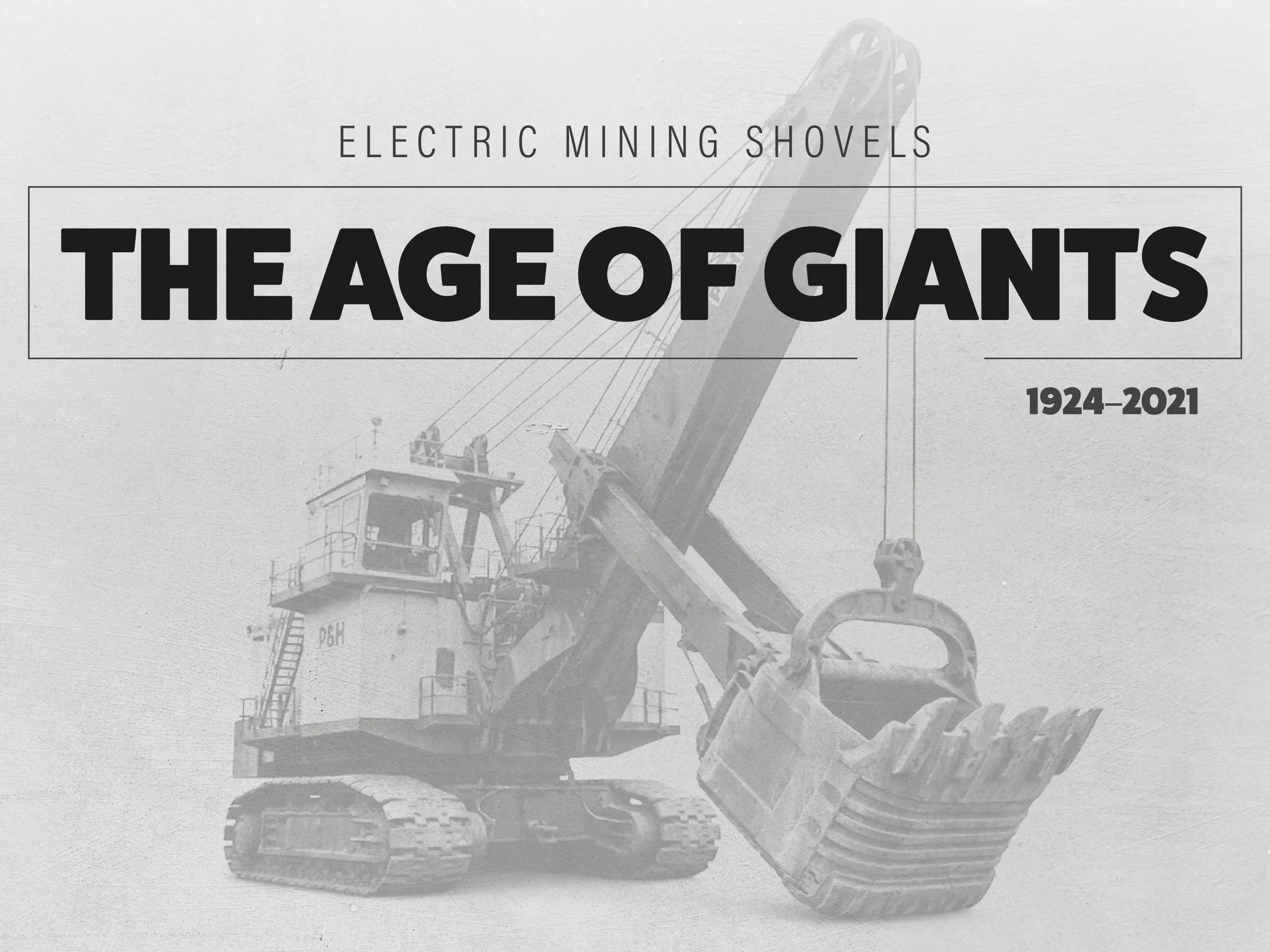
The Age of Giants: How Mining Shovels Grew, Peaked, and Deliberately Shrank
For four decades, the American coalfields hosted an engineering arms race measured in cubic metres of bucket. It ended not with a bigger machine, but with a deliberate retreat. The single largest mobile land machine ever built, the Marion 6360 "Captain," was commissioned in 1965 and destroyed by fire in 1991. No shovel has approached its scale since, and the machines that replaced it were smaller by design.
Where Indium Goes: The Metal Behind Screens, Chips, and Solar
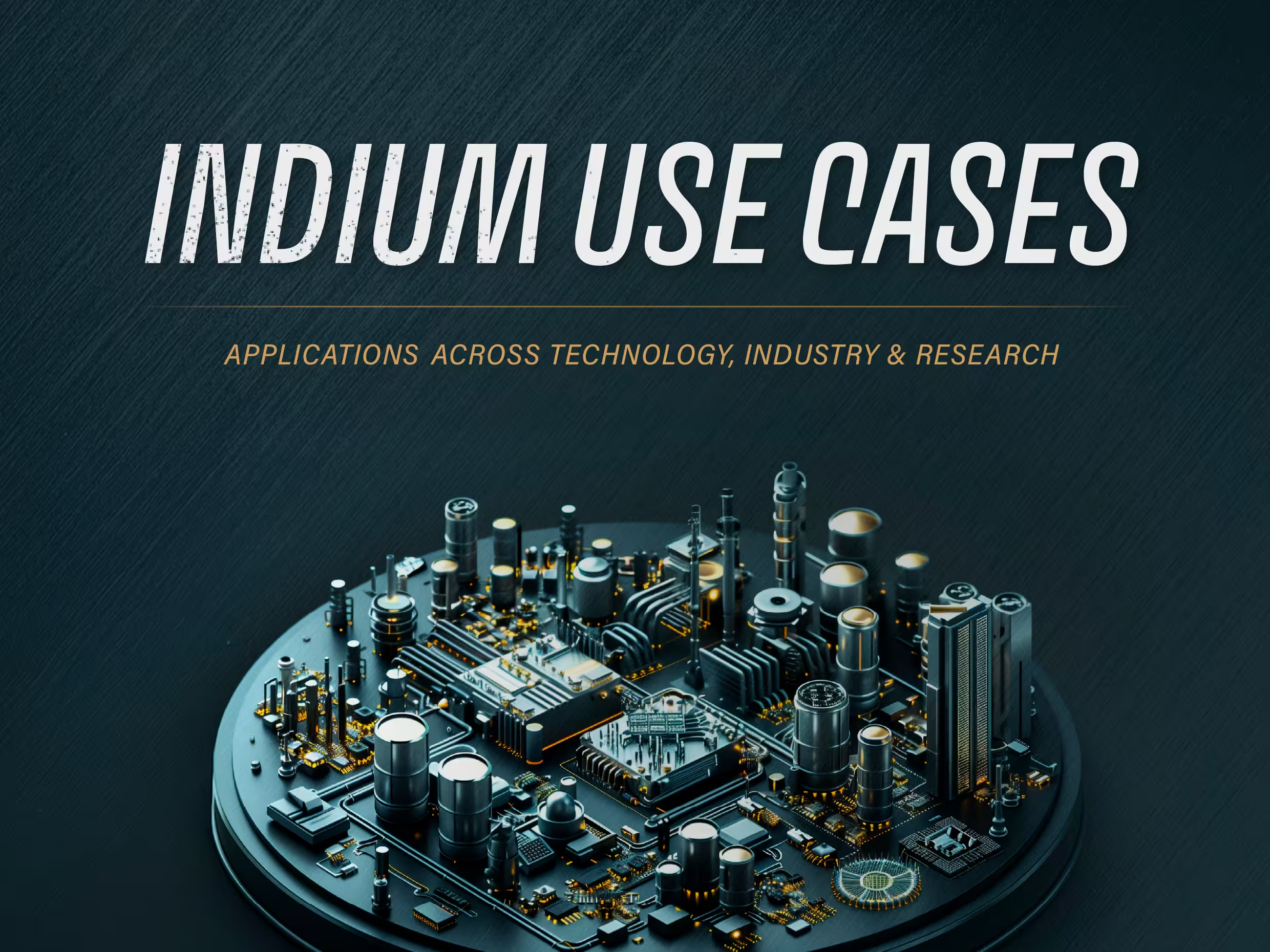
Where Indium Goes: The Metal Behind Screens, Chips, and Solar
Indium is one of the metals you never see but use constantly. As indium tin oxide, it forms the transparent conductive coating on nearly every LCD and touchscreen, and that single application still accounts for most global consumption, according to the USGS. But the metal's role is broadening. Its compounds now sit inside the high-speed optical chips that route data through AI data centers, a shift that has turned a quiet, display-driven material into one buyers watch closely, especially as China refines about 70% of it and has begun tightening the flow.

Rare Earths and the F-35: The Defense Supply-Chain Bottleneck Behind America's Most Advanced Fighter Jet
Rare Earths and the F-35: The Defense Supply-Chain Bottleneck Behind America's Most Advanced Fighter Jet
In September 2022, the Pentagon quietly stopped taking delivery of new F-35 fighter jets. The reason was not a design flaw or a manufacturing defect. A single small magnet inside the plane's engine had been made using an alloy from China, which is banned under U.S. defense procurement law.