Commodities
January 7, 2025
1 min
Commodities

In a world driven by the need for raw materials—from the iron ore that builds our cities to the copper that wires the energy transition—the companies that unearth these resources operate on a truly staggering scale. But which of these giants are the most financially powerful?
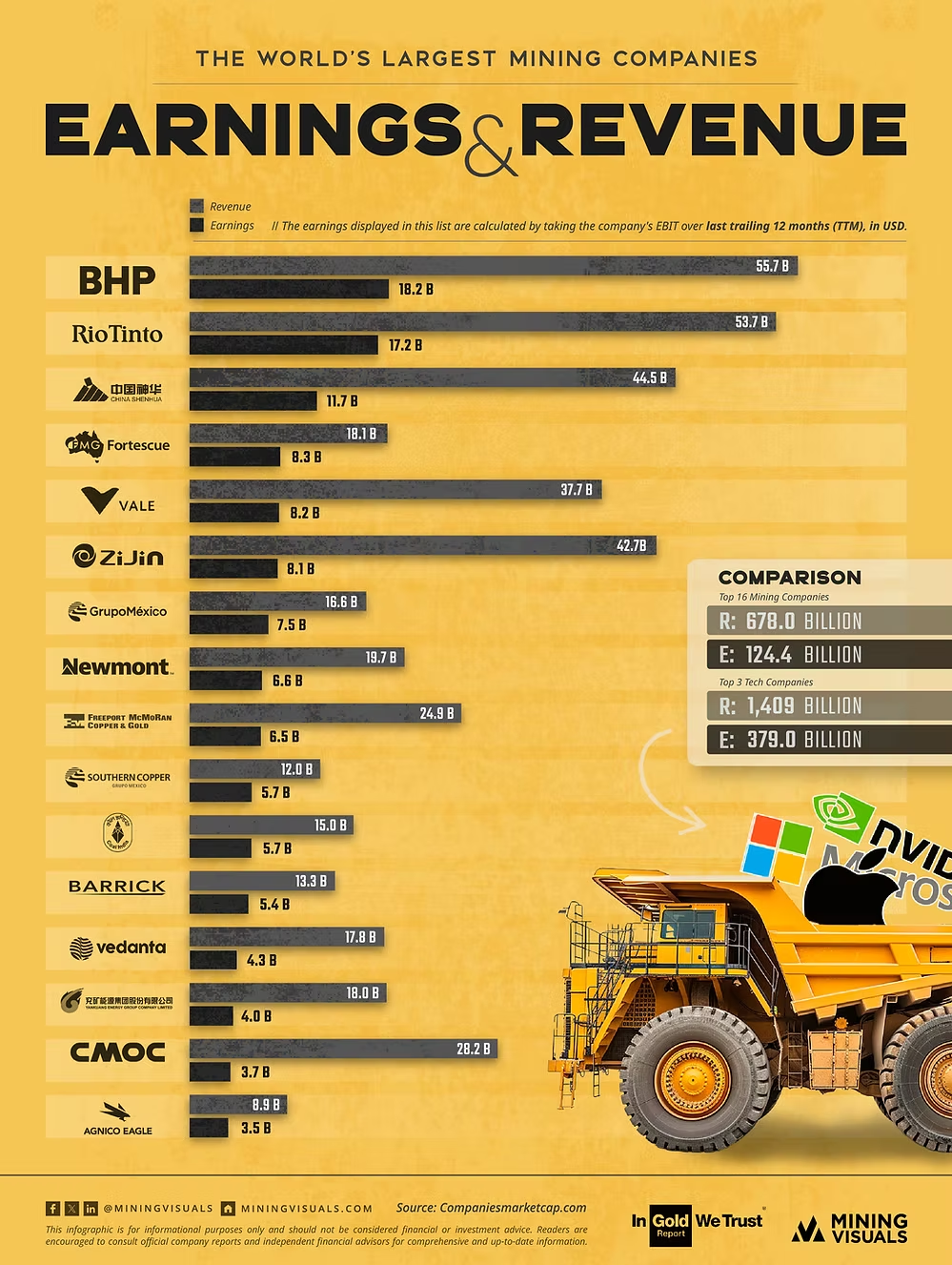
Following up on our previous analysis, we are once again ranking the world's largest mining companies, this time by their financial performance over the last twelve months (TTM). Our latest infographic provides a clear snapshot of the industry's titans, ranked by their Earnings (EBIT) and benchmarked against their total Revenue.
The Diversified Giants Reign Supreme
At the top of the list, the diversified behemoths BHP and Rio Tinto continue to dominate. With revenues of $55.7B and $53.7B respectively, their immense scale is clear. More importantly, their earnings of $18.2B and $17.2B showcase their operational efficiency and the benefit of high-margin commodities like iron ore.
Close behind are other major players like China's state-owned China Shenhua and the Brazilian powerhouse VALE.
Mining vs. Tech
One of the most revealing insights from our analysis is the comparison to the tech industry. As the chart shows:
- The Top 16 Mining Companies generated a $678 Billion in revenue.
- The Top 3 Tech Companies generated more than double that, at a staggering $1.4 Trillion.
The even starker contrast is in profitability. The miners' $678B in revenue translated to $124.4B in earnings, while the three tech giants converted their $1.4T in revenue into $379B in earnings.
This comparison powerfully illustrates the fundamental difference between the two sectors. Mining is a game of immense capital intensity, high operating costs, and cyclical markets. While the revenues are enormous, the profit margins are tighter. Tech, on the other hand, often operates on a high-margin, scalable software model.
The Health of the Industry
Overall, these numbers paint a picture of a healthy and hugely profitable global mining sector. The world's top companies are generating massive revenues and converting a significant portion of that into earnings, allowing them to fund new projects, return capital to shareholders, and continue to supply the essential metals and minerals that underpin the global economy.
Source: All data is sourced from Companiesmarketcap.com and is based on trailing twelve months (TTM) figures as of the date of publication. Earnings are calculated using EBIT (Earnings Before Interest and Taxes).
Disclaimer: The rankings and financial data (EBIT, Revenue) in this article are based on information available at the time of publication, reflecting performance over the last twelve months (TTM). While we aim for accuracy, market conditions and company performance are dynamic and subject to rapid change. This article is for informational purposes only.



Explore More
View All

Behind Tin's 2026 Record High
Behind Tin's 2026 Record High
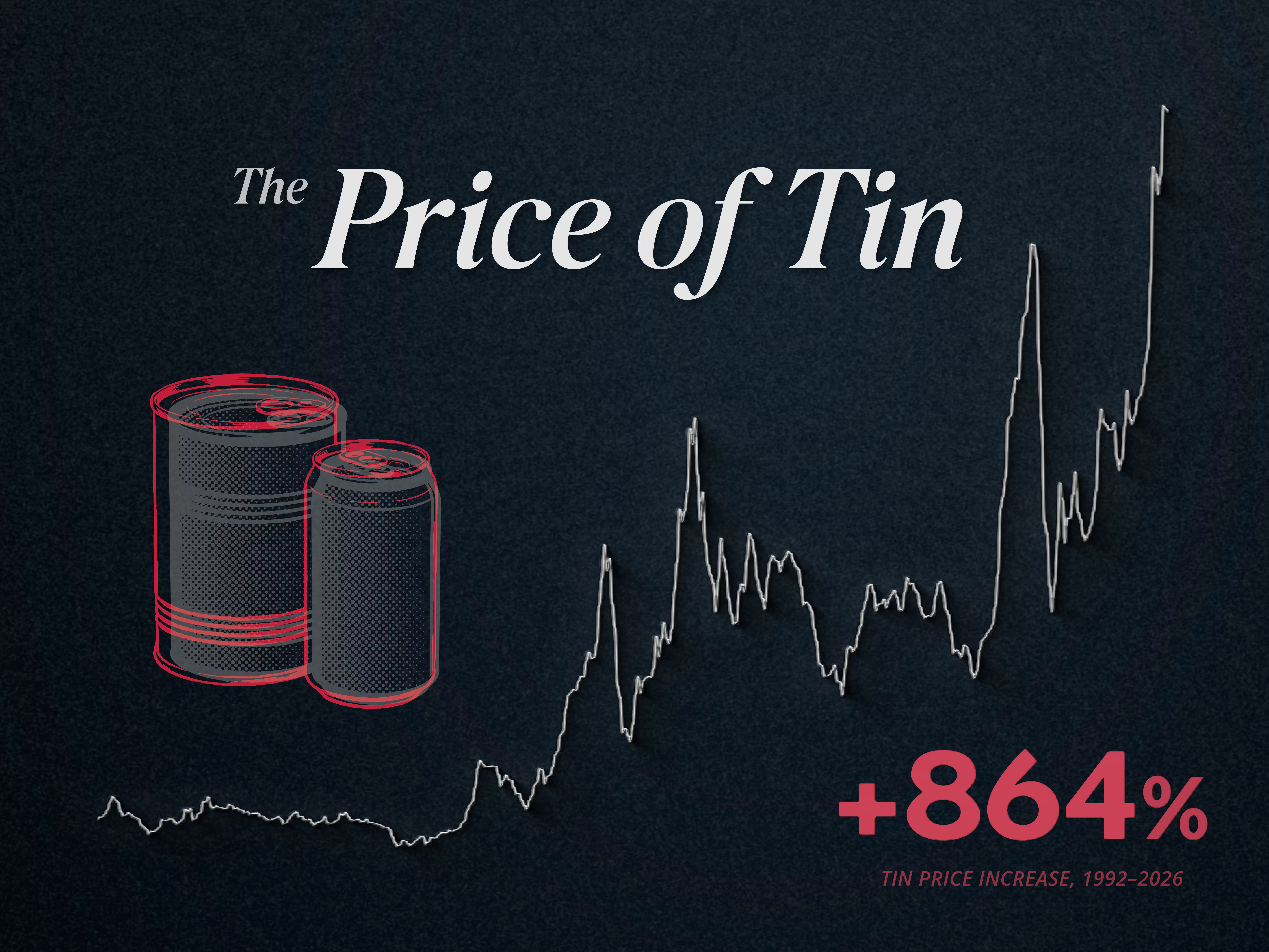
In January 2026, the London Metal Exchange three-month tin contract closed at US$53,462 a tonne, a nominal all-time high that surpassed the March 2022 peak, and it has traded near those levels since. The puzzle is that there is no shortage of tin today: exchange inventories actually rose as the price climbed, rather than being drawn down. Two very different things are holding the price up. The first is short-term: a wave of investor buying, which the industry says drove the January jump. The second is long-term: on current forecasts, the world will not mine enough tin to meet demand later this decade, a gap already projected before the rally began and expected to persist after it fades. The lasting story is that forecast shortfall, not the spike.
The Age of Giants: How Mining Shovels Grew, Peaked, and Deliberately Shrank
The Age of Giants: How Mining Shovels Grew, Peaked, and Deliberately Shrank
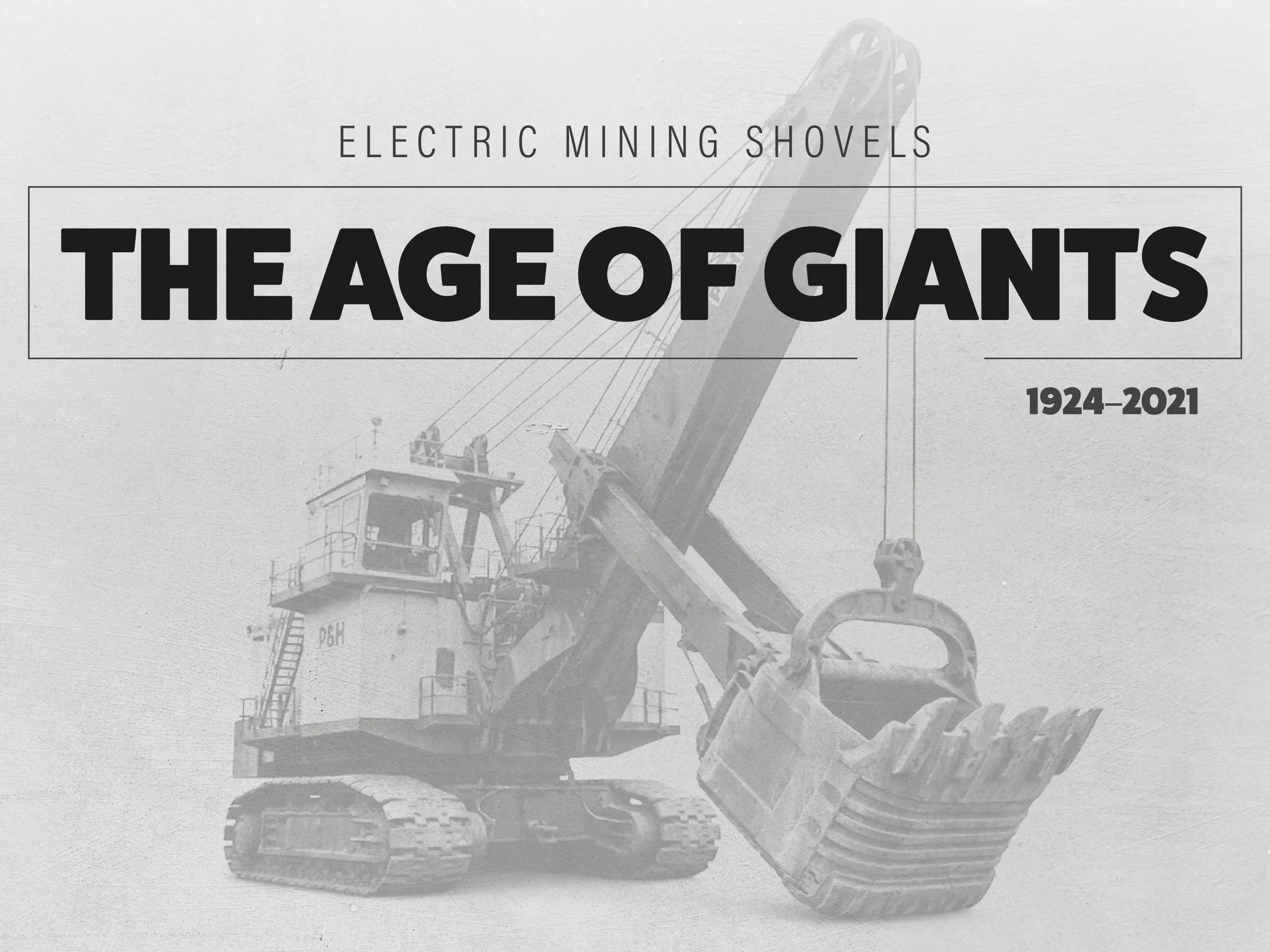
For four decades, the American coalfields hosted an engineering arms race measured in cubic metres of bucket. It ended not with a bigger machine, but with a deliberate retreat. The single largest mobile land machine ever built, the Marion 6360 "Captain," was commissioned in 1965 and destroyed by fire in 1991. No shovel has approached its scale since, and the machines that replaced it were smaller by design.
Where Indium Goes: The Metal Behind Screens, Chips, and Solar
Where Indium Goes: The Metal Behind Screens, Chips, and Solar
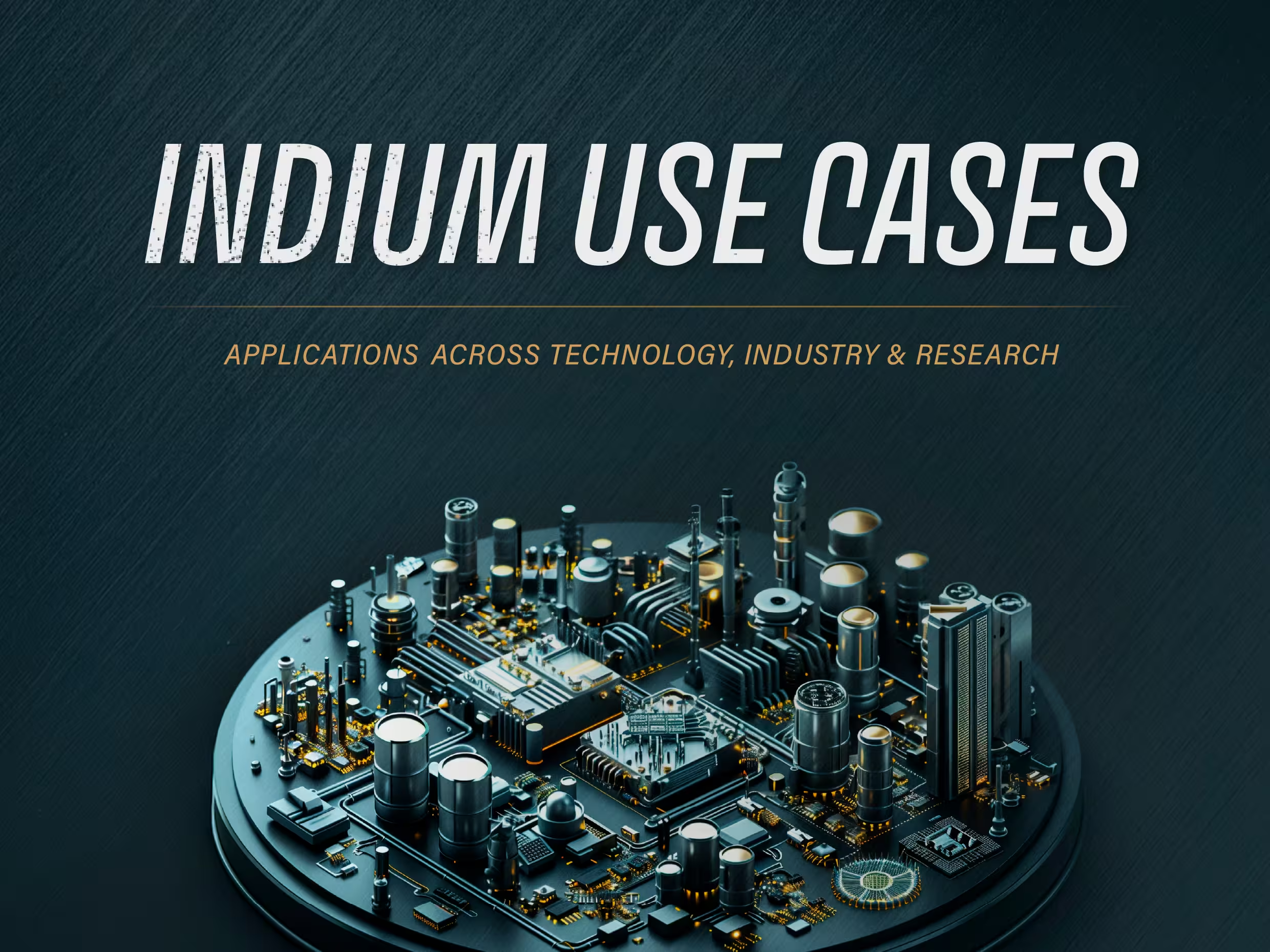
Indium is one of the metals you never see but use constantly. As indium tin oxide, it forms the transparent conductive coating on nearly every LCD and touchscreen, and that single application still accounts for most global consumption, according to the USGS. But the metal's role is broadening. Its compounds now sit inside the high-speed optical chips that route data through AI data centers, a shift that has turned a quiet, display-driven material into one buyers watch closely, especially as China refines about 70% of it and has begun tightening the flow.
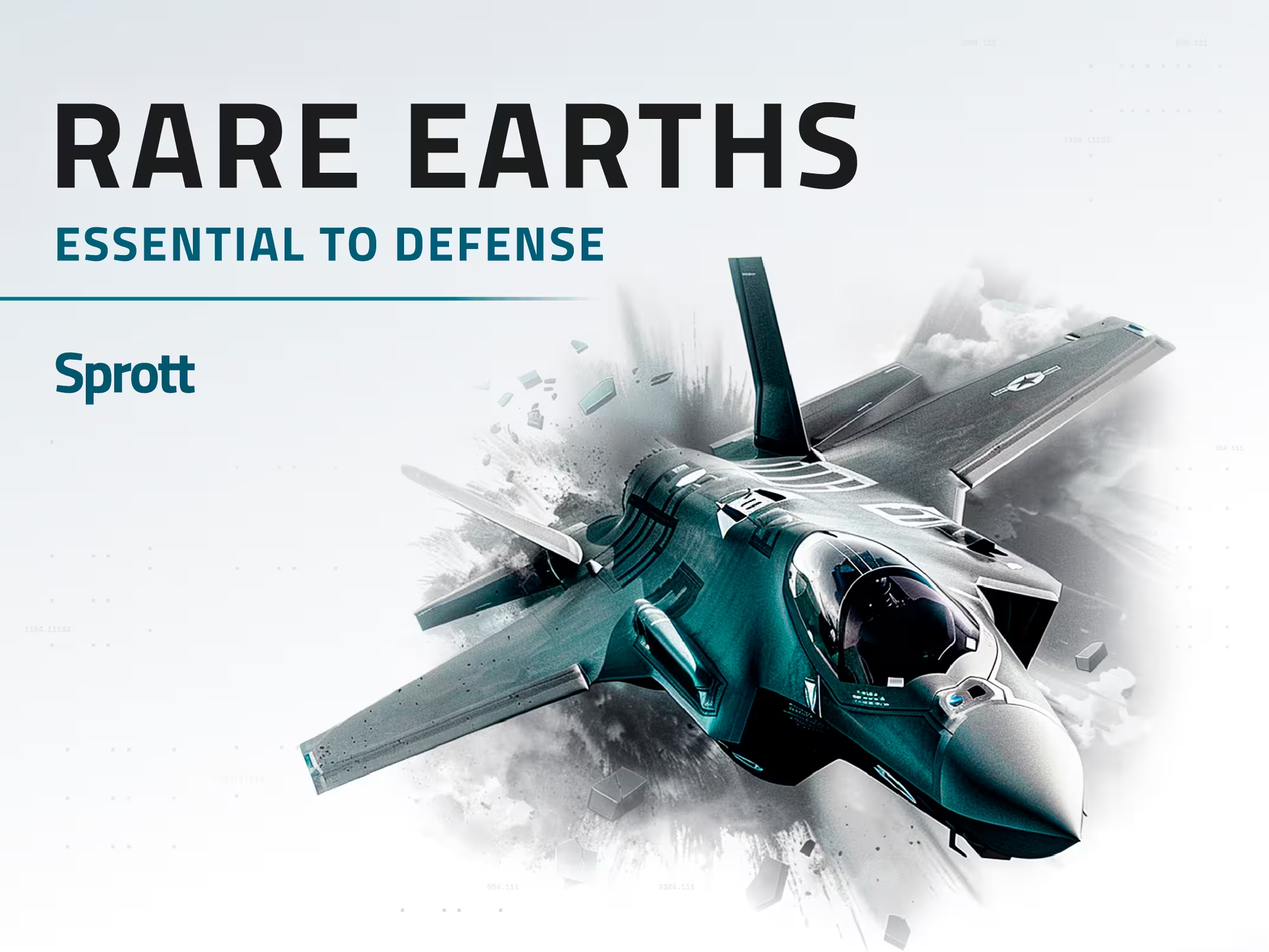
Rare Earths and the F-35: The Defense Supply-Chain Bottleneck Behind America's Most Advanced Fighter Jet
Rare Earths and the F-35: The Defense Supply-Chain Bottleneck Behind America's Most Advanced Fighter Jet
In September 2022, the Pentagon quietly stopped taking delivery of new F-35 fighter jets. The reason was not a design flaw or a manufacturing defect. A single small magnet inside the plane's engine had been made using an alloy from China, which is banned under U.S. defense procurement law.