Commodities
What Each Part of the Mining Ecosystem Does
SIX KINDS OF COMPANIES TAKE A DEPOSIT FROM THE FIRST DRILL HOLE TO REFINED METAL
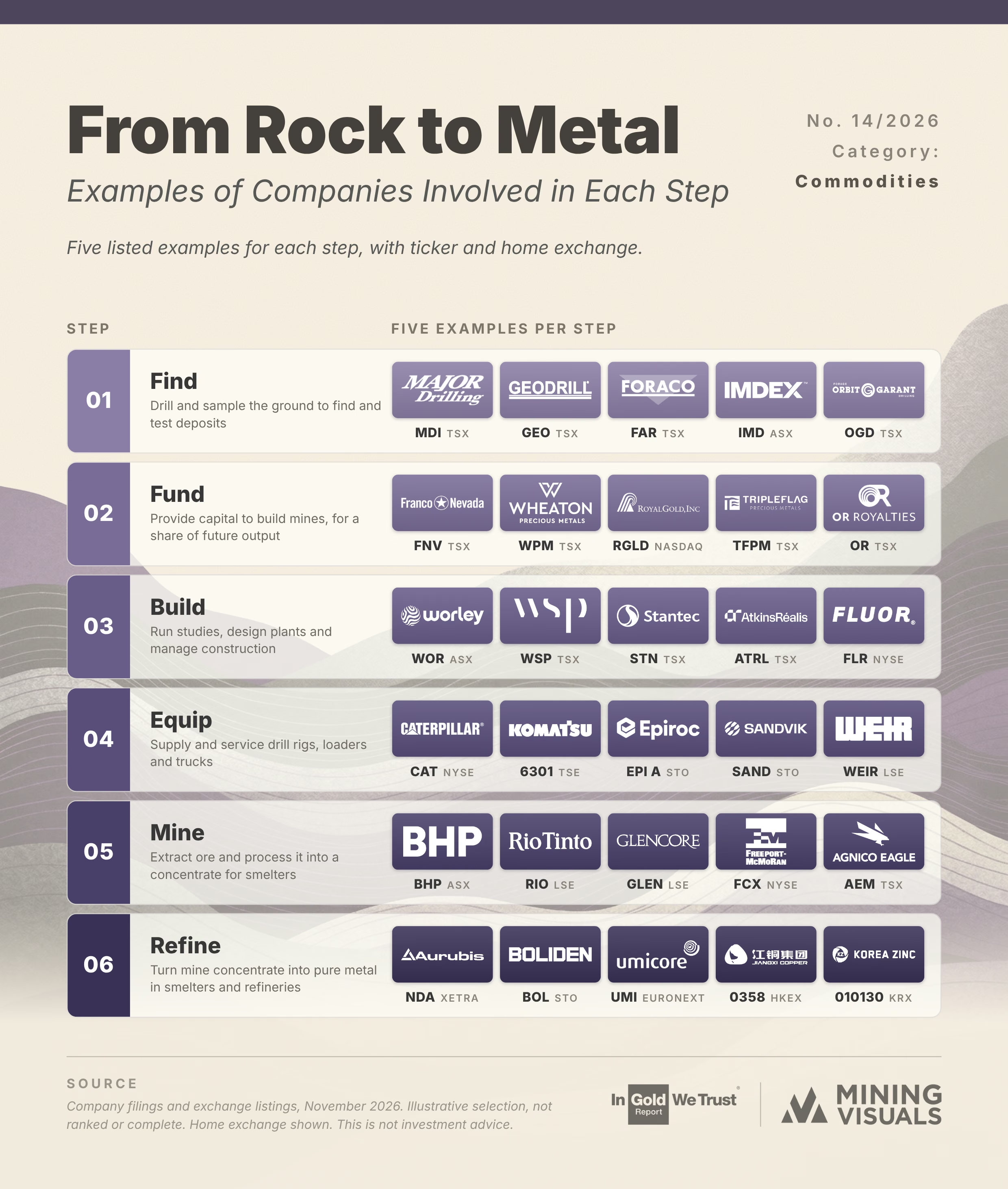

Drilling Comes First: Contractors drill the ground to test whether a deposit is worth mining.
Concentrate Is Not the End Product: Smelters and refiners convert mine concentrate into refined metal.
Steps Can Overlap: Some companies work at more than one step, such as miners that also run smelters.
Metal starts as rock that no one has found yet. Exploration and drilling turn it into a known deposit. The deposit is then financed, built, equipped and mined, and its concentrate is smelted and refined into metal.
Each stage is handled by its own industry, with its own listed companies. The section below explains what each step does, with a recent example from each.
Find. Exploration starts with drilling. Contractors bring up rock samples so geologists can test what is in the ground and how much of it there is. Major Drilling, whose principal source of revenue is contract drilling, reported more rigs in the field in the quarter ended July 31, citing demand from senior miners and juniors.
Fund. A mine needs money long before it sells any metal. Royalty and streaming companies provide part of it, in return for a share of the mine's future output or revenue. In one recent deal, Triple Flag agreed to provide US$440 million for a share of the Ravenswood mine's gold, and the release states the money will be used for debt reduction.
Build. Engineering firms turn a deposit into a working mine. They carry out the studies, design the processing plant and manage construction. Fluor said on November 6 that it had won two copper mining projects in Chile.
Equip. Equipment makers supply the drill rigs, loaders and trucks that move the rock, and keep them running with parts, service and upgrades. Epiroc said mining customers made up 83% of its orders in the third quarter, and that service growth was driven by mid-life upgrades of machines already in use.
Mine. Miners dig the ore, then crush and process it, usually into a concentrate. Output depends on ore grade, maintenance and conditions at the site. BHP said on October 20 that its copper production was lower in the quarter, citing planned grade declines, scheduled maintenance and severe weather in Chile.
Refine. Smelters and refiners turn concentrate into pure metal, and miners pay them a fee per ton for the work. The 2026 benchmark fee for copper concentrate was set at $0 per ton, down from $21.25, Reuters reported. For zinc, Korea Zinc's fee for smelting Teck's concentrate was $85 a ton in 2026, Bloomberg reported.
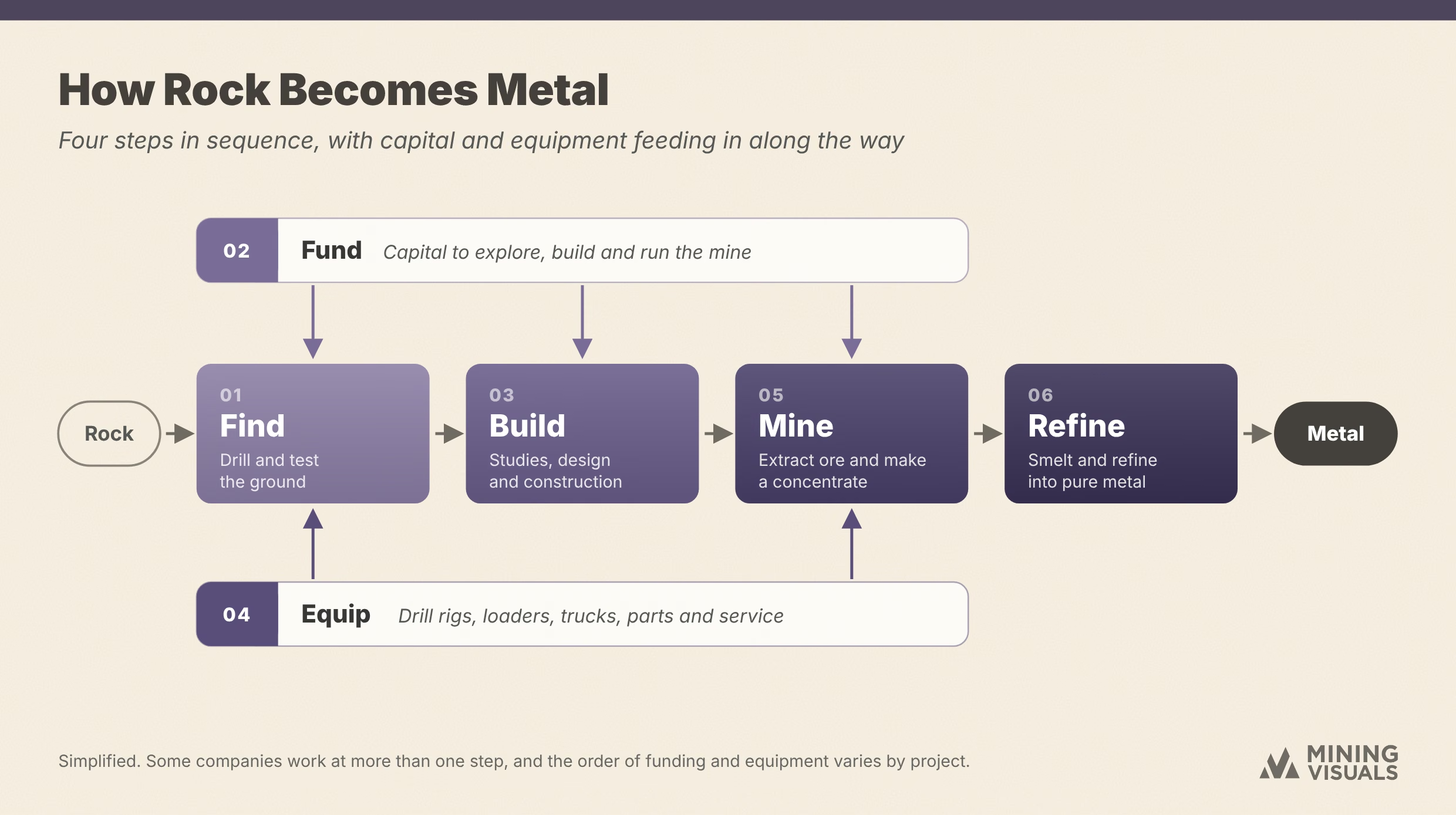
The six steps are not always run by separate companies. Boliden, one of the Refine examples, lists seven mines alongside five smelters on its operations page, so it covers both the Mine and Refine steps.
The 30 companies in the graphic are a selection. Each step includes many other listed and private firms, and the order within each row does not reflect size or importance.
MiningVisuals Disclaimer: This article is for informational purposes only and does not constitute financial or investment advice. Always conduct your own research.

Pakistan’s mineral export earnings could reach US$10.46 billion a year by 2039, up from US$932 million in 2025, according to a tentative outlook from the Petroleum Division. Other estimates start from a higher base: a projection by the Institute of Cost and Management Accountants of Pakistan, reported by APP, puts current mineral exports at about US$3 billion.
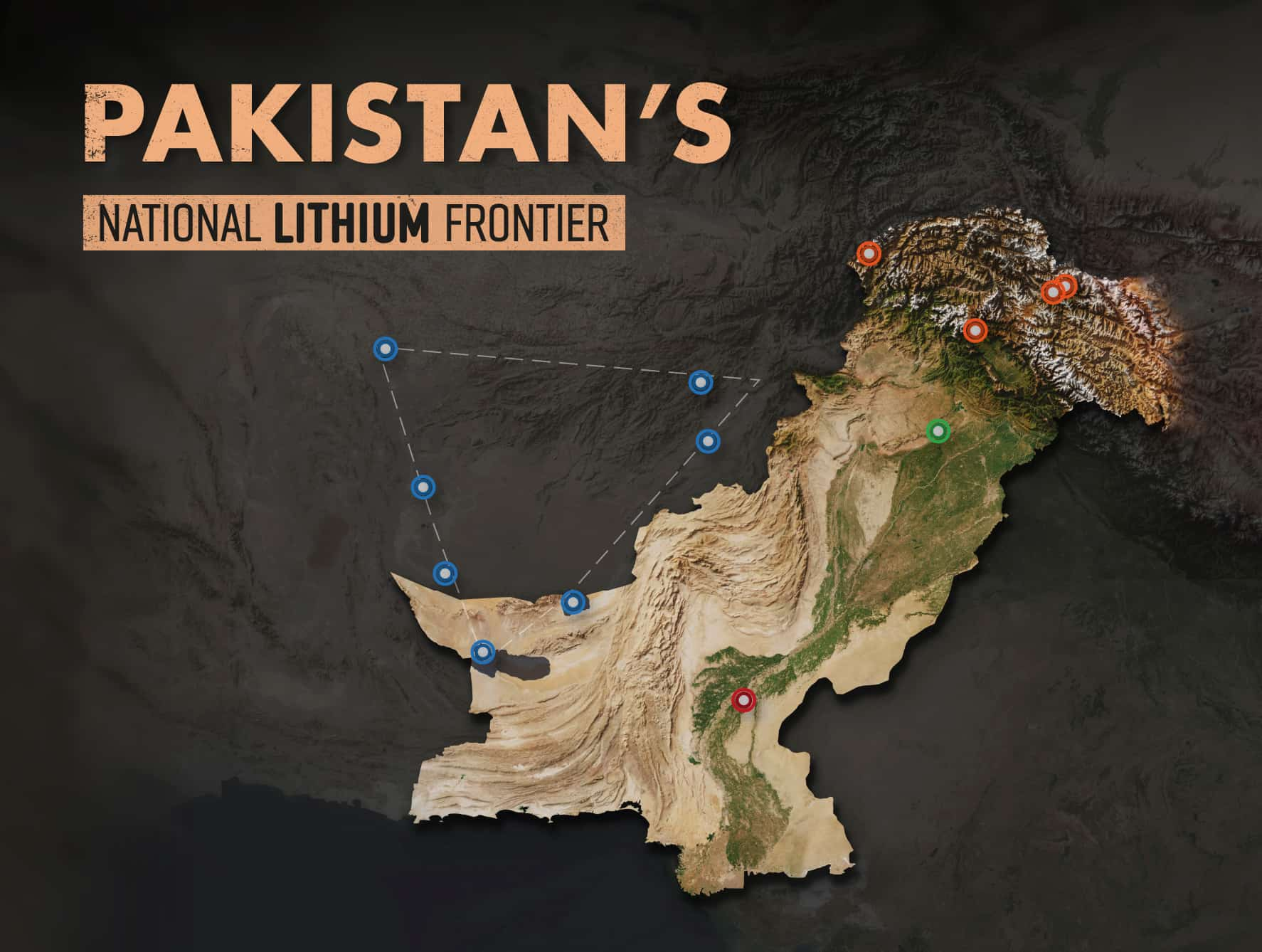
Lithium has been reported in four geological settings in Pakistan: brine lakes in Balochistan, geothermal well brine in Sindh, pegmatites in the northern mountains and clays in the Salt Range. A 2025 concept note by Geological Survey of Pakistan scientists describes these occurrences as potential and gives no resource estimates.
On November 6, 2025, the U.S. Interior Department added copper, silver and lead to its final critical minerals list, among 10 new entries. All three are main metals of a polymetallic deposit, where the USGS vein model places them in zones around a single intrusion. Silver shows how closely these metals are linked. The USGS says U.S. silver is "primarily obtained as a byproduct from lead-zinc, copper, and gold mines", and six smaller metals on the infographic reach the market the same way.

In April 2025, on Tesla’s Q1 earnings call, Elon Musk told investors that Optimus, the company’s humanoid robot, had been held up by a problem few outside the rare earth industry had been watching. “Optimus was affected,” he said, “by the magnet issue from China because the Optimus actuators in the arm do use permanent magnets” (Adamas Intelligence).