Precious Metals
January 3, 2025
1 min
Precious Metals


This graphic highlights data from the 2024 In Gold We Trust Report, showcasing central bank gold purchases from 2010 to 2023. The report provides insight into the growing demand for gold, particularly among emerging markets, and the shifting global economic landscape that drives this trend.
Since the 2007-2008 financial crisis, central banks, especially in emerging markets, have increasingly turned to gold. Countries like China, Russia, and Türkiye have led the way, driven by distrust in the US dollar and concerns about the global financial system. Since 2010, emerging markets have added over 3,200 tonnes of gold.
A 2023 survey shows 59% of central banks plan to further increase their gold reserves, motivated by domestic production, strategic adjustments, and financial concerns like inflation. While the US holds the most gold, emerging markets are quickly catching up.
Source: World Gold Council, Incrementum AG





Explore More
View All

Charted: Fifty Years of Gold Production in West Africa
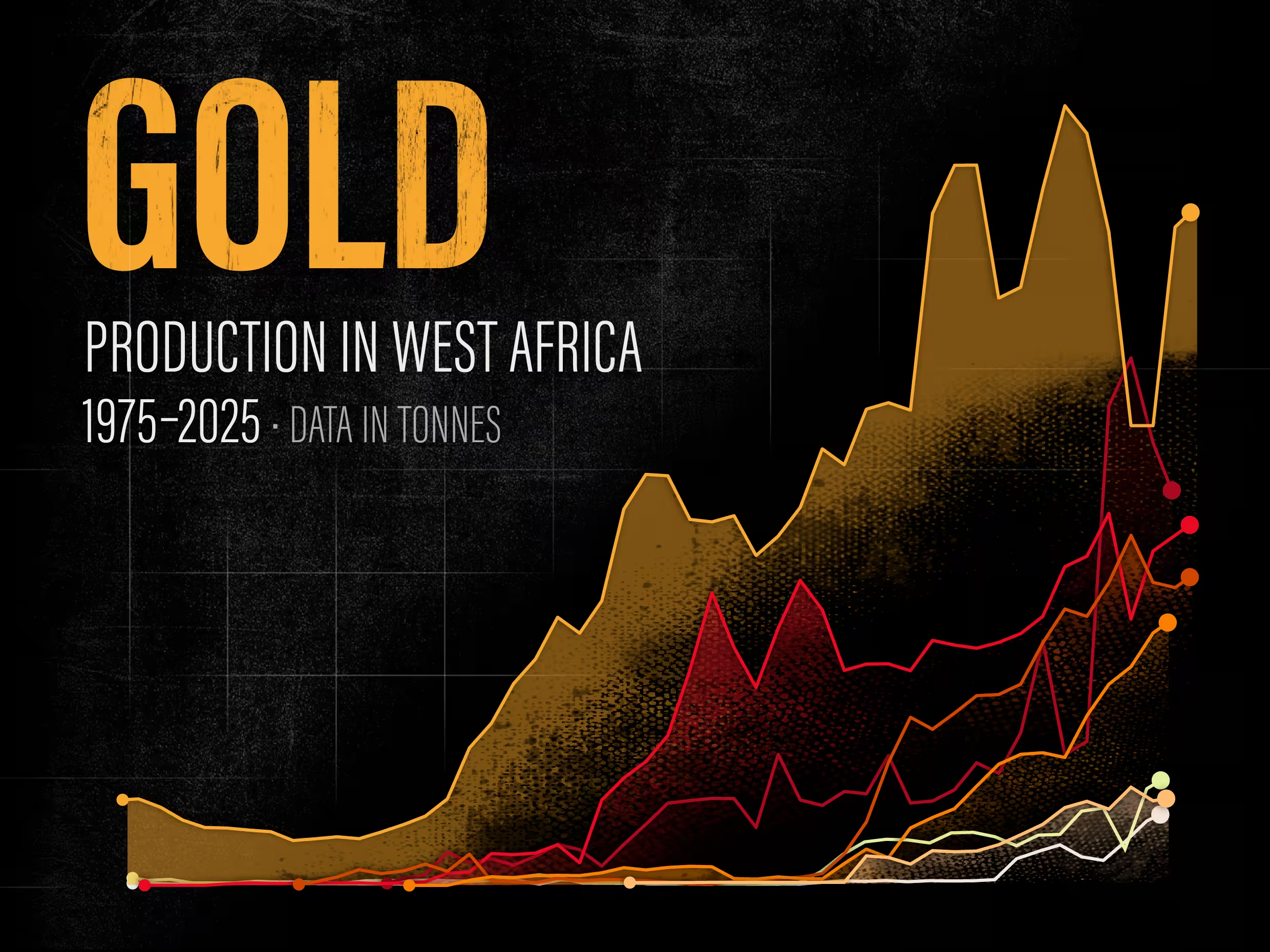
Charted: Fifty Years of Gold Production in West Africa
West Africa is in the middle of a gold run. In 2025 Ghana's output climbed more than 23 percent to a record 5.94 million ounces, holding its place as Africa's largest producer and now the sixth-largest in the world, and analysts expect the wider region to rebound about 8 percent in 2026.
Ghana's Gold Mining Landscape: A Story Written in Ancient Rock
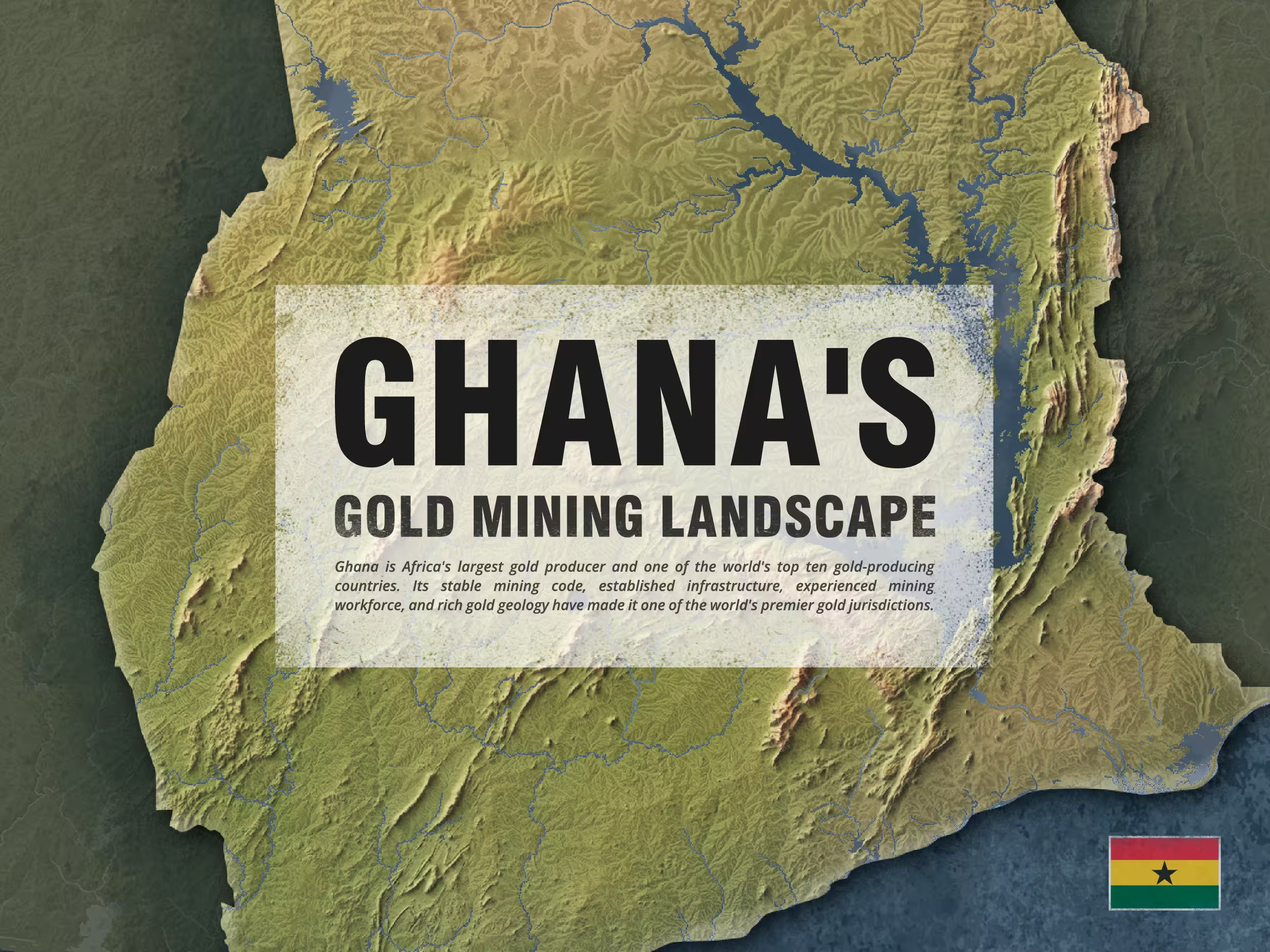
Ghana's Gold Mining Landscape: A Story Written in Ancient Rock
Ghana is one of the world's most significant gold-producing countries, and in 2025 it remained the largest in Africa, with national output reaching about 6 million ounces. But the numbers are only the surface. Ghana's gold reaches back more than two billion years into the rock beneath it, shaped by ancient mountain-building forces and worked by human hands for well over a century.
Solar Is Silver's Largest Industrial Market, and Not Easily Replaced
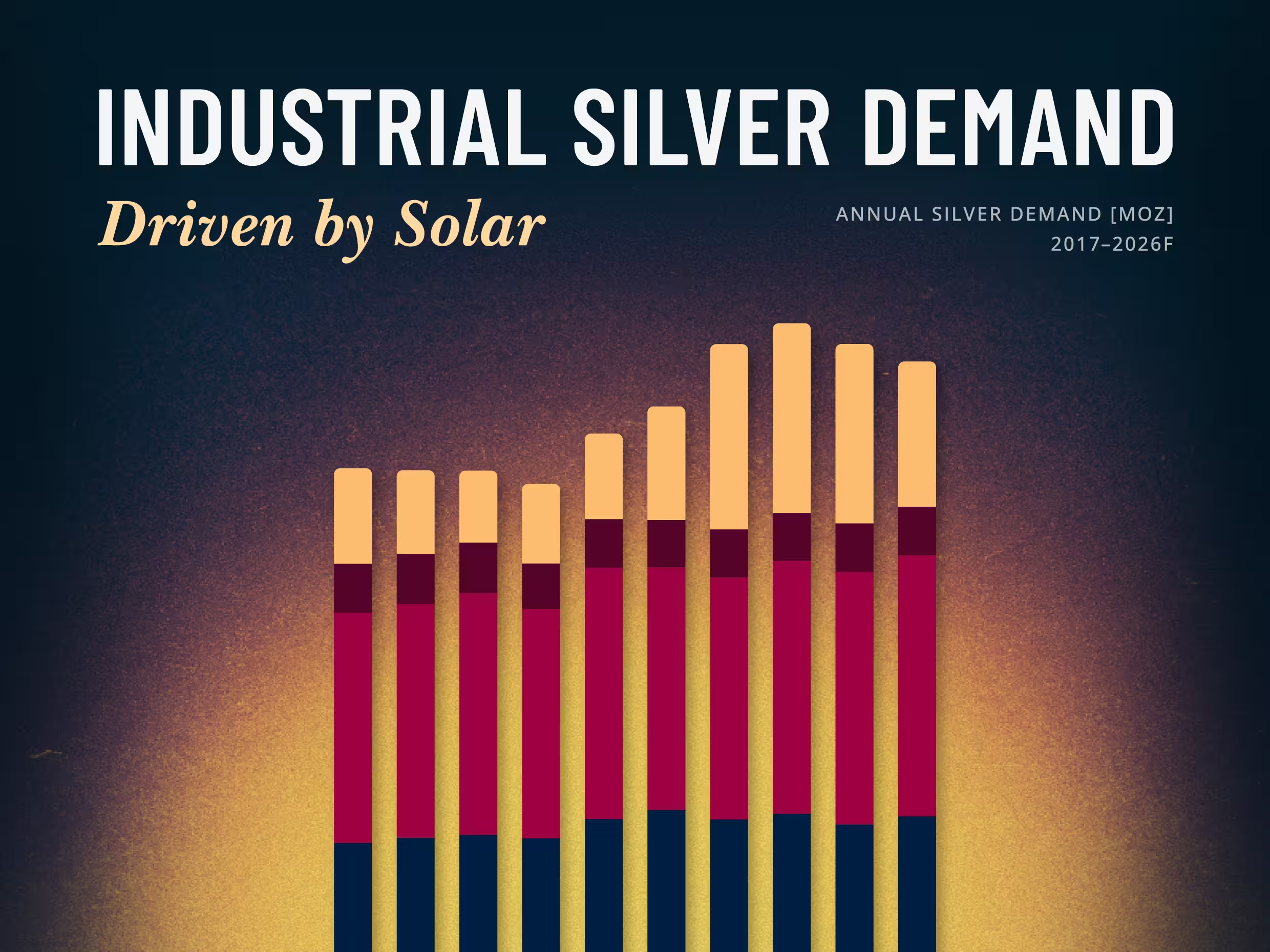
Solar Is Silver's Largest Industrial Market, and Not Easily Replaced
When LONGi Green Energy, the world's largest solar module maker, told investors on January 5, 2026 that it would begin mass-producing base-metal solar cells in the second quarter, it put a number on a pressure the whole industry feels. Solar is the largest single application within silver's industrial demand, and as the metal ran to a record above $121 an ounce in January, rising silver costs pushed manufacturers to accelerate efforts to reduce the metal per cell.

Silver in the Data Center: How AI's Power Crunch Is Building a New Pillar of Industrial Demand
Silver in the Data Center: How AI's Power Crunch Is Building a New Pillar of Industrial Demand
In early 2026, the artificial intelligence narrative shifted abruptly from software capabilities to physical hardware constraints. With tech giants committing hundreds of billions to new infrastructure—pushing global hyperscaler capital expenditures past $600 billion this year—the industry has collided with a new primary bottleneck: a severe power and thermal crunch.