Copper
April 3, 2025
2 min
Copper


As global demand for copper surges—driven by electrification and the energy transition—attention turns to the world’s largest copper mines and the projects poised to reshape future supply. Among these, Pakistan's Reko Diq stands out as the largest known undeveloped copper-gold deposit with near-term production potential. Comparing its projected capacity to today’s leading mines highlights its transformative significance.
The World’s Top Copper Mines (2024)
Based on 2024 data, the largest copper mines by annual production capacity are:
- Escondida – 1,350 kt
- Grasberg – 800 kt
- Collahuasi – 600 kt
- Morenci – 570 kt
- Cerro Verde – 550 kt
- Kamoa-Kakula – 550 kt
- Buenavista del Cobre – 535 kt
These operations set the benchmark for large-scale copper production.
Reko Diq’s Global Ranking Potential
Reko Diq, located in Balochistan, Pakistan, is the largest known undeveloped copper-gold project in the world. Once fully operational, it is projected to be able to produce 460 ktpa (phase 2), which would rank it as the 8th largest copper mine globally. For comparison, if Reko Diq were producing today, it would surpass:
- Antamina – 450 kt
- Tenke Fungurume – 450 kt
- El Teniente – 401 kt
- Cobre Panama, Las Bambas, Los Pelambres, and Polar Division, all producing 400 kt
The project is also designed for future expansion, with a potential Phase 3 that could substantially boost production, positioning Reko Diq among the world’s top five copper mines. With vast untapped resources, Pakistan is emerging as a key player in future copper markets. The development of Reko Diq underscores the country’s ambition to become a major producer, offering investors access to one of the most promising new copper projects globally.
Pakistan’s Vision for a New Copper Powerhouse
Reko Diq is at the heart of Pakistan’s strategy to unlock its vast mineral wealth and establish itself as a major global copper producer. This vision will take center stage at the Pakistan Minerals Investment Forum 2025 (PMIF25), held on April 8-9, where investment opportunities like Reko Diq will be a key focus.
As Pakistan’s premier platform for attracting global investment in mining, PMIF25 offers a gateway for industry leaders and stakeholders to explore the country’s mineral potential. With critical minerals like copper in high demand, Pakistan is positioning itself as a vital player in the future global supply chain.
Sponsored by:

The Pakistan Minerals Investment Forum 2025 (PMIF25) is the country’s premier platform dedicated to unlocking Pakistan’s vast mineral potential. Held at the Jinnah Convention Centre in Islamabad on April 8-9, 2025, this high-profile gathering will bring together industry leaders, investors, and policymakers to explore Pakistan’s growing role in the global supply of critical minerals. As the demand for essential minerals surges worldwide, Pakistan is positioning itself as a key player in future-facing supply chains. PMIF25 offers a unique opportunity to connect with stakeholders, discover new investment avenues, and be part of the country’s mining transformation.
Join us at PMIF25 and be at the forefront of Pakistan’s next mineral boom.
For more information: https://www.pakminforum.com/
Source: ICSG Directory of Copper Mines, Smelters, and Refineries – August 2024 Edition



Explore More
View All


The World’s Largest Operating Copper Mines Alongside Reko Diq
The World’s Largest Operating Copper Mines Alongside Reko Diq
Ten operating mines in six countries each produced between 359,000 and 1.32 million tonnes of copper in 2025, according to Wood Mackenzie estimates. Reko Diq in Pakistan appears alongside them with a figure from Barrick’s feasibility study, which refers to planned future production. More than half of the ten mines’ combined output came from the five in South America. The 2025 figures also reflect a disrupted year at Grasberg in Indonesia, while Reko Diq’s number points to a project planned in two phases.
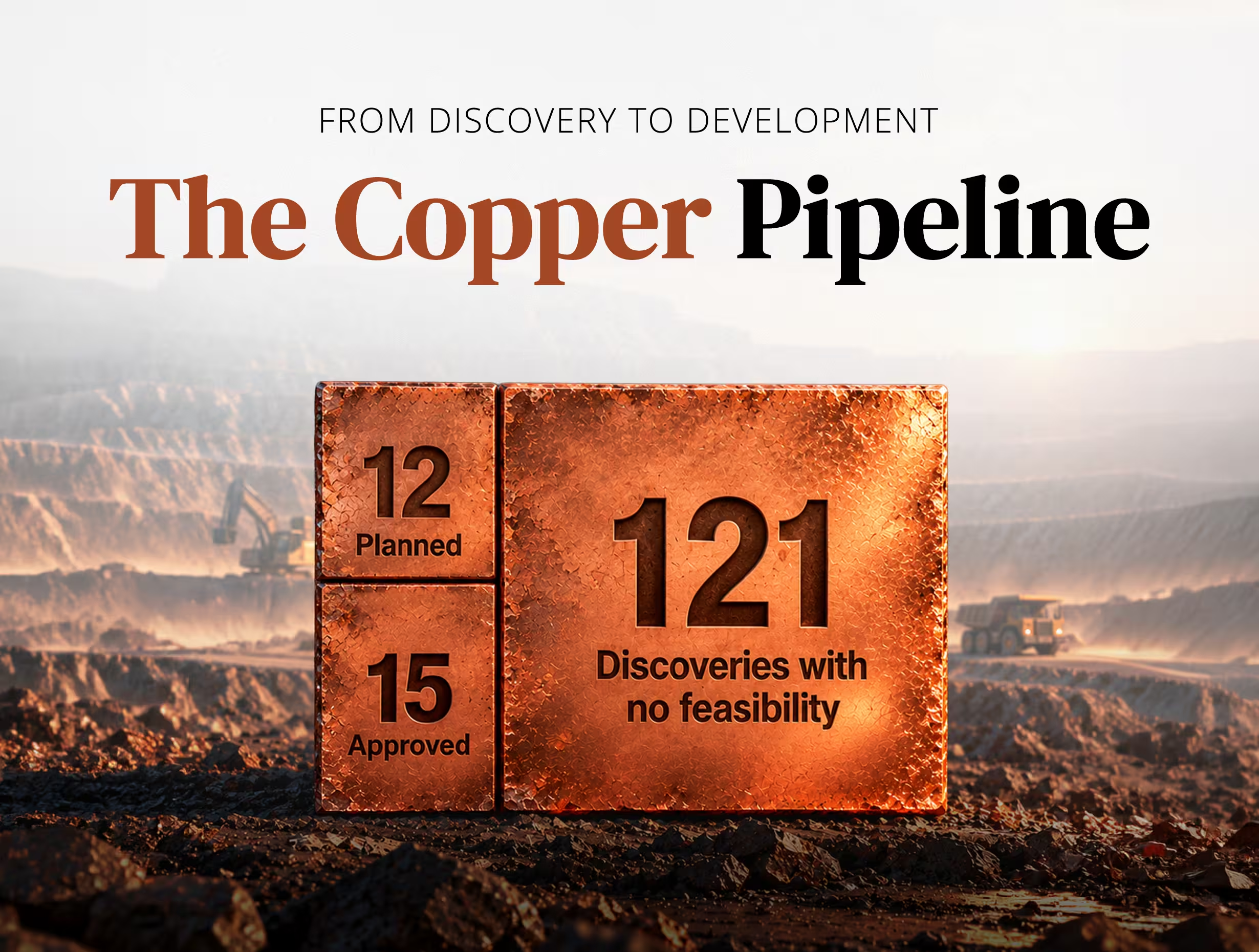
Most Major Copper Discoveries Since 1990 Are Still Not Mines.
Most Major Copper Discoveries Since 1990 Are Still Not Mines.
In May 2025, a joint venture of Lundin Mining and BHP released a resource estimate for its Vicuña district in the Andes, which S&P Global ranked as home to the largest greenfield copper discovery in 30 years. Per the same resource statement, the combined Filo del Sol and Josemaria deposits hold 13 million tonnes of contained copper in measured and indicated resources.
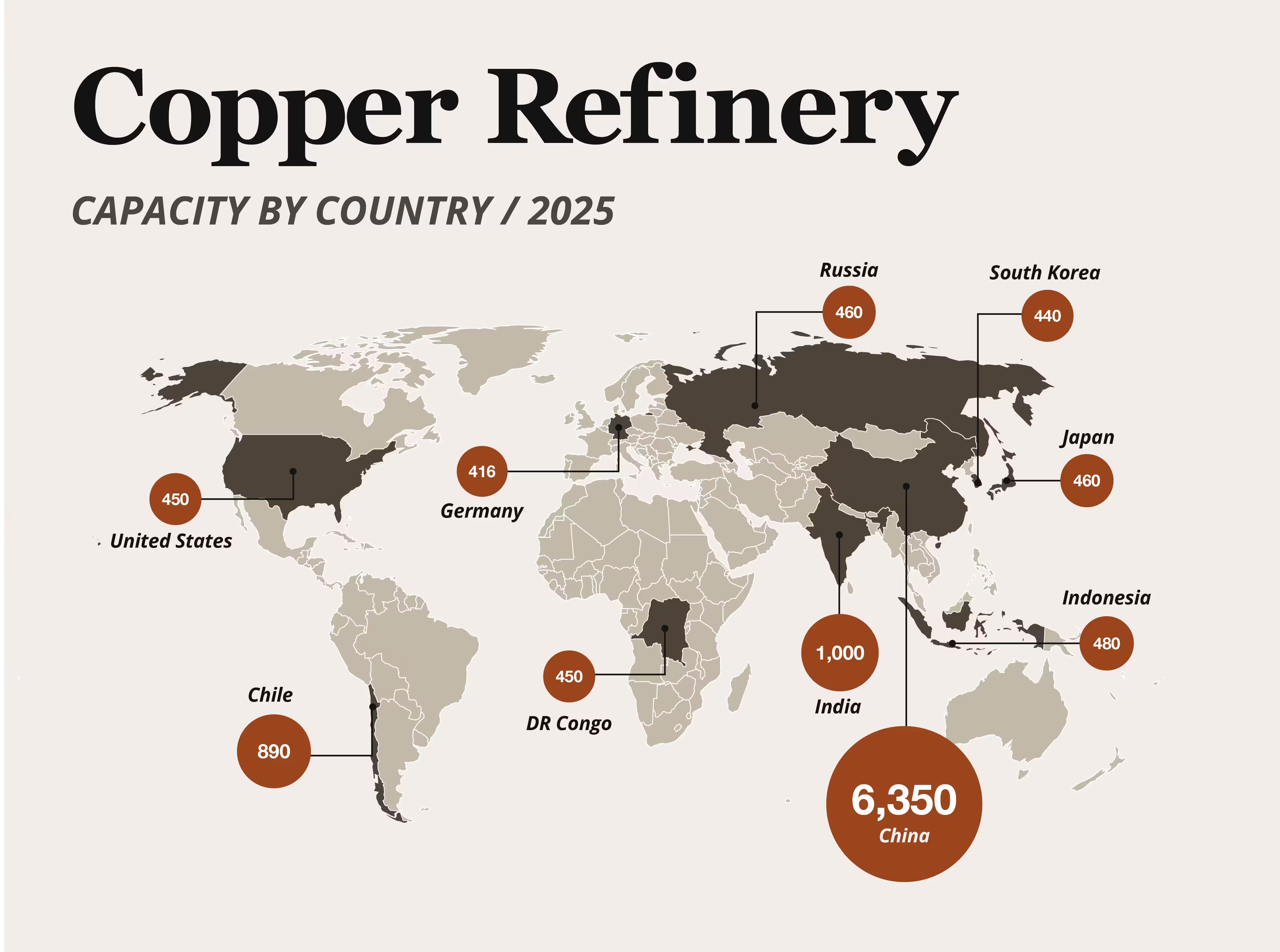
China Holds 56% of the Capacity at the World's 21 Largest Copper Refineries
China Holds 56% of the Capacity at the World's 21 Largest Copper Refineries
Indonesia's circle on the map above stands for a single plant: the Manyar refinery in East Java, operated by PT Freeport Indonesia, with 480,000 tonnes a year of capacity, according to the International Copper Study Group. It has been shut since the fourth quarter of 2025, after a mudflow at the Grasberg mine cut off its concentrate supply, and is due to restart this month at below 30% of capacity.
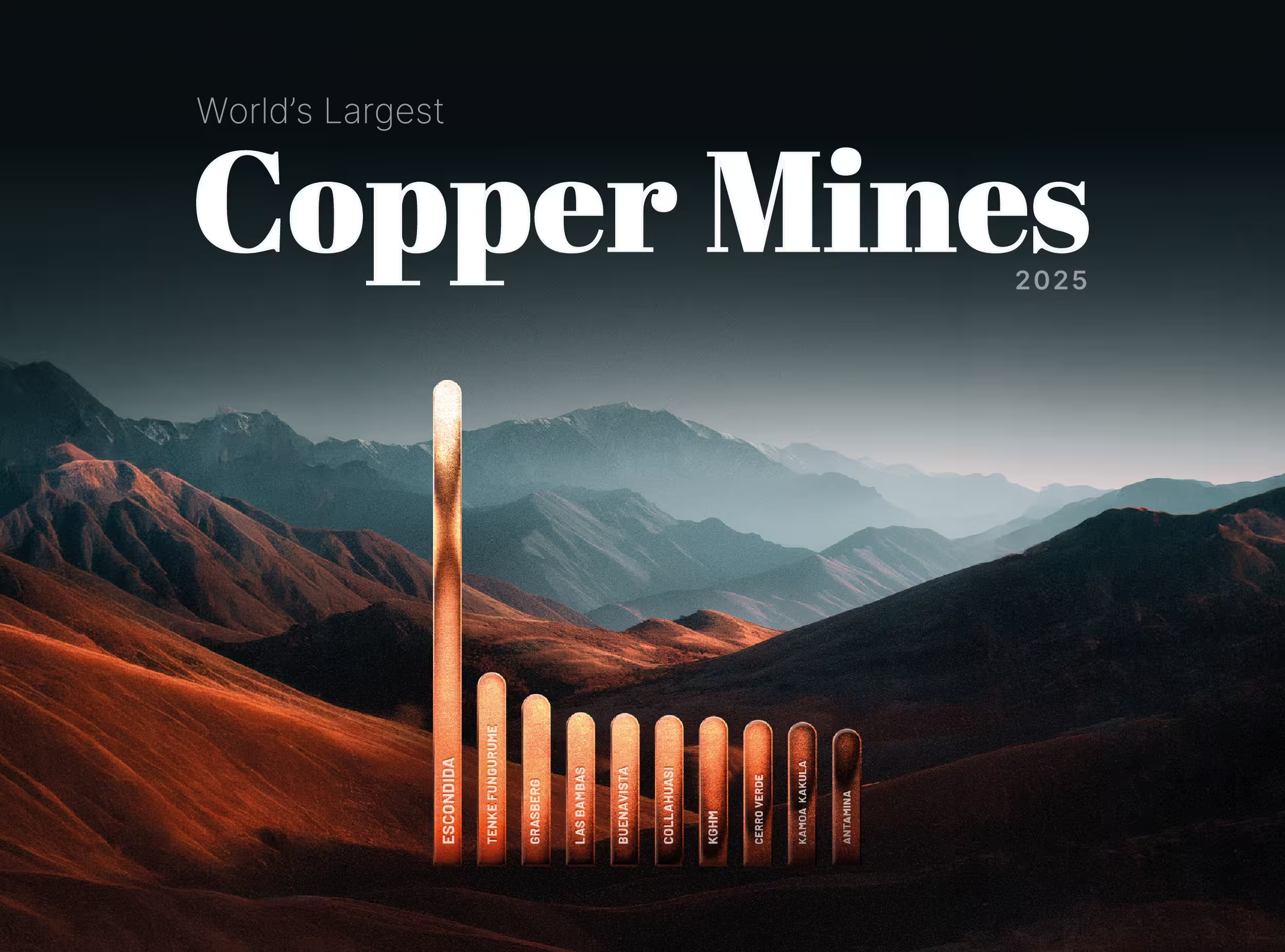
Ranked: The World's Largest Copper Mines (2025)
Ranked: The World's Largest Copper Mines (2025)
Copper has spent 2026 setting records, touching an intraday COMEX high of $6.71 per pound on May 13 amid AI-driven demand and supply shocks, against a backdrop where the ICSG now forecasts a 150,000-tonne deficit for 2026. In a market this tight, where the deficit thesis turns on lost tonnes, the question of where the world's copper actually comes from carries unusual weight.