Precious Metals
April 9, 2025
2 min
Precious Metals
%20Main.avif)

Silver is a unique metal, valued both as an investment and for its wide range of industrial applications, from electronics to renewable energy. Understanding where this metal originates involves looking at some of the world's largest mining operations. Based on 2023 production data compiled by GlobalData, here are the ten mines that produced the most silver globally last year.
Top Producer: Turkey's Gumuskoy Mine
Leading the list by a considerable margin is the Gumuskol Mine in Turkey. Its production reached 45.69 million ounces in 2023, more than twice the output of the second-largest producer.
Mexico's Prominent Role in Silver Production
Mexico features heavily in the top rankings, hosting five of the ten largest silver-producing mines. The highest-ranked among these is Newmont's Penasquito Mine (#2 globally), which produced 20.68 million ounces. Penasquito produces significant amounts of gold and is primarily a gold mine.
Other major Mexican producers on the list include:
- The Juanicipio Project (#6) with 14.89 million ounces.
- The San Julian Project (#7) producing 13.59 million ounces.
- The Fresnillo Mine (#8), part of the Fresnillo plc group, yielding 13.32 million ounces.
- The Saucito Mine (#10) with 11.6 million ounces. These mines collectively demonstrate Mexico's significant position in global silver supply.
Major European Mines: Poland's KGHM Operations
In Europe, Poland hosts two key silver producers, both operated by the copper mining company KGHM:
- The Polkowice-Sieroszowice Mine ranked #3 globally with 18.5 million ounces.
- The Rudna Mine followed closely at #4, producing 18.09 million ounces. Silver production at these sites is closely linked to KGHM's extensive copper mining activities.
Other Key Contributors: India and Peru
Rounding out the top ten are significant mines in Asia and South America:
- India's Sindesar Khurd Mine (#5), operated by Vedanta, produced 15.08 million ounces. This mine is primarily focused on lead and zinc, with silver as an important by-product.
- Peru's large Antamina Mine (#9) contributed 12.63 million ounces. This multi-metal mine, operated by a consortium including Glencore, primarily produces copper and zinc.
Summary
The 2023 data shows a concentration of major silver production in specific regions, particularly Mexico and Poland, with Turkey hosting the single largest producing mine. The list includes both primary silver operations and polymetallic mines where silver is recovered alongside other base metals like copper, lead, and zinc. These ten operations are central to meeting the world's demand for silver.
(Data based on the provided infographic sourced from GlobalData for 2023 production, figures in million ounces. Minor rounding or inaccuracies may be present as noted in the source.)




Explore More
View All

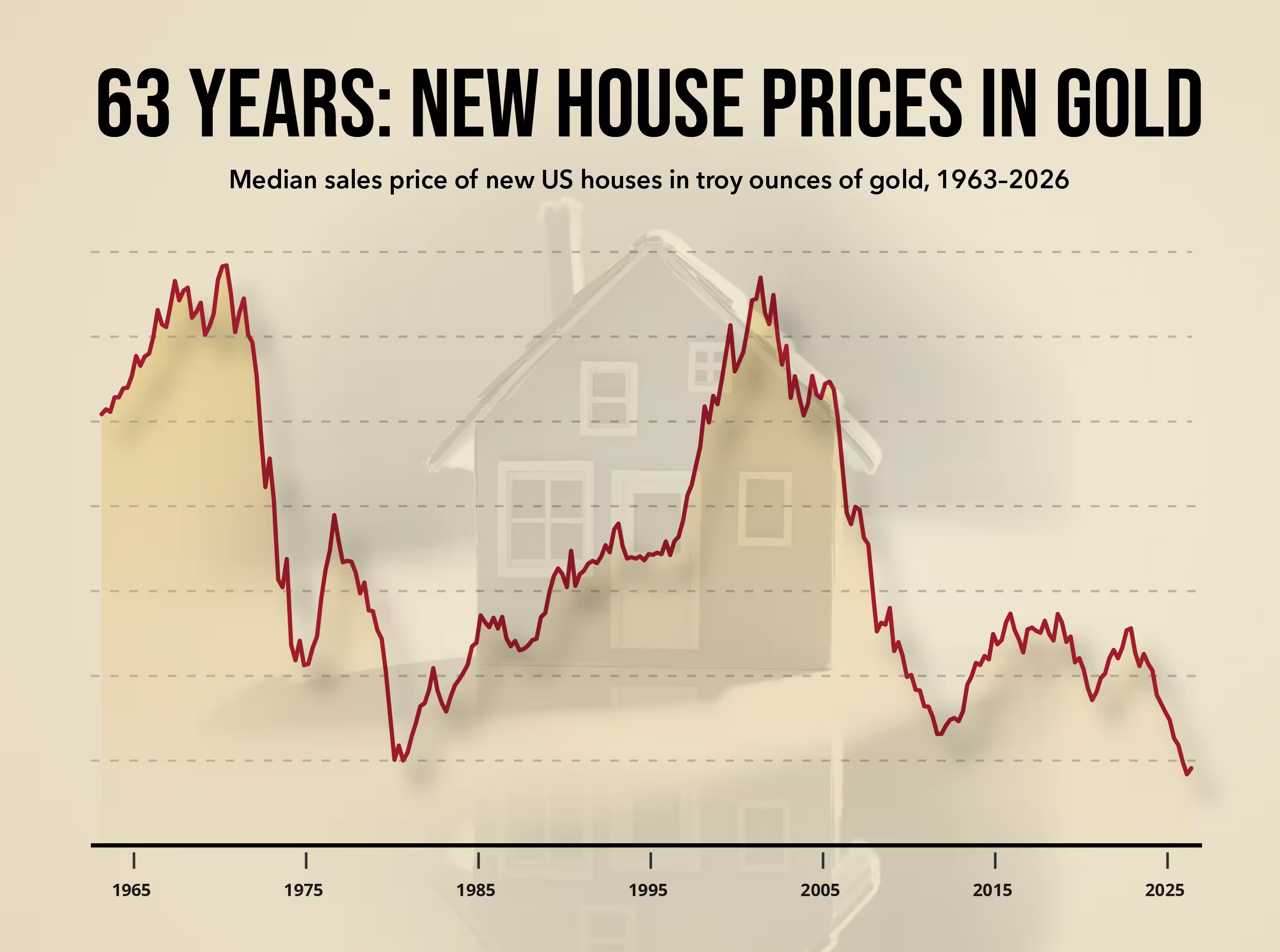
A Median New US Home Now Costs Less Than 100 Ounces of Gold
A Median New US Home Now Costs Less Than 100 Ounces of Gold
The US Census Bureau's July new-home report, released on August 25, put the median price of a newly built house at $393,800. HousingWire noted that was the lowest since July 2021. In dollars, the market has moved within a narrow band: the quarterly median has stayed between $408,500 and $435,400 since 2023.
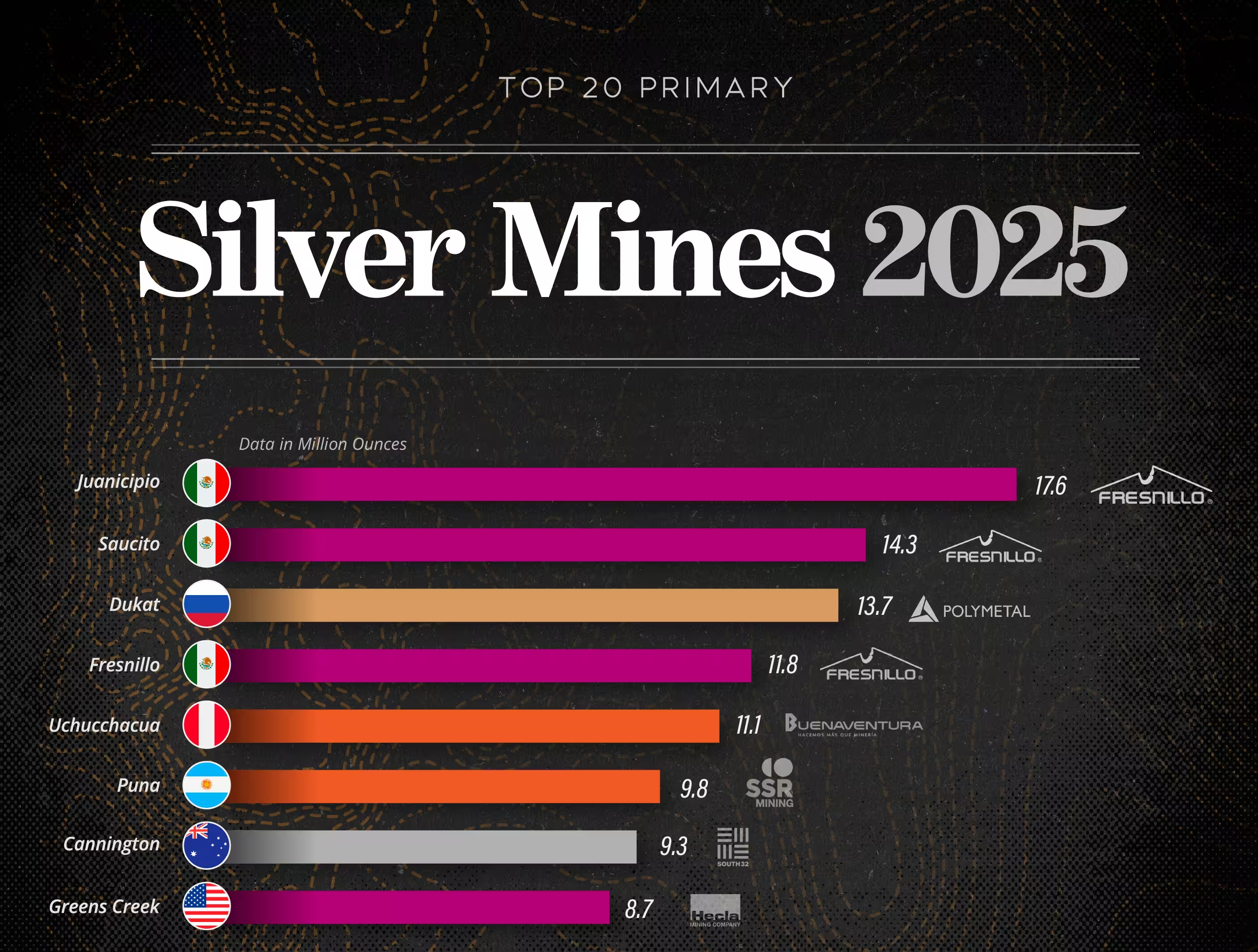
The World's 20 Largest Primary Silver Mines by 2025 Output
The World's 20 Largest Primary Silver Mines by 2025 Output
The single largest source of primary silver is a young mine in the Mexican state of Zacatecas. Juanicipio put out 17.6 million ounces in 2025, more than any other mine that earns its keep from silver itself rather than pulling it out as a byproduct of lead, zinc and gold. Fresnillo operates it and owns 56%; the other 44% changed hands in September 2025, when Pan American Silver completed a US$2.1 billion takeover of MAG Silver.
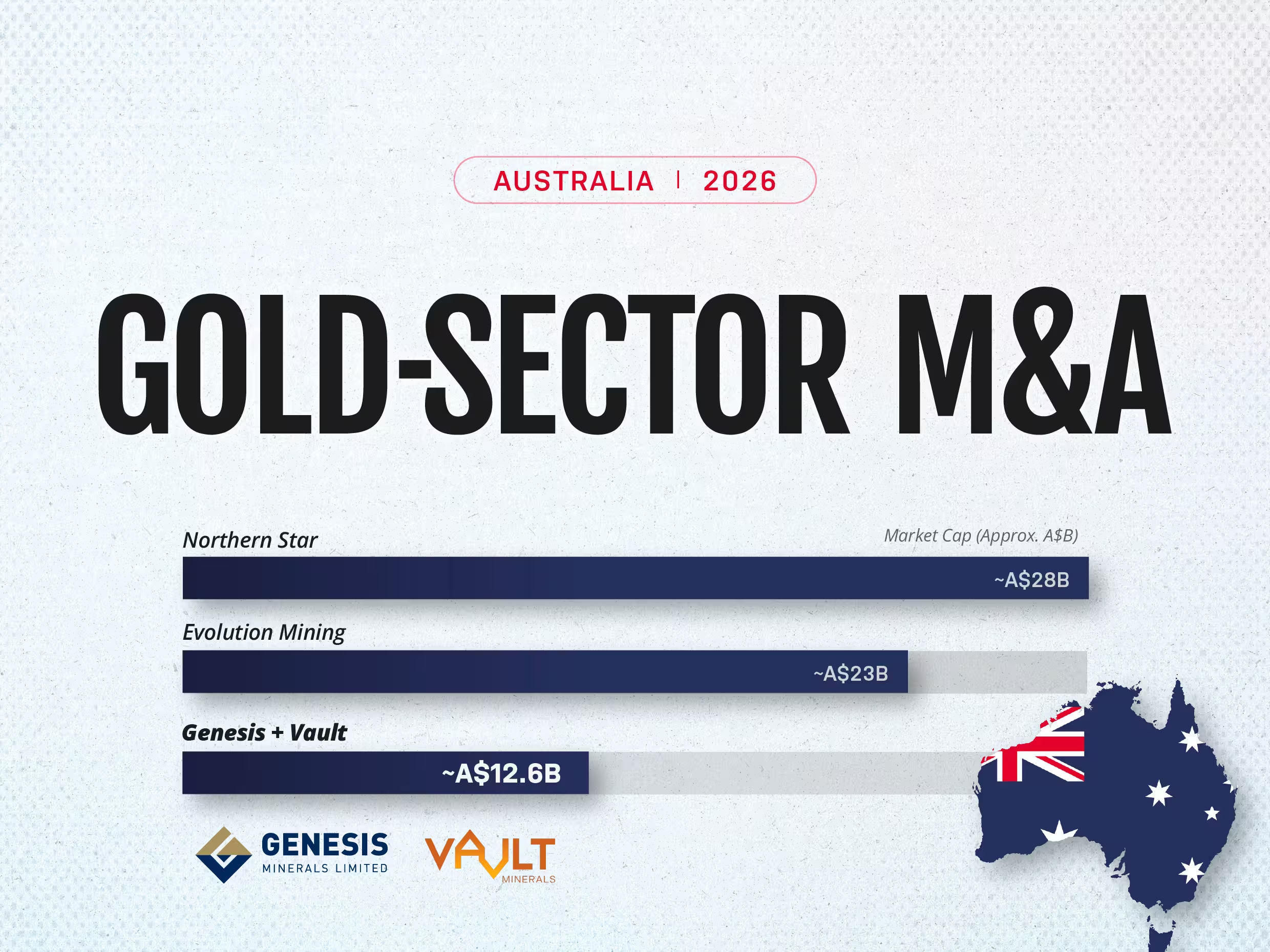
Gold's Record Run Has Set Off a Wave of Mining Mergers
Gold's Record Run Has Set Off a Wave of Mining Mergers
Gold hit an all-time high of about US$5,595 an ounce in January 2026 before settling near US$4,000, still far above the levels of a few years ago. That combination, record prices followed by a stable, still-profitable pullback, has done something a straight rally rarely does: it has opened a merger window.
.webp)
Three Ancient Belts Carry Ghana's Gold, and Investment Keeps Flowing to Them
Three Ancient Belts Carry Ghana's Gold, and Investment Keeps Flowing to Them
In March 2026, one of Ghana's own mining companies said it would invest about $1.2 billion in its operations at the Tarkwa and Damang gold mines. Both sit on the Ashanti belt, one of three narrow bands of ancient rock that carry almost all of Ghana's gold.