Precious Metals
September 1, 2025
3 min
Precious Metals


The global silver market is no longer defined by its historical roles in coinage or photography. A fundamental transformation has occurred, cementing a new foundation for demand built on technology and green energy. This isn't just a shift; it's a structural realignment where industrial applications have become the market's primary driver.
The Silver Survey 2025 provides the data to chart this industrialization. The accompanying infographic visualizes how silver's most critical sectors are forecast to evolve by 2025, using 2016 as a baseline for comparison.
The New Industrial Bedrock
The forecast for 2025 shows that silver's future is now inextricably linked to its non-substitutable industrial properties.
- Electrical & Electronics remains the single largest consumer, with forecast demand of 270 million ounces (Moz). This demand forms the new bedrock for the market, reflecting silver's essential role in everything from automotive electronics to consumer devices.
- Photovoltaics is the most powerful growth catalyst. Demand from the solar sector is projected to hit 196 Moz, a +140% increase from 2016. This explosive growth positions silver as a critical bottleneck and beneficiary of the global energy transition.

- Other Industrial applications provide further proof of silver's diverse utility. This category, forecast to grow by a robust +19.5%. This steady expansion highlights silver's versatility and its deepening integration into high-value manufacturing and technology worldwide.
Shifting Tides in Traditional Sectors
While the industrial core strengthens, traditional sectors are settling into new, smaller roles.
- Photography, once a pillar of silver demand, is forecast to fall a further 30.2% to just 24 Moz, marking the final chapter of its transition to digital.
- Coins and Bars: After years of heightened activity, physical investment in Coins and Bars is forecast to normalize at 204 Moz. While still a significant market, it is no longer the primary growth story it once was.
Conclusion: A Market Redefined
The 2025 forecast paints a clear picture of a market that has been fundamentally redefined. The narrative is no longer about a battle between old and new uses, but about the establishment of a powerful new industrial base. This "industrialization of silver" provides a strong, resilient foundation for demand, driven by the unstoppable trends of electrification, connectivity, and green energy. Understanding this structural shift is the key to understanding the modern silver market.
Sponsored by:

Outcrop Silver is a leading explorer and developer focused on advancing its flagship Santa Ana high-grade silver project in Colombia. Leveraging a disciplined and seasoned team of professionals with decades of experience in the region. Outcrop Silver is dedicated to expanding current mineral resources through strategic exploration initiatives.
At the core of our operations is a commitment to responsible mining practices and community engagement, underscoring our approach to sustainable development. Our expertise in navigating complex geological and market conditions enables us to consistently identify and capitalize on opportunities to enhance shareholder value.
With a deep understanding of the Colombian mining landscape and a track record of successful exploration, Outcrop Silver is poised to transform the Santa Ana project into a significant silver producer, contributing positively to the local economy and setting new standards in the mining industry.
Learn more about Outcrop Silver at https://outcropsilver.com/
Disclaimer: This article is for informational and illustrative purposes only, based on data sourced from the Silver Survey 2025.




Explore More
View All

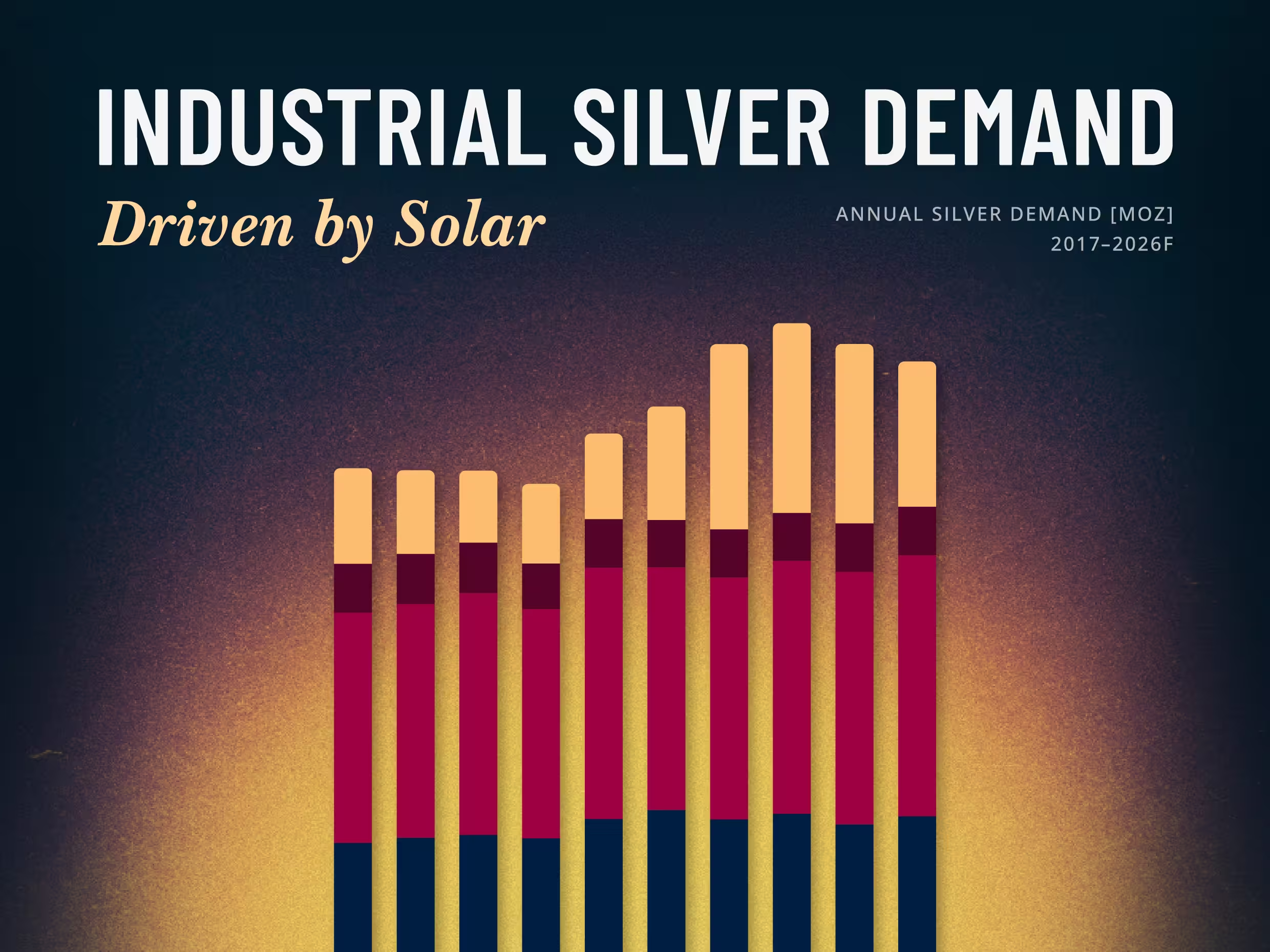
Solar Is Silver's Largest Industrial Market, and Not Easily Replaced
Solar Is Silver's Largest Industrial Market, and Not Easily Replaced
When LONGi Green Energy, the world's largest solar module maker, told investors on January 5, 2026 that it would begin mass-producing base-metal solar cells in the second quarter, it put a number on a pressure the whole industry feels. Solar is the largest single application within silver's industrial demand, and as the metal ran to a record above $121 an ounce in January, rising silver costs pushed manufacturers to accelerate efforts to reduce the metal per cell.
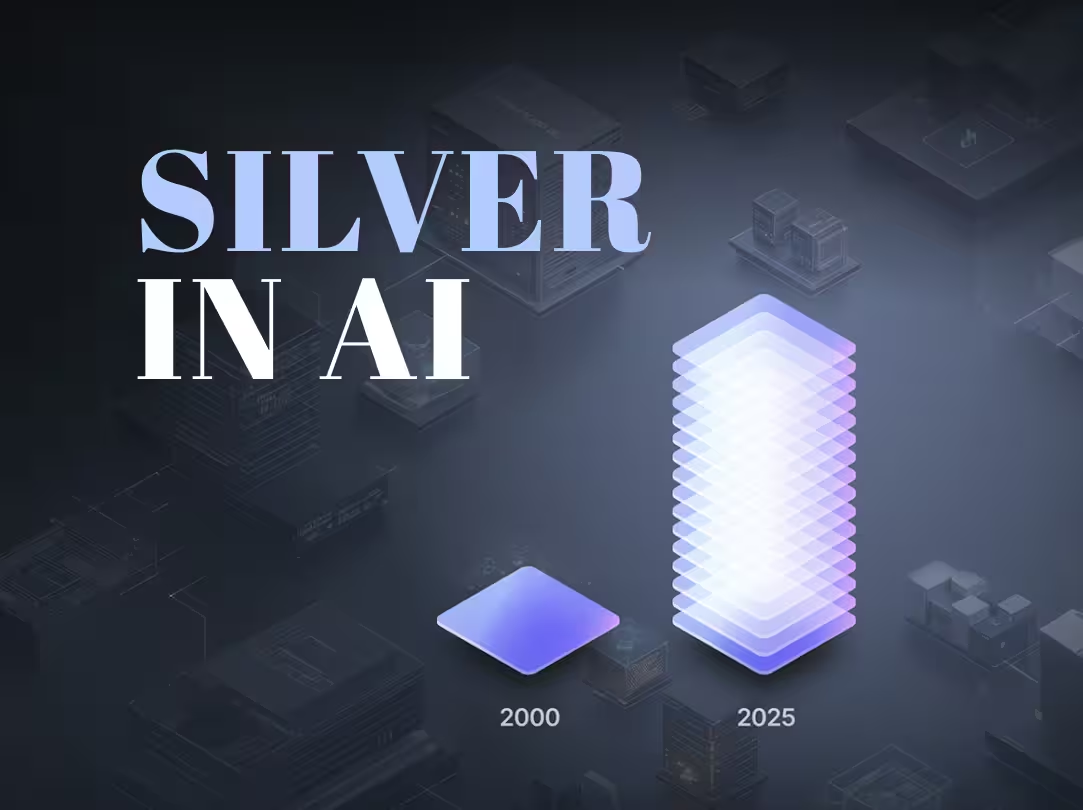
Silver in the Data Center: How AI's Power Crunch Is Building a New Pillar of Industrial Demand
Silver in the Data Center: How AI's Power Crunch Is Building a New Pillar of Industrial Demand
In early 2026, the artificial intelligence narrative shifted abruptly from software capabilities to physical hardware constraints. With tech giants committing hundreds of billions to new infrastructure—pushing global hyperscaler capital expenditures past $600 billion this year—the industry has collided with a new primary bottleneck: a severe power and thermal crunch.

Silver's Use Cases: A Visual Guide to Where the Metal Actually Goes
Silver's Use Cases: A Visual Guide to Where the Metal Actually Goes
Somewhere inside a pressurized-water reactor, an alloy that is four-fifths silver is absorbing neutrons to keep the core in check, a job most silver investors have never heard of. It is a useful reminder that the metal people picture as coins and jewelry mostly works elsewhere, across industry.

Ranked: The Countries That Produced the Most Silver in 2025
Ranked: The Countries That Produced the Most Silver in 2025
Mexico remained the world's top silver-producing country in 2025, mining 172.9 million ounces (Moz), roughly a fifth of global supply, according to the World Silver Survey 2026, produced for the Silver Institute by Metals Focus. But Mexico's lead narrowed: its output fell 5% for a third straight year, while second-place Peru climbed 7%. Global mine production rose 3% to 846.6 Moz, even as the ranking's top tier told a story of one leader sliding and its closest rival closing in.