Precious Metals
October 21, 2024
2 min
Precious Metals


This graphic highlights the correlation between the growth rate of solar PV electricity capacity additions, the demand for silver used in photovoltaics, and the price of silver from 2016 to 2024F.
The rapid expansion of solar photovoltaic (PV) capacity is driving a sharp increase in the demand for silver, as the metal is crucial in enhancing the efficiency of solar panels. Silver plays a key role in PV applications by conducting electricity, with each solar panel containing approximately 20 grams (0.643 ounces) of silver.
In 2023, the demand for silver used in solar PV cells surged to 193.5 million ounces, and it's projected to reach 232 million ounces in 2024. This accounts for 16-19% of total silver demand compared to 5.59% in 2015 and highlights the growing interconnection between solar energy and silver demand.
IEA forecast: Solar capacity is set for remarkable growth. Global solar photovoltaic capacity additions are projected to reach 467 GW in 2024, marking a 460% increase compared to 2015 levels. Additionally, The International Energy Agency (IEA) forecasts that from 2024 to 2030, over 4,000 GW of new solar capacity will be added, comprising 80% of the total renewable capacity expansion. China is expected to lead this growth, contributing 60% of new installations, followed by the EU and the U.S., where growth rates are expected to double.

Several factors are fueling this boom:
- Cost Reduction: Solar technology has become more affordable, making it highly competitive in energy markets.
- Government Support: Incentives and policies are driving widespread solar adoption.
- Energy Transition Goals: Many countries aim to meet their climate targets by accelerating solar energy deployment.
- Technological Advancements: More efficient solar panels are increasing capacity while lowering overall costs.
As solar PV capacity continues to expand, the demand for silver is poised to grow further, solidifying the close relationship between these two critical components of the green energy transition.
Sponsored by:

The Silver Institute is a global organization dedicated to promoting the use, study, and understanding of silver. It provides in-depth research on silver’s supply, demand, and pricing trends across various industries such as industrial applications, jewelry, investment, and solar energy. One of the institute’s key publications is the World Silver Survey, an annual report that offers detailed statistics and analysis on the global silver market.
For further information, you can visit the official Silver Institute website.
The information presented here may contain inaccuracies and is subject to rounding. We do not guarantee that all information is complete or correct. We accept no responsibility for any errors, omissions, or outcomes resulting from the use of this information. This is not investment advice.





Explore More
View All

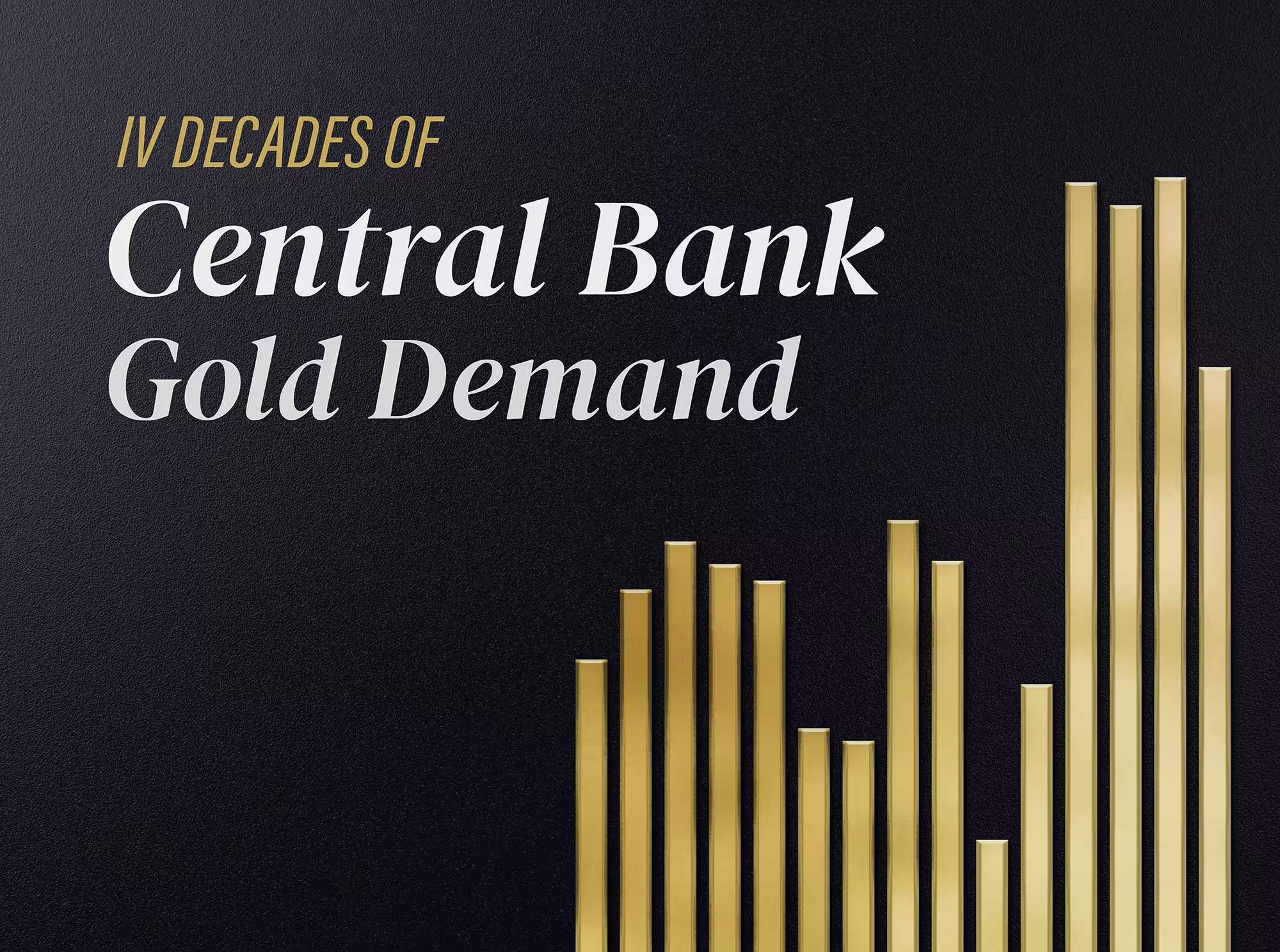
Central Banks Have Been Net Gold Buyers Since 2010, After Two Decades of Net Selling
Central Banks Have Been Net Gold Buyers Since 2010, After Two Decades of Net Selling
Central banks bought more gold between April and June 2026 than in any second quarter on record, according to a World Gold Council report published on July 30. That keeps them net buyers this year, as they have been every year since 2010. Underneath, the picture is changing. Russia and Türkiye, both big buyers in the past, have been selling.

Gold Mines in West Africa: Two Billion Years in the Making
Gold Mines in West Africa: Two Billion Years in the Making
The nine West African countries with significant reported output produced about 15% of the world's mined gold in 2025, according to Metals Focus and World Gold Council data. Almost every mine on the map above was built in the past 25 years, and four more reached production in the last eighteen months: Lafigué in Côte d'Ivoire in June 2024, Kiaka in Burkina Faso in June 2025, Ahafo North in Ghana in October 2025 and Kiniero in Guinea in December 2025.
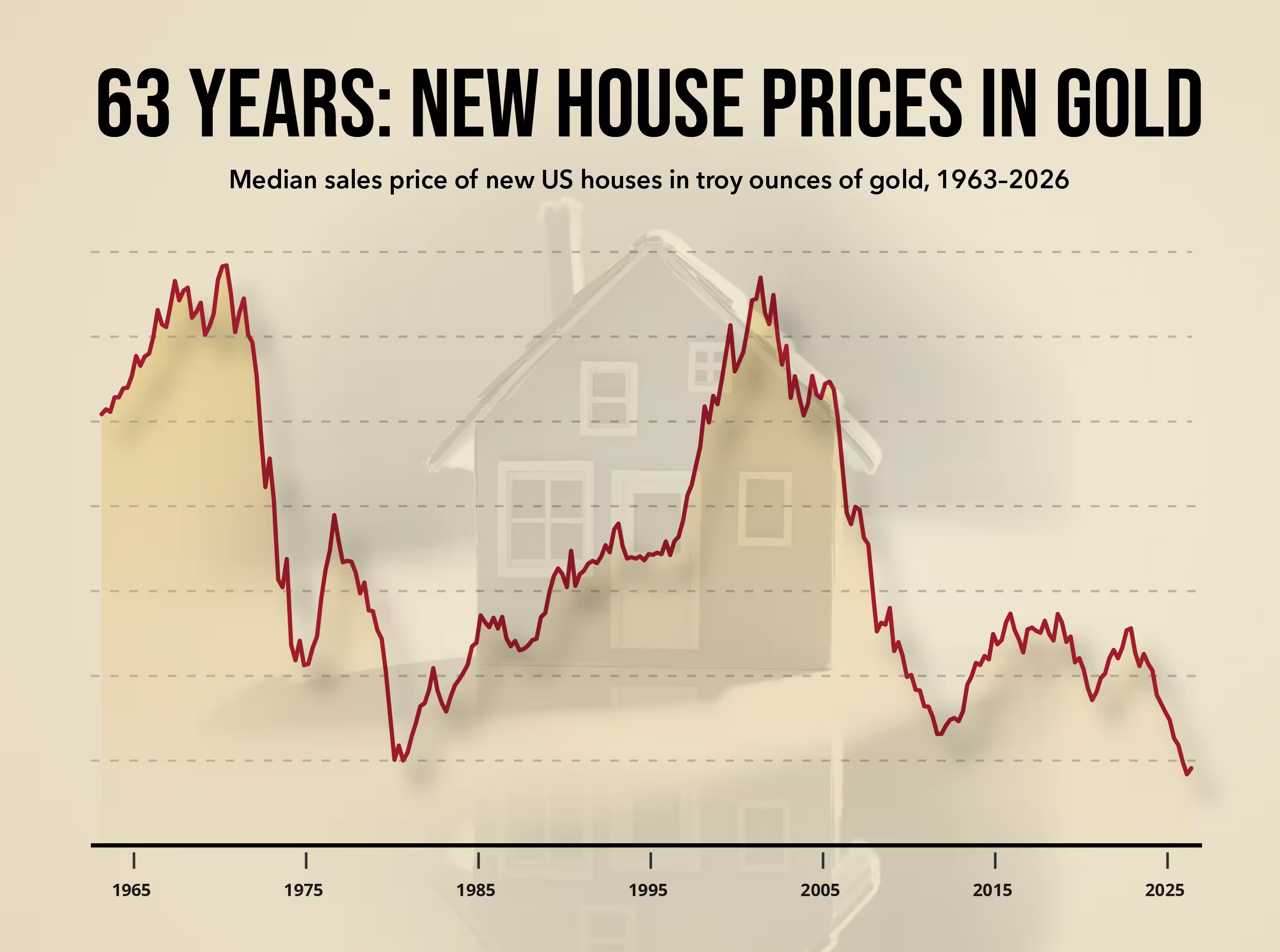
A Median New US Home Now Costs Less Than 100 Ounces of Gold
A Median New US Home Now Costs Less Than 100 Ounces of Gold
The US Census Bureau's July new-home report, released on August 25, put the median price of a newly built house at $393,800. HousingWire noted that was the lowest since July 2021. In dollars, the market has moved within a narrow band: the quarterly median has stayed between $408,500 and $435,400 since 2023.
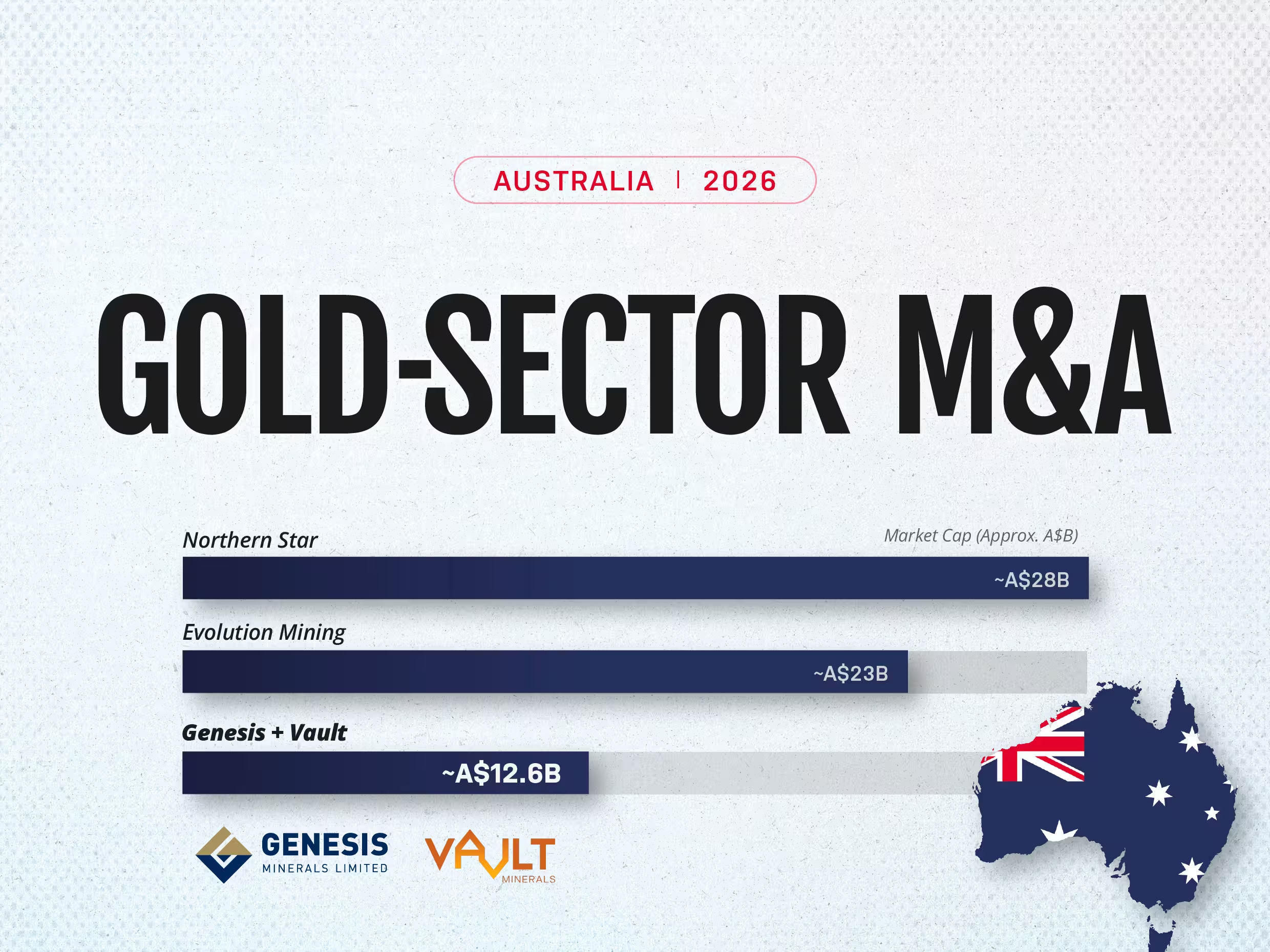
Gold's Record Run Has Set Off a Wave of Mining Mergers
Gold's Record Run Has Set Off a Wave of Mining Mergers
Gold hit an all-time high of about US$5,595 an ounce in January 2026 before settling near US$4,000, still far above the levels of a few years ago. That combination, record prices followed by a stable, still-profitable pullback, has done something a straight rally rarely does: it has opened a merger window.