Precious Metals
December 6, 2024
2 min
Precious Metals


For centuries, people have mined deep underground to find valuable materials that power industries and support everyday life. Some of the world’s deepest mines stretch thousands of meters below the Earth’s surface, where miners navigate intricate tunnels in search of precious resources.
Mponeng Gold Mine in South Africa is the world’s deepest, reaching 4 kilometers down. Located in Carletonville and run by Harmony Gold, it produces large amounts of gold and is a testament to advanced mining technology. The trip to the bottom takes over an hour, showing just how deep miners work.
Close by is TauTona Mine, once the deepest before Mponeng. Although it closed in 2018, its complex network of tunnels remains a symbol of mining excellence. Similarly, Savuka Mine, also in South Africa, has been a major gold producer, although it's nearing closure.
East Rand Mine, located in Boksburg, operated for more than 100 years before closing in 2008. It was one of the oldest and deepest mines and played a major role in developing South Africa’s mining industry. Driefontein Mine, another South African site, is still operational and contributes significantly to the world’s gold supply. Thanks to its large reserves, Driefontein is expected to continue production until at least 2030.
Kusasalethu Mine in Carletonville, formerly called Elandskraal, is an active site that has faced challenges like strikes and safety concerns, highlighting the difficulties of deep mining. In the U.S., Empire Mine in California, which closed in 1956, was once a key player in American gold production, generating an estimated $300 million during its operation.
Back in South Africa, Kloof Mine (also known as KDC) is a major producer, benefiting from the Witwatersrand Basin’s rich gold deposits. Blyvooruitzicht Mine, active since the 1930s, is known for both gold and uranium production. Lastly, Kolar Gold Fields in India, once a major source of gold during British rule, was a historic site until its closure in 2001 due to declining profitability.
Why are so many deep mines located in South Africa?
South Africa's Witwatersrand Basin holds vast gold reserves, making it a global center for deep mining. The country’s expertise and investment in mining technology have allowed it to develop some of the deepest and most advanced operations in the world.
Challenges of Deep Mining
Mining at such extreme depths comes with several difficulties:
- Heat: Temperatures can reach up to 60°C, requiring cooling systems.
- Safety: Miners face risks like rockfalls and seismic events, demanding strict safety measures.
- High Costs: The deeper the mine, the more expensive it is to extract resources.
These deep mines are engineering marvels and reflect human perseverance. From the gold-rich veins in South Africa to the historic Kolar Gold Fields, they continue to influence the global mining industry. Moving forward, the focus will be on safety, sustainability, and innovation in deep mining.


Explore More
View All

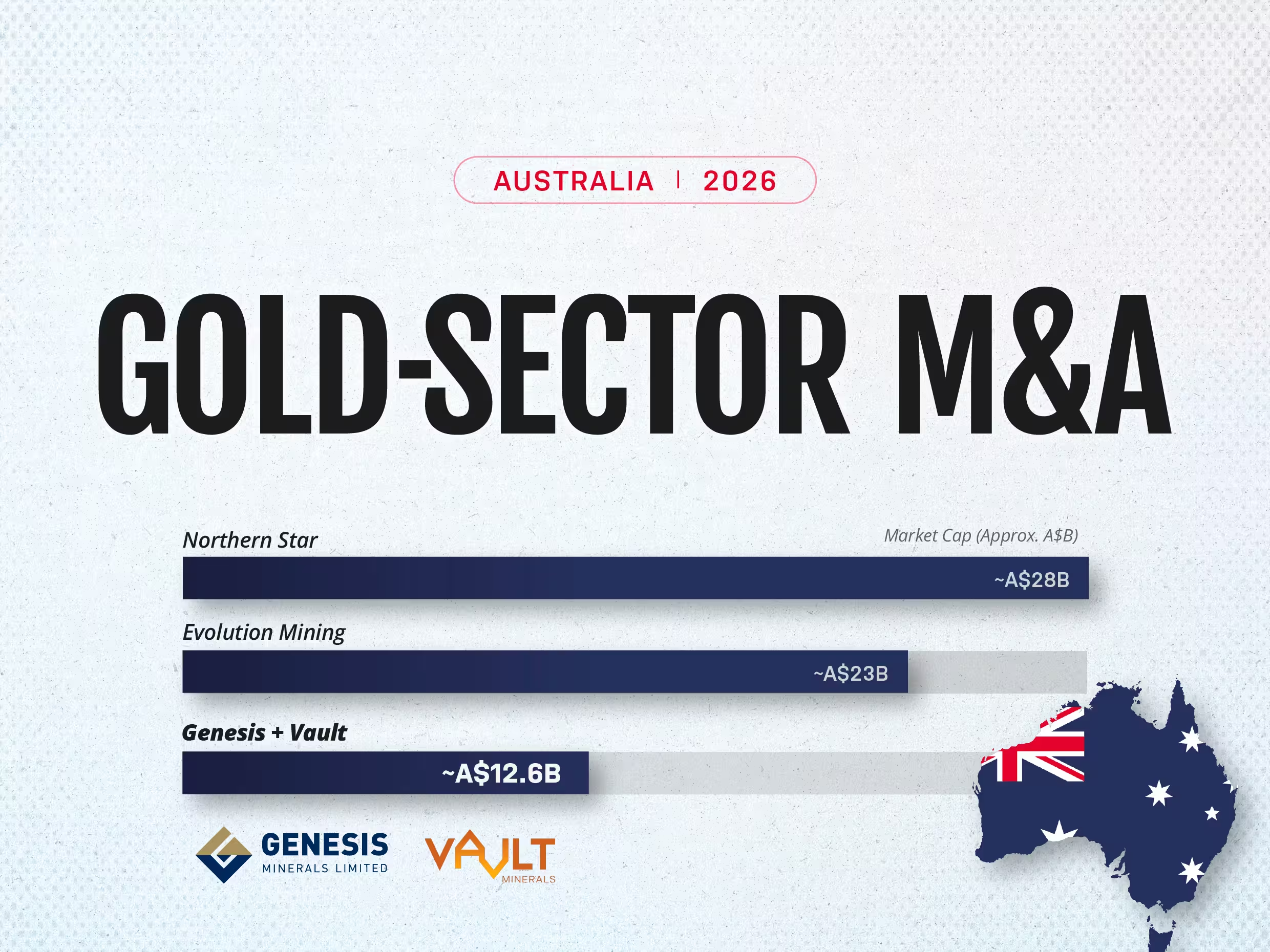
Gold's Record Run Has Set Off a Wave of Mining Mergers
Gold's Record Run Has Set Off a Wave of Mining Mergers
Gold hit an all-time high of about US$5,595 an ounce in January 2026 before settling near US$4,000, still far above the levels of a few years ago. That combination, record prices followed by a stable, still-profitable pullback, has done something a straight rally rarely does: it has opened a merger window.
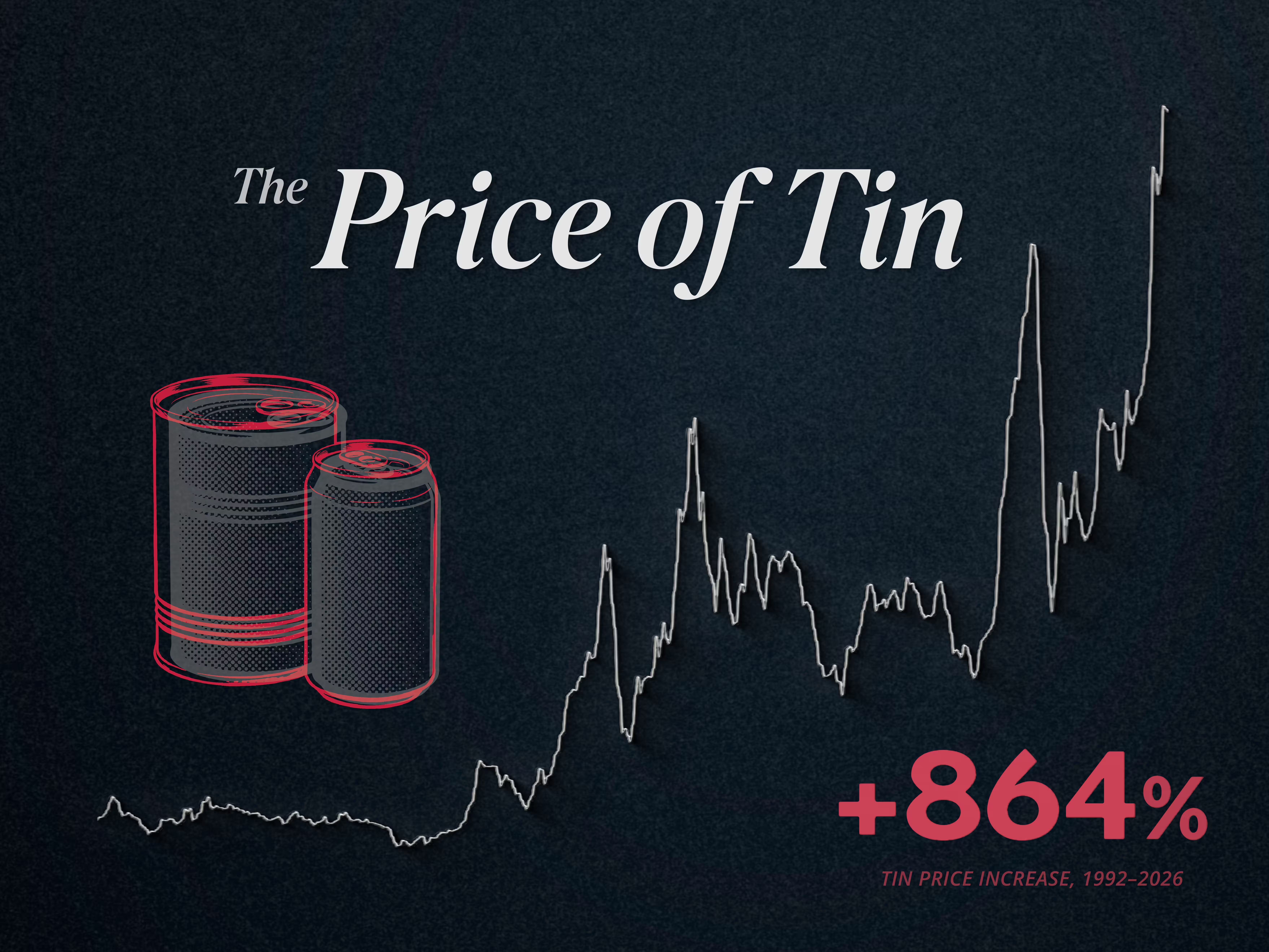
Behind Tin's 2026 Record High
Behind Tin's 2026 Record High
In January 2026, the London Metal Exchange three-month tin contract closed at US$53,462 a tonne, a nominal all-time high that surpassed the March 2022 peak, and it has traded near those levels since. The puzzle is that there is no shortage of tin today: exchange inventories actually rose as the price climbed, rather than being drawn down. Two very different things are holding the price up. The first is short-term: a wave of investor buying, which the industry says drove the January jump. The second is long-term: on current forecasts, the world will not mine enough tin to meet demand later this decade, a gap already projected before the rally began and expected to persist after it fades. The lasting story is that forecast shortfall, not the spike.
.webp)
Three Ancient Belts Carry Ghana's Gold, and Investment Keeps Flowing to Them
Three Ancient Belts Carry Ghana's Gold, and Investment Keeps Flowing to Them
In March 2026, one of Ghana's own mining companies said it would invest about $1.2 billion in its operations at the Tarkwa and Damang gold mines. Both sit on the Ashanti belt, one of three narrow bands of ancient rock that carry almost all of Ghana's gold.
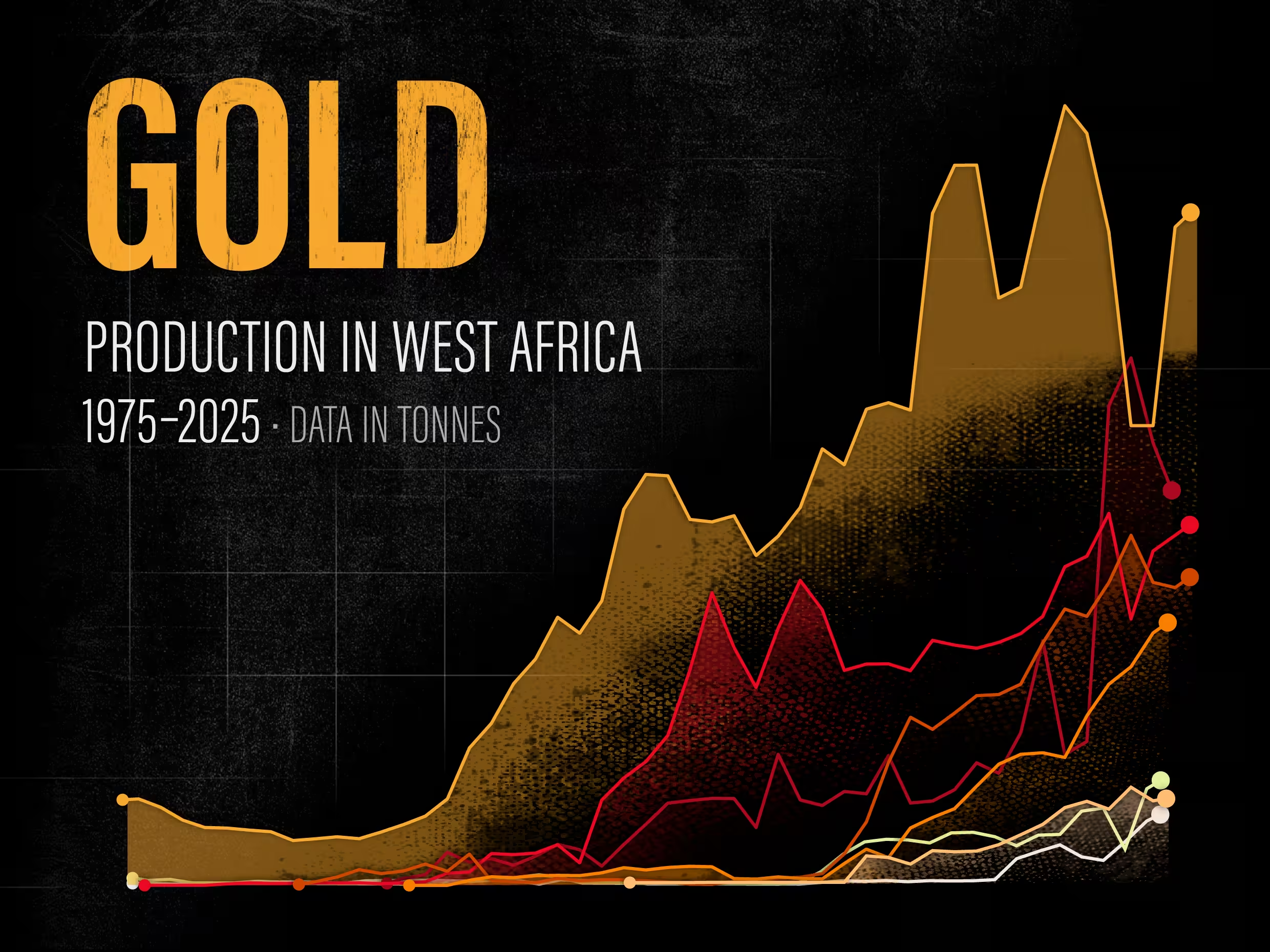
Charted: Fifty Years of Gold Production in West Africa
Charted: Fifty Years of Gold Production in West Africa
West Africa is in the middle of a gold run. In 2025 Ghana's output climbed more than 23 percent to a record 5.94 million ounces, holding its place as Africa's largest producer and now the sixth-largest in the world, and analysts expect the wider region to rebound about 8 percent in 2026.