Precious Metals
Central Banks Have Been Net Gold Buyers Since 2010, After Two Decades of Net Selling
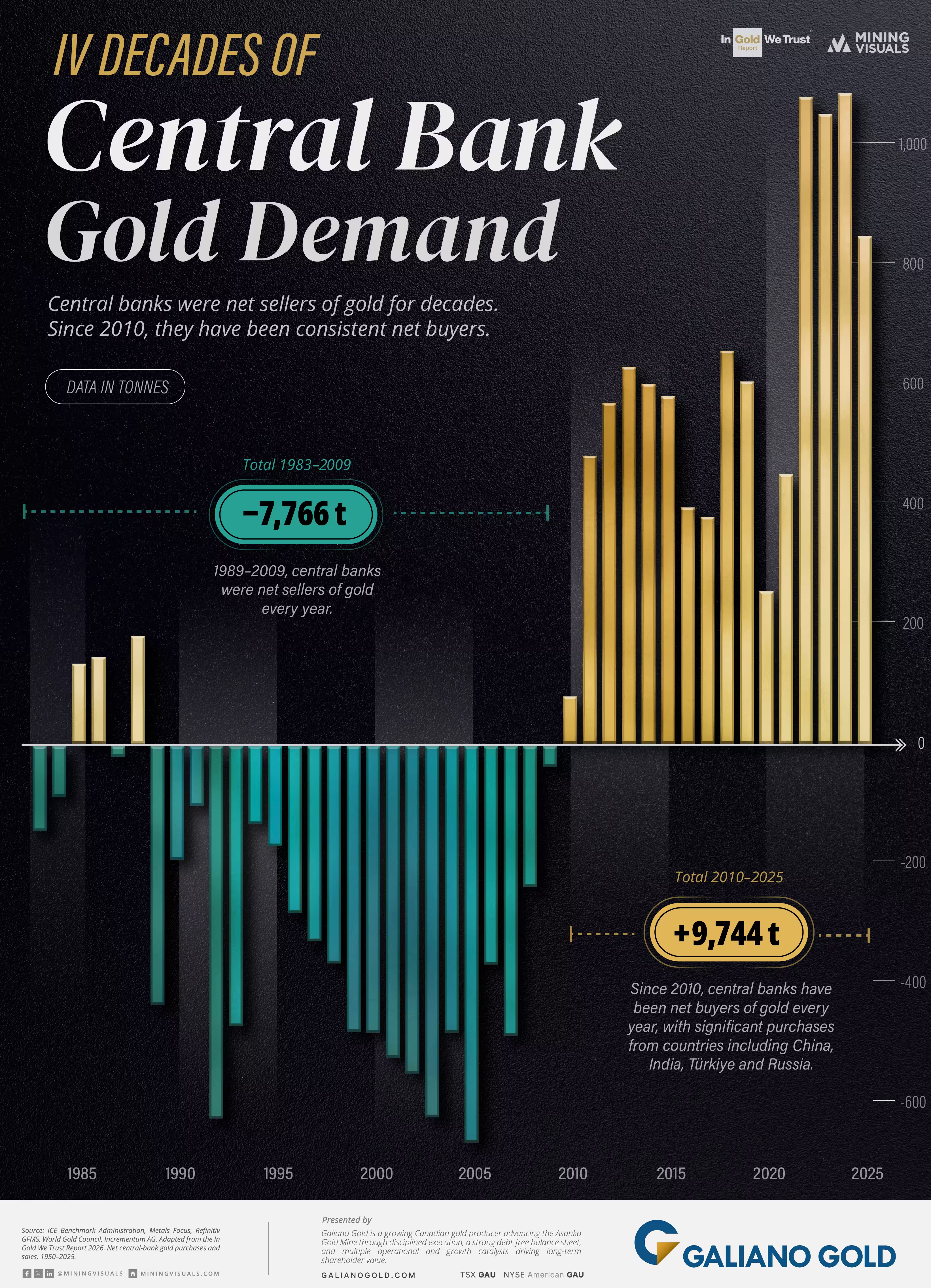
NET BUYING SINCE 2010 NOW EXCEEDS THE NET SELLING OF 1983 TO 2009
The following content is sponsored by Galiano Gold

A Third of the Buying in Three Years: Purchases from 2022 to 2024 equal a third of all net buying since 2010, per World Gold Council data.
1,695 Tonnes From Two Sellers: The UK and Switzerland sold that much gold between 1999 and 2005, during two decades of net selling.
Poland Targets 700 Tonnes: Poland was the largest central bank buyer in the first half of 2026, and its governor has set a 700-tonne goal.
Central banks bought more gold between April and June 2026 than in any second quarter on record, according to a World Gold Council report published on July 30. That keeps them net buyers this year, as they have been every year since 2010.
Before that run began, central banks had been net sellers of gold for two decades. Some of the largest sales were deliberate decisions by governments that wanted less of their reserves in gold.
Much of the selling was a deliberate policy choice. The UK sold about 395 tonnes between 1999 and 2002 and moved the money into currencies, saying gold "is less liquid and the price of gold is more volatile." Switzerland sold 1,300 tonnes, finishing in 2005.
The selling also had limits. From 1999, a group of central banks agreed to cap their combined sales at about 400 tonnes a year. By the late 2000s they were selling well below the cap, and the agreements ended in 2019 because members had "not sold significant amounts of gold for nearly a decade."
Since 2010, central banks have bought nearly 2,000 tonnes more gold than they sold between 1983 and 2009, per World Gold Council data.
The biggest years came recently. Central banks bought more than 1,000 tonnes in each of 2022, 2023 and 2024, something that had not happened in any year since at least 1950. Buying slowed in 2025, but was still higher than in any year from 2010 to 2021.
Türkiye was the largest seller in the first three months of 2026, according to the World Gold Council, and Russia was the largest in the next three. Russia said rising prices had increased gold's share of its reserves and that it needed to diversify, Reuters reported.
Other countries kept buying. Poland was the largest buyer in the first half of the year, and its central bank aims to hold 700 tonnes. China's purchases between April and June were its biggest in more than two years.
The World Gold Council estimates total central bank demand. Part of it is purchases that central banks report; the rest is counted as unreported buying. When new data arrives, that estimate can change. In July, the Council cut its figure for the first quarter of 2026 by more than three-quarters.
Even with the strong second quarter, buying in the first half of 2026 was the lowest since 2022. Bloomberg reported that this year's total is likely to come in below 2025.

Galiano Gold Inc. (TSX: GAU) (NYSE American: GAU) is building momentum at the Asanko Gold Mine in Ghana, West Africa. With a strong, debt-free balance sheet, disciplined execution, and multiple operational and growth catalysts ahead, Galiano is focused on strengthening cash flow generation, growing Mineral Resources and Mineral Reserves, extending mine life, and delivering long-term shareholder value.
As a Canadian gold producer, Galiano is committed to responsible mining and sustainable value creation while contributing to Ghana's economic development through local employment, procurement, and community investment.
Learn more at www.galianogold.com.
MiningVisuals Disclaimer: This article is for informational purposes only and does not constitute financial or investment advice. Always conduct your own research.
Sources
Graphic data: ICE Benchmark Administration, Metals Focus, Refinitiv GFMS, World Gold Council, Incrementum AG. Adapted from the In Gold We Trust Report 2026.


The nine West African countries with significant reported output produced about 15% of the world's mined gold in 2025, according to Metals Focus and World Gold Council data. Almost every mine on the map above was built in the past 25 years, and four more reached production in the last eighteen months: Lafigué in Côte d'Ivoire in June 2024, Kiaka in Burkina Faso in June 2025, Ahafo North in Ghana in October 2025 and Kiniero in Guinea in December 2025.
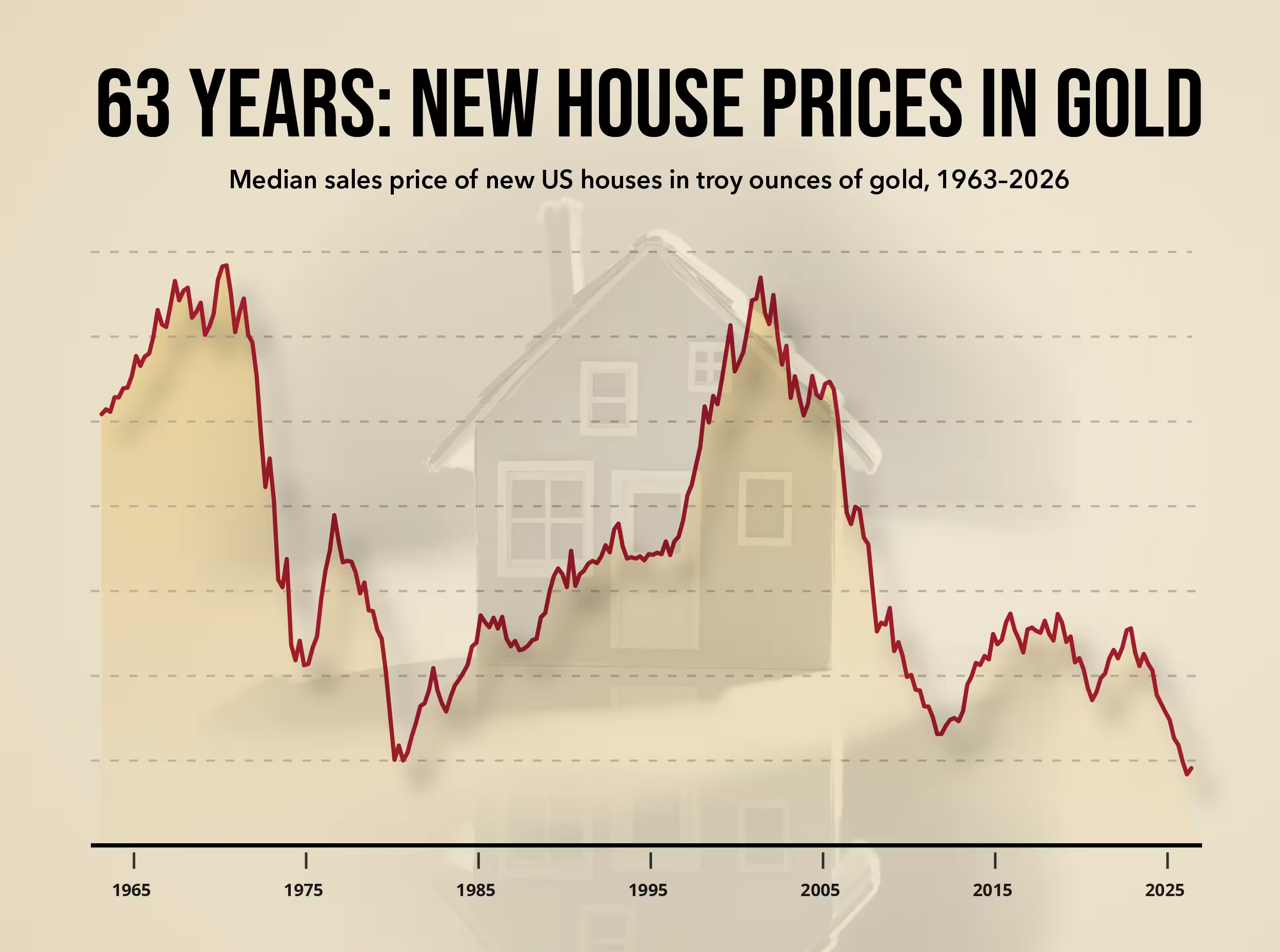
The US Census Bureau's July new-home report, released on August 25, put the median price of a newly built house at $393,800. HousingWire noted that was the lowest since July 2021. In dollars, the market has moved within a narrow band: the quarterly median has stayed between $408,500 and $435,400 since 2023.
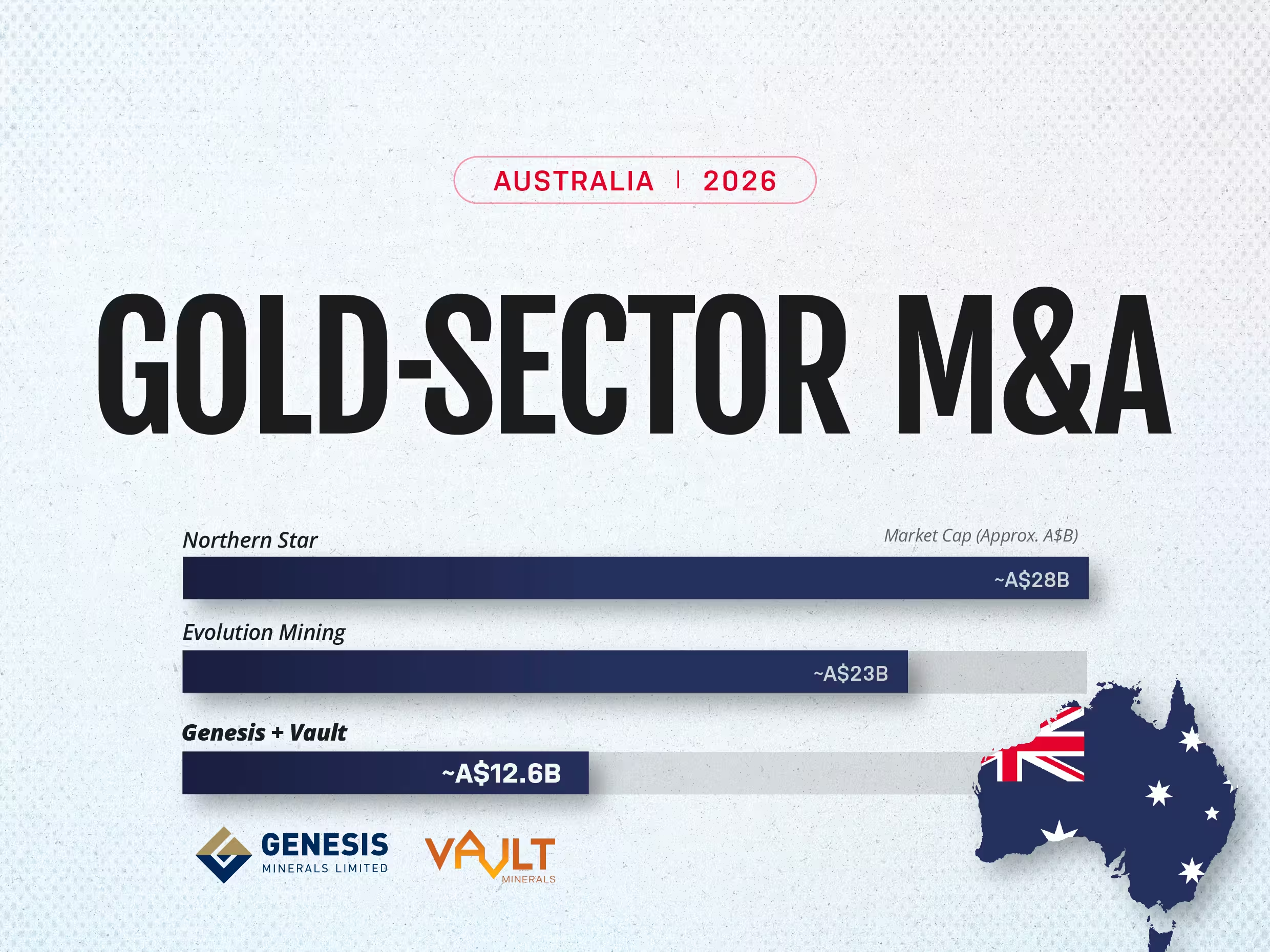
Gold hit an all-time high of about US$5,595 an ounce in January 2026 before settling near US$4,000, still far above the levels of a few years ago. That combination, record prices followed by a stable, still-profitable pullback, has done something a straight rally rarely does: it has opened a merger window.
.webp)
In March 2026, one of Ghana's own mining companies said it would invest about $1.2 billion in its operations at the Tarkwa and Damang gold mines. Both sit on the Ashanti belt, one of three narrow bands of ancient rock that carry almost all of Ghana's gold.