Commodities
The 20 Largest Technology Suppliers to Mining by 2025 Sales
BOTH CHINESE NAMES IN THE TOP 20 SELL MINE TRUCK AUTONOMY, AND BOTH NOW TRADE IN HONG KONG


Five Years of Growth: Sales by the 50 ranked companies rose 73.5% in five years, or 11.6% a year.
Who Is Left Out: Siemens and SAP are excluded, as mining is not a material standalone income stream for them.
What Drives Sales: Software, sensors and analytics platforms drive most of the current expansion, the report says.
Mining Beacon’s GLOBALminingTech50 2026, the source of the ranking, counts only the technology part of each supplier’s mining business. Several leaders, including Hexagon, Epiroc and Komatsu, enter as divisions or arms of larger corporations, so a rank reflects one business line rather than group revenue.
Eacon Mining, listed in the ranking as a private company, joined the Hong Kong Stock Exchange in July, raising about HK$2.3 billion. In November, International Mining reported that Eacon’s autonomous haulage system had reached site-wide operation for all 60 battery-electric trucks at Zijin Mining’s Zhibula copper mine by the end of September.
Hexagon says 9% of its overall sales, or US$566 million in 2025, came from mining-related software, sensors and controls. ABB’s US$1,489 million is Mining Beacon’s estimate of the mining and metals technology contribution to its 2025 revenue. For Eacon, the report gives about US$180 million, up from US$137 million.
Mining Beacon notes that some companies shared information on a not-for-publication basis, and the report gives 2025 revenue for only some of the entries. Its total for all 50 companies is about US$6.8 billion. For what equipment makers supply beyond technology, see our earlier article on what each part of the mining ecosystem does.

MiningVisuals Disclaimer: This article is for informational purposes only and does not constitute financial or investment advice. Always conduct your own research.

Metal starts as rock that no one has found yet. Exploration and drilling turn it into a known deposit. The deposit is then financed, built, equipped and mined, and its concentrate is smelted and refined into metal. Each stage is its own industry, with its own listed companies, and their revenue depends on different things. The section below explains how each step works and makes its money, with a recent example from each.
Pakistan’s mineral export earnings could reach US$10.46 billion a year by 2039, up from US$932 million in 2025, according to a tentative outlook from the Petroleum Division. Other estimates start from a higher base: a projection by the Institute of Cost and Management Accountants of Pakistan, reported by APP, puts current mineral exports at about US$3 billion.
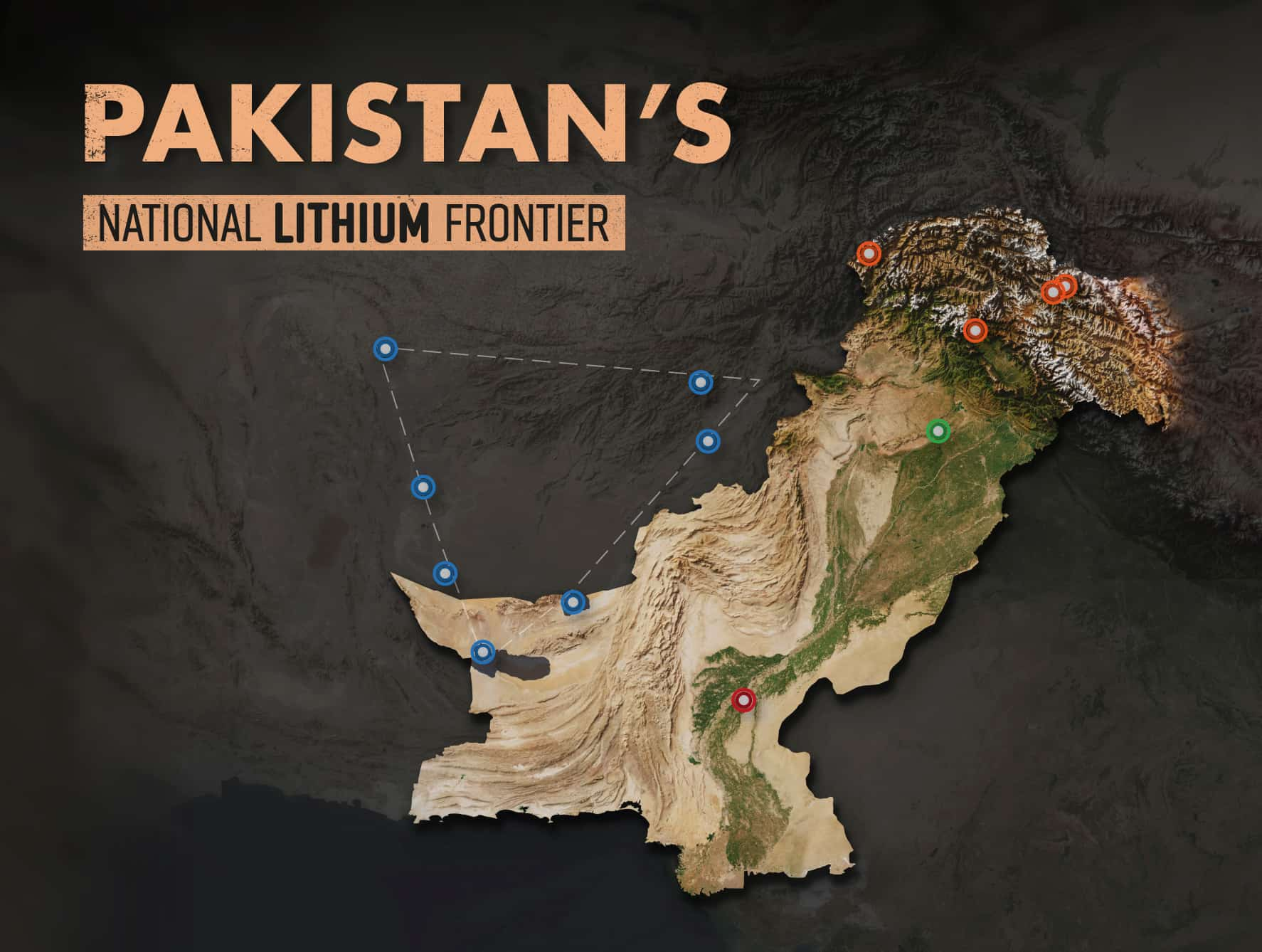
Lithium has been reported in four geological settings in Pakistan: brine lakes in Balochistan, geothermal well brine in Sindh, pegmatites in the northern mountains and clays in the Salt Range. A 2025 concept note by Geological Survey of Pakistan scientists describes these occurrences as potential and gives no resource estimates.
On November 6, 2025, the U.S. Interior Department added copper, silver and lead to its final critical minerals list, among 10 new entries. All three are main metals of a polymetallic deposit, where the USGS vein model places them in zones around a single intrusion. Silver shows how closely these metals are linked. The USGS says U.S. silver is "primarily obtained as a byproduct from lead-zinc, copper, and gold mines", and six smaller metals on the infographic reach the market the same way.