Precious Metals
November 29, 2024
2 min
Precious Metals


In a recent tweet, Elon Musk declared that solar power will dominate future power generation. While ambitious, his statement aligns with compelling trends in solar capacity growth. This article delves into the data behind Musk’s vision, the transformative role of solar in the global energy transition, and the significant implications for the silver market.
"Solar power will be the vast majority of power generation in the future"
- Elon Musk, Nov 12, 2024
Solar's Exponential Growth
According to the International Energy Agency (IEA), solar photovoltaic (PV) capacity has experienced explosive growth in recent years. From 2016 to 2023, solar capacity additions increased from 83.3 GW to 405.5 GW, with projections for 2024 reaching 467 GW and an impressive 672.6 GW by 2028. In 2023 alone, solar PV accounted for three-quarters of renewable capacity additions worldwide, underscoring its pivotal role in reducing global reliance on fossil fuels.
Utility-scale solar PV has become the most cost-effective option for new electricity generation in most countries, even amid rising commodity prices. Meanwhile, distributed solar PV—such as rooftop systems on homes and businesses—is set for rapid expansion, driven by high retail electricity prices and supportive policies from governments seeking to meet ambitious climate targets.
The Silver Connection
The adoption of solar PV technologies has a direct and significant impact on the demand for silver, an essential material in solar panels. Between 2015 and 2024F, silver demand for photovoltaics has soared by an astonishing 289% (source). As the global solar market continues to scale, silver demand is expected to rise even further, creating opportunities for growth but also challenges for supply chains reliant on this critical metal.
The Road Ahead
Solar power is not only a cornerstone of the clean energy transition but also a key driver of technological and economic transformation. The rapid expansion of solar PV capacity—supported by declining costs, innovation, and strong policy frameworks—validates Elon Musk’s vision of a solar-dominated future.
However, achieving this vision will require sustained investment and strategic planning to overcome challenges such as supply chain disruptions and material constraints, particularly for silver. Continued progress will ensure that solar power remains a dominant force in energy generation, capable of meeting growing global demand sustainably.
With solar PV poised to set new records year after year, the future of energy looks brighter than ever—and silver will play a pivotal role in this transformation.
Silver PV demand data from World Silver Survey 2024. Solar PV data from IEA. This is a work derived by Miningvisuals from IEA material and Miningvisuals is solely liable and responsible for this derived work. The derived work is not endorsed by the IEA in any manner. The information presented here may contain inaccuracies and is subject to rounding. This is not investment advice.




Explore More
View All

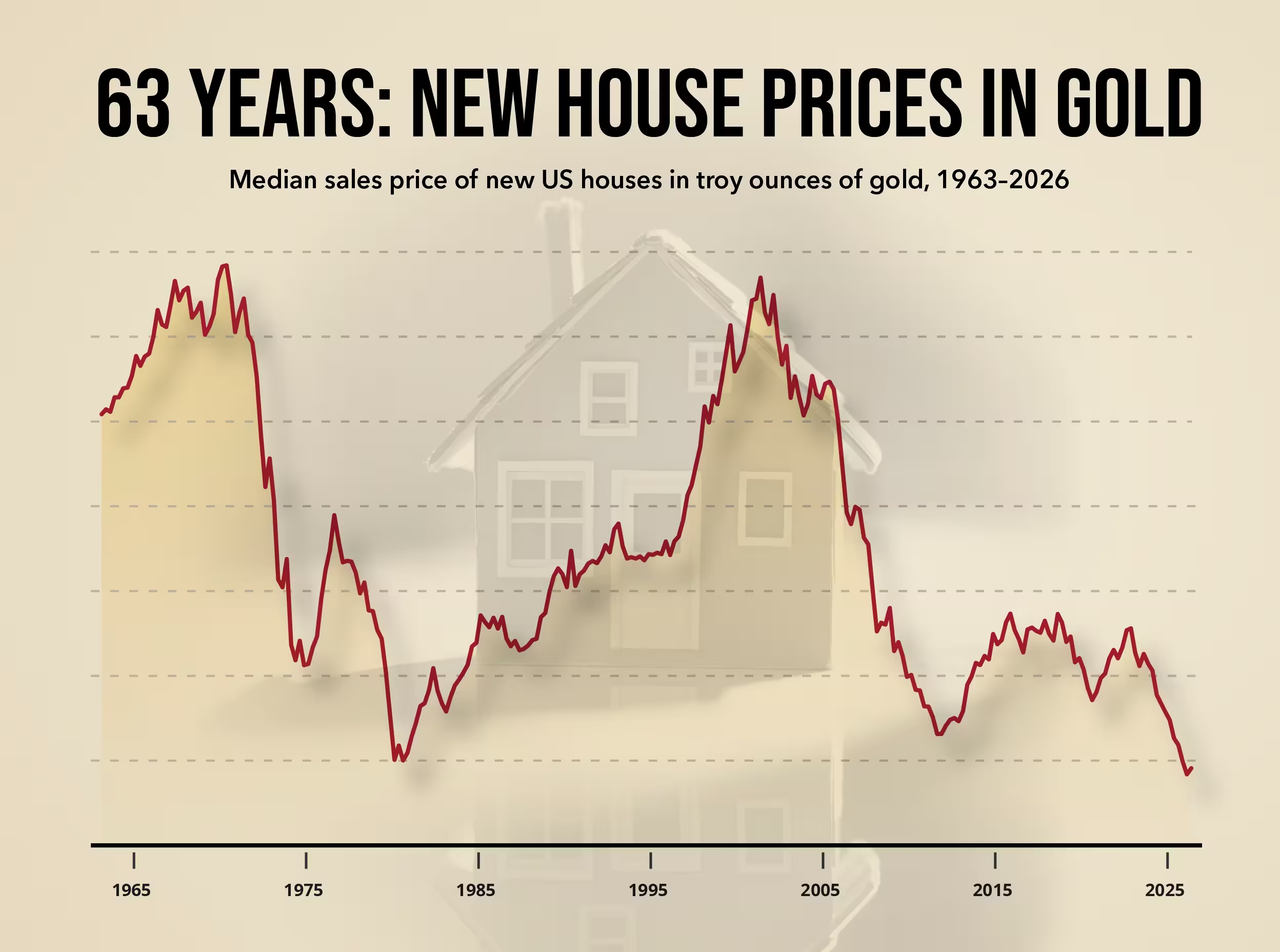
A Median New US Home Now Costs Less Than 100 Ounces of Gold
A Median New US Home Now Costs Less Than 100 Ounces of Gold
The US Census Bureau's July new-home report, released on August 25, put the median price of a newly built house at $393,800. HousingWire noted that was the lowest since July 2021. In dollars, the market has moved within a narrow band: the quarterly median has stayed between $408,500 and $435,400 since 2023.
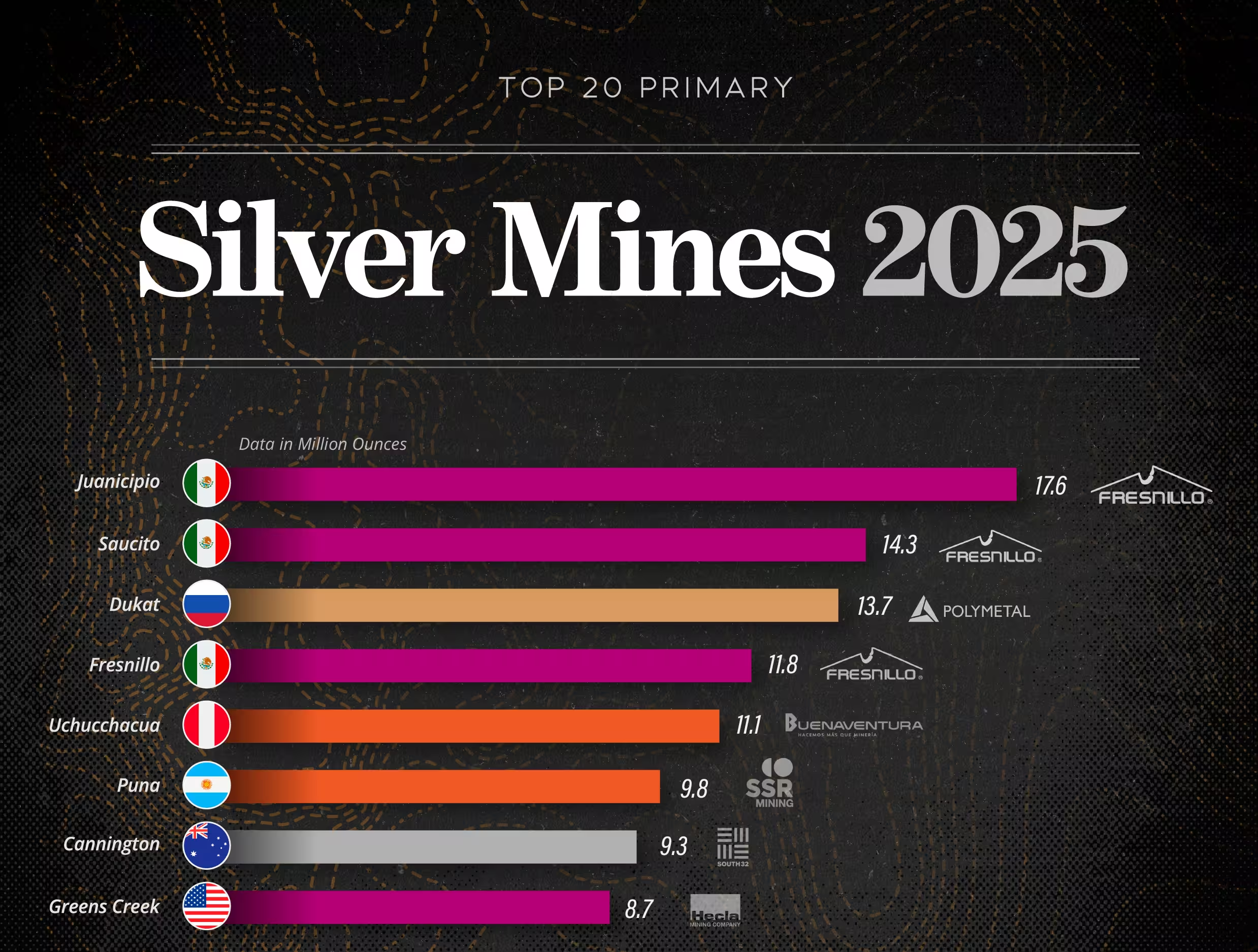
The World's 20 Largest Primary Silver Mines by 2025 Output
The World's 20 Largest Primary Silver Mines by 2025 Output
The single largest source of primary silver is a young mine in the Mexican state of Zacatecas. Juanicipio put out 17.6 million ounces in 2025, more than any other mine that earns its keep from silver itself rather than pulling it out as a byproduct of lead, zinc and gold. Fresnillo operates it and owns 56%; the other 44% changed hands in September 2025, when Pan American Silver completed a US$2.1 billion takeover of MAG Silver.
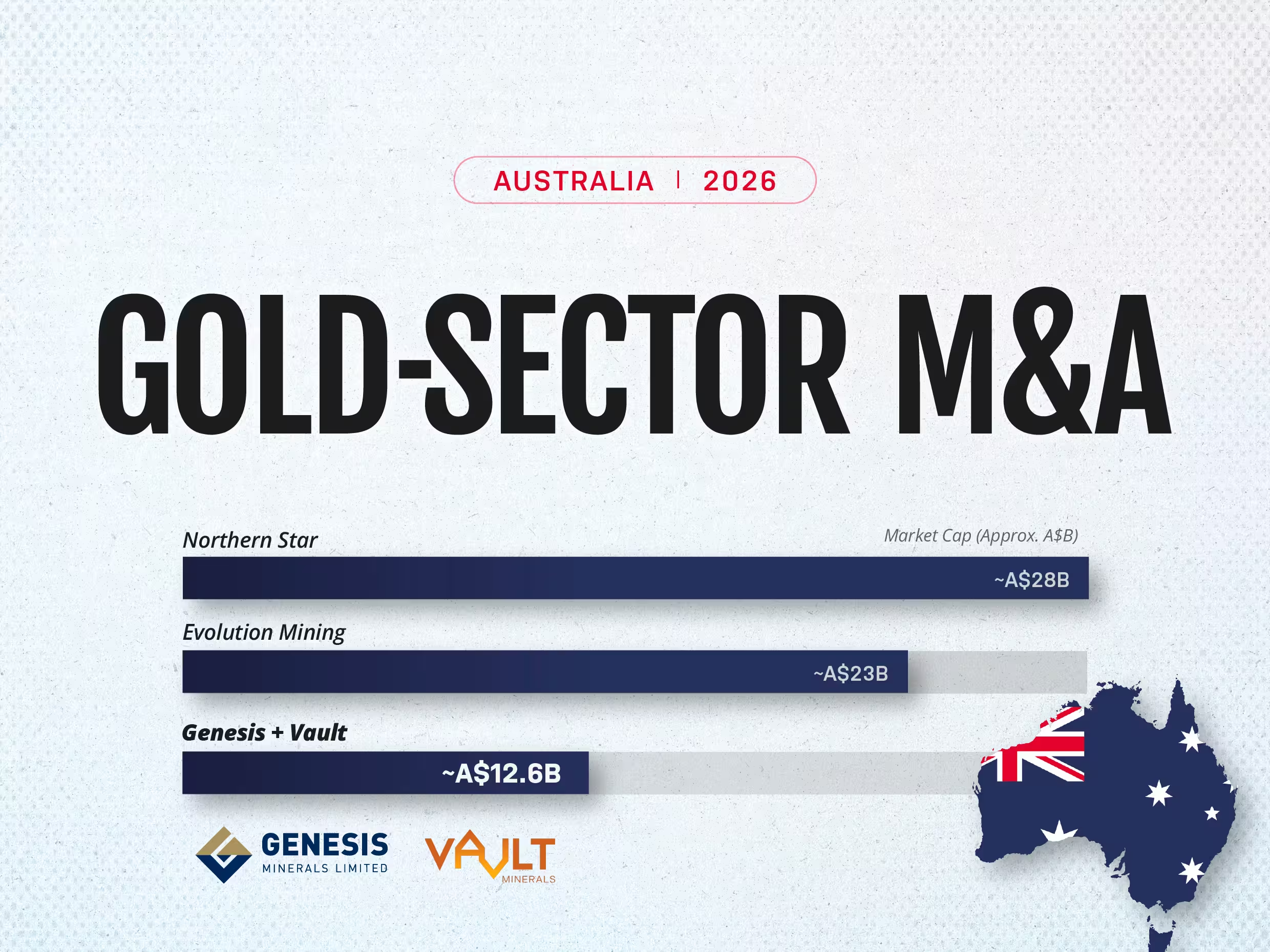
Gold's Record Run Has Set Off a Wave of Mining Mergers
Gold's Record Run Has Set Off a Wave of Mining Mergers
Gold hit an all-time high of about US$5,595 an ounce in January 2026 before settling near US$4,000, still far above the levels of a few years ago. That combination, record prices followed by a stable, still-profitable pullback, has done something a straight rally rarely does: it has opened a merger window.
.webp)
Three Ancient Belts Carry Ghana's Gold, and Investment Keeps Flowing to Them
Three Ancient Belts Carry Ghana's Gold, and Investment Keeps Flowing to Them
In March 2026, one of Ghana's own mining companies said it would invest about $1.2 billion in its operations at the Tarkwa and Damang gold mines. Both sit on the Ashanti belt, one of three narrow bands of ancient rock that carry almost all of Ghana's gold.