Precious Metals
July 28, 2024
2 min
Precious Metals


This graphic uses data from the Silver Institute's World Silver Survey 2024 to explore the supply and demand dynamics in silver. It illustrates how annual supply and demand have changed from 2015 to 2023 and includes a forecast for 2024. Each layer in the chart represents different demand categories, showcasing how each category has changed.
In 2023, silver demand exceeded supply for the third consecutive year, despite a 30% drop in the market deficit to 184.3 Moz. Declines in bar and coin investment, jewelry, and silverware demand were offset by robust industrial demand, especially from the solar sector. With limited supply growth, the 2024 forecast supply-demand gap is projected to rise by 17%.

Total silver demand fell by 7% to 1,195 Moz in 2023 but was still 9% higher than the second-highest total in this series. The decline was driven by drops in investment, jewelry, and silverware, while industrial demand hit a record high, rising 11% to 654.4 Moz, thanks to gains in green economy applications, particularly photovoltaics.

Silver Supply in 2023
Global mine production fell by 1% to 830.5Moz due to operational suspensions and lower ore grades in several countries. Primary silver production decreased, while supply from lead/zinc and copper mines slightly increased. Recycling grew by 1% to a 10-year high, driven by the industrial sector and high silver prices in India. Official sector net supply fell by 6% but remained trivial in volume.
The silver market in 2023 continued to face a supply deficit driven by robust industrial demand and limited supply growth. While prices remained subdued, ongoing deficits and eventual inventory drawdowns suggest potential future price increases.
Sponsored by:

Eloro Resources Ltd. is an exploration company focused on developing a world class silver and tin project in Bolivia's Potosí Department. Our flagship project, ISKA ISKA , ranks in the top five of global undeveloped resources in scale for both tin and silver. This truly significant grass roots discovery remains open in multiple directions with further potential to both expand and enhance. This world class deposit benefits not only from its proximity to infrastructure, but more importantly, from our connection to Bolivia through our management team and community involvement. Our goal at Eloro is clear - expand resources, attract partnerships, and establish itself as a key player in the mining sector.
Learn more about Eloro Resources at https://elororesources.com/
Source: World Silver Survey 2024
The information presented here may contain inaccuracies and is subject to rounding. We do not guarantee that all information is complete or correct. We accept no responsibility for any errors, omissions, or outcomes resulting from the use of this information. This is not investment advice.





Explore More
View All


Central Banks Have Been Net Gold Buyers Since 2010, After Two Decades of Net Selling
Central Banks Have Been Net Gold Buyers Since 2010, After Two Decades of Net Selling
Central banks bought more gold between April and June 2026 than in any second quarter on record, according to a World Gold Council report published on July 30. That keeps them net buyers this year, as they have been every year since 2010. Underneath, the picture is changing. Russia and Türkiye, both big buyers in the past, have been selling.

Gold Mines in West Africa: Two Billion Years in the Making
Gold Mines in West Africa: Two Billion Years in the Making
The nine West African countries with significant reported output produced about 15% of the world's mined gold in 2025, according to Metals Focus and World Gold Council data. Almost every mine on the map above was built in the past 25 years, and four more reached production in the last eighteen months: Lafigué in Côte d'Ivoire in June 2024, Kiaka in Burkina Faso in June 2025, Ahafo North in Ghana in October 2025 and Kiniero in Guinea in December 2025.
A Median New US Home Now Costs Less Than 100 Ounces of Gold
A Median New US Home Now Costs Less Than 100 Ounces of Gold
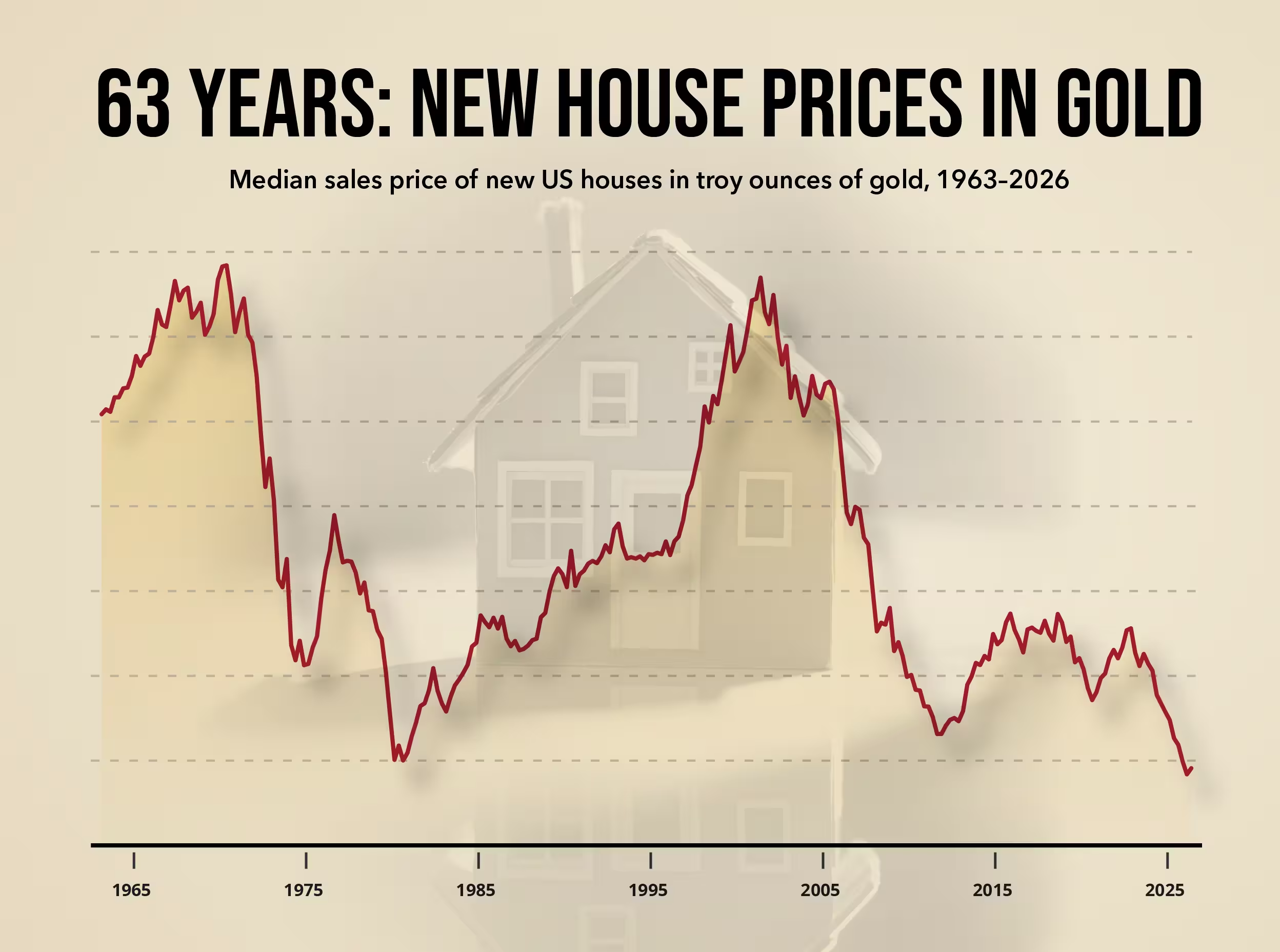
The US Census Bureau's July new-home report, released on August 25, put the median price of a newly built house at $393,800. HousingWire noted that was the lowest since July 2021. In dollars, the market has moved within a narrow band: the quarterly median has stayed between $408,500 and $435,400 since 2023.
Gold's Record Run Has Set Off a Wave of Mining Mergers
Gold's Record Run Has Set Off a Wave of Mining Mergers
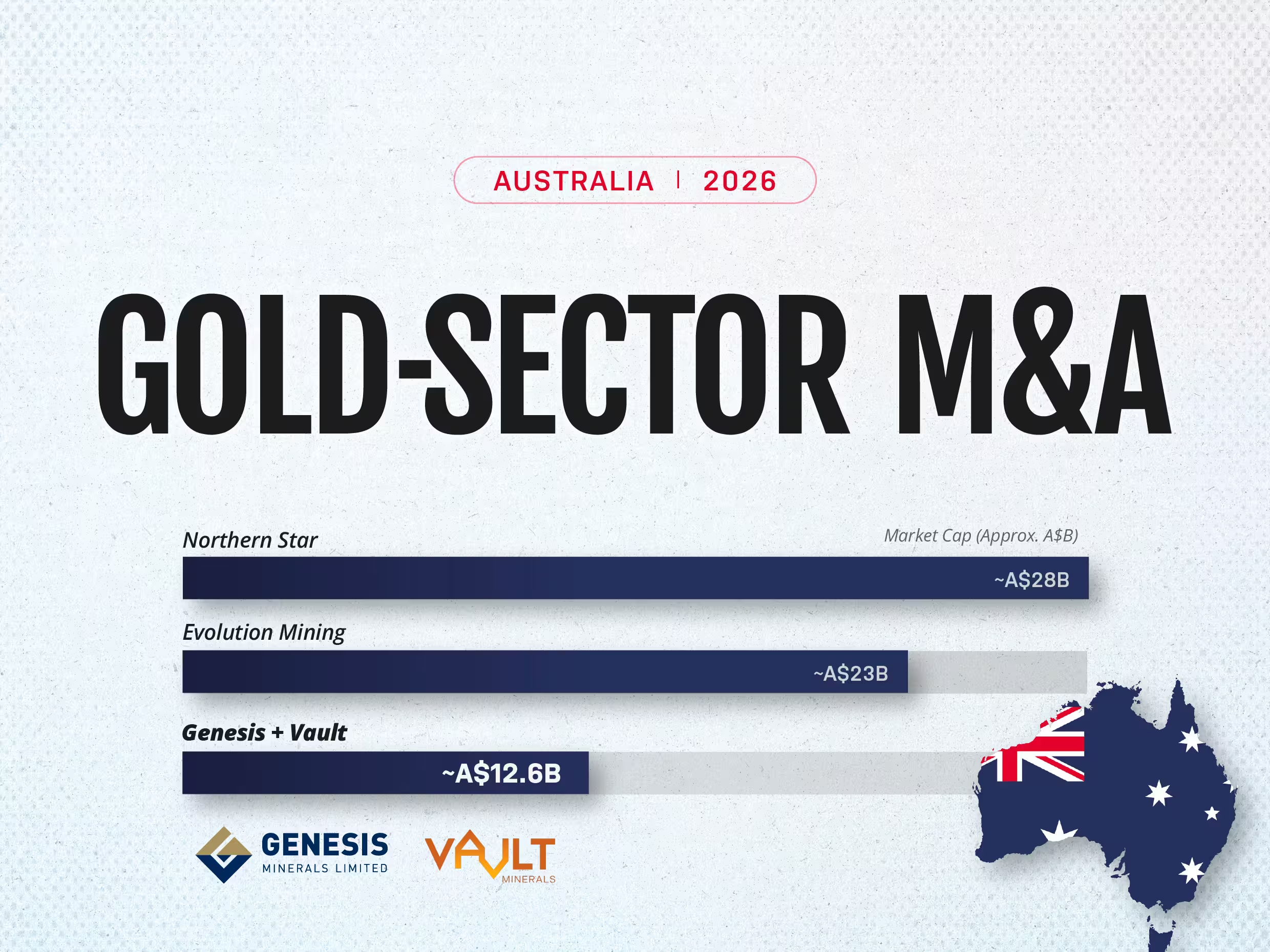
Gold hit an all-time high of about US$5,595 an ounce in January 2026 before settling near US$4,000, still far above the levels of a few years ago. That combination, record prices followed by a stable, still-profitable pullback, has done something a straight rally rarely does: it has opened a merger window.