Copper
December 11, 2024
2 min
Copper
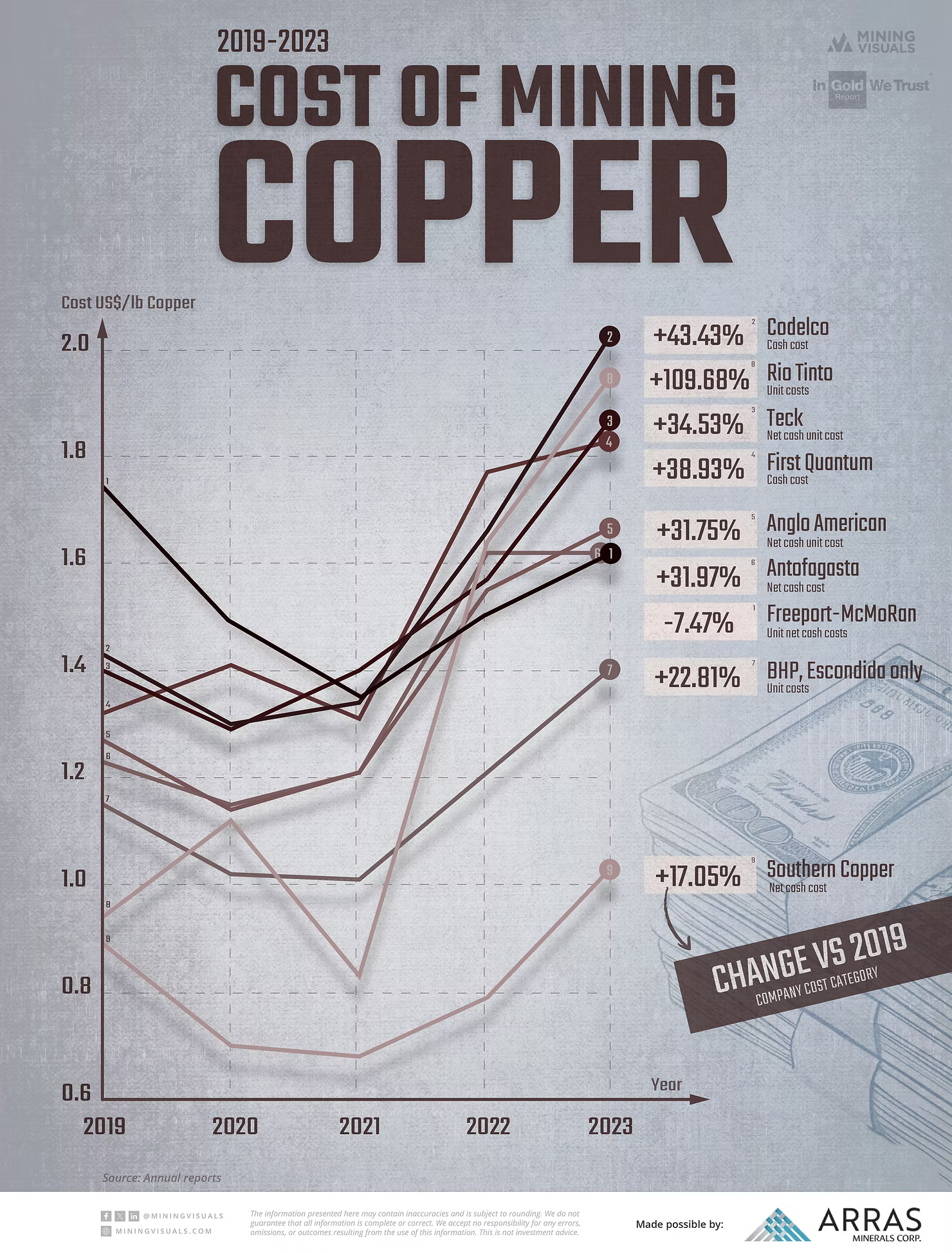

This graphic illustrates how copper production costs have evolved for major companies from 2019 to 2023. Costs has risen sharply for most major producers due to factors like inflation, declining ore grades, and rising input costs. Notably, fuel prices surged by 350%, and sulfuric acid costs increased by over 600% in top-producing nations like Chile (source).
These cost pressures have significantly squeezed profit margins, even as copper prices peaked at $5.11 per pound in 2021. Geopolitical tensions, labor shortages, and regulatory challenges have further complicated new mining projects, some of which have seen costs soar to about $45,000 per tonne of daily installed capacity due to inflation, steadily falling grades and dropping output (source).
Rio Tinto experienced the steepest increase, with costs nearly doubling from $0.93 per pound to $1.95. Codelco followed with a 43% rise, from $1.42 to $2.03 per pound. BHP’s costs at Escondida climbed more moderately, increasing 23% from $1.14 to $1.40 per pound. Southern Copper maintained the lowest costs, rising only 17% from $0.88 to $1.03 per pound. These changes underline how inflation, ore quality, and operational challenges have reshaped the cost structure of copper mining.
While copper prices remain within profitable ranges, many companies are extending the life of existing mines rather than pursuing new projects. This trend, combined with an average lead time of over 16 years for new mines, is creating supply constraints that could drive future price increases.
Sponsored by:

Arras Minerals is a mining exploration company focused on copper and gold projects in northeast Kazakhstan, with key assets including Elemes, Tay, and Beskauga. The company also partners with Teck Resources on a 1,900 sq km exploration area funded by Teck. Arras aims to expand exploration in Kazakhstan's prolific mineral belts, leveraging untapped potential through drilling and geological surveys to define resources and grow its portfolio.
Learn more about Arras Minerals at https://www.arrasminerals.com/
Source: Annual reports
The information presented here may contain inaccuracies and is subject to rounding. We do not guarantee that all information is complete or correct. We accept no responsibility for any errors, omissions, or outcomes resulting from the use of this information. This is not investment advice.





Explore More
View All

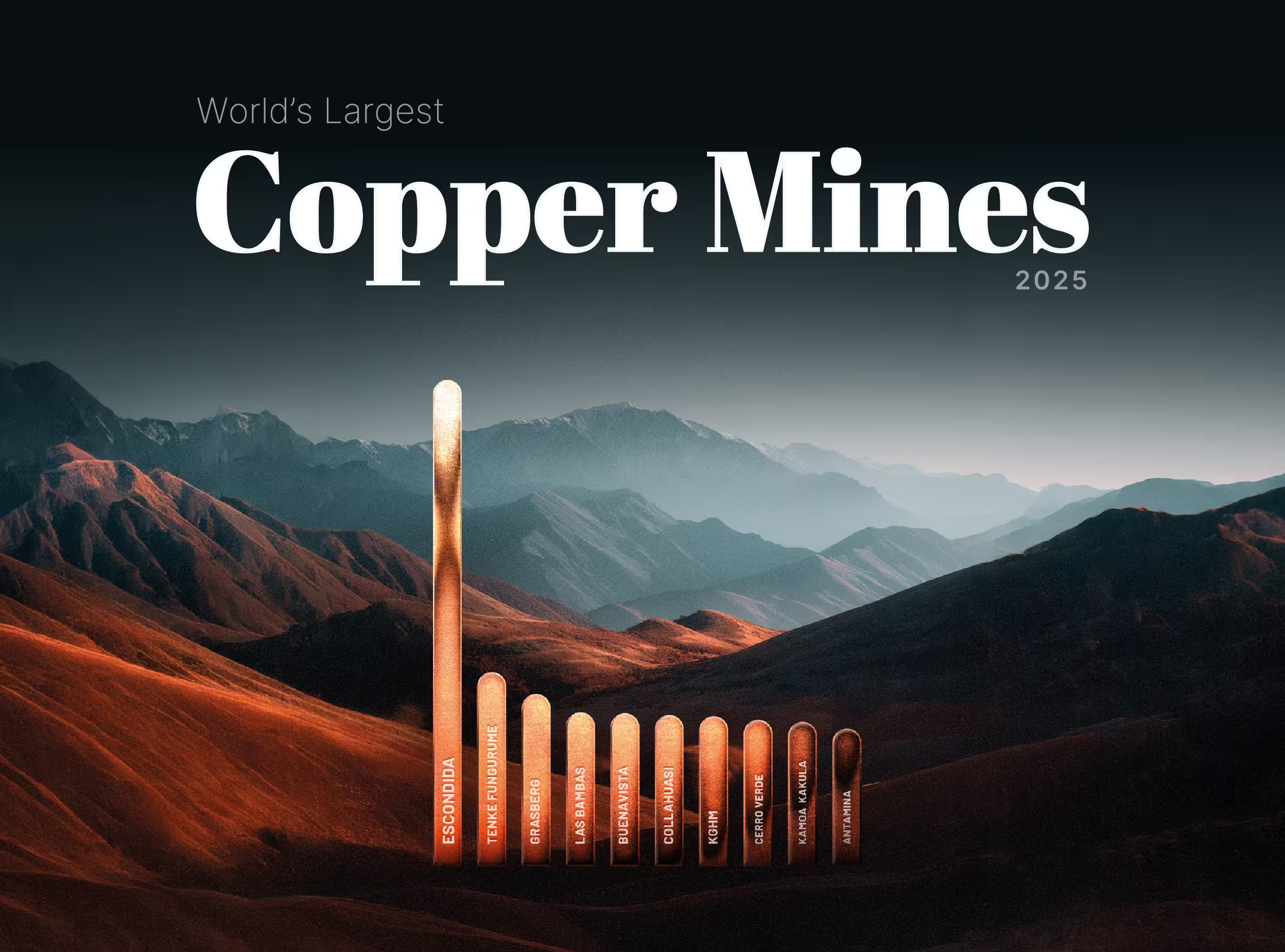
Ranked: The World's Largest Copper Mines (2025)
Ranked: The World's Largest Copper Mines (2025)
Copper has spent 2026 setting records, touching an intraday COMEX high of $6.71 per pound on May 13 amid AI-driven demand and supply shocks, against a backdrop where the ICSG now forecasts a 150,000-tonne deficit for 2026. In a market this tight, where the deficit thesis turns on lost tonnes, the question of where the world's copper actually comes from carries unusual weight.

Copper on Track for Its Highest Monthly Close on Record: A Look at the Drivers
Copper on Track for Its Highest Monthly Close on Record: A Look at the Drivers
Copper has spent most of 2026 doing something it had not done in a quarter century: setting fresh records every few weeks. The COMEX contract printed an intraday all-time high of $6.71 per pound on May 13, and the May monthly close looks set to land at the top of the historical chart. In London, copper traded above $14,000 per tonne in mid-May, touching $14,196.50, within reach of the LME's January 29 record of $14,527.50.

The Cost of Mining Copper: A 2024–2025 Update
The Cost of Mining Copper: A 2024–2025 Update
Copper futures touched an all-time high above $6.58 per pound on May 12, 2026, capping a 40.86% gain over the prior twelve months as supply tightness collided with structural demand from grid build-out, electric vehicles, and AI data centers. Earlier in the year, the LME benchmark rallied 22% to a record $13,387 per tonne on January 6, 2026. Behind the price action lies a less-discussed story: what it actually costs the world's largest miners to pull a pound of copper out of the ground.

Copper Production Q4 2025
Copper Production Q4 2025
As power-hungry AI data centers drive a projected 2-million-ton surge in global copper demand by 2030, market attention remains fixated on the supply side. Fourth-quarter 2025 metrics provide a definitive look at how the world's top miners closed out the year. While overall volumes remain heavily concentrated among a few historic industry giants, the true Q4 narratives emerged further down the list, as mid-tier producers leveraged flagship asset expansions to hit multi-year highs and offset the sector's ongoing struggle with declining ore grades.