Rare Earth
December 9, 2024
1 min
Rare Earth
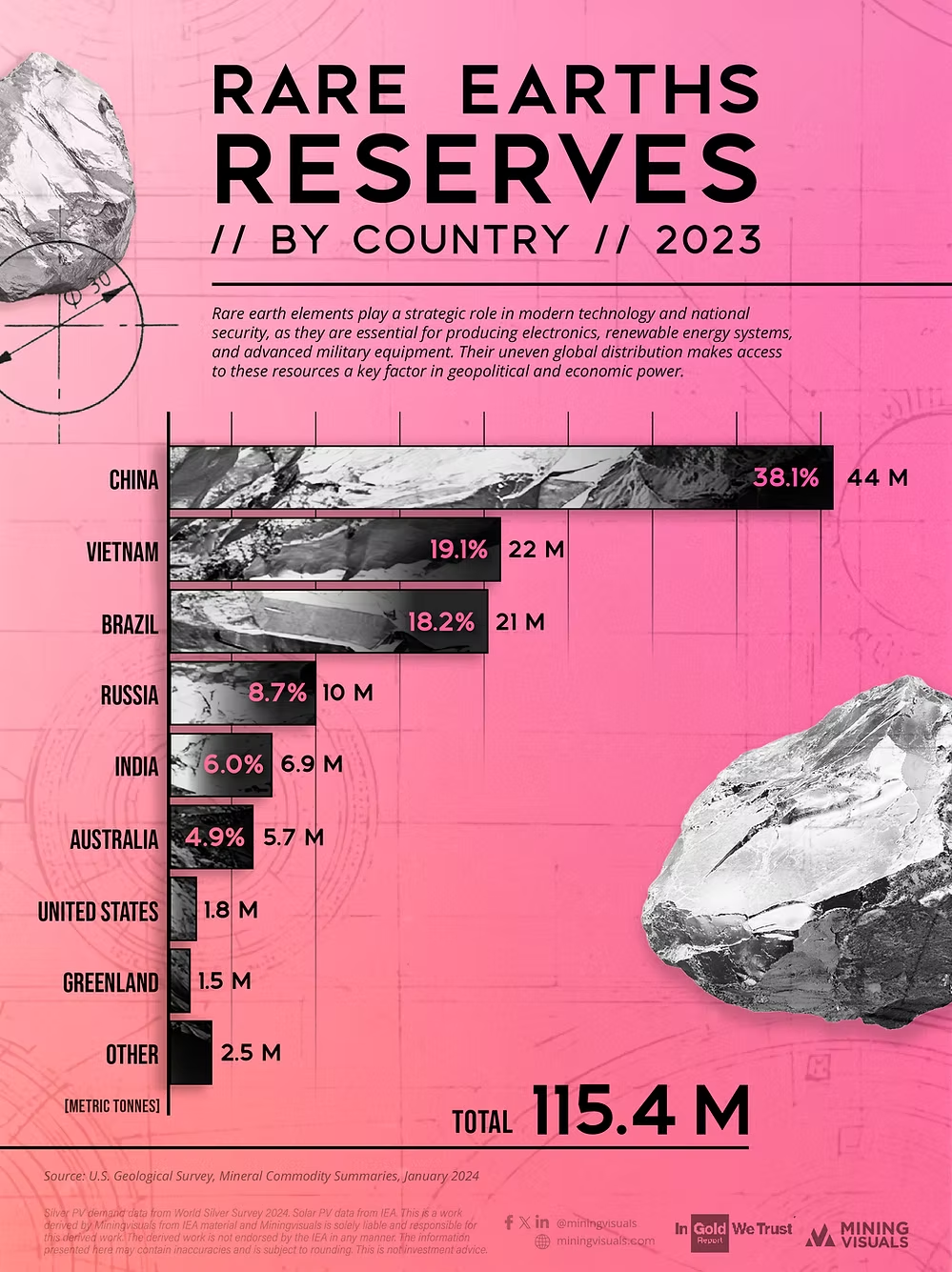

As of 2023, global reserves were estimated at 115.4 million metric tons (MT), with China, Vietnam and Brazil holding most significant part of these reserves.
China leads the world with 44 million MT of rare earth reserves, including major deposits like Bayan Obo in Inner Mongolia and ion-adsorption clays in southern provinces, rich in heavy rare earths like dysprosium. These elements are crucial for technologies requiring high-performance magnets, such as EVs, wind turbines, and military systems. Beyond its vast reserves, China dominates over 80% of rare earth refining capacity, controlling global supply chains and reinforcing its strategic importance.
Vietnam follows with 22 million MT, emerging as a strategic player. Despite low current production, the country is scaling up efforts to build an integrated rare earth industry. The largest rare earth deposit in Vietnam is the Dong Pao mine, located in Lai Chau Province. This deposit, which spans 132 hectares, is the country’s most significant source of rare earth elements. Other notable deposits in Vietnam are found in provinces like Lao Cai and Yen Bai. The mining sector in Vietnam is set to grow significantly as the country develops its rare earth reserves, especially in light of the rising global demand for these materials
Brazil, with 21 million MT, is also ramping up commercial efforts, focusing on magnet-related REEs through projects like Serra Verde. The Serra Verde rare earth deposit in Goiás, Brazil, is significant for its ion-adsorption clays, found on weathered granite. It contains valuable rare earth elements like neodymium and dysprosium, essential for technologies like EVs and wind turbines. Serra Verde is expected to become a major producer by 2030, with environmentally friendly mining methods.
Russia, with 10 million MT, faces challenges from geopolitical tensions. The Tomtor deposit in Russia is considered one of the most significant rare earth deposits in the world. Located in the Far East, it holds vast reserves of rare earth oxides and niobium, making it a critical project for Russia's rare earth ambitions. It is strategically important as Russia seeks to reduce reliance on imports from China, especially for materials used in defense, electronics, and electric vehicles. However, the project's development has faced delays due to challenges like permit issues and engineering setbacks
Australia, India, Greenland, and the United States each have important rare earth deposits. Australia's Mount Weld is a high-grade source of key elements like neodymium, used in clean energy technologies. India’s coastal Monazite sands contain lighter rare earths and the country aims to boost production. Greenland's Kvanefjeld deposit holds valuable heavy rare earths, but development is delayed due to political and environmental issues. The U.S. has the Mountain Pass mine but faces challenges with refining, as most processing is done in China
Smaller but significant reserves are found in the U.S., Greenland, and Southeast Asia. The Mountain Pass mine in California is the U.S.’s primary site, while Greenland and countries like Thailand and Myanmar add to global capacity.
Source: U.S. Geological Survey, Mineral Commodity Summaries, January 2024




Explore More
View All

Behind Tin's 2026 Record High
Behind Tin's 2026 Record High
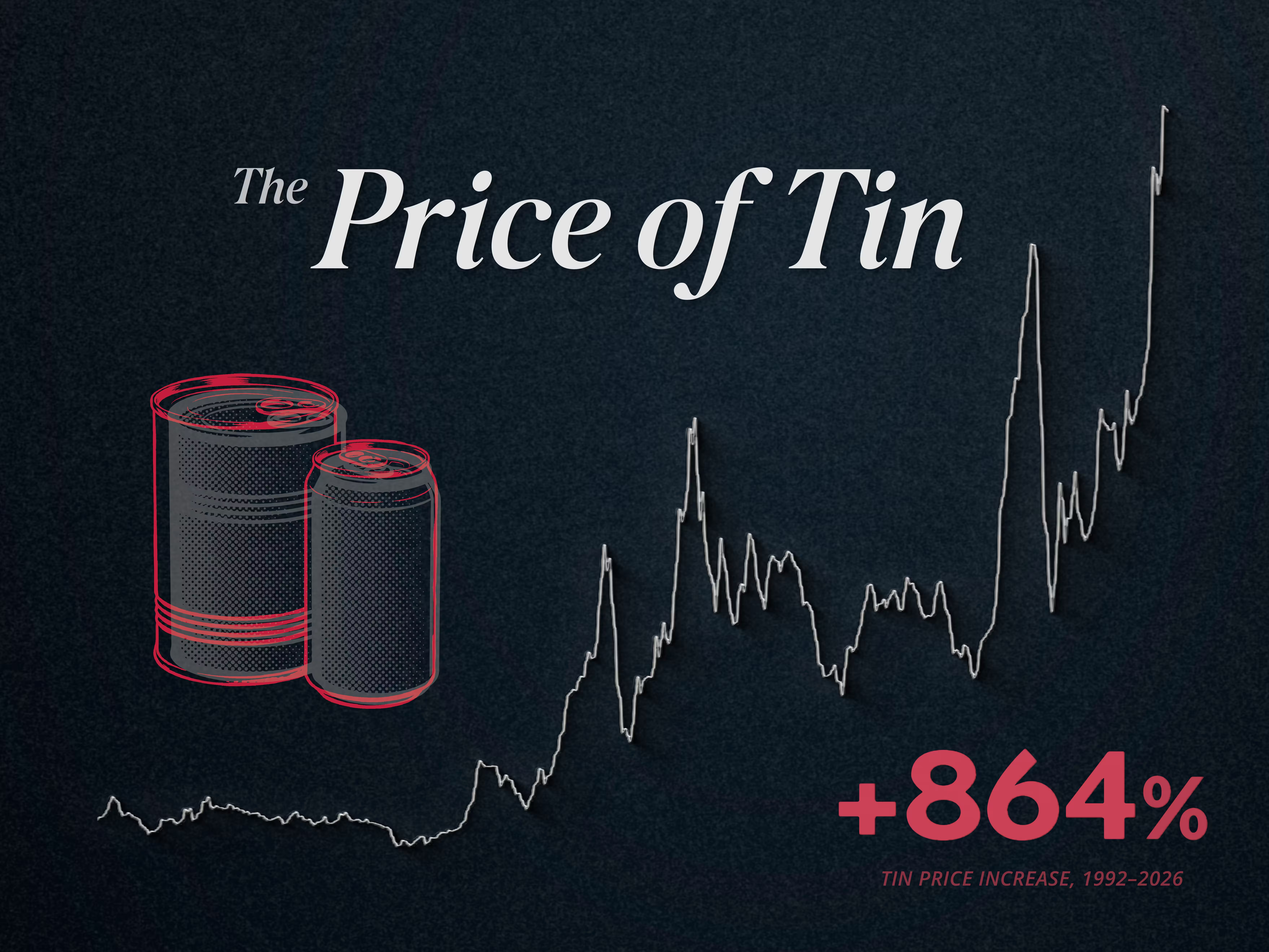
In January 2026, the London Metal Exchange three-month tin contract closed at US$53,462 a tonne, a nominal all-time high that surpassed the March 2022 peak, and it has traded near those levels since. The puzzle is that there is no shortage of tin today: exchange inventories actually rose as the price climbed, rather than being drawn down. Two very different things are holding the price up. The first is short-term: a wave of investor buying, which the industry says drove the January jump. The second is long-term: on current forecasts, the world will not mine enough tin to meet demand later this decade, a gap already projected before the rally began and expected to persist after it fades. The lasting story is that forecast shortfall, not the spike.
A Few Countries Control the World's Energy Transition Minerals
A Few Countries Control the World's Energy Transition Minerals
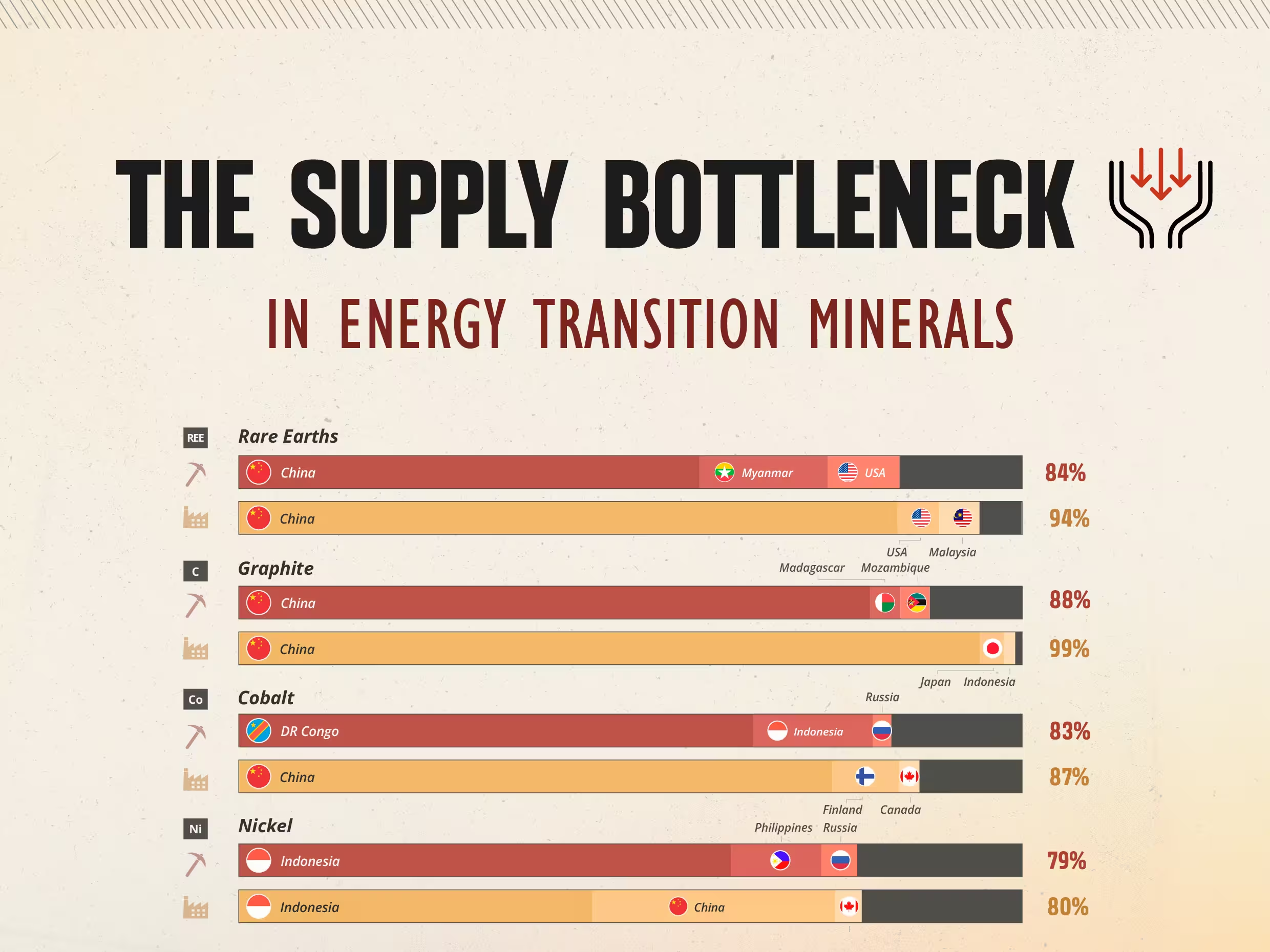
When China restricted exports of seven heavy rare earth elements and their magnets on 4 April 2025, factories felt it within weeks. Carmakers in the United States, Europe and Japan reported disruptions serious enough to cut output or halt production lines, and Washington negotiated a 90-day truce to restart the flow.
The Age of Giants: How Mining Shovels Grew, Peaked, and Deliberately Shrank
The Age of Giants: How Mining Shovels Grew, Peaked, and Deliberately Shrank
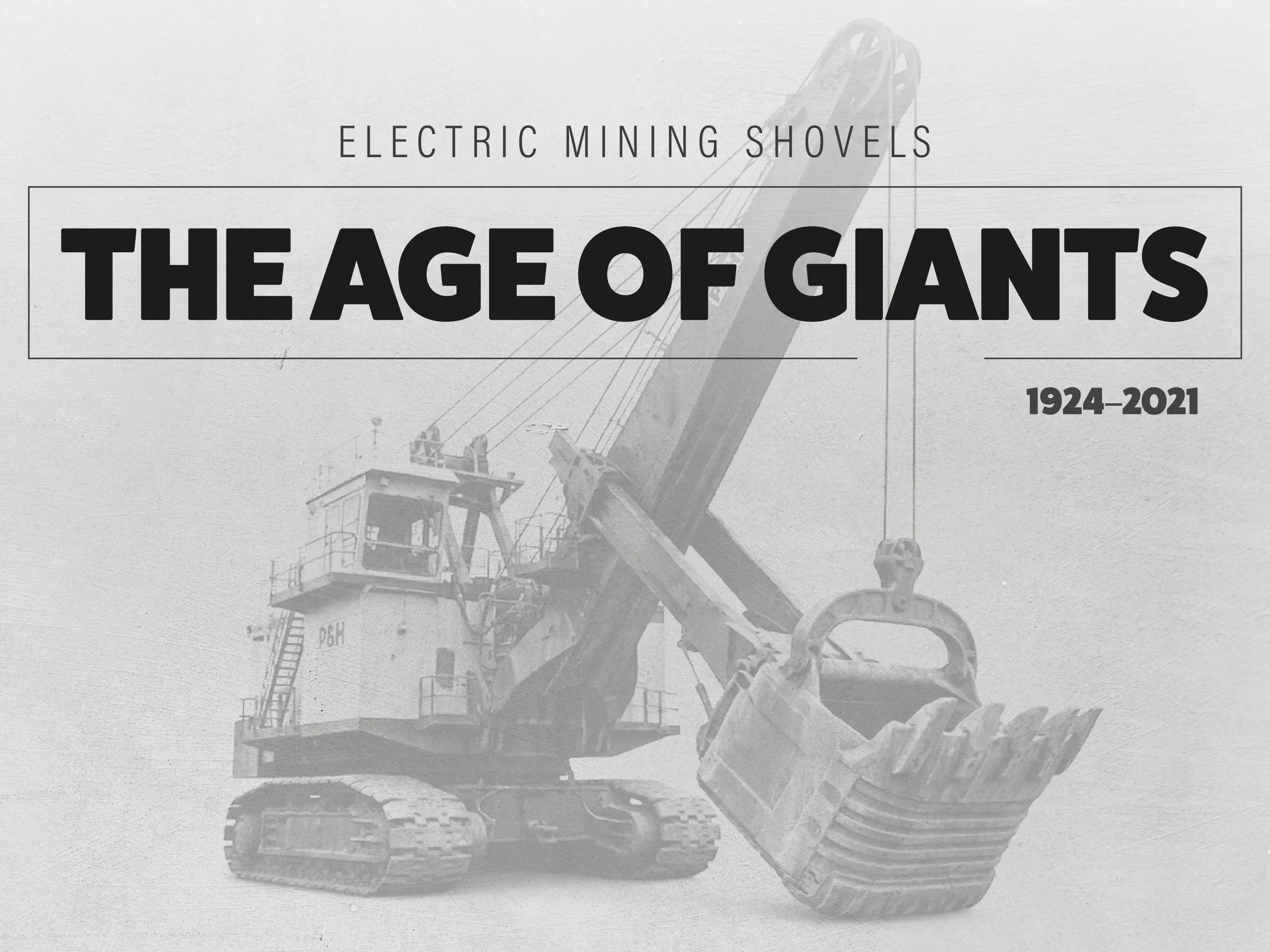
For four decades, the American coalfields hosted an engineering arms race measured in cubic metres of bucket. It ended not with a bigger machine, but with a deliberate retreat. The single largest mobile land machine ever built, the Marion 6360 "Captain," was commissioned in 1965 and destroyed by fire in 1991. No shovel has approached its scale since, and the machines that replaced it were smaller by design.
Where Indium Goes: The Metal Behind Screens, Chips, and Solar
Where Indium Goes: The Metal Behind Screens, Chips, and Solar
Indium is one of the metals you never see but use constantly. As indium tin oxide, it forms the transparent conductive coating on nearly every LCD and touchscreen, and that single application still accounts for most global consumption, according to the USGS. But the metal's role is broadening. Its compounds now sit inside the high-speed optical chips that route data through AI data centers, a shift that has turned a quiet, display-driven material into one buyers watch closely, especially as China refines about 70% of it and has begun tightening the flow.