Precious Metals
December 23, 2024
1 min
Precious Metals


As 2024 comes to a close, gold, silver, and copper have experienced notable price growth. Gold has had an outstanding year so far, with prices rising by more than 27%. The precious metal soared to an all-time high of $2,790 per ounce in October 2024, marking its strongest performance in decades. Investor demand surged amid geopolitical tensions, inflationary concerns, and a flight to safe-haven assets during periods of uncertainty. Gold’s enduring appeal as a store of value was reinforced as inflation and market volatility spooked investors, leading to a steady climb in its price throughout the year.
Silver also experienced substantial growth so far in 2024, gaining over 24%. Its price peaked at $34.72 per ounce on October 22, 2024, the highest level in 12 years. Silver’s rise was largely driven by booming industrial demand, particularly from the solar energy and electric vehicle sectors. As global economies accelerated their sustainability initiatives, silver became an increasingly critical material due to its key role in green technologies, such as photovoltaic cells and battery production.
Copper’s YTD growth of 5.37% reflects its steady demand, although it did not experience the same dramatic percentage increases as gold and silver. However, copper hit a record high of $5.20 per pound in May 2024, driven by its critical role in the renewable energy transition and advanced technologies. The metal is essential for clean energy infrastructure, electric vehicles, and the rapidly expanding AI industry, positioning copper as a cornerstone for future industrial development.





Explore More
View All

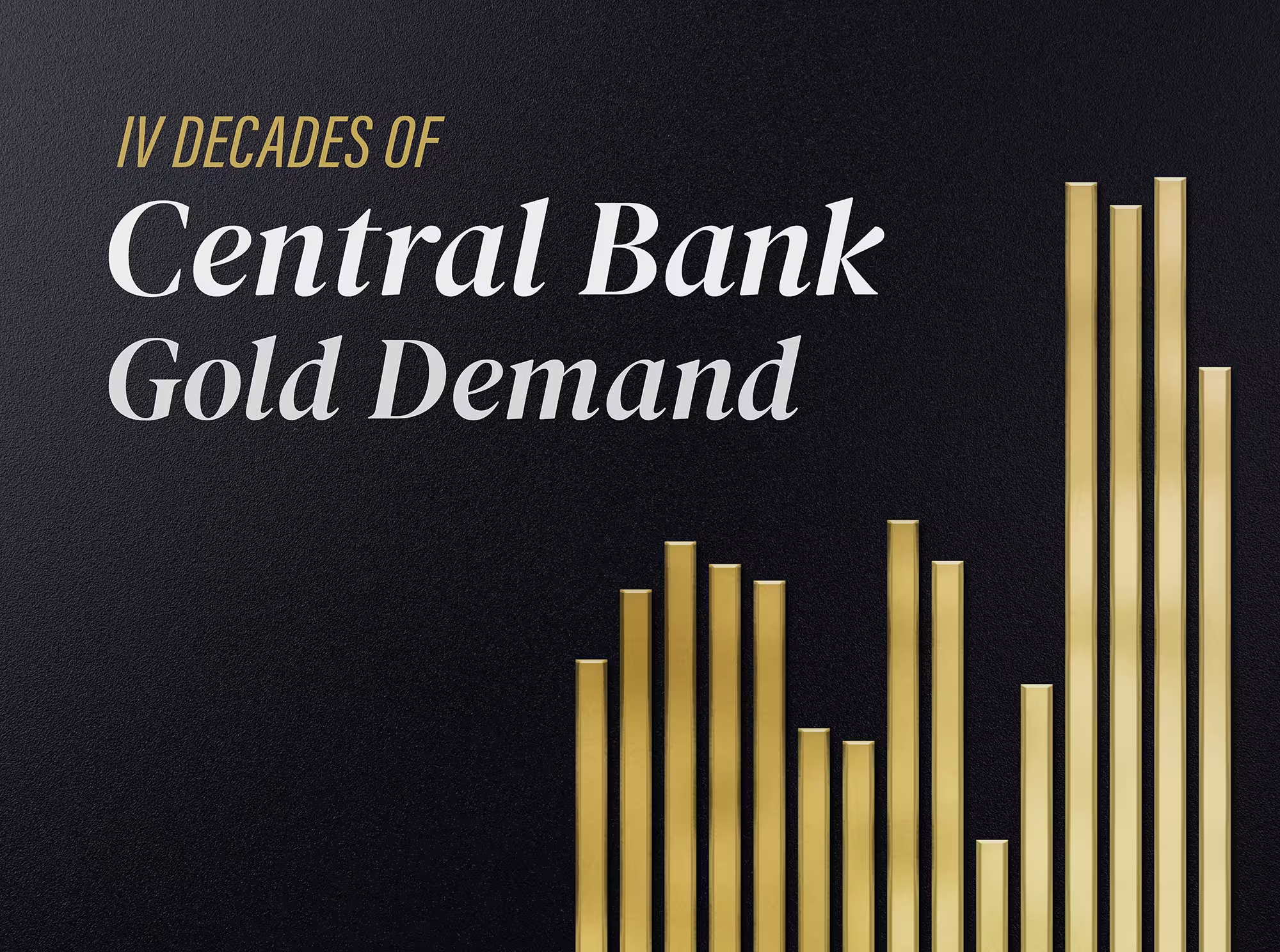
Central Banks Have Been Net Gold Buyers Since 2010, After Two Decades of Net Selling
Central Banks Have Been Net Gold Buyers Since 2010, After Two Decades of Net Selling
Central banks bought more gold between April and June 2026 than in any second quarter on record, according to a World Gold Council report published on July 30. That keeps them net buyers this year, as they have been every year since 2010. Underneath, the picture is changing. Russia and Türkiye, both big buyers in the past, have been selling.

Gold Mines in West Africa: Two Billion Years in the Making
Gold Mines in West Africa: Two Billion Years in the Making
The nine West African countries with significant reported output produced about 15% of the world's mined gold in 2025, according to Metals Focus and World Gold Council data. Almost every mine on the map above was built in the past 25 years, and four more reached production in the last eighteen months: Lafigué in Côte d'Ivoire in June 2024, Kiaka in Burkina Faso in June 2025, Ahafo North in Ghana in October 2025 and Kiniero in Guinea in December 2025.
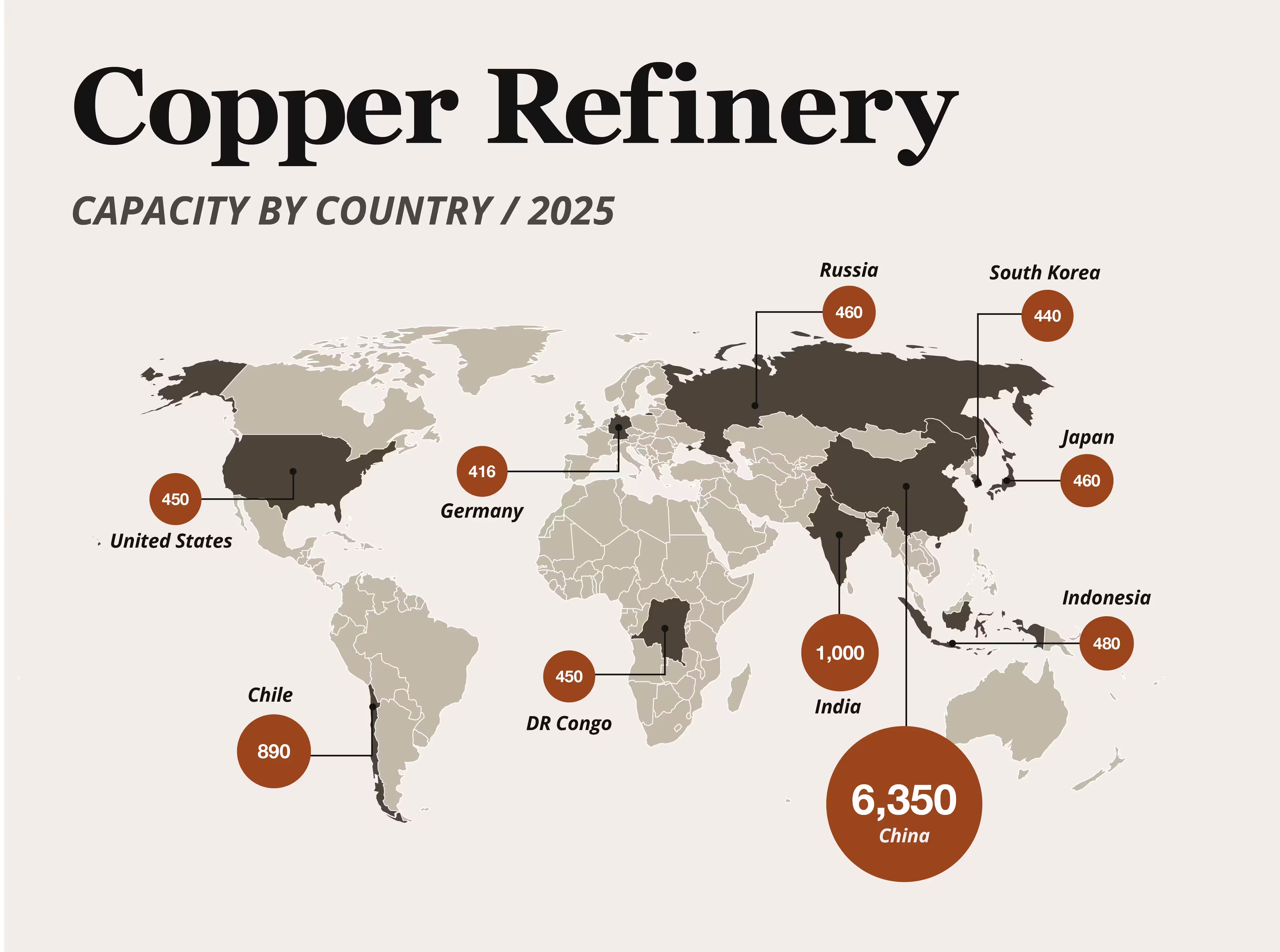
China Holds 56% of the Capacity at the World's 21 Largest Copper Refineries
China Holds 56% of the Capacity at the World's 21 Largest Copper Refineries
Indonesia's circle on the map above stands for a single plant: the Manyar refinery in East Java, operated by PT Freeport Indonesia, with 480,000 tonnes a year of capacity, according to the International Copper Study Group. It has been shut since the fourth quarter of 2025, after a mudflow at the Grasberg mine cut off its concentrate supply, and is due to restart this month at below 30% of capacity.
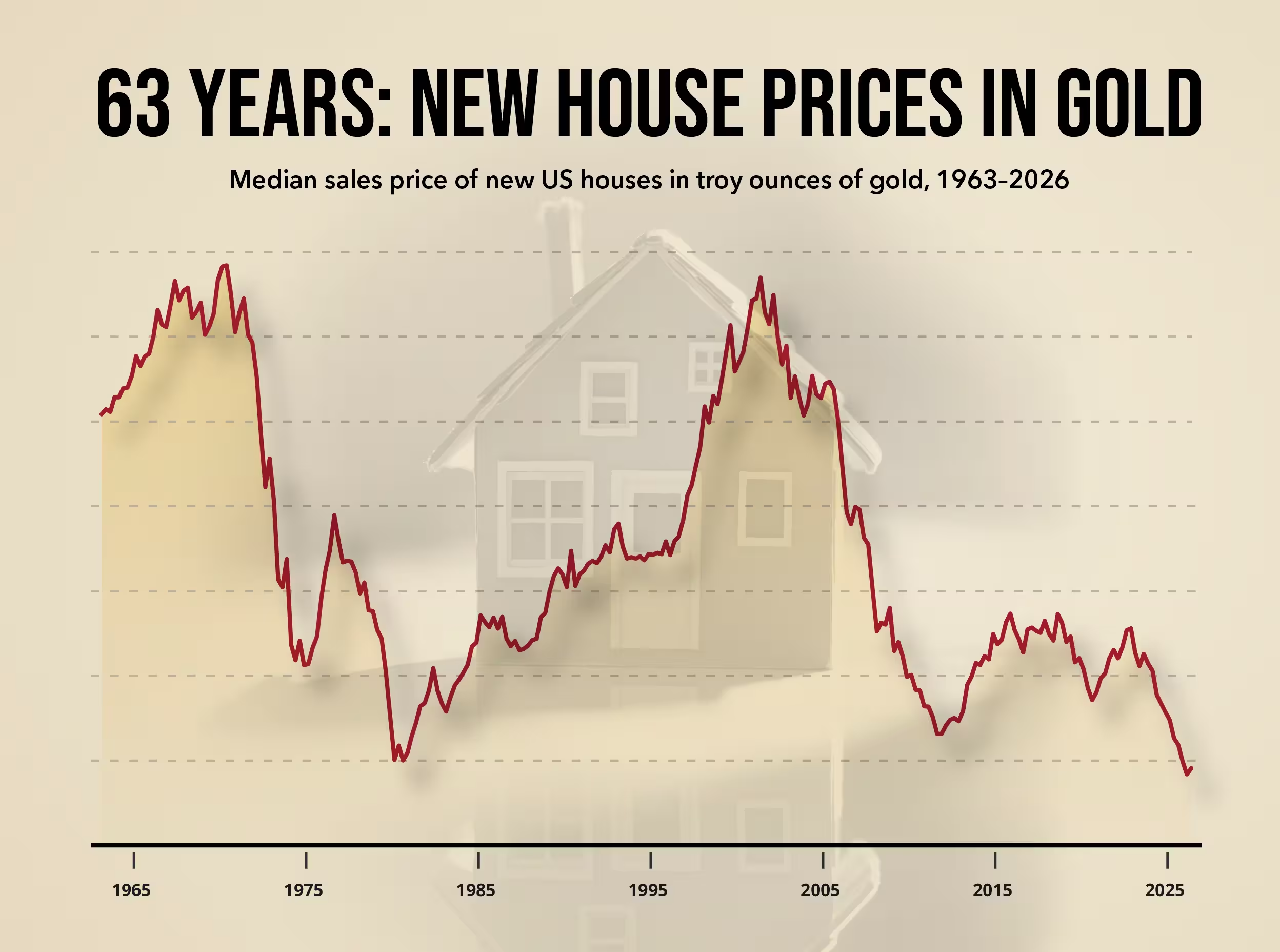
A Median New US Home Now Costs Less Than 100 Ounces of Gold
A Median New US Home Now Costs Less Than 100 Ounces of Gold
The US Census Bureau's July new-home report, released on August 25, put the median price of a newly built house at $393,800. HousingWire noted that was the lowest since July 2021. In dollars, the market has moved within a narrow band: the quarterly median has stayed between $408,500 and $435,400 since 2023.