Precious Metals
July 17, 2024
2 min
Precious Metals

Ranked: Large Gold Deposits and Projects
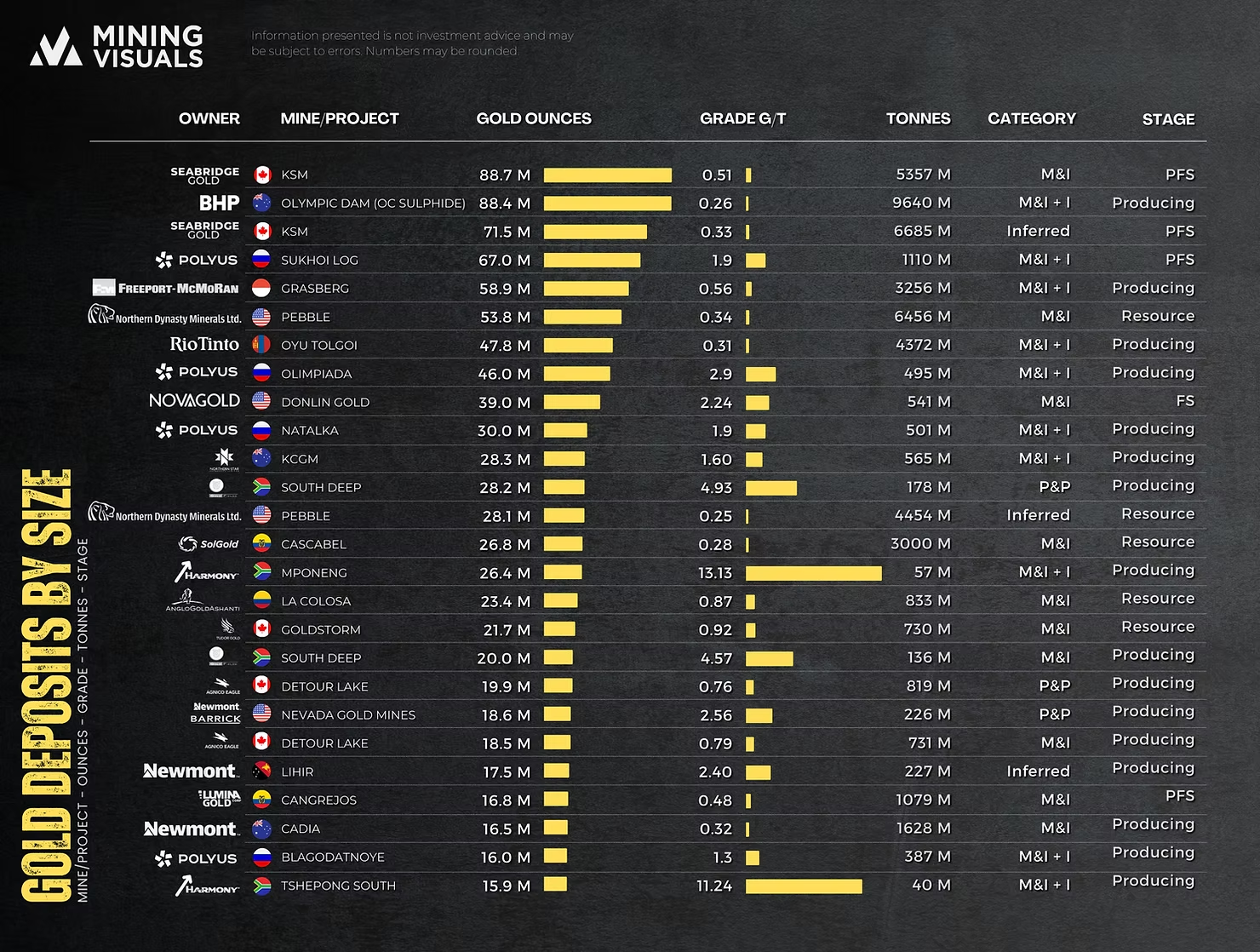
This graphic highlights some of the world's largest gold deposits and projects, detailing their grade, location, ownership, and development stage. Note that some deposits are categorized by resource classification (43-101 based resources) while others combine all categories (JORC based resources).
Top 3 Largest Gold Deposits:
- KSM: Located in British Columbia, Canada, KSM is the world's largest undeveloped gold project. It holds 88.7 million ounces in the measured and indicated category and 71.5 million ounces in the inferred category, totaling 160.2 million ounces. The project also contains significant copper, silver, and molybdenum and is currently in the development stage, with a pre-feasibility study released in 2022.
- Olympic Dam: Owned by BHP, this massive deposit in South Australia is one of the world's largest and most significant ore bodies, containing vast quantities of copper, uranium, gold, and silver. The deposit includes 88.4 million ounces of gold across all categories and is currently in production.
- Pebble: Located in Alaska, Pebble is one of the largest undeveloped copper and gold projects, also containing substantial molybdenum and silver resources. It has 53.8 million ounces of gold in the measured and indicated category and 28.1 million ounces in the inferred category, totaling 81.9 million ounces. The project is in the development stage but faces significant opposition from environmental groups, indigenous communities, and commercial fishing interests due to potential ecosystem impacts, particularly on salmon habitats.
Considering Grade:
While the top three deposits are notable for their size, their average gold grades are relatively low. For instance, the Sukhoi Log deposit contains 67 million ounces with an average grade of 1.9 g/t, nearly four times that of KSM (0.51 g/t) and almost eight times that of Olympic Dam.
The highest-grade deposits on this list are Mponeng, Tshepong South, and South Deep, all located in South Africa. Mponeng stands out with an impressive average grade of 13.13 g/t and 26.4 million ounces. Tshepong South has a grade of 11.24 g/t and 15.9 million ounces, while South Deep, despite a significantly lower grade of 4.93 g/t, holds 28.2 million ounces.





Explore More
View All


The World's 20 Largest Primary Silver Mines by 2025 Output
The World's 20 Largest Primary Silver Mines by 2025 Output
The largest silver producer among the world's primary silver mines in 2025 sat not in Mexico but in southwestern Bolivia. San Cristóbal, a large open-pit silver-zinc-lead mine run by Minera San Cristóbal, produced 17.6 million ounces of silver, narrowly ahead of Mexico's Juanicipio at the same rounded figure, in new Metals Focus data on the 20 largest primary silver mines. These are the operations where silver is a defining product rather than an incidental byproduct of lead, zinc and gold. The list runs from centuries-old mines in Mexico's silver belt to remote sites in the Andes, the Australian outback and the Alaskan wilderness. Eight of the 20 sit in Mexico, together about 44% of the total, while the rest are spread across the Americas, Asia, Africa and Australia.

Central Banks Have Been Net Gold Buyers Since 2010, After Two Decades of Net Selling
Central Banks Have Been Net Gold Buyers Since 2010, After Two Decades of Net Selling
Central banks bought more gold between April and June 2026 than in any second quarter on record, according to a World Gold Council report published on July 30. That keeps them net buyers this year, as they have been every year since 2010. Underneath, the picture is changing. Russia and Türkiye, both big buyers in the past, have been selling.

Gold Mines in West Africa: Two Billion Years in the Making
Gold Mines in West Africa: Two Billion Years in the Making
The nine West African countries with significant reported output produced about 15% of the world's mined gold in 2025, according to Metals Focus and World Gold Council data. Almost every mine on the map above was built in the past 25 years, and four more reached production in the last eighteen months: Lafigué in Côte d'Ivoire in June 2024, Kiaka in Burkina Faso in June 2025, Ahafo North in Ghana in October 2025 and Kiniero in Guinea in December 2025.
A Median New US Home Now Costs Less Than 100 Ounces of Gold
A Median New US Home Now Costs Less Than 100 Ounces of Gold
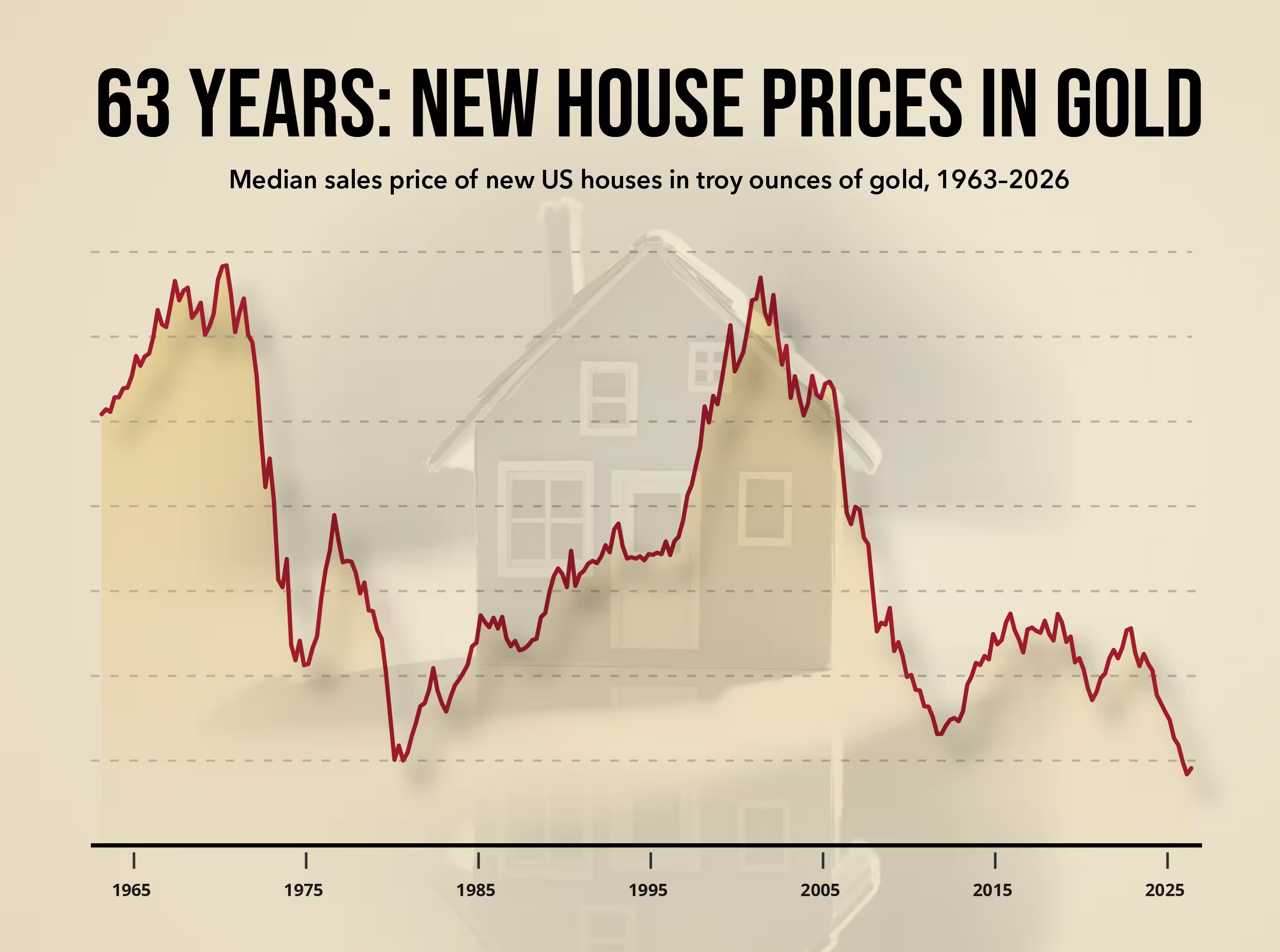
The US Census Bureau's July new-home report, released on August 25, put the median price of a newly built house at $393,800. HousingWire noted that was the lowest since July 2021. In dollars, the market has moved within a narrow band: the quarterly median has stayed between $408,500 and $435,400 since 2023.