Precious Metals
December 30, 2024
2 min
Precious Metals


According to a new report from the Silver Institute, the silver market is set to face a significant structural deficit for the fourth consecutive year in 2024, driven by record industrial demand and renewed growth in jewelry and silverware consumption. With global demand reaching 1.21 billion ounces and mine supply increasing by only 1%, the market dynamics are creating significant competition for silver resources.
As of December 30, silver prices have surged by an impressive 25% since the start of the year, nearly reaching $35 per ounce in October for the first time since 2012. Industrial applications have been the primary driver of silver’s growth, with demand forecasted to rise by 7% in 2024 to surpass 700 million ounces (Moz) for the first time in history. Key contributors to this surge include:
- Green Economy Applications: The photovoltaic (PV) sector continues to anchor demand, as silver plays a critical role in solar panel production. Investments in renewable energy infrastructure have bolstered this trend.
- Automotive Sector: The push for electric vehicles (EVs) and advanced vehicle technologies has increased the need for silver in powertrains, sensors, and charging station infrastructure.
- Technological Advancements: The rapid adoption of AI technologies has spurred demand for new hardware and infrastructure, offsetting challenges in consumer electronics.
As global economies transition toward greener and more technologically advanced industries, silver’s indispensable role in these transformations is becoming increasingly evident. With industrial demand reaching new heights and market deficits persisting, silver is poised to remain a critical commodity shaping the future of energy, technology, and mobility.
The year 2024 marks a key moment for silver, highlighting its increasing importance in industry and its role as a driver of global progress.
Sponsored by:

The Silver Institute is a global organization dedicated to promoting the use, study, and understanding of silver. It provides in-depth research on silver’s supply, demand, and pricing trends across various industries such as industrial applications, jewelry, investment, and solar energy. One of the institute’s key publications is the World Silver Survey, an annual report that offers detailed statistics and analysis on the global silver market.
For further information, you can visit the official Silver Institute website.
Source: https://silverinstitute.org/global-industrial-demand-on-track-for-a-new-record-high-in-2024/
The information presented here may contain inaccuracies and is subject to rounding. We do not guarantee that all information is complete or correct. We accept no responsibility for any errors, omissions, or outcomes resulting from the use of this information. This is not investment advice.





Explore More
View All


The World's 20 Largest Primary Silver Mines by 2025 Output
The World's 20 Largest Primary Silver Mines by 2025 Output
The largest silver producer among the world's primary silver mines in 2025 sat not in Mexico but in southwestern Bolivia. San Cristóbal, a large open-pit silver-zinc-lead mine run by Minera San Cristóbal, produced 17.6 million ounces of silver, narrowly ahead of Mexico's Juanicipio at the same rounded figure, in new Metals Focus data on the 20 largest primary silver mines. These are the operations where silver is a defining product rather than an incidental byproduct of lead, zinc and gold. The list runs from centuries-old mines in Mexico's silver belt to remote sites in the Andes, the Australian outback and the Alaskan wilderness. Eight of the 20 sit in Mexico, together about 44% of the total, while the rest are spread across the Americas, Asia, Africa and Australia.

Central Banks Have Been Net Gold Buyers Since 2010, After Two Decades of Net Selling
Central Banks Have Been Net Gold Buyers Since 2010, After Two Decades of Net Selling
Central banks bought more gold between April and June 2026 than in any second quarter on record, according to a World Gold Council report published on July 30. That keeps them net buyers this year, as they have been every year since 2010. Underneath, the picture is changing. Russia and Türkiye, both big buyers in the past, have been selling.

Gold Mines in West Africa: Two Billion Years in the Making
Gold Mines in West Africa: Two Billion Years in the Making
The nine West African countries with significant reported output produced about 15% of the world's mined gold in 2025, according to Metals Focus and World Gold Council data. Almost every mine on the map above was built in the past 25 years, and four more reached production in the last eighteen months: Lafigué in Côte d'Ivoire in June 2024, Kiaka in Burkina Faso in June 2025, Ahafo North in Ghana in October 2025 and Kiniero in Guinea in December 2025.
A Median New US Home Now Costs Less Than 100 Ounces of Gold
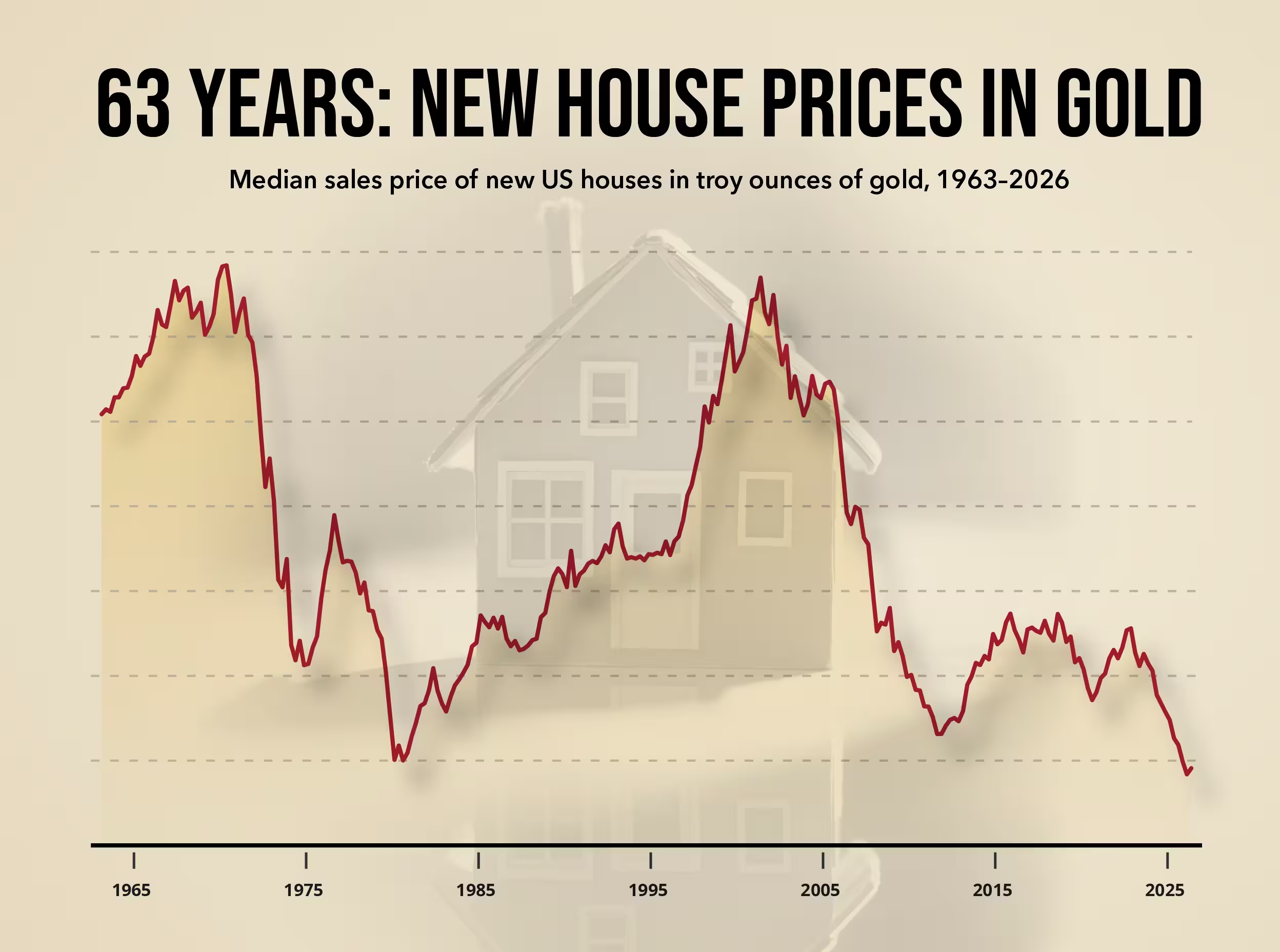
A Median New US Home Now Costs Less Than 100 Ounces of Gold
The US Census Bureau's July new-home report, released on August 25, put the median price of a newly built house at $393,800. HousingWire noted that was the lowest since July 2021. In dollars, the market has moved within a narrow band: the quarterly median has stayed between $408,500 and $435,400 since 2023.