Precious Metals
April 1, 2025
2 min
Precious Metals


Gold's allure is timeless, but beyond the bars stacked in vaults, vast treasures remain locked deep within the Earth. Understanding where the largest untapped reserves lie is key to the future of global supply. Recent U.S. Geological Survey (USGS) assessments pinpoint two nations above all others: Australia and Russia are estimated to hold geological fortunes of around 12,000 metric tons of gold each, still waiting underground.
Russia’s Largest Gold Deposits
Based on recent estimates from TAdviser (citing Russia’s state balance sheet as of March 2025), some of Russia’s largest gold reserves include:
- Sukhoy Log (Irkutsk): Over 2,770 tonnes, making it Russia’s largest gold deposit.
- Natalkinskoye (Natalka) (Magadan): Around 1,385 tonnes.
- Olympiadinskoye (Olimpiada) (Krasnoyarsk): Approximately 949 tonnes.
These three deposits account for a significant share of Russia’s total gold reserves, positioning the country as one of the world’s top gold-rich nations. However, reserve estimates can vary depending on the source and methodology.
Australia’s Largest Gold Deposits
Similarly, Australia boasts some of the largest gold deposits globally. Based on recent reports, key reserves include:
- Cadia Valley (New South Wales): Operated by Newmont, with estimated reserves of approximately 17 million ounces (as of June 2023).
- KCGM / Super Pit (Western Australia): Operated by Northern Star Resources, holding reserves of 13.3 million ounces (as of mid-2023/2024).
- Boddington (Western Australia): Operated by Newmont, with reserves estimated at 10.8 million ounces (as of December 31, 2024).
Other Countries with Major Gold Reserves
While Russia and Australia lead in total reserves, other countries also hold significant in-ground gold:
- South Africa – 5,000 metric tons
- Indonesia – 3,600 metric tons
- China – 3,100 metric tons
- United States – 3,000 metric tons
- Canada – 3,200 metric tons
- Brazil – 2,400 metric tons
- Peru – 2,500 metric tons
- Kazakhstan – 2,300 metric tons
These reserves represent gold yet to be mined but confirmed through geological surveys and exploration efforts.
U.S. Geological Survey, Mineral Commodity Summaries, January 2024





Explore More
View All

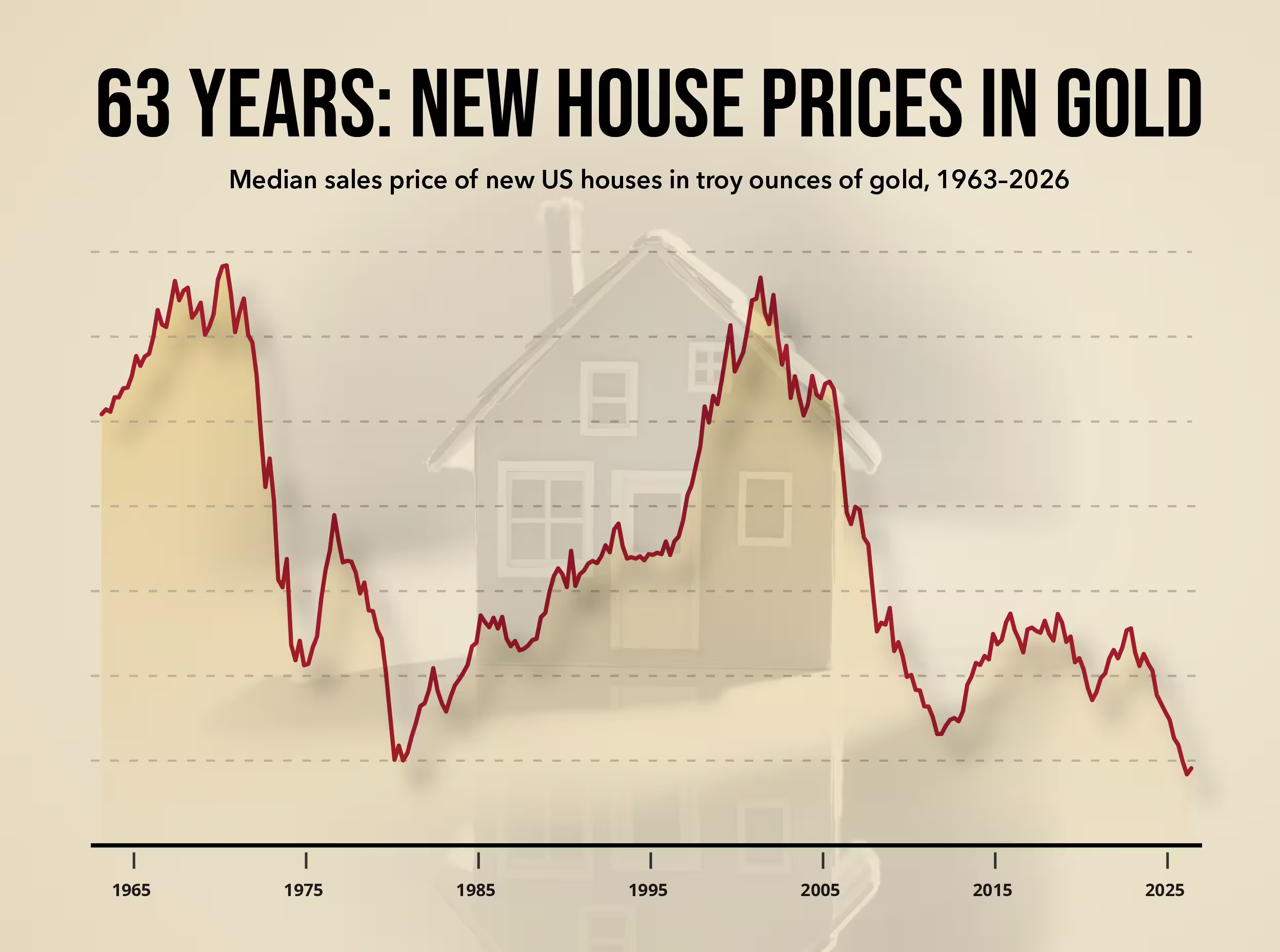
A Median New US Home Now Costs Less Than 100 Ounces of Gold
A Median New US Home Now Costs Less Than 100 Ounces of Gold
The US Census Bureau's July new-home report, released on August 25, put the median price of a newly built house at $393,800. HousingWire noted that was the lowest since July 2021. In dollars, the market has moved within a narrow band: the quarterly median has stayed between $408,500 and $435,400 since 2023.
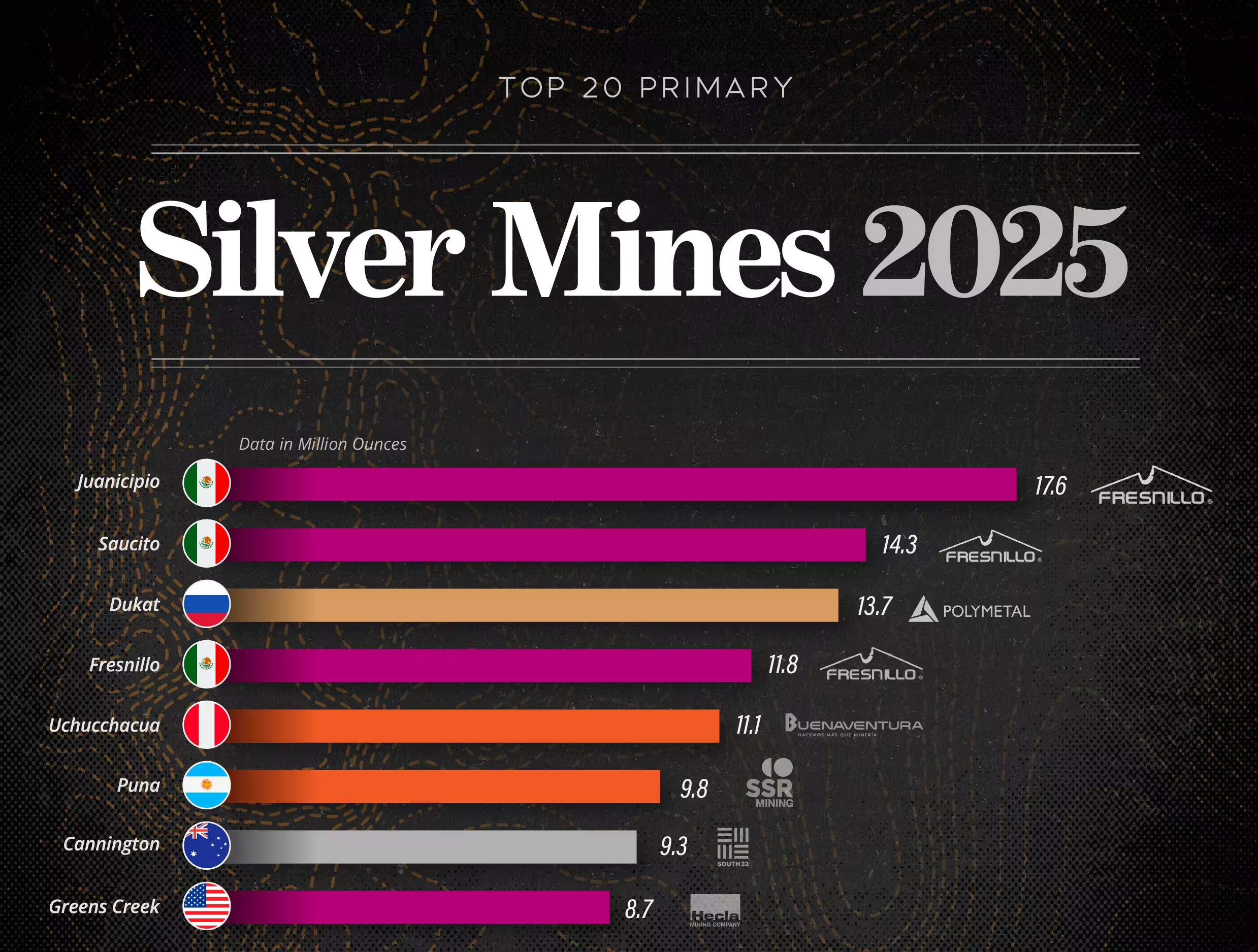
The World's 20 Largest Primary Silver Mines by 2025 Output
The World's 20 Largest Primary Silver Mines by 2025 Output
The single largest source of primary silver is a young mine in the Mexican state of Zacatecas. Juanicipio put out 17.6 million ounces in 2025, more than any other mine that earns its keep from silver itself rather than pulling it out as a byproduct of lead, zinc and gold. Fresnillo operates it and owns 56%; the other 44% changed hands in September 2025, when Pan American Silver completed a US$2.1 billion takeover of MAG Silver.
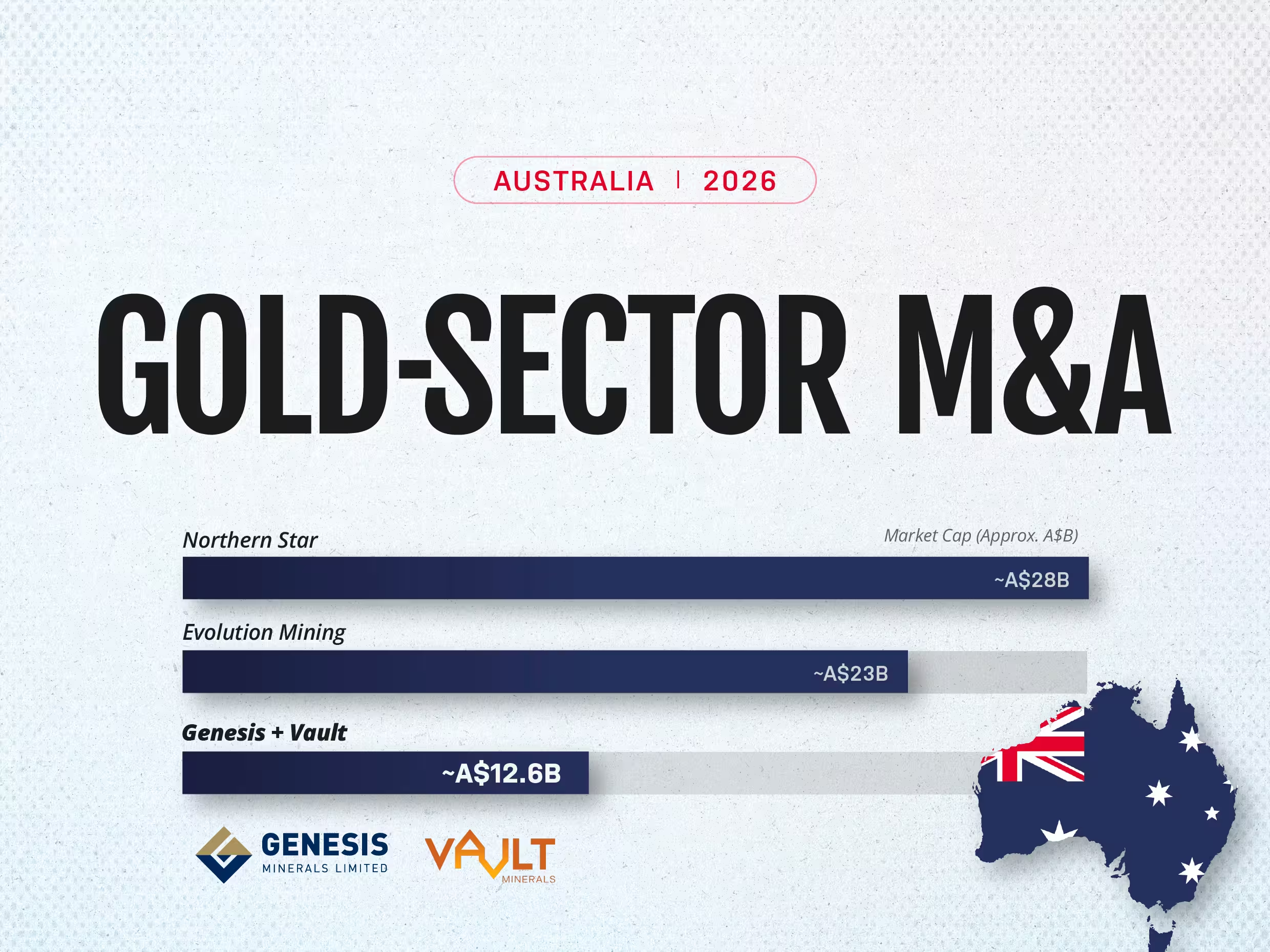
Gold's Record Run Has Set Off a Wave of Mining Mergers
Gold's Record Run Has Set Off a Wave of Mining Mergers
Gold hit an all-time high of about US$5,595 an ounce in January 2026 before settling near US$4,000, still far above the levels of a few years ago. That combination, record prices followed by a stable, still-profitable pullback, has done something a straight rally rarely does: it has opened a merger window.
.webp)
Three Ancient Belts Carry Ghana's Gold, and Investment Keeps Flowing to Them
Three Ancient Belts Carry Ghana's Gold, and Investment Keeps Flowing to Them
In March 2026, one of Ghana's own mining companies said it would invest about $1.2 billion in its operations at the Tarkwa and Damang gold mines. Both sit on the Ashanti belt, one of three narrow bands of ancient rock that carry almost all of Ghana's gold.