Precious Metals
March 19, 2025
2 min
Precious Metals
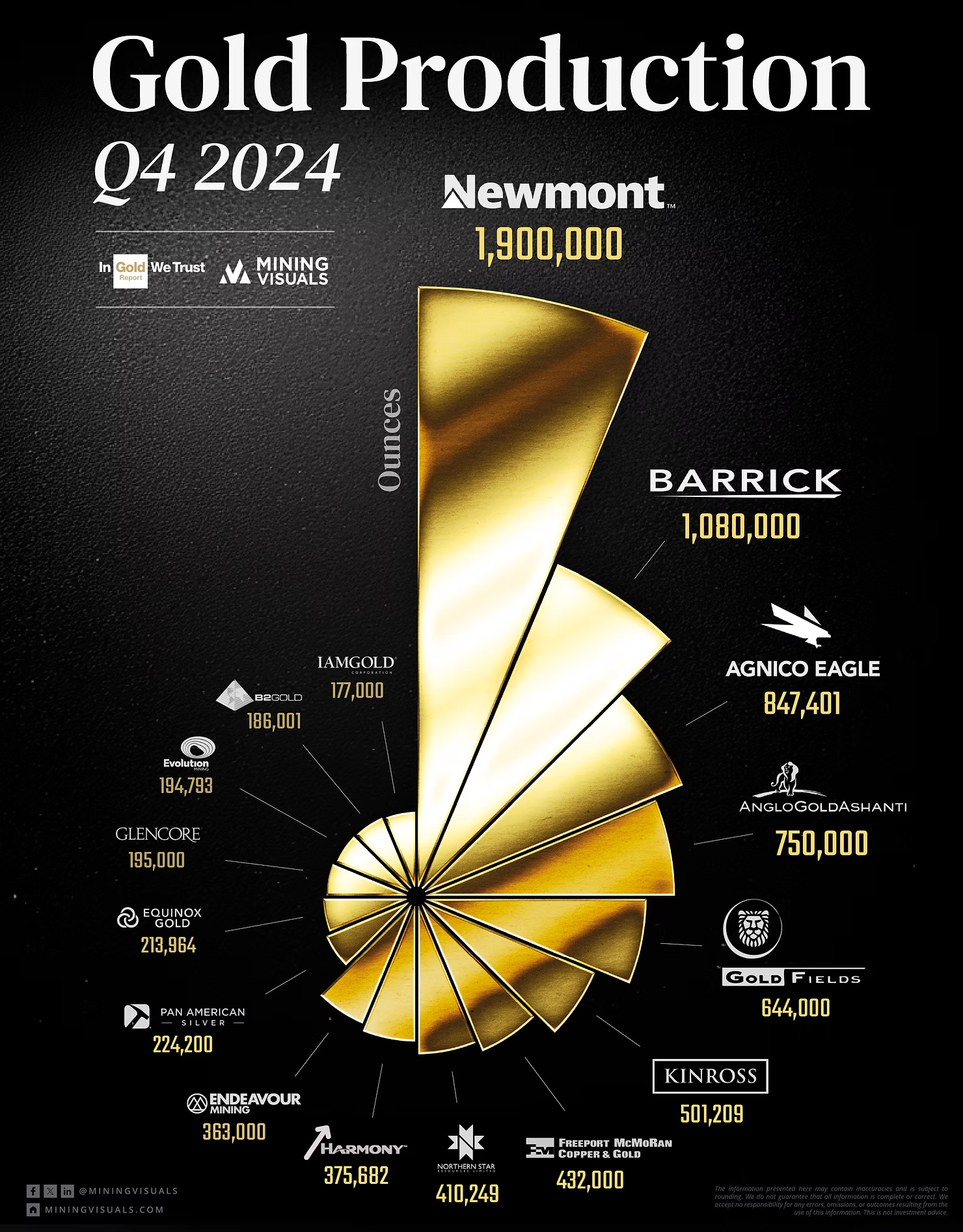

The infographic above offers a visual breakdown of Q4 2024 gold production among the largest producers. In Q4 2024, significant shifts were observed compared to Q3, with several companies posting large increases while others experienced declines.
Significant Increases:
- Endeavour Mining PLC: Production surged 34.44% from 270,000 ounces in Q3 to 363,000 ounces in Q4. This boost was driven by higher ore grades processed, improved throughput following the end of the regional wet season, and the ramp-up of key projects—including the Sabodala-Massawa Expansion and the Lafigué Mine in Ivory Coast, which began production in August 2024 (Min-Met, Reuters).
- Gold Fields Ltd: Production increased 26.27% to 644,000 ounces in Q4 2024. This rise was fueled by the strategic acquisition of Osisko Mining’s assets, which strengthened its production portfolio, and by the ramp-up of operations at the Salares Norte mine in Chile (Gold Fields FY2024 Results, Reuters).
- Equinox Gold Corp: Production increased 22.98% to 213,964 ounces, primarily driven by the commencement of commercial operations at its Greenstone mine, which contributed about 111,710 ounces in Q4. Strong performances at Los Filos and RDM also boosted overall production (Equinox Gold Q4 Results).
- Newmont Corporation: Production rose 13.77% to 1.90 million ounces, thanks to higher gold prices, improved cost efficiency (AISC down 1.5% to $1,463/oz), and asset optimization through the divestiture of non-core assets like the Eleonore and Musselwhite mines.
- Barrick Gold Corp’s Q4 2024 production increased by 14.53%, reaching 1.08 million ounces. This boost was driven by improved metallurgical recovery and operational efficiencies at key assets in North America and Africa, along with enhanced processing throughput. Strategic investments in production optimization and favorable gold prices further supported the surge in output (Reuters, Barrick Q4 Report).
Significant Declines:
- Kinross Gold Corp: Production dropped 15.58% to 501,209 ounces in Q4 2024 compared to 593,699 ounces in Q3. The decline was mainly due to lower output at its La Coipa mine, driven by reduced silver grades and throughput, increased mill maintenance costs, and fewer mining activities related to capital development (GlobeNewswire, Kinross Q4 Report).
- Harmony Gold Mining Company: Production fell by 11.01% in Q4 2024. This drop was attributed to planned lower output from its South African underground mines and the Hidden Valley operation in Papua New Guinea, which had previously benefited from higher-grade ores (Harmony, Reuters).
Source: Quarterly Statements





Explore More
View All


The World's 20 Largest Primary Silver Mines by 2025 Output
The World's 20 Largest Primary Silver Mines by 2025 Output
The largest silver producer among the world's primary silver mines in 2025 sat not in Mexico but in southwestern Bolivia. San Cristóbal, a large open-pit silver-zinc-lead mine run by Minera San Cristóbal, produced 17.6 million ounces of silver, narrowly ahead of Mexico's Juanicipio at the same rounded figure, in new Metals Focus data on the 20 largest primary silver mines. These are the operations where silver is a defining product rather than an incidental byproduct of lead, zinc and gold. The list runs from centuries-old mines in Mexico's silver belt to remote sites in the Andes, the Australian outback and the Alaskan wilderness. Eight of the 20 sit in Mexico, together about 44% of the total, while the rest are spread across the Americas, Asia, Africa and Australia.

Central Banks Have Been Net Gold Buyers Since 2010, After Two Decades of Net Selling
Central Banks Have Been Net Gold Buyers Since 2010, After Two Decades of Net Selling
Central banks bought more gold between April and June 2026 than in any second quarter on record, according to a World Gold Council report published on July 30. That keeps them net buyers this year, as they have been every year since 2010. Underneath, the picture is changing. Russia and Türkiye, both big buyers in the past, have been selling.

Gold Mines in West Africa: Two Billion Years in the Making
Gold Mines in West Africa: Two Billion Years in the Making
The nine West African countries with significant reported output produced about 15% of the world's mined gold in 2025, according to Metals Focus and World Gold Council data. Almost every mine on the map above was built in the past 25 years, and four more reached production in the last eighteen months: Lafigué in Côte d'Ivoire in June 2024, Kiaka in Burkina Faso in June 2025, Ahafo North in Ghana in October 2025 and Kiniero in Guinea in December 2025.
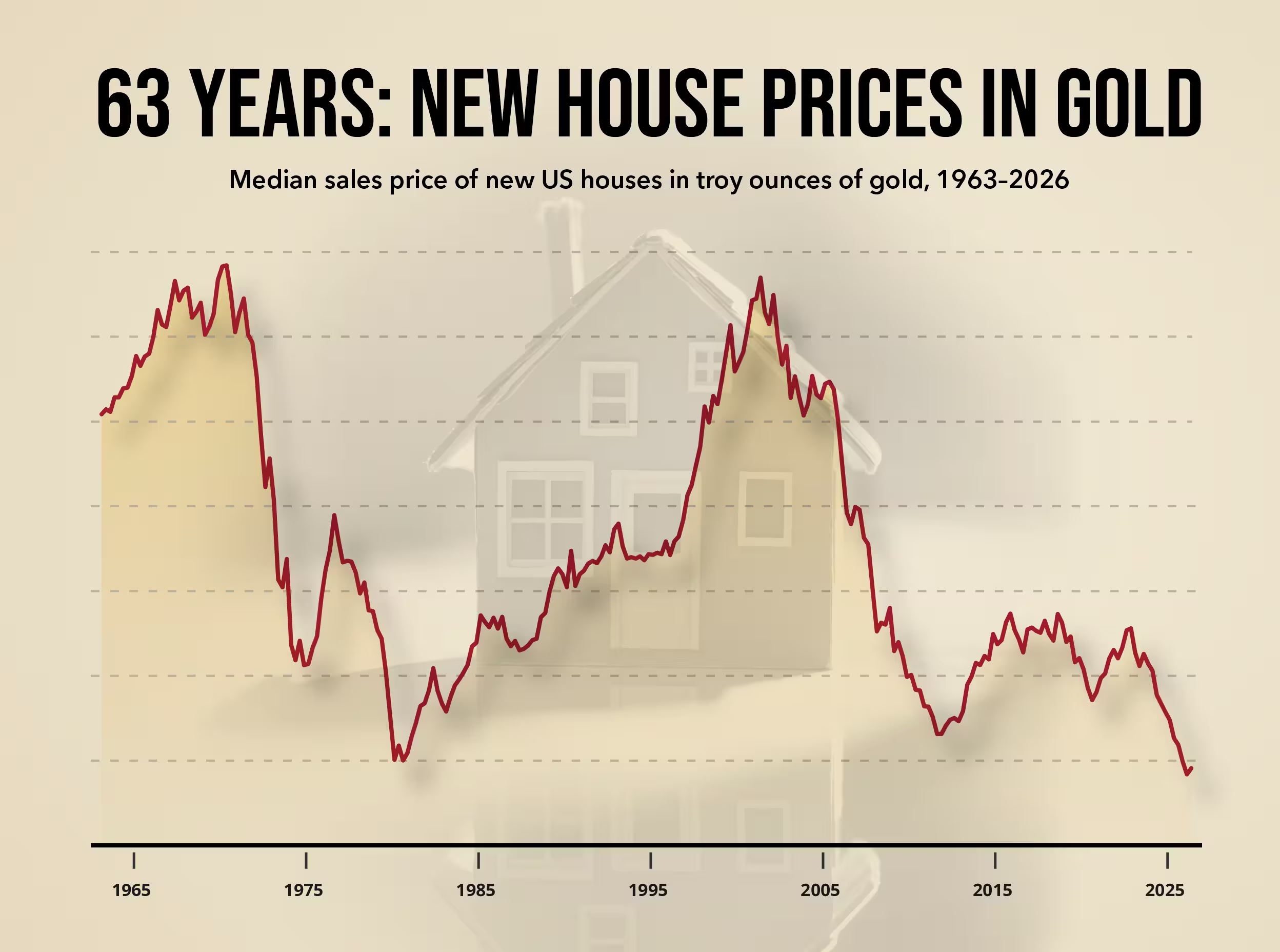
A Median New US Home Now Costs Less Than 100 Ounces of Gold
A Median New US Home Now Costs Less Than 100 Ounces of Gold
The US Census Bureau's July new-home report, released on August 25, put the median price of a newly built house at $393,800. HousingWire noted that was the lowest since July 2021. In dollars, the market has moved within a narrow band: the quarterly median has stayed between $408,500 and $435,400 since 2023.