Precious Metals
February 6, 2025
1 min
Precious Metals


In 2024, gold prices surged across multiple currencies, particularly in emerging markets.
This graphic presents data from the In Gold We Trust Report (January 2025), illustrating how gold prices evolved in various emerging market currencies throughout the year.
🔗 To read the full report, visit In Gold We Trust.
In Nigeria, the Naira's 121.5% rise in gold prices was driven by multiple devaluations by the Central Bank of Nigeria (CBN), high inflation surpassing 28%, and a severe USD shortage that pushed investors toward gold as a store of value.
Similarly, Egypt experienced a 109.1% increase, primarily due to the Egyptian Pound losing 50% of its value following an IMF-driven currency float. Inflation soared above 35%, and as confidence in the local currency declined, Egyptians turned to gold to safeguard their wealth.
Venezuela, with an 84.1% increase, continued to struggle with hyperinflation and currency volatility. Many Venezuelans relied on gold and USD as alternatives to the Bolívar, while the government’s dependence on gold reserves further contributed to price surges.
Moderate increases were observed in Brazil (62.1%), Argentina (62.1%), Russia (61.8%), Mexico (56.2%), and Turkey (52.5%), where inflation and economic uncertainty played key roles in gold price appreciation.
Lower but still notable growth between 30-45% was recorded in Colombia, Chile, the Philippines, Indonesia, South Africa, and India, reflecting a broader trend of rising gold demand in emerging markets.




Explore More
View All

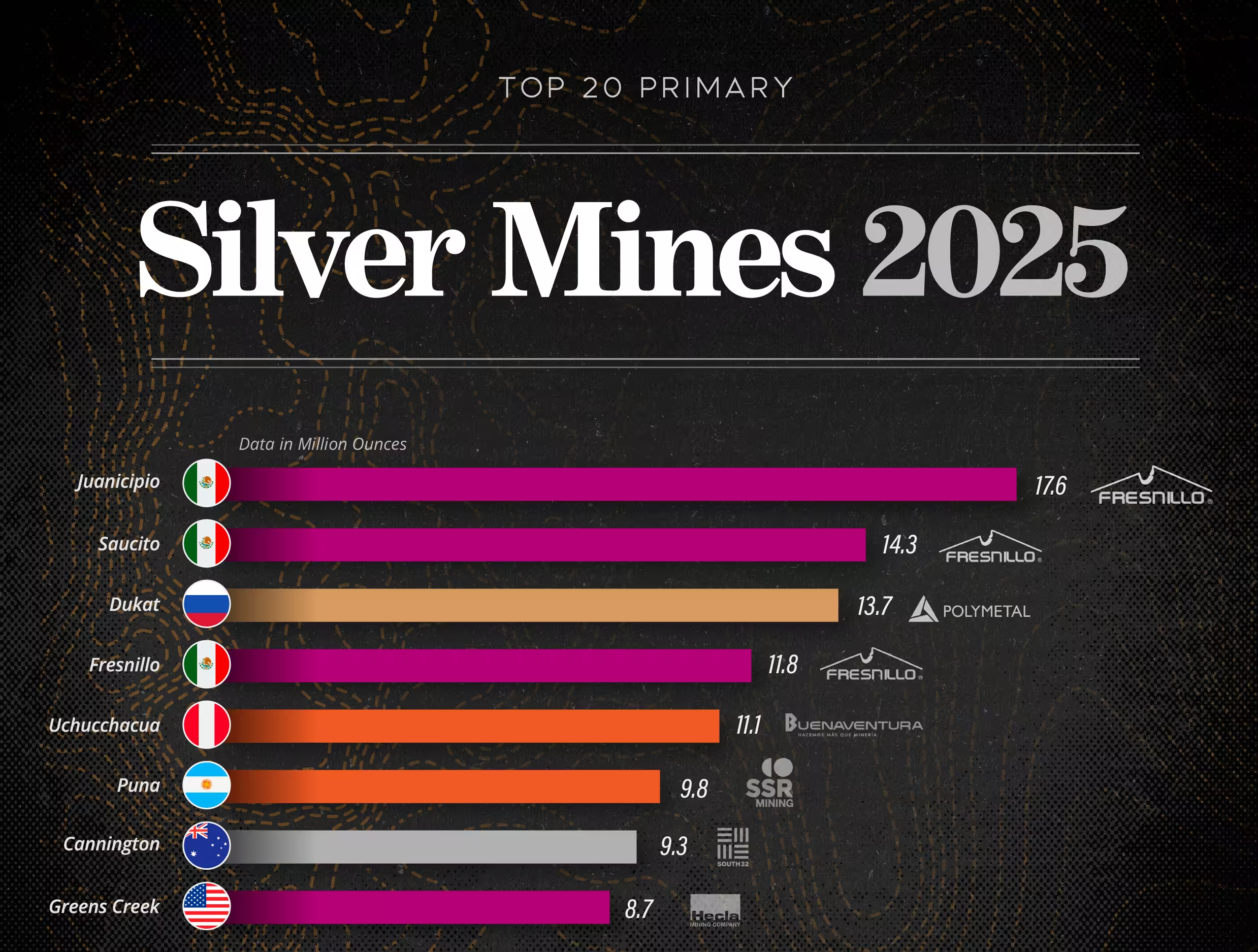
The World's 20 Largest Primary Silver Mines by 2025 Output
The World's 20 Largest Primary Silver Mines by 2025 Output
The single largest source of primary silver is a young mine in the Mexican state of Zacatecas. Juanicipio put out 17.6 million ounces in 2025, more than any other mine that earns its keep from silver itself rather than pulling it out as a byproduct of lead, zinc and gold. Fresnillo operates it and owns 56%; the other 44% changed hands in September 2025, when Pan American Silver completed a US$2.1 billion takeover of MAG Silver.
Gold's Record Run Has Set Off a Wave of Mining Mergers
Gold's Record Run Has Set Off a Wave of Mining Mergers
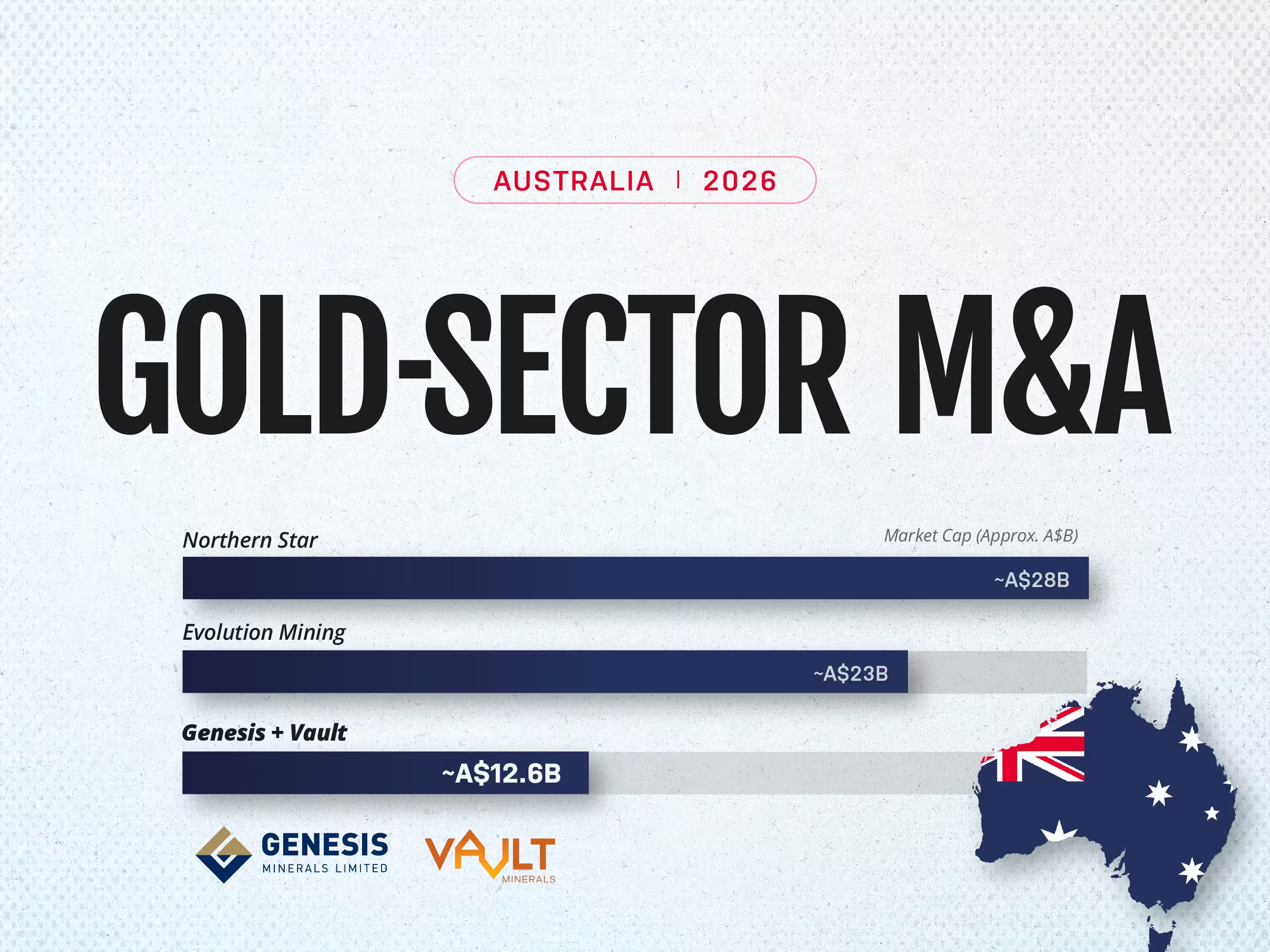
Gold hit an all-time high of about US$5,595 an ounce in January 2026 before settling near US$4,000, still far above the levels of a few years ago. That combination, record prices followed by a stable, still-profitable pullback, has done something a straight rally rarely does: it has opened a merger window.
.webp)
Three Ancient Belts Carry Ghana's Gold, and Investment Keeps Flowing to Them
Three Ancient Belts Carry Ghana's Gold, and Investment Keeps Flowing to Them
In March 2026, one of Ghana's own mining companies said it would invest about $1.2 billion in its operations at the Tarkwa and Damang gold mines. Both sit on the Ashanti belt, one of three narrow bands of ancient rock that carry almost all of Ghana's gold.
Charted: Fifty Years of Gold Production in West Africa
Charted: Fifty Years of Gold Production in West Africa
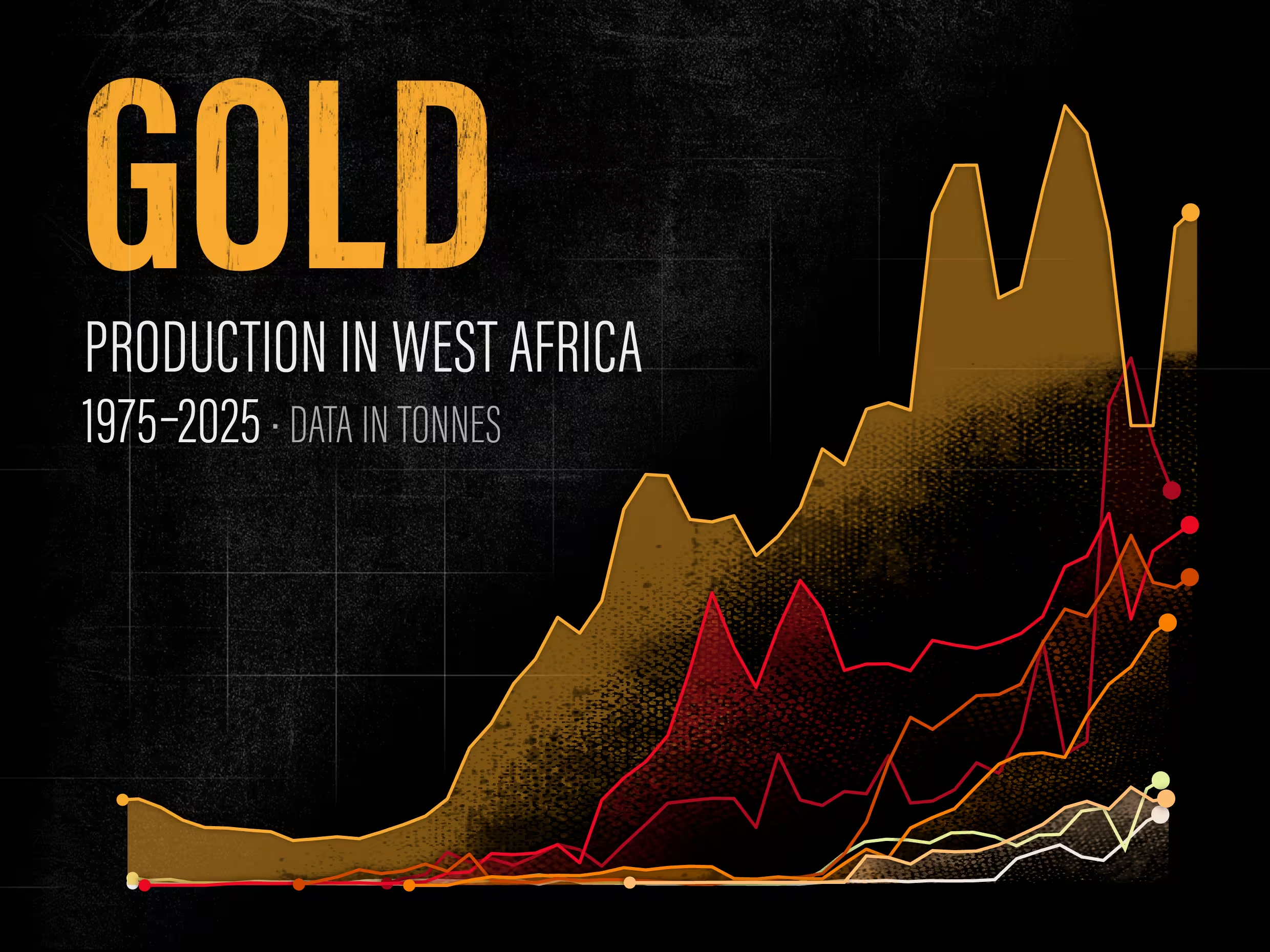
West Africa is in the middle of a gold run. In 2025 Ghana's output climbed more than 23 percent to a record 5.94 million ounces, holding its place as Africa's largest producer and now the sixth-largest in the world, and analysts expect the wider region to rebound about 8 percent in 2026.