Precious Metals
July 17, 2024
1 min
Precious Metals


This graphic illustrates the performance of gold prices and the HUI Gold Index since 1999. Despite gold continuously reaching new all-time highs, gold stocks remain significantly below their 2007 peak.
Since late 1999, gold has surged by 728 percent, whereas gold stocks have only increased by 277 percent. Typically, in a bull market, gold stocks outperform the price of gold, as evidenced from 2000 to 2008. However, this time appears to be different, with gold stocks trading sideways since 2013.
The pressing question is whether gold stocks will catch up with the rising price of gold. If they do, gold stocks will need to increase significantly from their current levels, potentially offering a substantial opportunity for investors in this sector.





Explore More
View All


Gold Mines in West Africa: Two Billion Years in the Making
Gold Mines in West Africa: Two Billion Years in the Making
The nine West African countries with significant reported output produced about 15% of the world's mined gold in 2025, according to Metals Focus and World Gold Council data. Almost every mine on the map above was built in the past 25 years, and four more reached production in the last eighteen months: Lafigué in Côte d'Ivoire in June 2024, Kiaka in Burkina Faso in June 2025, Ahafo North in Ghana in October 2025 and Kiniero in Guinea in December 2025.
A Median New US Home Now Costs Less Than 100 Ounces of Gold
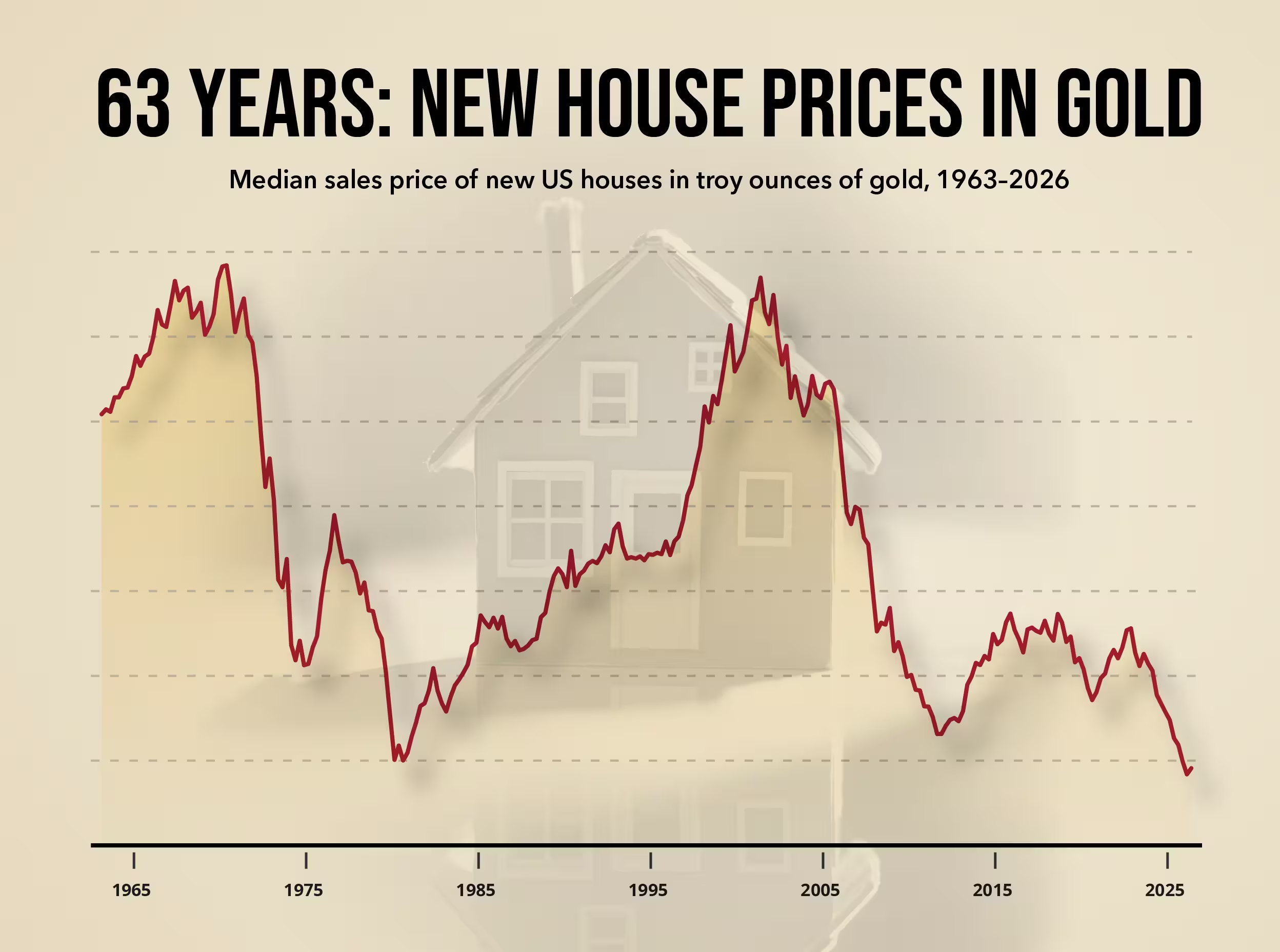
A Median New US Home Now Costs Less Than 100 Ounces of Gold
The US Census Bureau's July new-home report, released on August 25, put the median price of a newly built house at $393,800. HousingWire noted that was the lowest since July 2021. In dollars, the market has moved within a narrow band: the quarterly median has stayed between $408,500 and $435,400 since 2023.
Gold's Record Run Has Set Off a Wave of Mining Mergers
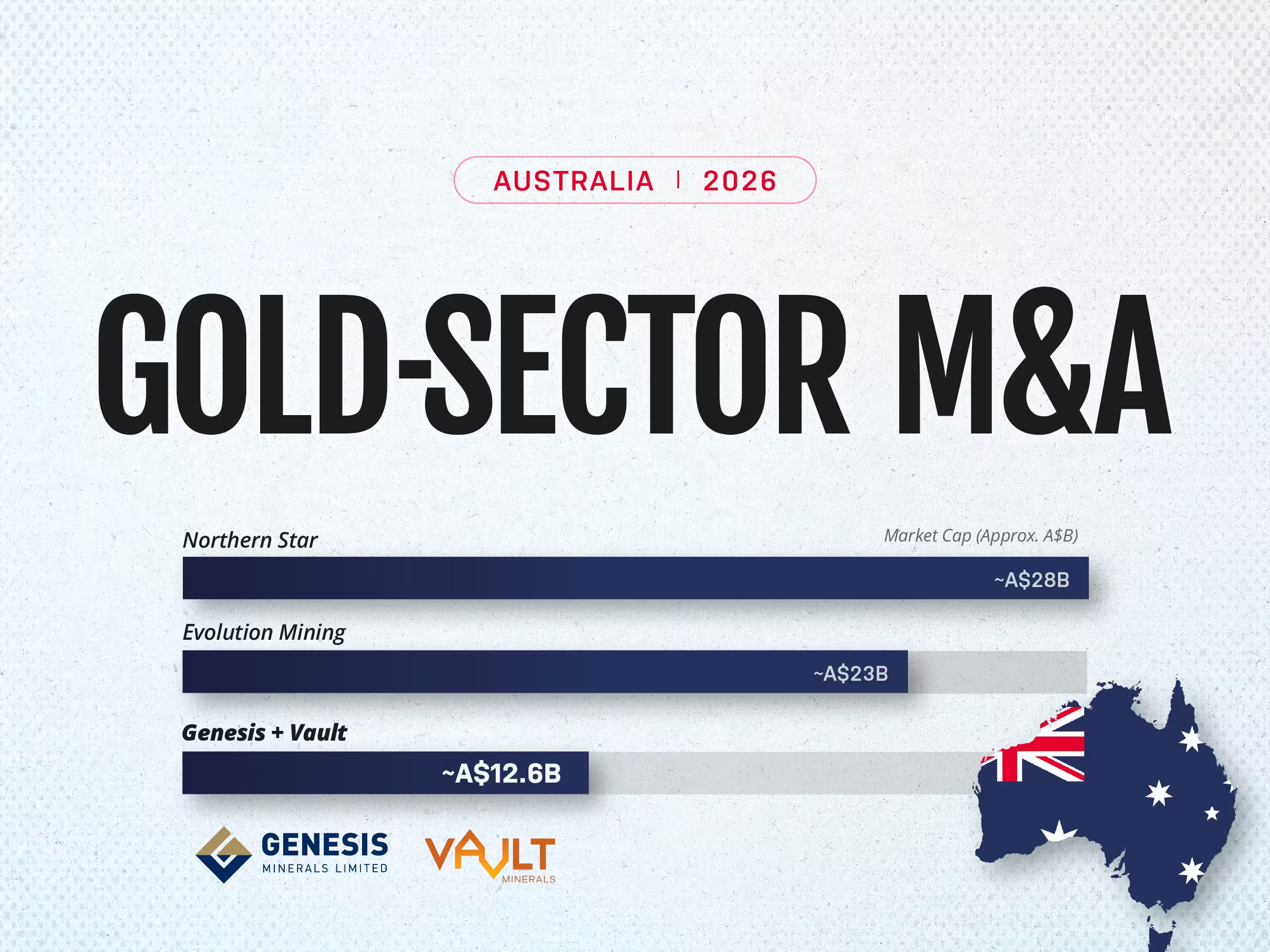
Gold's Record Run Has Set Off a Wave of Mining Mergers
Gold hit an all-time high of about US$5,595 an ounce in January 2026 before settling near US$4,000, still far above the levels of a few years ago. That combination, record prices followed by a stable, still-profitable pullback, has done something a straight rally rarely does: it has opened a merger window.
.webp)
Three Ancient Belts Carry Ghana's Gold, and Investment Keeps Flowing to Them
Three Ancient Belts Carry Ghana's Gold, and Investment Keeps Flowing to Them
In March 2026, one of Ghana's own mining companies said it would invest about $1.2 billion in its operations at the Tarkwa and Damang gold mines. Both sit on the Ashanti belt, one of three narrow bands of ancient rock that carry almost all of Ghana's gold.