Precious Metals
April 8, 2025
3 min
Precious Metals


As one of Earth's most significant metallogenic belts, the Tethyan Belt carves a vast path across the globe, stretching thousands of kilometers from Europe, through the Middle East and the Himalayas, and extending into Southeast Asia. This immense geological feature is the complex legacy of the closure of the ancient Tethys Ocean and the subsequent continental collisions that shaped large parts of Eurasia. The belt hosts world-class endowments of diverse mineral deposits, making it a globally vital source of base metals, precious metals like gold, and increasingly important critical minerals.
Copper and Gold Giants:
The Tethyan Belt is arguably most renowned for its tremendous wealth in copper and gold. These metals are often found together in large-scale porphyry deposits and associated epithermal systems, which remain primary targets for mineral exploration efforts throughout the region. Significant examples illustrating the scale of mineralization include:
- Significant Copper Deposits (>5 Million Tonnes): Such as Skouries (Greece), Majdanpek & Bor (Serbia), Kışladağ (Turkey), Sar Cheshmeh (Iran), and Sungun (Iran).
- Significant Gold Deposits (>5 Million Ounces): Including Roșia Montană (Romania) and Çöpler (Turkey).
- Major Copper-Gold Systems: Reko Diq in Pakistan stands out as a particularly massive mineralized zone within the belt. Other notable sites include Hot Maden (Turkey) and the historical mining district of Banská Štiavnica (Slovakia).
A Diverse Mineral Inventory:
Beyond the headline copper and gold resources, the Tethyan Belt's complex geology has generated a wide array of other valuable mineral deposits:
- Lead, Zinc, and Silver: These metals are also very common throughout the belt, often occurring in epithermal vein and replacement-type deposits, sometimes found alongside copper and gold systems.
- Chromium: Significant chromium deposits are associated with ophiolite sequences – remnants of ancient oceanic crust emplaced during tectonic collisions. These are particularly important in countries like Turkey.
- Other Notable Minerals: The belt is a major source of other industrial and critical minerals. Turkey, for instance, holds a majority of the world's Boron resources. Deposits of Bauxite (aluminum ore), Phosphate, Potash, Manganese, Antimony, and Uranium are also found within this vast geological province.
Future Potential and Exploration:
Despite centuries of mining activity, the Tethyan Belt remains a prime target for continued mineral exploration. Its geological potential is far from exhausted, particularly concerning the discovery of new deposits vital for modern technology and the energy transition.
Regions such as Eastern Europe, Pakistan, and parts of Turkey are noted as being under-explored with high potential for future discoveries. Events like the Pakistan Minerals Investment Forum 2025 underscore the ongoing efforts and significant interest in unlocking the remaining mineral wealth within specific, highly prospective parts of the belt, like Pakistan. The continued exploration focus ensures the Tethyan Belt will remain a crucial contributor to the global supply of essential metals and minerals for the foreseeable future.
Sponsored by:
The Pakistan Minerals Investment Forum 2025 (PMIF25) is the country’s premier platform dedicated to unlocking Pakistan’s vast mineral potential. Held at the Jinnah Convention Centre in Islamabad on April 8-9, 2025, this high-profile gathering will bring together industry leaders, investors, and policymakers to explore Pakistan’s growing role in the global supply of critical minerals. As the demand for essential minerals surges worldwide, Pakistan is positioning itself as a key player in future-facing supply chains. PMIF25 offers a unique opportunity to connect with stakeholders, discover new investment avenues, and be part of the country’s mining transformation.
Join us at PMIF25 and be at the forefront of Pakistan’s next mineral boom.
For more information: https://www.pakminforum.com/



Explore More
View All


The World's 20 Largest Primary Silver Mines by 2025 Output
The World's 20 Largest Primary Silver Mines by 2025 Output
The largest silver producer among the world's primary silver mines in 2025 sat not in Mexico but in southwestern Bolivia. San Cristóbal, a large open-pit silver-zinc-lead mine run by Minera San Cristóbal, produced 17.6 million ounces of silver, narrowly ahead of Mexico's Juanicipio at the same rounded figure, in new Metals Focus data on the 20 largest primary silver mines. These are the operations where silver is a defining product rather than an incidental byproduct of lead, zinc and gold. The list runs from centuries-old mines in Mexico's silver belt to remote sites in the Andes, the Australian outback and the Alaskan wilderness. Eight of the 20 sit in Mexico, together about 44% of the total, while the rest are spread across the Americas, Asia, Africa and Australia.
Most Major Copper Discoveries Since 1990 Are Still Not Mines.
Most Major Copper Discoveries Since 1990 Are Still Not Mines.
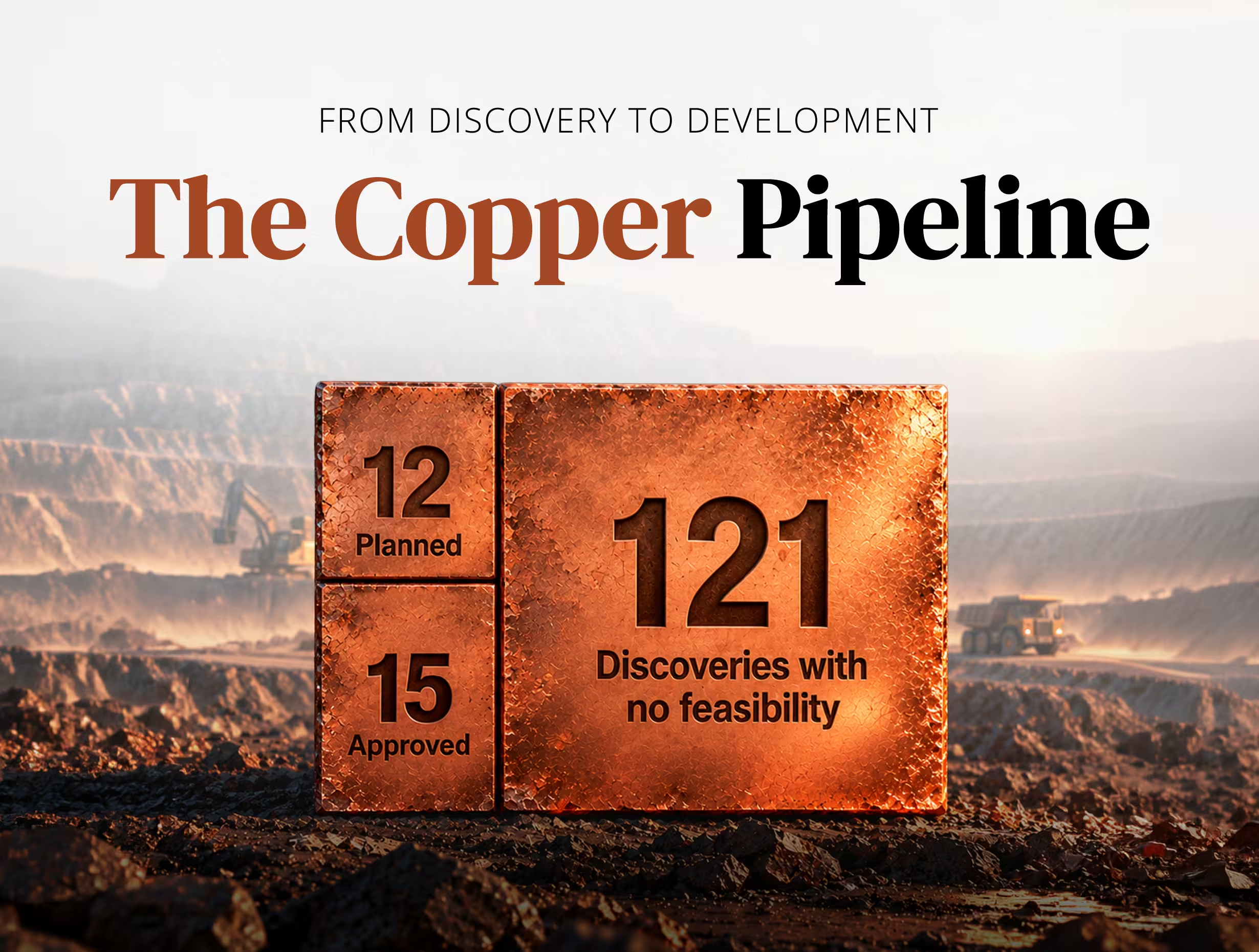
In May 2025, a joint venture of Lundin Mining and BHP released a resource estimate for its Vicuña district in the Andes, which S&P Global ranked as home to the largest greenfield copper discovery in 30 years. Per the same resource statement, the combined Filo del Sol and Josemaria deposits hold 13 million tonnes of contained copper in measured and indicated resources.
Central Banks Have Been Net Gold Buyers Since 2010, After Two Decades of Net Selling
Central Banks Have Been Net Gold Buyers Since 2010, After Two Decades of Net Selling
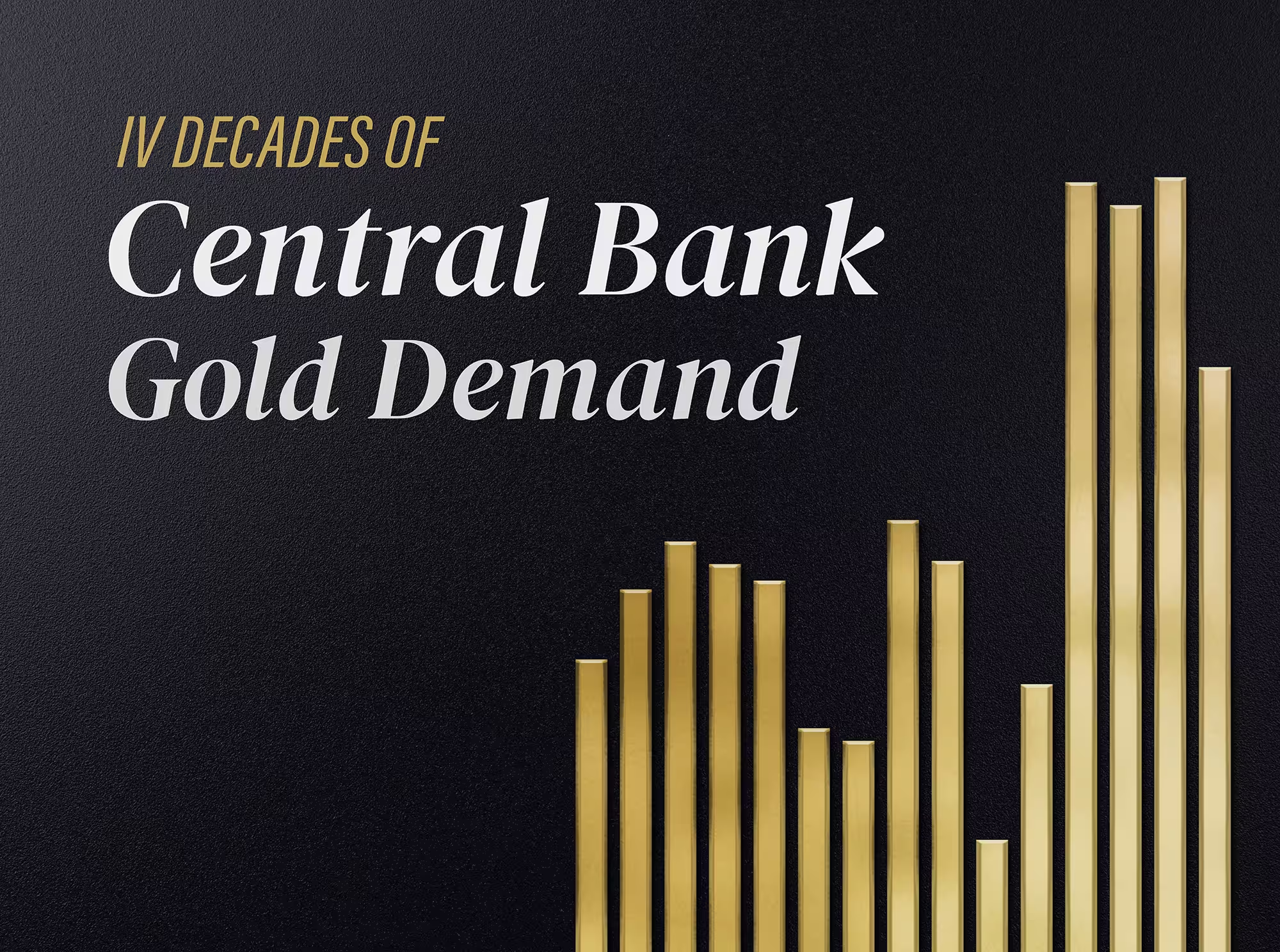
Central banks bought more gold between April and June 2026 than in any second quarter on record, according to a World Gold Council report published on July 30. That keeps them net buyers this year, as they have been every year since 2010. Underneath, the picture is changing. Russia and Türkiye, both big buyers in the past, have been selling.

Gold Mines in West Africa: Two Billion Years in the Making
Gold Mines in West Africa: Two Billion Years in the Making
The nine West African countries with significant reported output produced about 15% of the world's mined gold in 2025, according to Metals Focus and World Gold Council data. Almost every mine on the map above was built in the past 25 years, and four more reached production in the last eighteen months: Lafigué in Côte d'Ivoire in June 2024, Kiaka in Burkina Faso in June 2025, Ahafo North in Ghana in October 2025 and Kiniero in Guinea in December 2025.