Critical Minerals
February 11, 2026
3 min
Critical Minerals

Key takeaways
Key Takeaways
- Strategic Vulnerability: The EU’s path to net-zero by 2050 is threatened by a heavy reliance on imports, depending 100% on external suppliers for nearly half of the materials essential for the energy transition.
- Incomplete Foundations: An audit by the European Court of Auditors found that the EU's current policy framework lacks clear justification for its 2030 benchmarks and fails to account for specific material needs.
- Production Bottlenecks: Domestic capacity is severely hampered by low exploration investment and permitting processes that can take over 15 years, making it unlikely that current strategic projects will meet 2030 targets.
As the European Union moves toward its goal of net-zero emissions by 2050, the demand for critical raw materials, the building blocks of wind turbines, batteries, and solar panels—is skyrocketing. However, a recent audit by the European Court of Auditors suggests that while the EU has set an ambitious strategic course, the current policy framework rests on "incomplete foundations".
The Challenge of Dependency
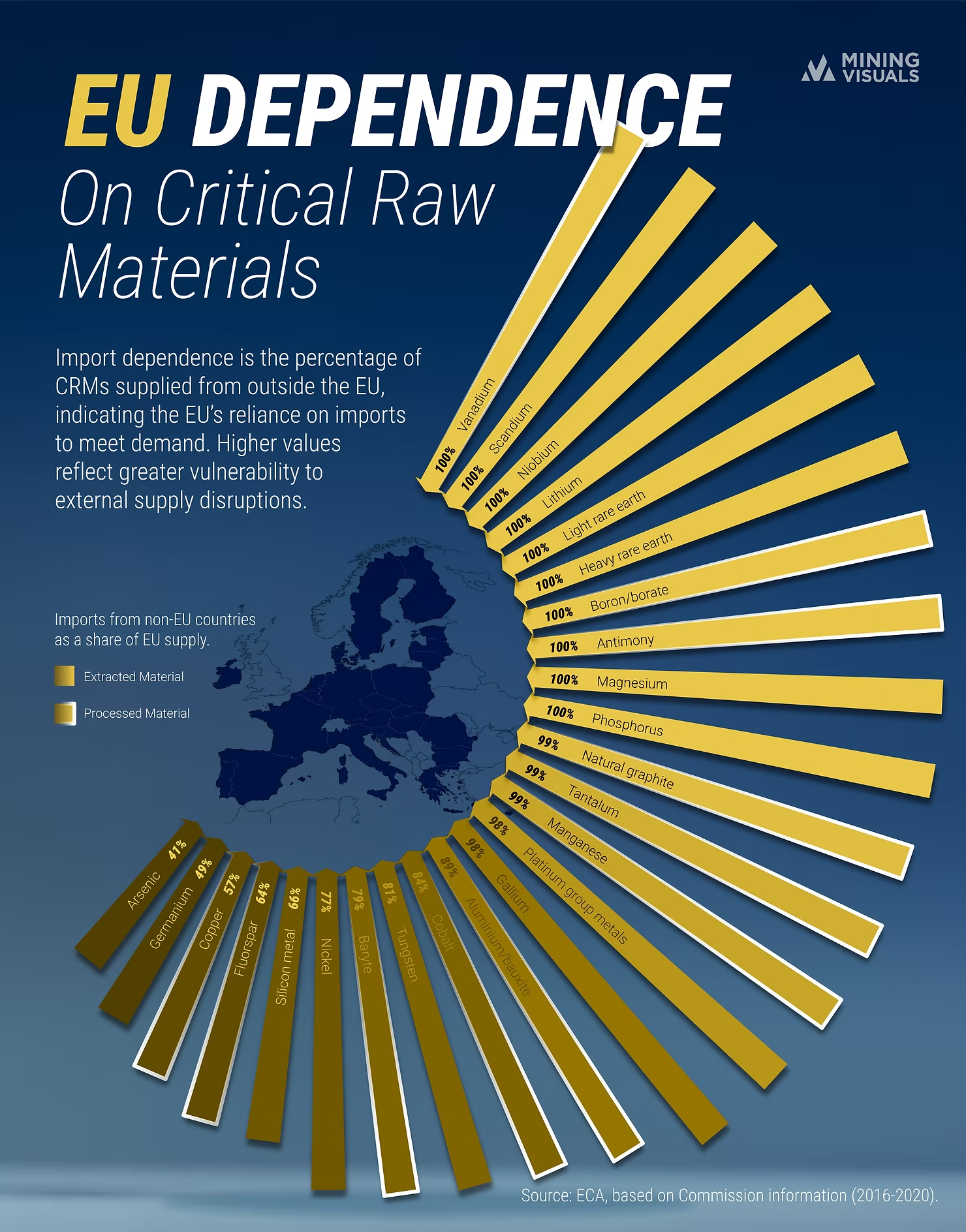
The EU currently faces a significant strategic vulnerability: it is heavily reliant on imports for most critical materials. For instance:
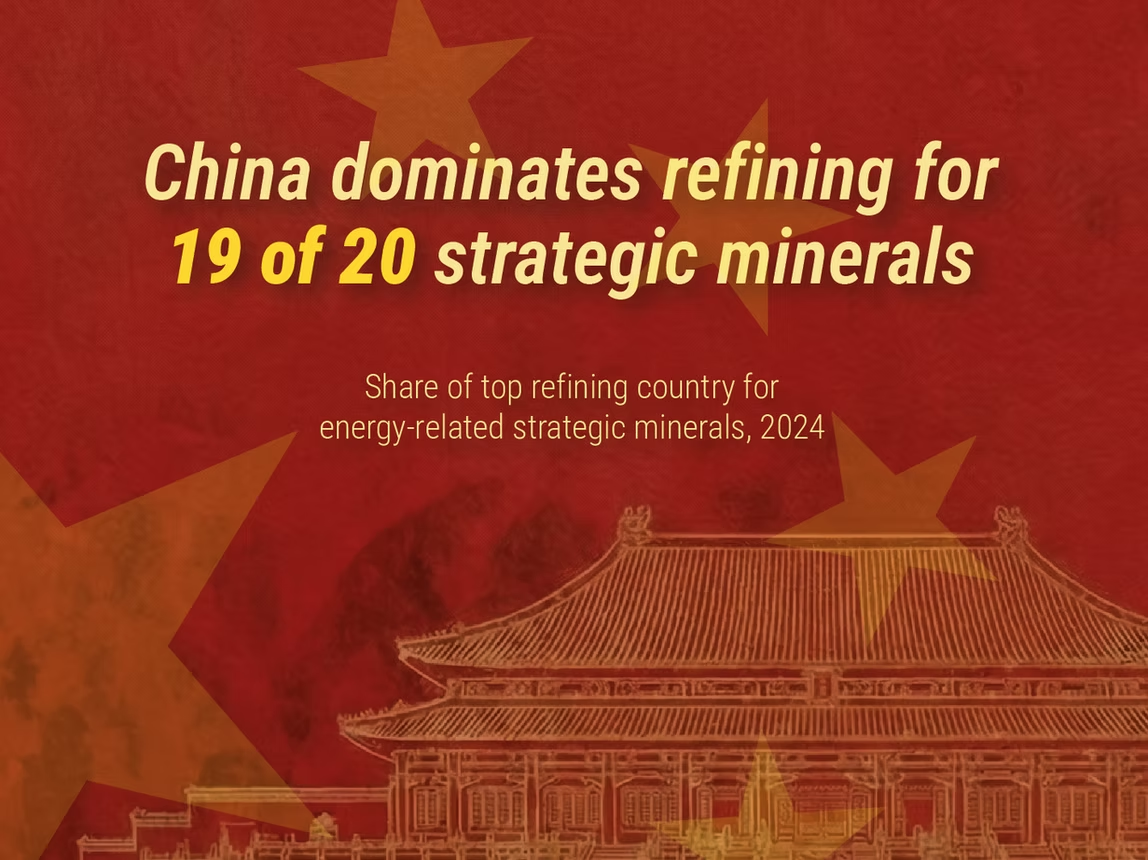
- China provides 97% of the EU’s magnesium and 100% of its processed rare earth elements.
- Türkiye supplies 99% of the EU's boron.
- For 10 out of 26 materials essential for the energy transition, the EU is 100% dependent on external sources.
Strategic Targets and Their Shortcomings
To address these risks, the Critical Raw Materials Act (CRMA) established non-binding "benchmarks" to be achieved by 2030:
- Extraction: At least 10% of EU annual consumption should be mined domestically.
- Processing: At least 40% should be processed within the EU.
- Recycling: At least 25% should come from recycled sources.
- Diversification: No more than 65% of any strategic material should come from a single non-EU country.
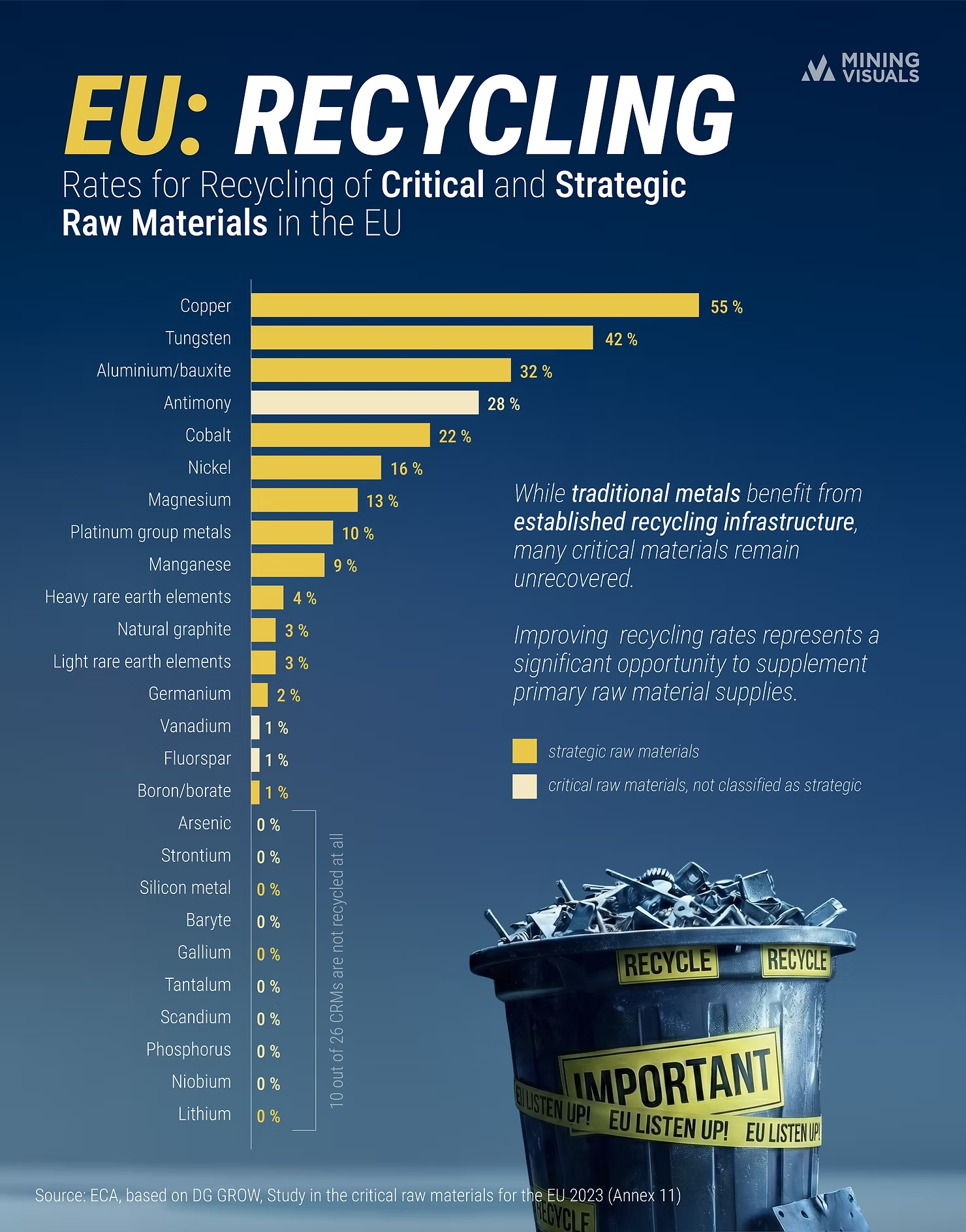
The audit found that these targets lack clear justification and do not account for the specific needs of individual materials. Furthermore, current data shows the EU is far from these goals; for example, lithium and gallium are currently not recycled at all within the Union.
Bottlenecks in Domestic Production
Boosting domestic supply is hampered by several "bottlenecks":
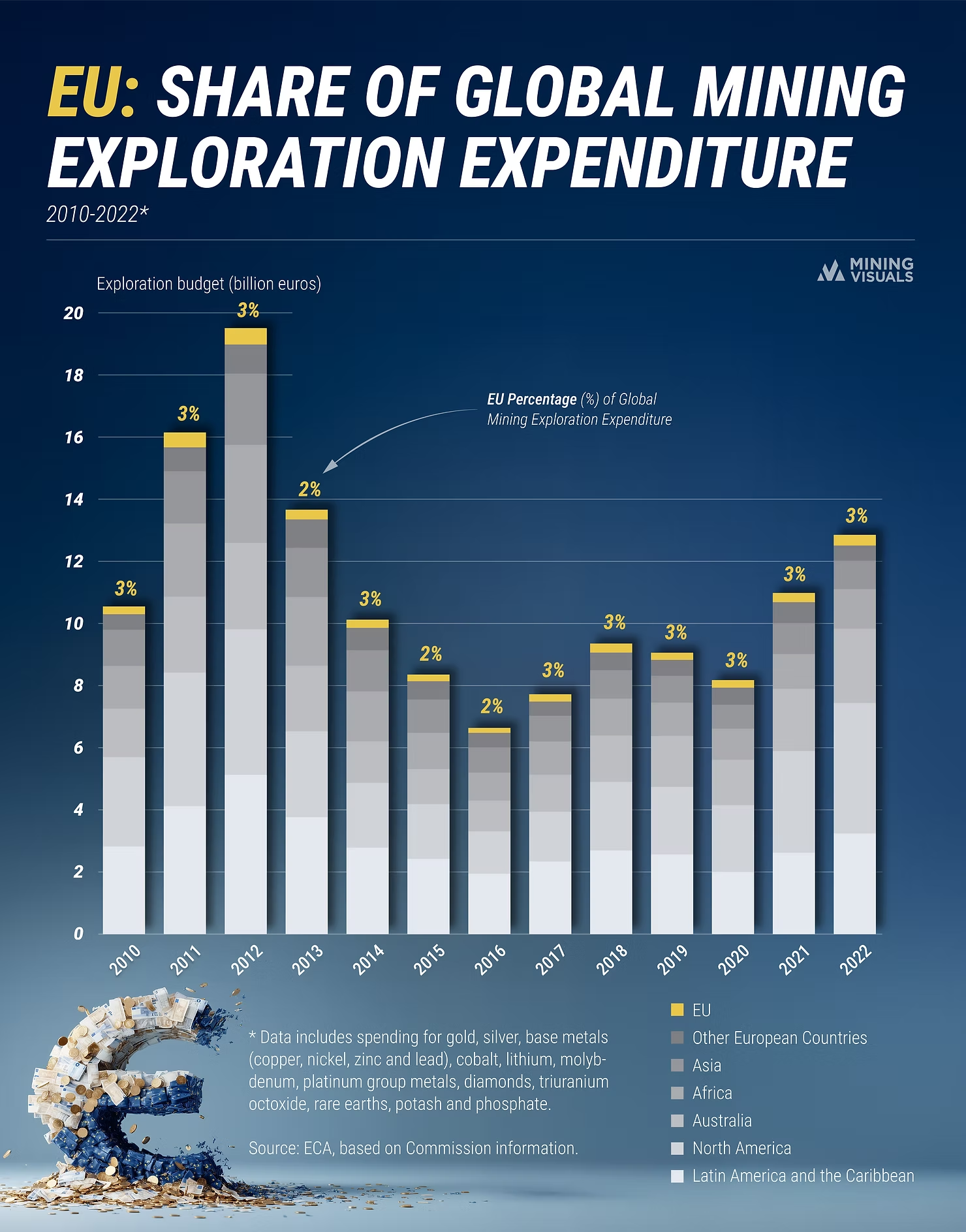
- Exploration: The EU accounts for only 2% to 3% of global exploration expenditure, leading to a lack of knowledge about potential deposits.
- Permitting: Opening a mine in the EU typically takes 10 to 15 years, and in some cases, like Sweden, it can exceed 30 years due to complex environmental and social considerations.
- Financing: Many financial institutions avoid the sector due to high risks and the lack of established "sustainable financing" criteria in the EU taxonomy.
The Untapped Potential of Circularity
Sustainable resource management—including recycling and substituting scarce materials—could significantly reduce primary demand. However, the EU lacks binding recycling targets for individual critical materials. Additionally, market barriers such as high energy costs and the lack of economies of scale make it difficult for European recyclers to compete with global leaders like China.
Strategic Projects: A Slow Start
The EU has introduced a "strategic project" label to fast-track permits and improve access to finance. While 75 projects were selected in the first wave of 2025, many are in such early stages that they are unlikely to contribute meaningfully to the 2030 targets.
Sources
This article and the associated data tables are based on the following verified and trusted institutional reports:
- European Court of Auditors (ECA): Special Report 04/2026, "Critical raw materials for the energy transition - Not a rock-solid policy".
- European Commission (DG GROW): "Study on the critical raw materials for the EU 2023".
- Joint Research Centre (JRC): "Supply chain analysis and material demand forecast in strategic technologies and sectors in the EU – A foresight study, 2023".
- World Trade Organization (WTO): Trade dispute and export restriction data.
- World Bank: 2023 World Governance Indicators.




Explore More
View All

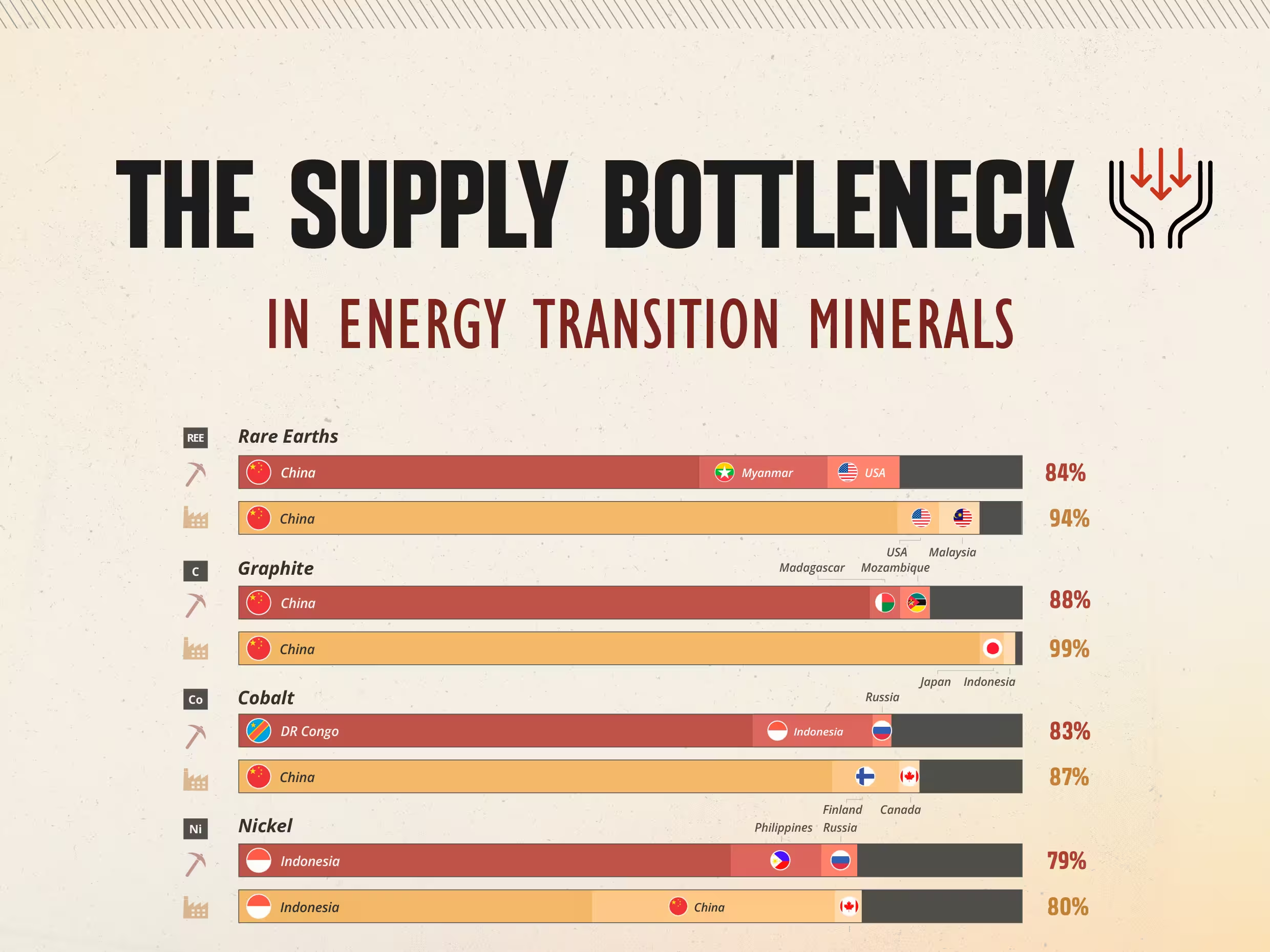
A Few Countries Control the World's Energy Transition Minerals
A Few Countries Control the World's Energy Transition Minerals
When China restricted exports of seven heavy rare earth elements and their magnets on 4 April 2025, factories felt it within weeks. Carmakers in the United States, Europe and Japan reported disruptions serious enough to cut output or halt production lines, and Washington negotiated a 90-day truce to restart the flow.

Silver’s Elevation to Critical Mineral Status: A Strategic Turning Point for U.S. Supply Chains
Silver’s Elevation to Critical Mineral Status: A Strategic Turning Point for U.S. Supply Chains
The U.S. Department of the Interior’s addition of silver to the Final 2025 List of Critical Minerals in November 2025 marks a pivotal shift. No longer viewed primarily as a precious metal for jewelry and investment, silver is now recognized as vital to technology, the energy transition, and national security.