Copper
January 30, 2025
3 min
Copper


In this article, we take a closer look at where the European Union (EU) sources its copper concentrate. Despite the EU’s strong refining and recycling capacity, it remains heavily reliant on imports to meet its concentrate needs. Currently, around 50% of this supply comes from non-EU mines, many located thousands of kilometers away. Would expanding domestic production be a viable solution? Let’s explore this question further.
What is Copper Concentrate?
Copper concentrate is a semi-processed material derived from mined copper ores. It typically contains about 30% copper metal, while the remaining 70% consists of impurities and waste. This waste must be processed and managed at the destination, adding to the environmental and logistical burden. For every 1,000 kt of copper concentrate imported into the EU, only 300 kt represents usable copper metal, while 700 kt is waste material that requires handling within the EU.
If the same 1,000 kt were mined domestically, this 700 kt of waste could be managed at the source, eliminating the need for its transportation. This shift would not only reduce emissions but also simplify waste management practices within the EU.
The Environmental Impact of Copper Imports
Transporting copper concentrate—with its 70% waste content—significantly contributes to carbon emissions. In 2018, global shipping emissions accounted for 1,076 million tonnes of CO2, or approximately 2.9% of global emissions caused by human activity. The transportation of unnecessary waste amplifies this environmental footprint.
Moreover, managing imported waste within the EU adds to resource inefficiencies. Handling waste material generated abroad poses challenges in terms of storage, disposal, and environmental regulations. By shifting copper mining and initial processing to domestic operations, the EU could drastically cut down on emissions and streamline waste management.
A Call for Local Mining and Sustainability
While recycling currently meets 50% of the EU’s copper needs, this alone may not suffice to address the projected growth in demand for copper. Expanding domestic copper mining offers a viable path to reduce dependency on imports, lower shipping emissions, and manage waste locally. Mining within the EU would not only address immediate environmental concerns but also strengthen supply chain security.
In addition, developing domestic mining capabilities aligns with the EU's broader sustainability goals. By reducing reliance on non-EU sources, the region can ensure a more stable, eco-friendly, and efficient supply of copper, which is critical for the green transition, including renewable energy systems and electric vehicles.
Sponsored by:

Arctic Minerals AB (Arctic) is a Nordic mineral exploration company focused on strategic metals vital for Europe's transition.
Its flagship Hennes Bay copper-silver project in Finland boasts a Maiden JORC Compliant Inferred Resource, announced March 2025, totaling 55.39 Mt at 1.0% Copper Equivalent (0.8% Cu & 20.8 g/t Ag). This represents 447,000 tonnes of contained copper and 37 million ounces of silver. The project also shows confirmed potential for critical metals including gallium, germanium, vanadium, and rare earth elements. With less than 5% of the prospective area drill-tested, Hennes Bay offers significant growth and new discovery opportunities within a world-class geological setting and excellent infrastructure.
Arctic Minerals is listed on Nasdaq First North Growth Market under the ticker "ARCT".
Learn more about Arctic Minerals at https://arcticminerals.se/en/.
Source: European Commission, Study on the Critical Raw Materials for the EU 2023 - Final report
The information presented here may contain inaccuracies and is subject to rounding. We do not guarantee that all information is complete or correct. We accept no responsibility for any errors, omissions, or outcomes resulting from the use of this information. This is not investment advice.



Explore More
View All

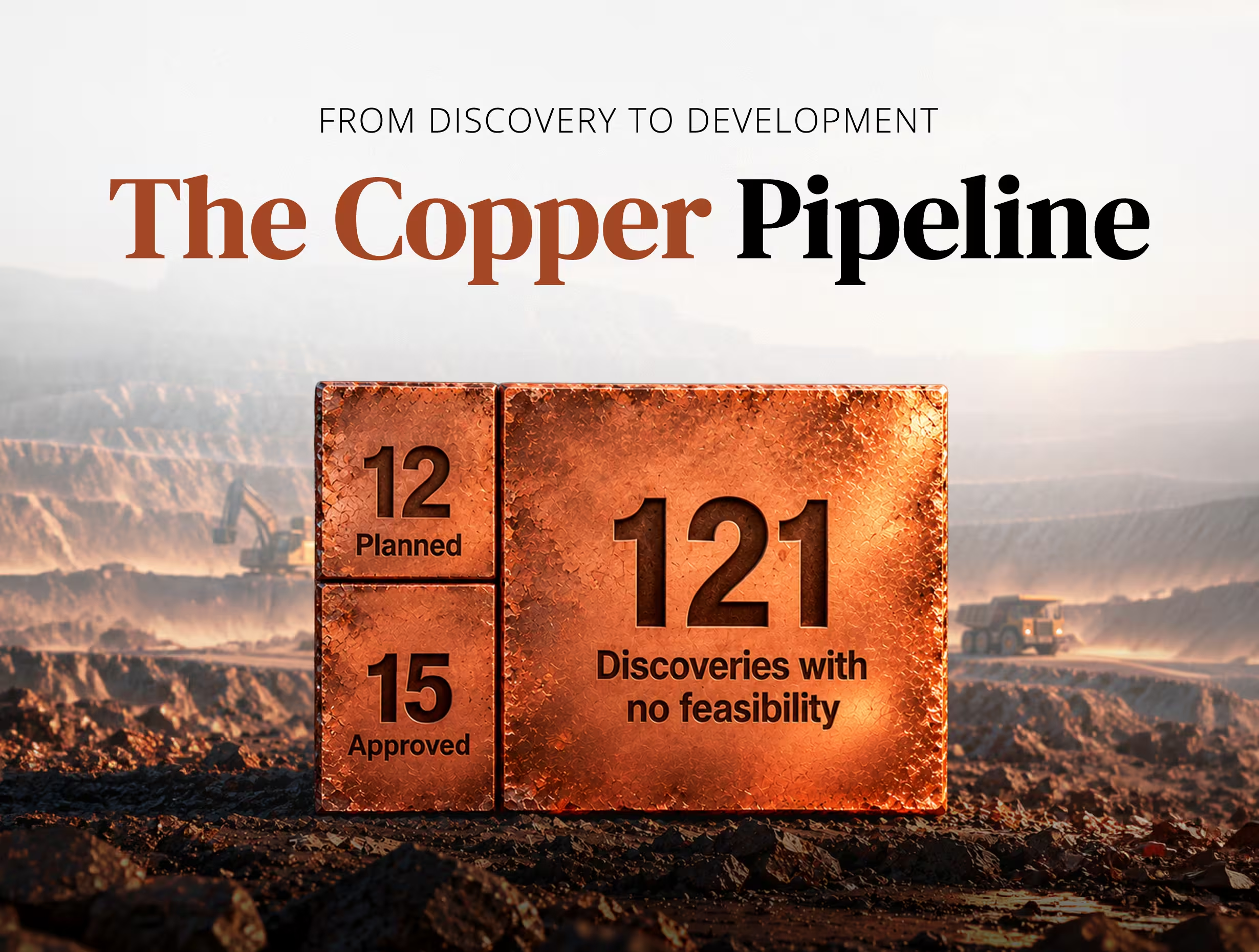
Most Major Copper Discoveries Since 1990 Are Still Not Mines.
Most Major Copper Discoveries Since 1990 Are Still Not Mines.
In May 2025, a joint venture of Lundin Mining and BHP released a resource estimate for its Vicuña district in the Andes, which S&P Global ranked as home to the largest greenfield copper discovery in 30 years. Per the same resource statement, the combined Filo del Sol and Josemaria deposits hold 13 million tonnes of contained copper in measured and indicated resources.
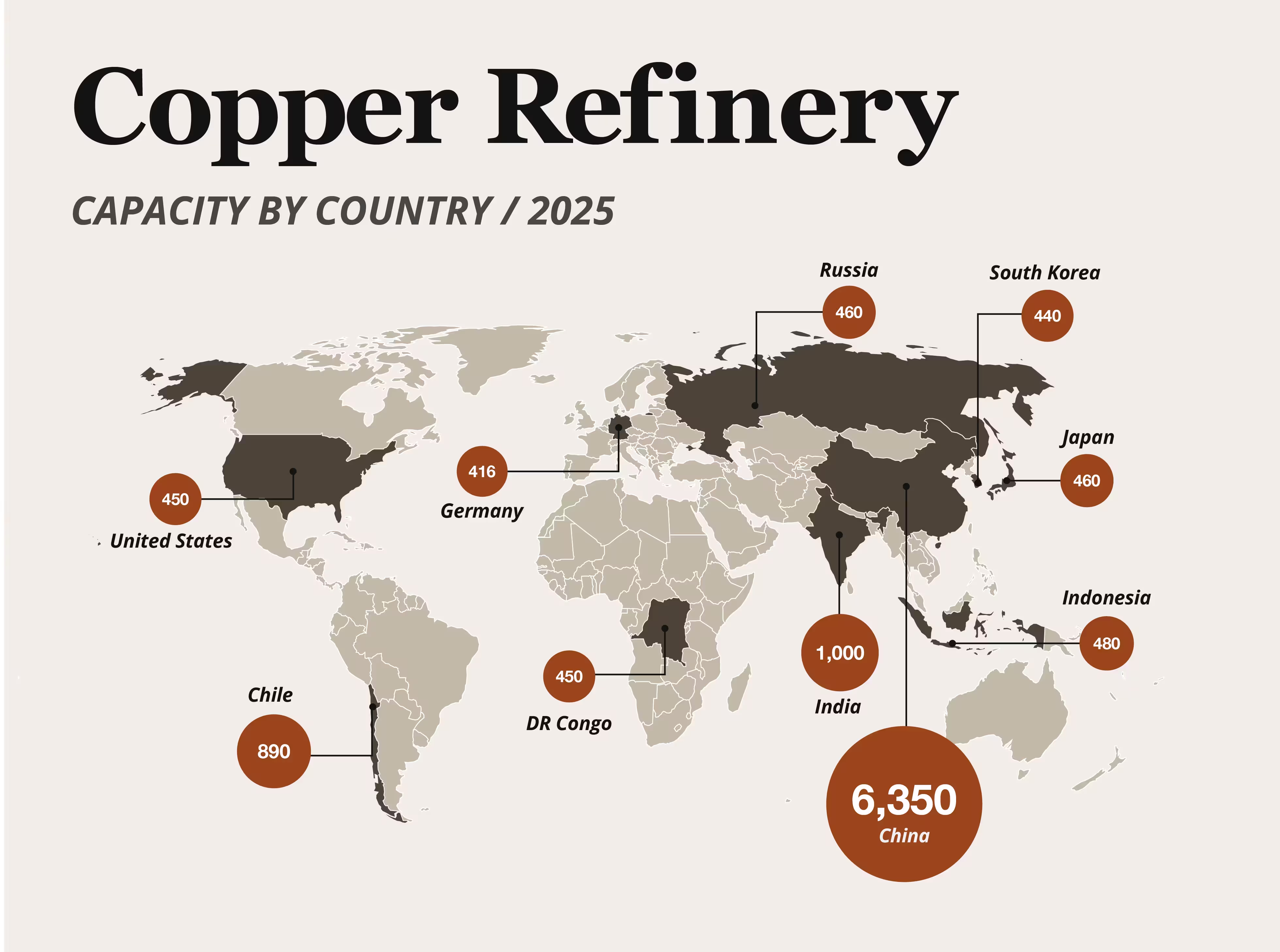
China Holds 56% of the Capacity at the World's 21 Largest Copper Refineries
China Holds 56% of the Capacity at the World's 21 Largest Copper Refineries
Indonesia's circle on the map above stands for a single plant: the Manyar refinery in East Java, operated by PT Freeport Indonesia, with 480,000 tonnes a year of capacity, according to the International Copper Study Group. It has been shut since the fourth quarter of 2025, after a mudflow at the Grasberg mine cut off its concentrate supply, and is due to restart this month at below 30% of capacity.
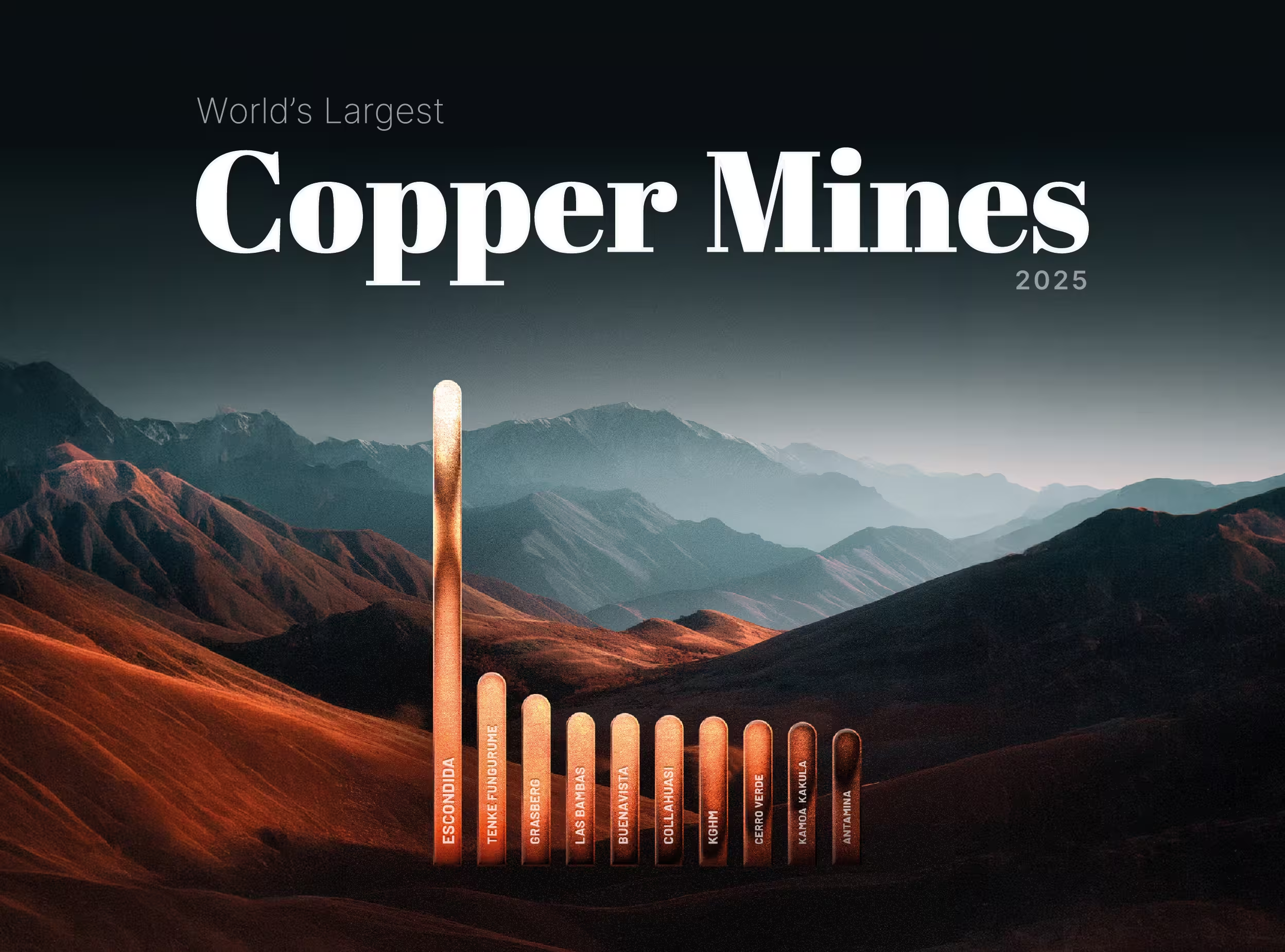
Ranked: The World's Largest Copper Mines (2025)
Ranked: The World's Largest Copper Mines (2025)
Copper has spent 2026 setting records, touching an intraday COMEX high of $6.71 per pound on May 13 amid AI-driven demand and supply shocks, against a backdrop where the ICSG now forecasts a 150,000-tonne deficit for 2026. In a market this tight, where the deficit thesis turns on lost tonnes, the question of where the world's copper actually comes from carries unusual weight.
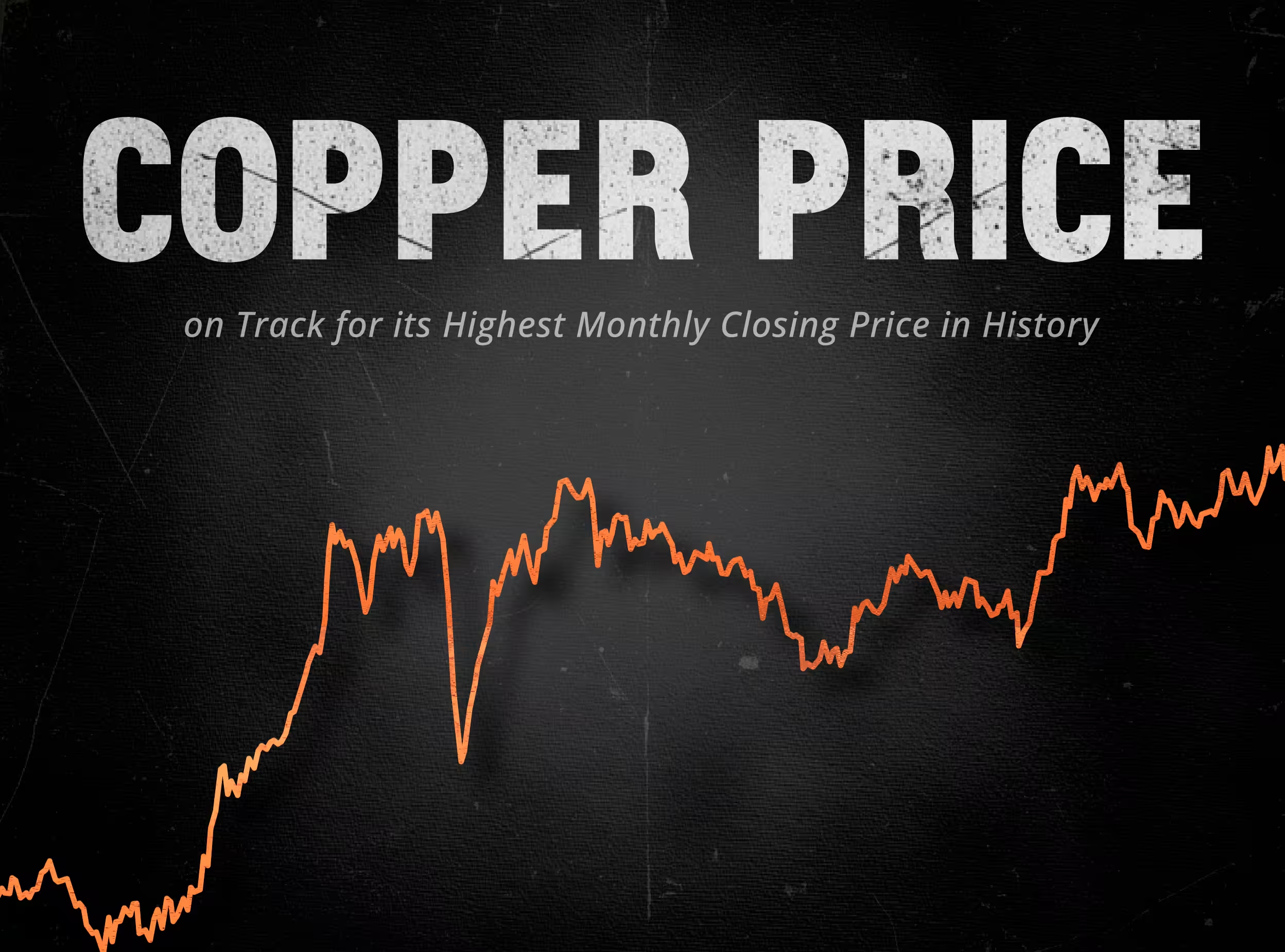
Copper on Track for Its Highest Monthly Close on Record: A Look at the Drivers
Copper on Track for Its Highest Monthly Close on Record: A Look at the Drivers
Copper has spent most of 2026 doing something it had not done in a quarter century: setting fresh records every few weeks. The COMEX contract printed an intraday all-time high of $6.71 per pound on May 13, and the May monthly close looks set to land at the top of the historical chart. In London, copper traded above $14,000 per tonne in mid-May, touching $14,196.50, within reach of the LME's January 29 record of $14,527.50.