Copper
March 19, 2026
1 min
Copper


Key takeaways
- The Timeline Mismatch: AI infrastructure scales in months (1.5–2 years per facility), whereas new copper mines take 17.9 years to develop, creating a "speed to power" crisis.
- Hyperscale Hunger: A single AI-ready hyperscale data center consumes up to 50,000 tons of copper, driven by high-density power needs and liquid cooling systems.
- Looming Shortfall: Total demand is set to reach 42 Mt by 2040, outstripping supply by 10 Mt—a 24% shortfall.
The AI revolution is often described in terms of "compute" and "algorithms," but on the ground, it is a story of heavy metal. While a software update can scale globally in seconds, the physical infrastructure required to house it, specifically the copper needed for power and cooling, is hitting a geological and bureaucratic wall.
As of early 2026, the urgency has reached a fever pitch. A recent S&P Global study highlights that the race for AI, combined with increased defense spending, is widening a "substantial shortfall" in global copper supply. While an AI data center can be built and operational in roughly 18 to 23 months, a new copper mine takes an average of 17.9 years to move from discovery to production. This "lag" threatens to stall the very technological leap it is meant to support.
The Infrastructure Imbalance: Months vs. Decades
The core of this supply challenge is a simple matter of timing. According to the Copper Development Association, the permitting and approval phase alone for a U.S. mine can consume over a decade of the 29-year development cycle. In contrast, data center developers are moving at "AI speed," with over $1.5 trillion in U.S. investment announcements and 6.3 GW of capacity currently under construction in North America.
Why AI is a Copper Hog
It isn't just that we are building more data centers; we are building different ones. Modern AI clusters, such as those utilizing NVIDIA’s GB200 architecture, require over two miles of copper cabling per rack just for data transmission. Beyond the cables, the sheer electrical intensity, often exceeding 100 MW per facility, requires massive amounts of copper busbars and power distribution units. Furthermore, the extreme heat generated by AI GPUs has made copper-intensive liquid cooling systems a necessity rather than an option. Because of these compounding architectural shifts, a single hyperscale AI data center can consume up to 50,000 tons of copper, representing a massive increase over the 5,000 to 15,000 tons required by a conventional facility.
A Looming 10 Million Ton Shortfall
The math for 2040 is sobering. S&P Global projects that copper demand from data centers will grow by 127% by 2040. When combined with the broader electrification of the global economy, total demand is expected to reach 42 Mt, while projected supply lingers at only 32 Mt. This 24% deficit represents a structural challenge that cannot be solved by recycling alone; it requires new primary extraction.
Final Synthesis
The "Goldilocks" era of cheap, abundant copper is ending just as the AI era begins. The data shows a clear divergence: the digital world is scaling in months, while the physical world of mining is measured in generations. For investors and policymakers, the focus must shift from the "silicon" end of the supply chain to the "copper" beginning. Without a radical shift in how quickly we can bring domestic resources online, the AI boom may find itself restricted not by code, but by the availability of the red metal.
Data & Sources:
- Copper Development Association: U.S. Copper and Data Center Demand (May 2025)
- S&P Global: 2026 Global Copper Supply Study (January 2026)





Explore More
View All

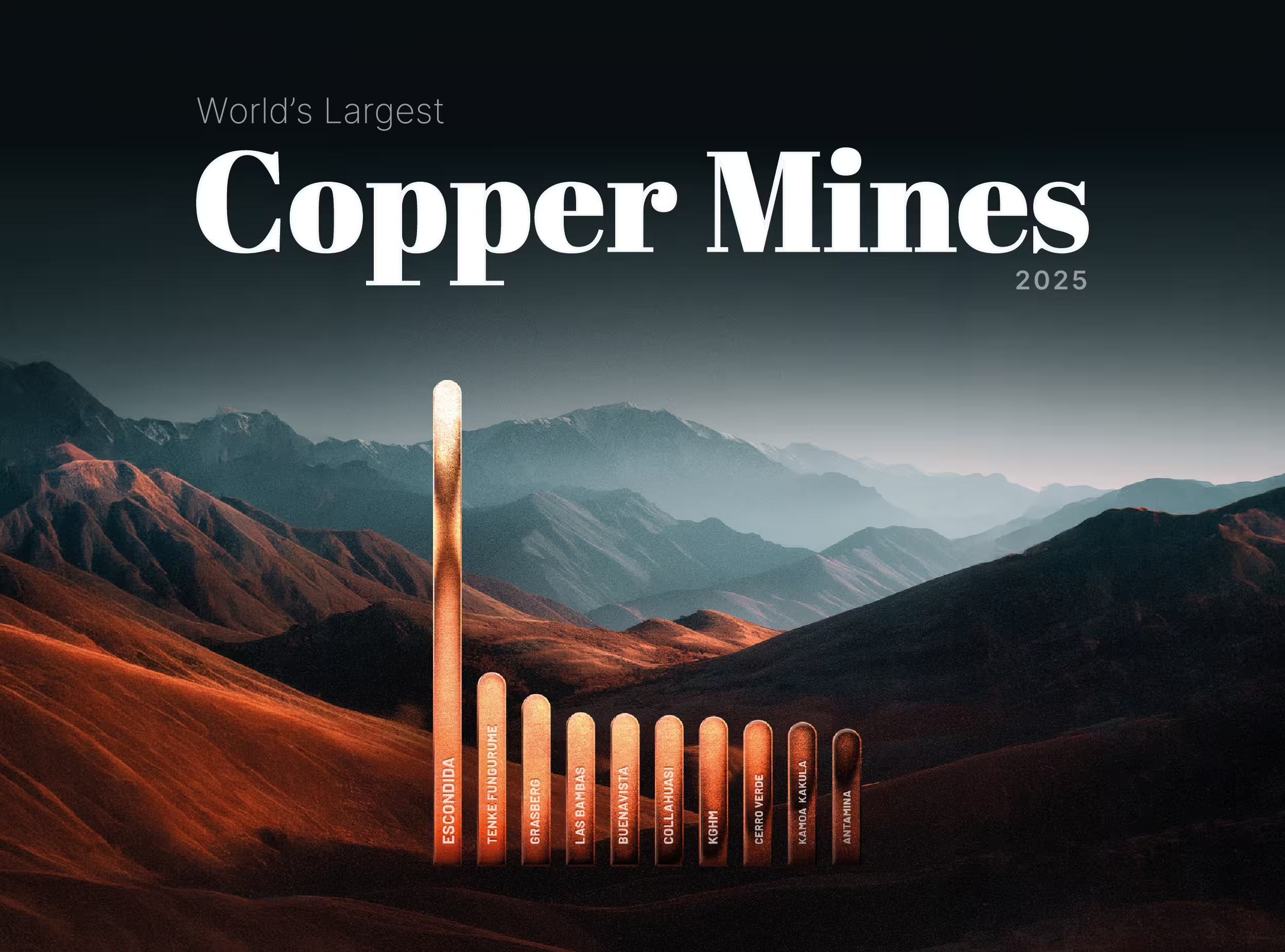
Ranked: The World's Largest Copper Mines (2025)
Ranked: The World's Largest Copper Mines (2025)
Copper has spent 2026 setting records, touching an intraday COMEX high of $6.71 per pound on May 13 amid AI-driven demand and supply shocks, against a backdrop where the ICSG now forecasts a 150,000-tonne deficit for 2026. In a market this tight, where the deficit thesis turns on lost tonnes, the question of where the world's copper actually comes from carries unusual weight.

Copper on Track for Its Highest Monthly Close on Record: A Look at the Drivers
Copper on Track for Its Highest Monthly Close on Record: A Look at the Drivers
Copper has spent most of 2026 doing something it had not done in a quarter century: setting fresh records every few weeks. The COMEX contract printed an intraday all-time high of $6.71 per pound on May 13, and the May monthly close looks set to land at the top of the historical chart. In London, copper traded above $14,000 per tonne in mid-May, touching $14,196.50, within reach of the LME's January 29 record of $14,527.50.

The Cost of Mining Copper: A 2024–2025 Update
The Cost of Mining Copper: A 2024–2025 Update
Copper futures touched an all-time high above $6.58 per pound on May 12, 2026, capping a 40.86% gain over the prior twelve months as supply tightness collided with structural demand from grid build-out, electric vehicles, and AI data centers. Earlier in the year, the LME benchmark rallied 22% to a record $13,387 per tonne on January 6, 2026. Behind the price action lies a less-discussed story: what it actually costs the world's largest miners to pull a pound of copper out of the ground.
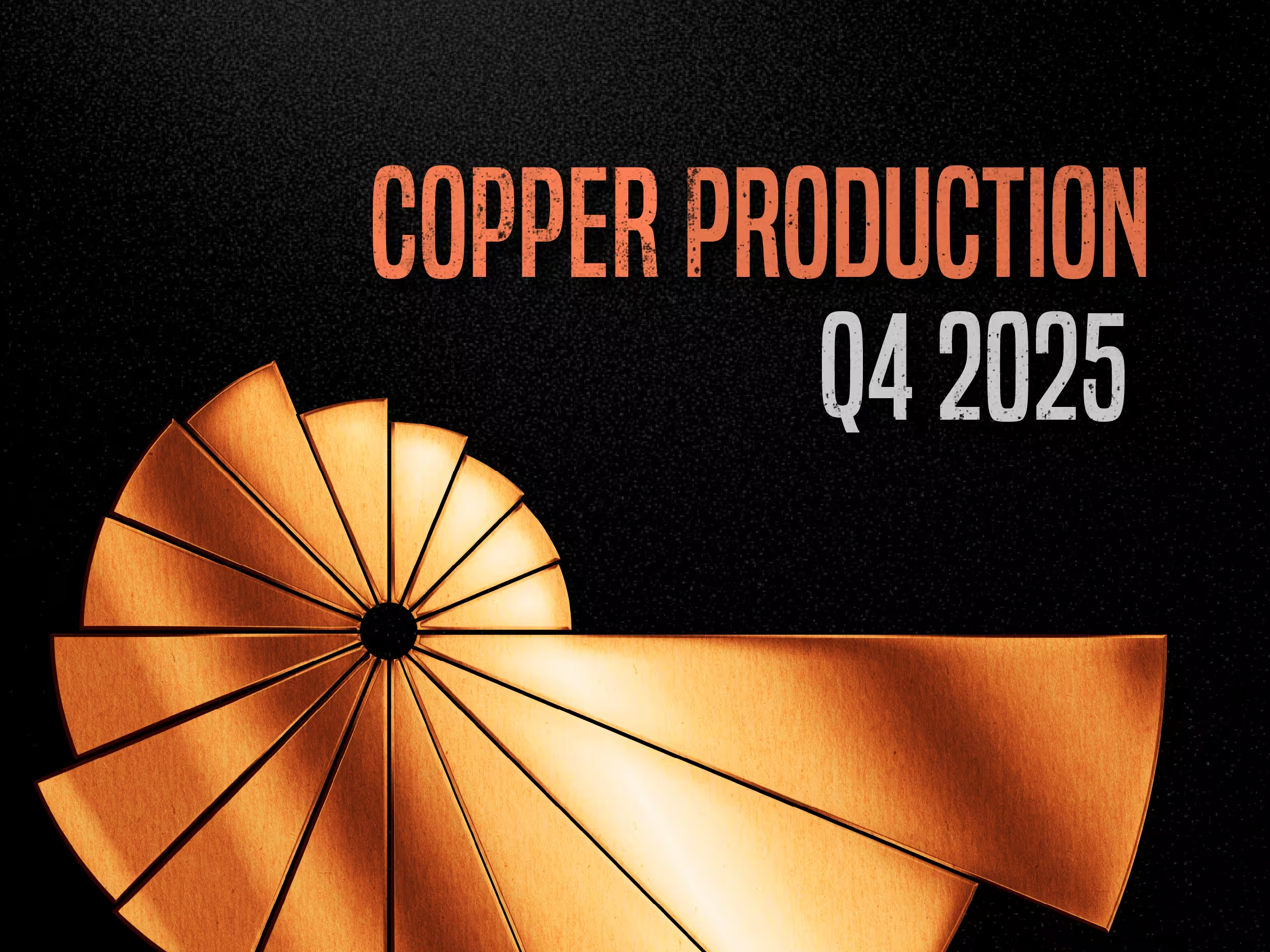
Copper Production Q4 2025
Copper Production Q4 2025
As power-hungry AI data centers drive a projected 2-million-ton surge in global copper demand by 2030, market attention remains fixated on the supply side. Fourth-quarter 2025 metrics provide a definitive look at how the world's top miners closed out the year. While overall volumes remain heavily concentrated among a few historic industry giants, the true Q4 narratives emerged further down the list, as mid-tier producers leveraged flagship asset expansions to hit multi-year highs and offset the sector's ongoing struggle with declining ore grades.