Precious Metals
May 12, 2025
3 min
Precious Metals
%20Main.avif)

In this article and accompanying infographic, we take a closer look at the latest supply and demand data from the World Silver Survey, released in April 2025.
The global silver market is experiencing a notable shift, driven largely by surging industrial demand—particularly from the green energy and electronics sectors. According to the report, total silver demand is expected to reach 1.148 billion ounces this year, while supply is forecast at just 1.030 billion ounces. This shortfall marks the fifth consecutive year of market deficit.
A Growing Role in Green and High-Tech Industries
Industrial use remains the largest component of silver demand, and it continues to grow steadily. One of the main drivers is the solar energy industry. Silver demand for photovoltaic (PV) applications has soared—up an estimated 139% from 2016 to 2025. This is due to the increasing global adoption of solar technology, advances in solar cell design, and government policies pushing for renewable energy. Silver plays a crucial role in solar cells because of its unmatched electrical conductivity, making it indispensable in the global push toward cleaner energy sources.
Beyond solar, demand is also climbing in the electronics sector. Excluding PV, silver demand in electrical and electronic applications is forecast to grow by nearly 19% between 2016 and 2025. This includes rising usage in 5G infrastructure, electric vehicles, and consumer electronics—areas where silver is essential for its conductivity and reliability in compact, high-performance components.
Other industrial applications, projected to grow by +19.5% (2016-2025F), also contribute to demand. However, the Institute observes a specific contraction in demand for brazing alloys and solders, expected to decline by -7.7% over the same period. This may be due to factors such as thrifting or substitution in some applications, even as the broader industrial use shows growth.
Softer Trends in Traditional Uses
In contrast to industrial demand, more traditional sectors like jewelry and silverware are showing modest or negative trends. Jewelry demand is expected to grow slightly (+3.7% over the period), while silverware continues its long-term decline, down 14% over the same timeframe. Investment demand—measured through physical silver in coins and bars—is also expected to ease slightly, with a projected decline of 3.9% from 2016 levels.
Supply Struggles to Keep Pace
On the supply side, the picture is more constrained. Global mine production is forecast at 835 million ounces in 2025—down over 7% compared to 2016. Lower ore grades, limited new project development, and operational challenges are contributing to this slowdown. Even with the help of recycled silver, supply is struggling to keep up with demand. The result? Persistent structural deficits in the silver market, a trend that began in 2021 and shows no signs of reversing in the short term.
Outlook: Silver’s Strategic Importance Grows
The findings from the World Silver Survey 2025 underscore silver’s growing strategic value. Its role in enabling clean energy and cutting-edge technology makes it a material of increasing importance. As industries evolve and the energy transition accelerates, all eyes will be on how supply can respond to this growing demand.
The ongoing supply gap suggests a tight market ahead—one with real implications for manufacturers, investors, and governments alike.
Sponsored by:

The Silver Institute is a global organization dedicated to promoting the use, study, and understanding of silver. It provides in-depth research on silver’s supply, demand, and pricing trends across various industries such as industrial applications, jewelry, investment, and solar energy. One of the institute’s key publications is the World Silver Survey, an annual report that offers detailed statistics and analysis on the global silver market.
For further information, you can visit the official Silver Institute website.
Source: Based on information extracted from the World Silver Survey 2025, published by The Silver Institute.
Disclaimer: This article summarizes information derived from the World Silver Survey 2025 and general market observations. Market conditions, forecasts, technological developments, and demand figures are subject to change and involve uncertainties. This content is for informational purposes only and should not be construed as financial or investment advice.




Explore More
View All

Central Banks Have Been Net Gold Buyers Since 2010, After Two Decades of Net Selling
Central Banks Have Been Net Gold Buyers Since 2010, After Two Decades of Net Selling
Central banks bought more gold between April and June 2026 than in any second quarter on record, according to a World Gold Council report published on July 30. That keeps them net buyers this year, as they have been every year since 2010. Underneath, the picture is changing. Russia and Türkiye, both big buyers in the past, have been selling.

Gold Mines in West Africa: Two Billion Years in the Making
Gold Mines in West Africa: Two Billion Years in the Making
The nine West African countries with significant reported output produced about 15% of the world's mined gold in 2025, according to Metals Focus and World Gold Council data. Almost every mine on the map above was built in the past 25 years, and four more reached production in the last eighteen months: Lafigué in Côte d'Ivoire in June 2024, Kiaka in Burkina Faso in June 2025, Ahafo North in Ghana in October 2025 and Kiniero in Guinea in December 2025.
A Median New US Home Now Costs Less Than 100 Ounces of Gold
A Median New US Home Now Costs Less Than 100 Ounces of Gold
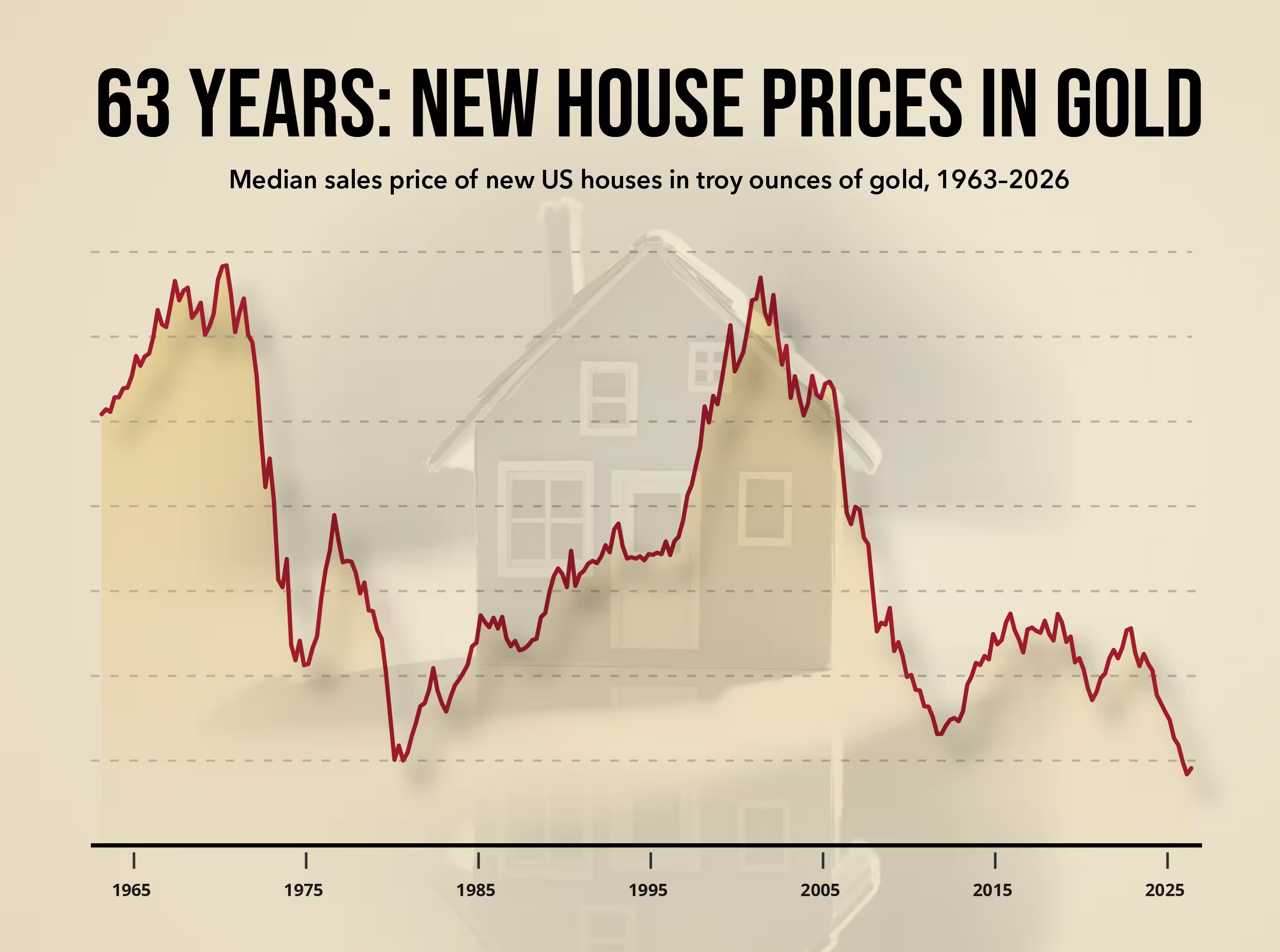
The US Census Bureau's July new-home report, released on August 25, put the median price of a newly built house at $393,800. HousingWire noted that was the lowest since July 2021. In dollars, the market has moved within a narrow band: the quarterly median has stayed between $408,500 and $435,400 since 2023.
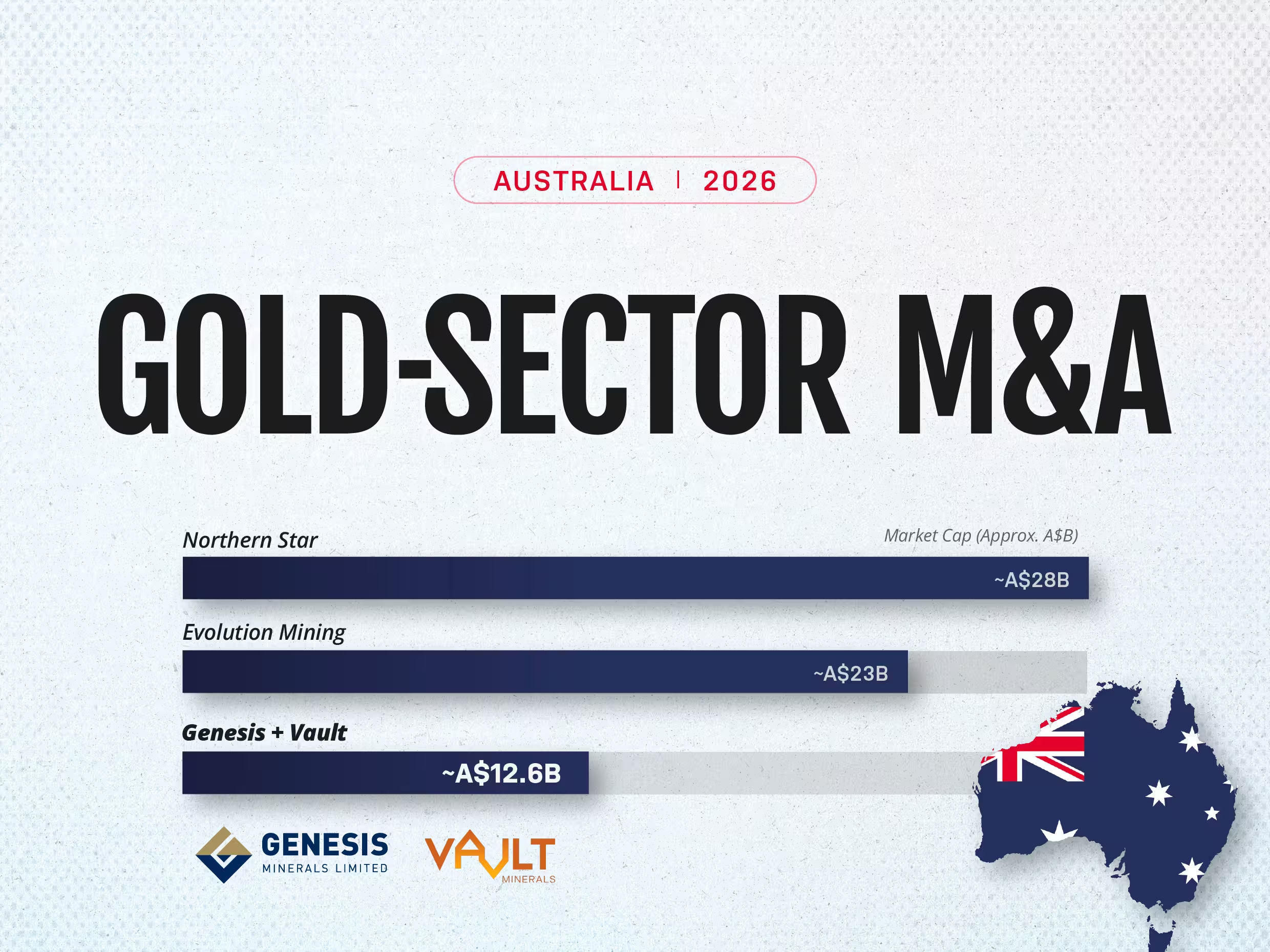
Gold's Record Run Has Set Off a Wave of Mining Mergers
Gold's Record Run Has Set Off a Wave of Mining Mergers
Gold hit an all-time high of about US$5,595 an ounce in January 2026 before settling near US$4,000, still far above the levels of a few years ago. That combination, record prices followed by a stable, still-profitable pullback, has done something a straight rally rarely does: it has opened a merger window.