Geology
Inside Porphyry and Epithermal Deposits: The Geology of Earth's Most Productive Mines
WORLD'S BIGGEST COPPER MINES BELOW. HIGH-GRADE GOLD VEINS ABOVE. ONE SYSTEM.
The following content is sponsored by Eloro Resources
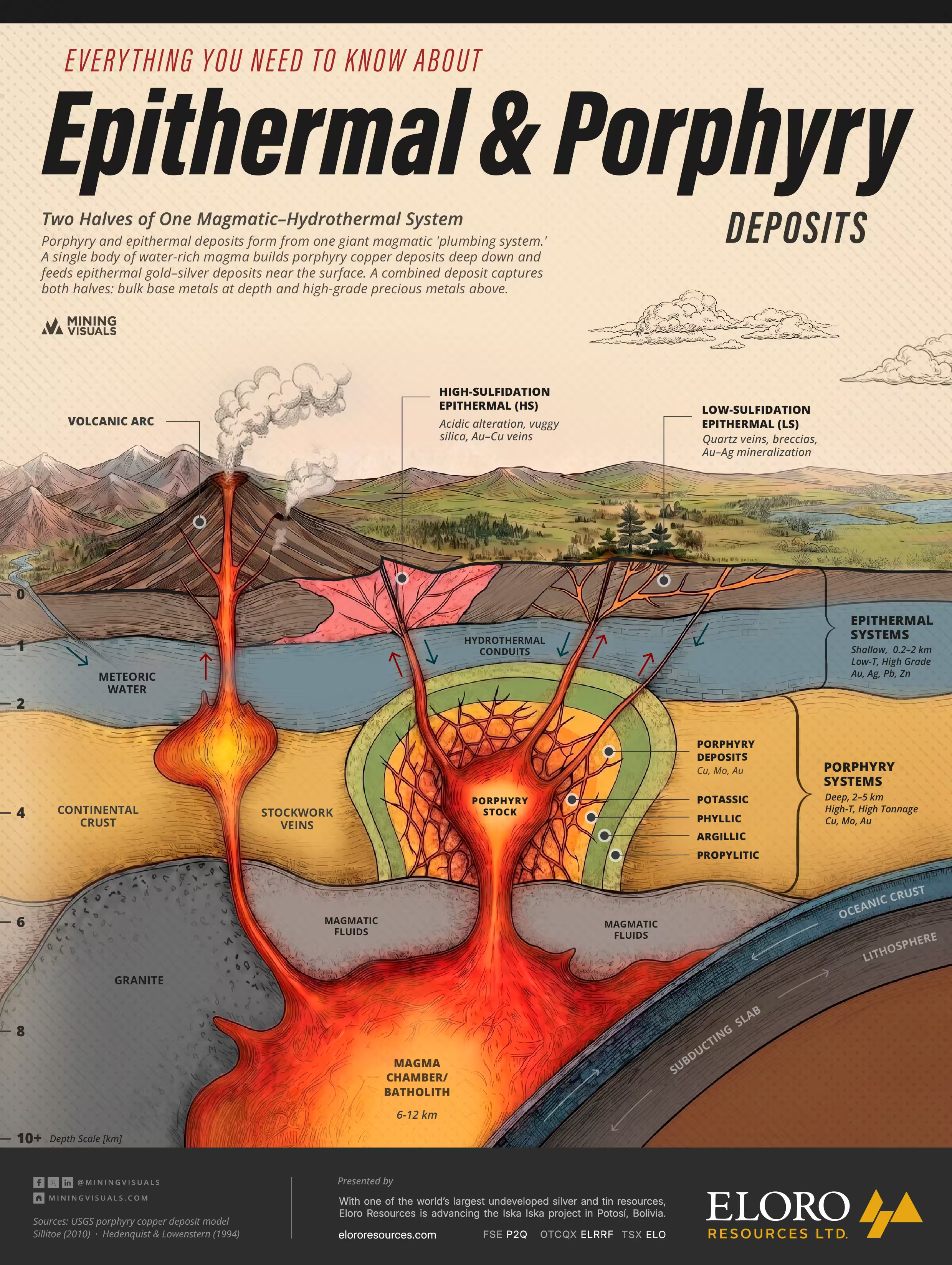

In March 2025, the USGS published an updated global database cataloguing every known porphyry copper deposit on Earth, a remarkable cartographic exercise for a deposit type that already supplies the planet with about 60% of its copper. What the database does not show is that the same magmatic engine produces a second, very different ore type immediately above: epithermal gold-silver veins, which the corresponding USGS model credits with about 8% of global gold supply. The accompanying infographic shows both halves in cross-section. The deeper story is that this single architecture, replicated along convergent plate margins for hundreds of millions of years, has built the world's largest copper mines and its richest precious-metal veins, often stacked vertically in the same district.
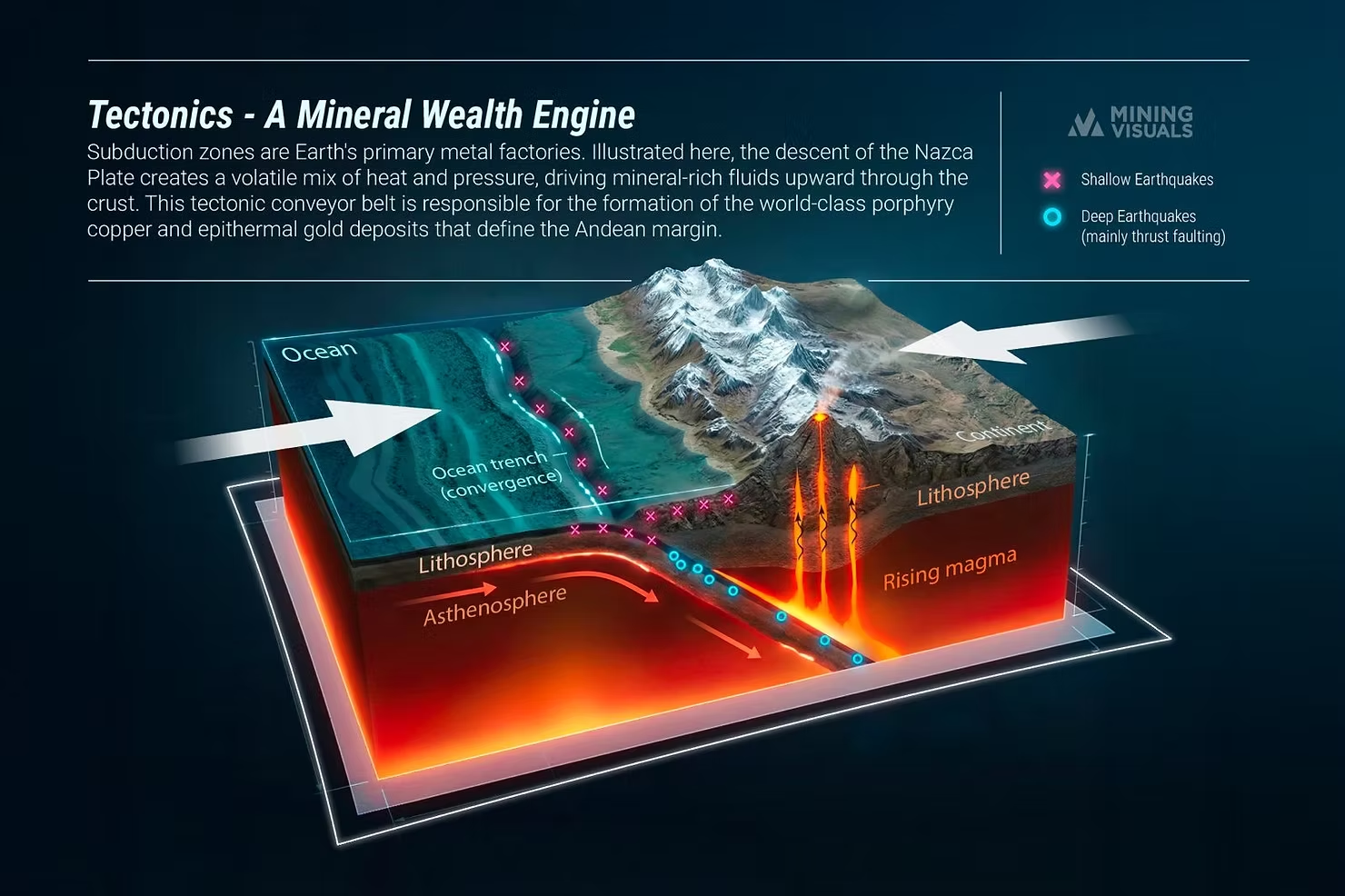
The architecture is unusually elegant. Per the USGS porphyry model, water-rich magma rises from convergent plate margins and stalls in the upper crust. As it crystallizes, it releases hot, metal-bearing fluids that fracture the surrounding rock and precipitate copper, molybdenum, and gold in a dense network of veinlets called a stockwork. This is the porphyry, sitting 1 to 6 km below the paleo-surface. As the same fluids rise into the top 1.5 km, mix with circulating groundwater, and boil, they partition gold and silver into high-grade veins, the epithermal half described by USGS as the source of roughly 8% of global gold and a significant share of global silver.

The two halves write different signatures in the rock. The porphyry's classic alteration sequence runs from a high-temperature potassic core out through phyllic (quartz, sericite, pyrite), argillic (clay-dominated), and propylitic (chlorite, epidote) at the periphery. The epithermal half itself splits into two end-members. High-sulfidation (HS) deposits form from acidic, oxidized magmatic fluids close to the intrusion, hosting gold-copper mineralization in zones of advanced argillic alteration (alunite, kaolinite). Low-sulfidation (LS) deposits form from cooler, near-neutral fluids farther out, hosting high-grade gold and silver in quartz-adularia veins. A lithocap at the surface often marks the bridge between the two halves.
These deposits do not appear at random. They line up along convergent plate boundaries. A previous MiningVisuals piece traced 34% of world copper to the Andean margin alone, with Chile's Chuquicamata and El Teniente headlining the porphyry half. On the same belt, Peru's Yanacocha district has produced over 37 Moz of gold from HS epithermal deposits since 1993, and Bolivia's Cerro Rico de Potosí has been mined for silver since the sixteenth century. In Utah, the Bingham Canyon Mine is the largest man-made excavation on Earth, with 19 million tons of copper produced. Indonesia's Grasberg is one of the world's most significant copper-gold porphyries.
Both halves now sit at the center of strategic mineral conversations. The USGS global porphyry database notes that porphyries also host rhenium, tellurium, and selenium as critical by-products. The USGS epithermal model, by contrast, confirms that epithermal districts are major contributors to global gold and silver supply, the same metals now under structural demand from electronics, solar, and the wider energy transition. The same magmatic engine that supplied colonial empires is being re-examined for what else it can deliver.
Eloro Resources Ltd. is a mineral exploration company advancing a world-class silver and tin project in Bolivia’s historic Potosí Department. Its flagship asset, the Iska Iska Project, ranks among the top five undeveloped global resources in terms of scale for both tin and silver.
This significant grassroots discovery remains open in multiple directions, offering substantial potential for continued expansion and resource enhancement. Iska Iska benefits from strong infrastructure access and a deeply rooted presence in Bolivia, supported by an experienced management team and meaningful community engagement.
Eloro’s strategy is focused on resource growth, strategic partnerships, and establishing a leading position within the global mining sector.
Learn more about Eloro Resources at: http://elororesources.com/


For over two centuries, diamond has sat unchallenged at the apex of mineral hardness. However, in early 2025, Chinese scientists successfully synthesized a hexagonal "super diamond" (lonsdaleite) that is theorized to withstand 58% more stress than standard cubic diamonds. While the frontier of material science pushes past natural limits, the foundational metric used to rank these materials remains surprisingly unchanged. Invented in 1812, the Mohs Scale of Mineral Hardness continues to be the ultimate benchmark for geologists, miners, and gemologists. Instead of complex chemical classifications, it relies on a simple, observable physical property: scratch resistance.

Minerals are the fundamental building blocks of rocks, forming the foundation of our planet and providing essential resources. From the humble Graphite in a pencil to sparkling Garnets in jewelry, minerals vary widely. But how do we tell these natural treasures apart?