Geology
January 22, 2026
3 min
Geology
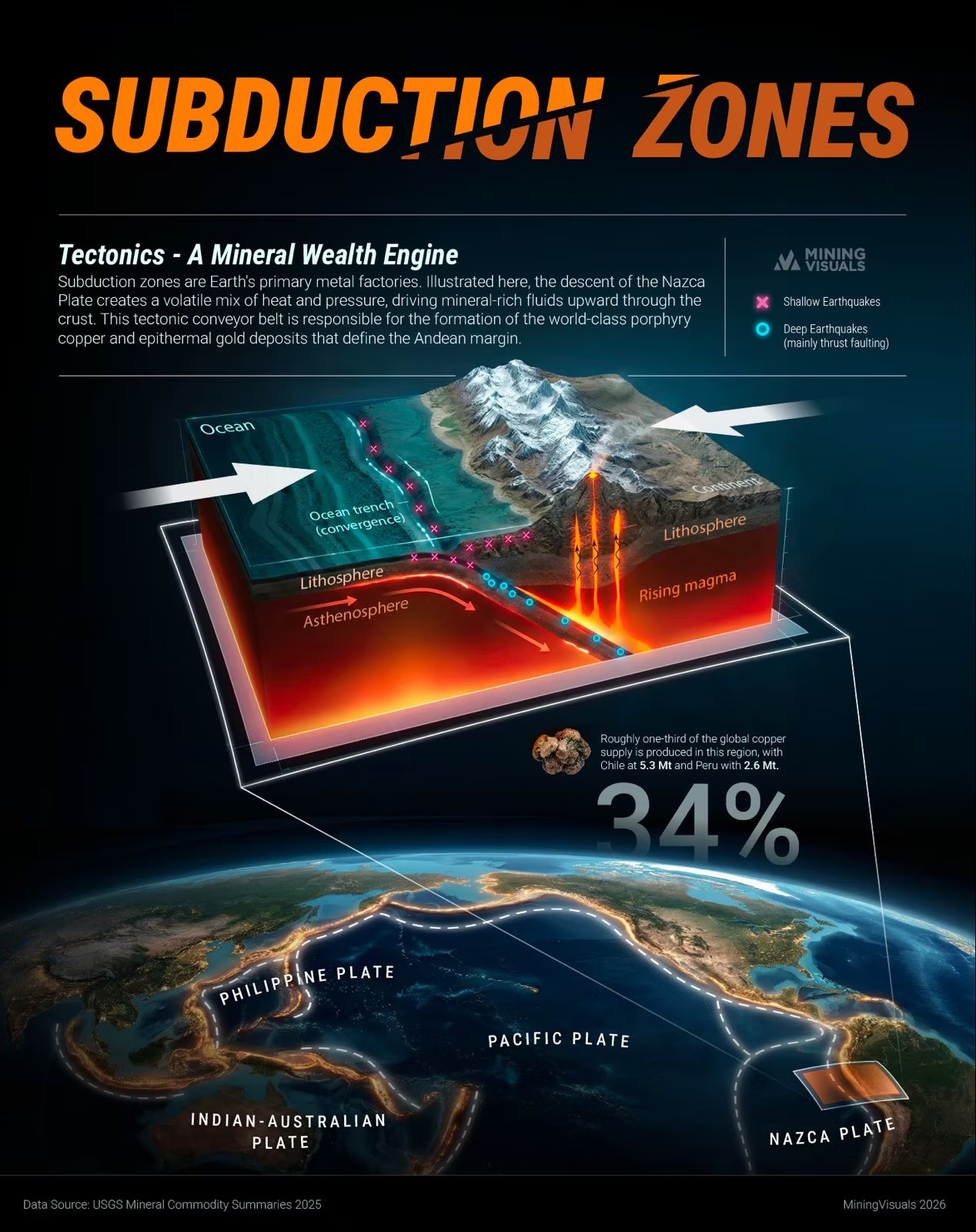

Beneath the crashing waves of the Pacific and the jagged peaks of the Andes lies a high-pressure conveyor belt that has been running for millions of years. While we often associate tectonic plate boundaries with devastating earthquakes and volcanic eruptions, there is another side to this geological violence: the creation of immense mineral wealth.
Subduction zones, where one tectonic plate slides beneath another, act as the primary "refineries" of our planet. This "mineral wealth engine" is responsible for the raw materials that power modern civilization, from the wiring in our homes to the components of the green energy transition.
The Recipe for a Mega-Deposit
What makes a subduction zone like the Andean margin so productive? It comes down to a volatile mix of Heat, Water, and Pressure.
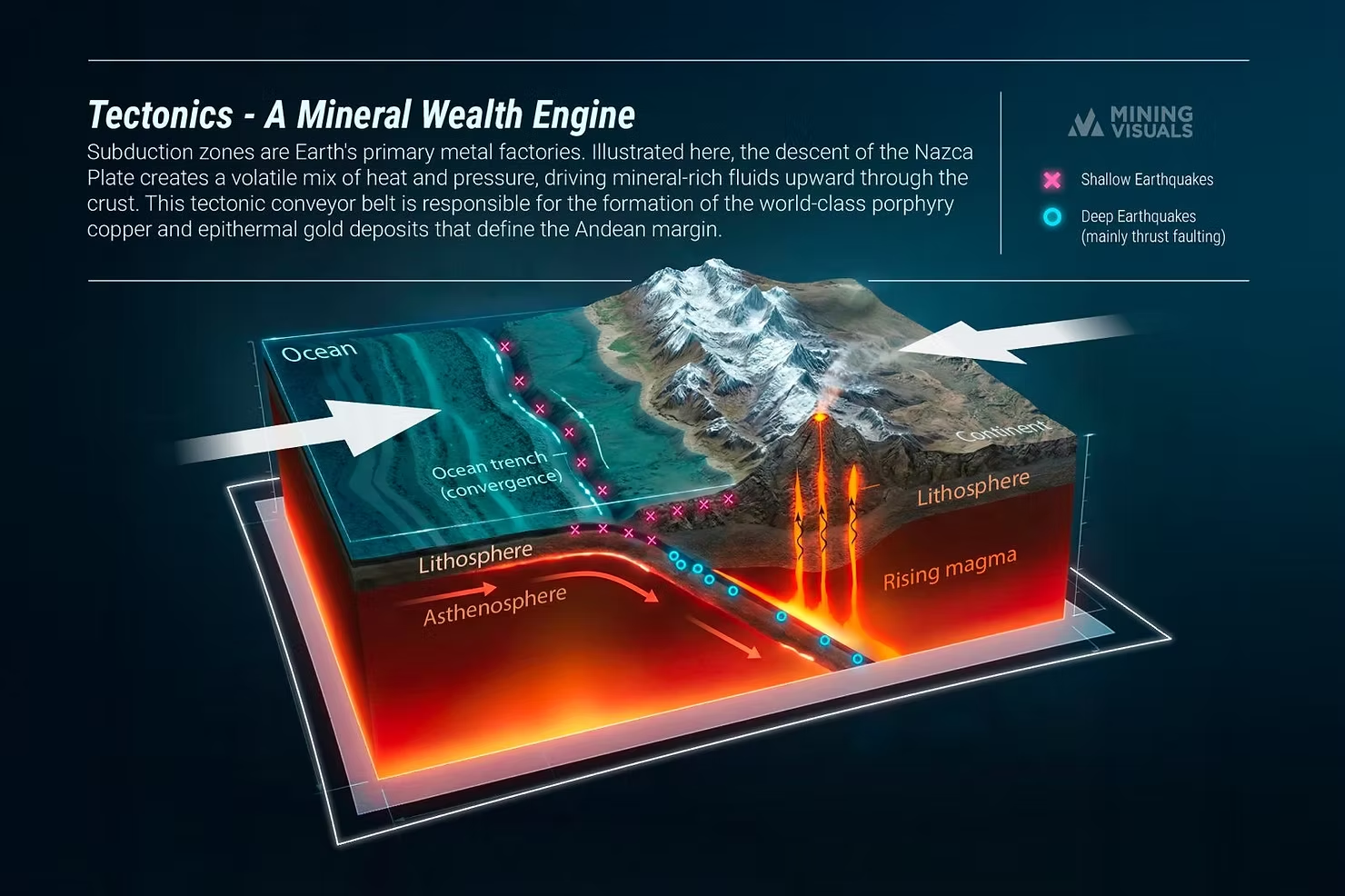
- The Descent: As the heavy oceanic crust (such as the Nazca Plate) descends into the hot Asthenosphere, it carries water-soaked sediments and hydrated minerals deep into the Earth.
- The "Sweat" Effect: Under intense heat and pressure, this water is squeezed out of the subducting plate. This lowers the melting point of the surrounding mantle, creating rising magma.
- The Distillation: As this magma rises through the continental Lithosphere, it acts like a sponge, leaching metals like copper, gold, and silver from the surrounding rock. These metal-rich fluids eventually crystallize in "porphyry" structures, massive, low-grade deposits that are the backbone of global mining.
Copper: The Red Gold of the Andes
The Andean region is a global powerhouse, producing 34% of the world’s copper. Chile and Peru are not just geographically unique; they are geologically blessed by their position along this active tectonic margin.
Based on the USGS Mineral Commodity Summaries, the scale of this production is unmatched:
The Ring of Fire: A Global Treasure Map
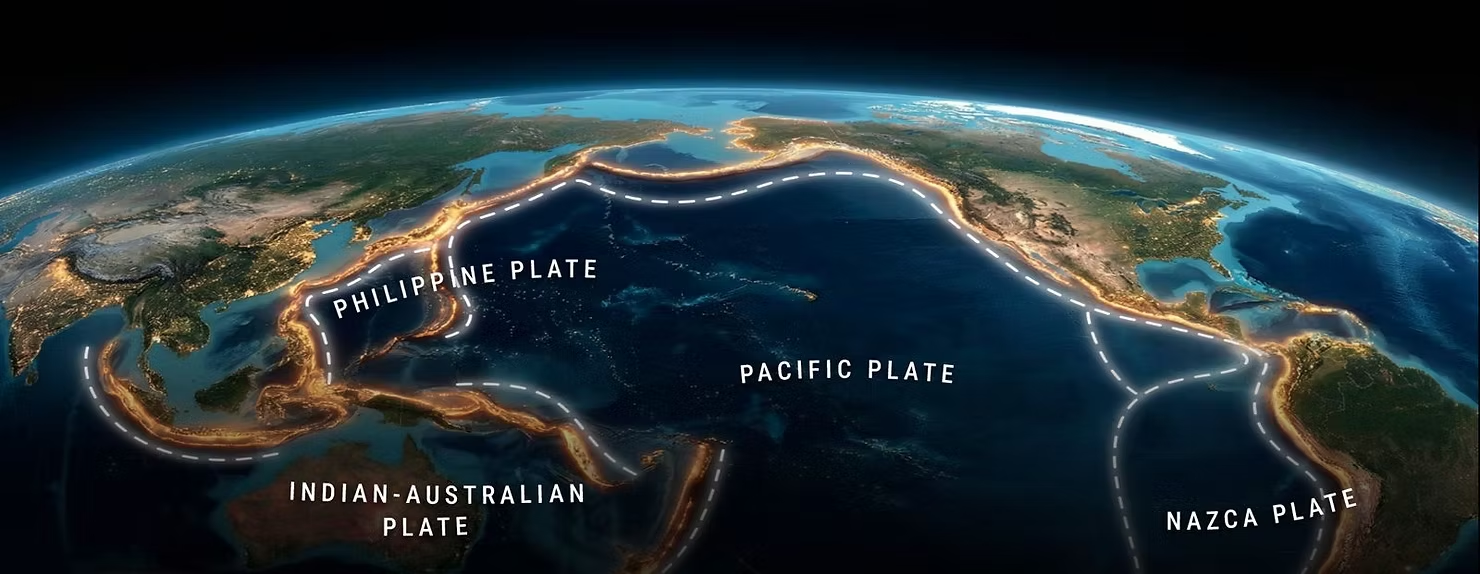
The "Ring of Fire", the string of subduction zones circling the Pacific Plate, serves as a global map for mineral exploration. Each segment of this boundary represents a different stage of mineral evolution:
- The Philippine Plate: Famous for high-grade epithermal gold systems, where gold-rich fluids reach the upper crust.
- The Indian-Australian Plate: Home to some of the world’s most significant copper-gold porphyries, such as the Grasberg mine.
- The Nazca Plate: The undisputed heavyweight champion of copper production, defining the Andean margin.
The Seismic Trade-off
Living above a "mineral factory" comes with inherent risk. The same tectonic forces that concentrate metals also trigger seismic activity. Geologists monitor Shallow Earthquakes, which occur at the high-friction "megathrust" interface, and Deep Earthquakes (mainly thrust faulting) that occur as the plate sinks further into the mantle.
For the mining industry, understanding these stress points is vital. The fracture networks created by these earthquakes often serve as the "plumbing" that allows mineral-rich fluids to travel upward and deposit their wealth.
The Bottom Line
We often think of the Earth as a static ball of rock, but it is a dynamic, recycling machine. The copper in your wiring and the gold ring on your finger are the direct results of a plate-tectonic process that began miles underground, millions of years ago. As the world moves toward an electrified, renewable future, these subduction zones remain the most strategic locations on the planet.
Sources & Further Reading
I. Core Data & Statistics
- USGS Mineral Commodity Summaries 2025: The primary source for global production and reserve data for copper, gold, and other critical minerals mentioned in the infographic.
- USGS Copper Statistics and Information: Detailed breakdowns of Chile and Peru's historical production and its role in the global supply chain.
- International Copper Study Group (ICSG): Global market forecasts and capacity reports for the copper industry.
II. Geological Research & Processes
- Subduction Zones and Porphyry Copper Deposits (GSA): A technical look at how "subduction zone jamming" and "slab breakoff" influence metal concentrations.
- Epithermal and Porphyry Ore Systems (MDPI Geosciences): An interdisciplinary study on the chemical "fingerprinting" of subduction-related magmas and their role in gold transport.
- The Wadati-Benioff Zone and Deep Seismicity: Educational resource explaining the relationship between descending slabs and earthquake depth distribution.
III. Regional Context
- Tectonics of the Andean Margin: Specific research on the Nazca Plate and how its angle of descent creates the distinct mineral belts of South America.


Explore More
View All

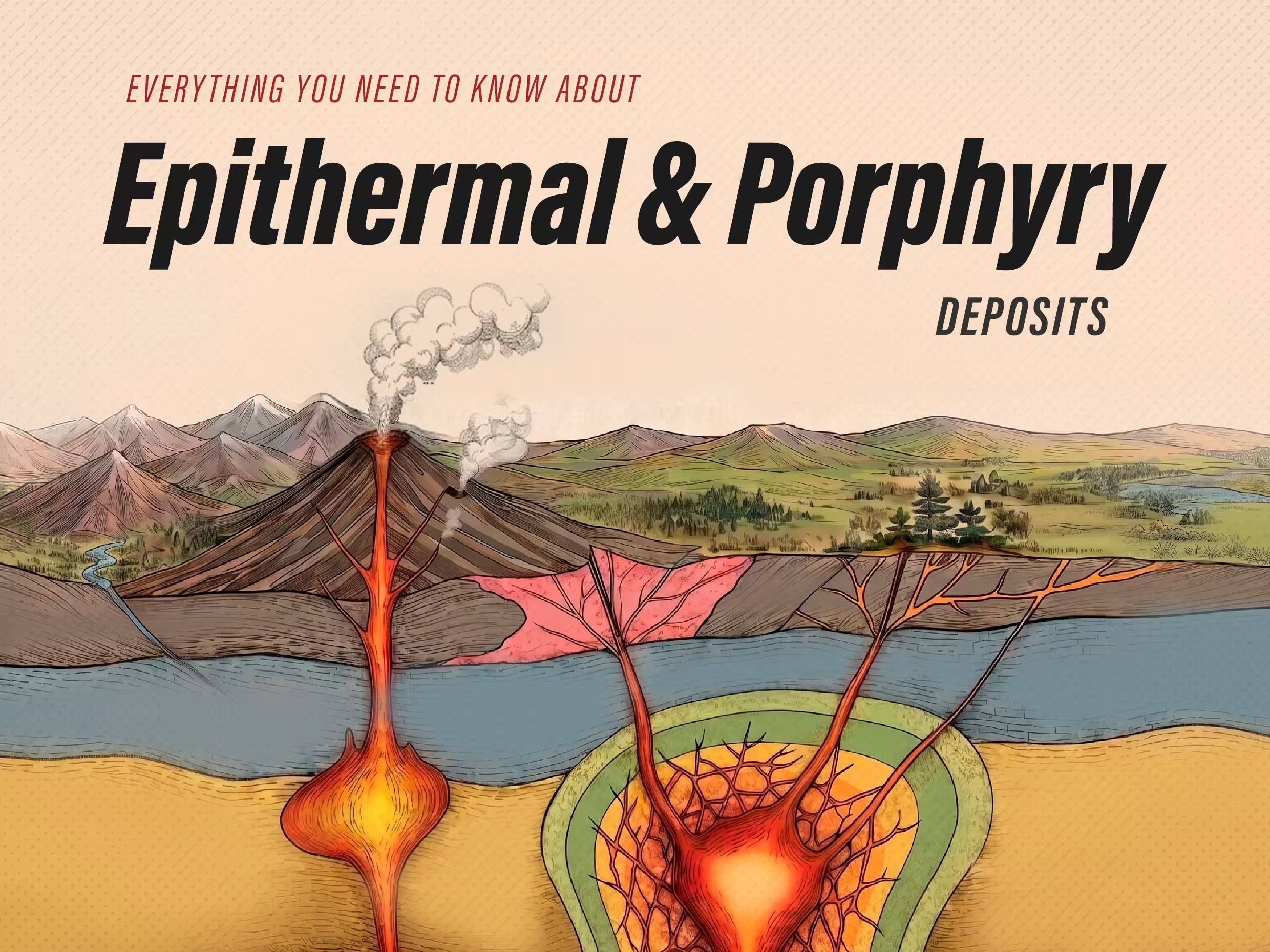
Inside Porphyry and Epithermal Deposits: The Geology of Earth's Most Productive Mines
Inside Porphyry and Epithermal Deposits: The Geology of Earth's Most Productive Mines
In March 2025, the USGS published an updated global database cataloguing every known porphyry copper deposit on Earth, a remarkable cartographic exercise for a deposit type that already supplies the planet with about 60% of its copper. What the database does not show is that the same magmatic engine produces a second, very different ore type immediately above: epithermal gold-silver veins

The Mohs Scale: Measuring Mineral Hardness from Talc to Diamond
The Mohs Scale: Measuring Mineral Hardness from Talc to Diamond
For over two centuries, diamond has sat unchallenged at the apex of mineral hardness. However, in early 2025, Chinese scientists successfully synthesized a hexagonal "super diamond" (lonsdaleite) that is theorized to withstand 58% more stress than standard cubic diamonds. While the frontier of material science pushes past natural limits, the foundational metric used to rank these materials remains surprisingly unchanged. Invented in 1812, the Mohs Scale of Mineral Hardness continues to be the ultimate benchmark for geologists, miners, and gemologists. Instead of complex chemical classifications, it relies on a simple, observable physical property: scratch resistance.

Properties of Common Minerals
Properties of Common Minerals
Minerals are the fundamental building blocks of rocks, forming the foundation of our planet and providing essential resources. From the humble Graphite in a pencil to sparkling Garnets in jewelry, minerals vary widely. But how do we tell these natural treasures apart?